Countries
Barbados: visas, tax & cost of living
Moving to Barbados as a remote worker: the 12-month Welcome Stamp, cost of living, why holders pay no Barbados income tax, healthcare and banking, honestly explained.
United KingdomBarbados
Your move to Barbados on a United Kingdom passport
- VisitEasyVisa-free entry
- NomadFairly easyNomad visa, stricter rules
- RelocateMediumResidence with conditions
Visiting
Visa-free for up to short stays. Travel on a passport valid for your whole stay, with a return or onward ticket and proof you can support yourself.
Passport validity: Passport valid for the whole of your stay; many nationalities are visa-free, and the officer sets your permitted stay on arrival (up to 6 months for several passports).
Heads-up: From 2026 Barbadians will need ETIAS authorisation to enter the EU, though this does not affect entry into Barbados.
At the border: Valid passport, proof of onward or return travel, and the online immigration and customs form completed before you land.
Working remotely
Barbados Welcome Stamp.
Income needed: USD 50,000 a year (BBD 100,000 in the Remote Employment Act), earned outside Barbados; the Act sets one figure, with no extra amount for a spouse or children (estimate)
Duration: 12 months
Fee: USD 2,000 individual, USD 3,000 family (BBD 4,000 / 6,000 in the Act), non-refundable and due only after approval (estimate)
Who qualifies: For people working remotely for an employer or clients outside Barbados. The stamp is granted for 12 months only; to stay longer you apply again for a new one. You need valid health insurance for the whole period. Neither you nor your spouse or dependants may take work from, or sell services to, anyone in Barbados. A family application covers your spouse or partner and children under 26. It is a visa, not residence: the Act creates no route to permanent residence.
Tax and residency
Under the Income Tax Act you are resident in an income (calendar) year if you spend in the aggregate more than 182 days in Barbados, or are ordinarily resident (a permanent home plus notice that you intend to stay at least two consecutive income years). Welcome Stamp holders are the exception: the Remote Employment Act deems them not resident and says their remote income is not Barbados income, so it is not taxed there. Otherwise, a resident who is not domiciled is taxed on Barbados income and on foreign income only when a benefit is received in Barbados. (estimate)
The UK decides residence with its Statutory Residence Test (days in the UK plus your ties). As a non-resident you are usually taxed only on UK income; where one exists, a double-tax treaty with the destination decides who taxes what.
Practical
Currency: BBD. Cost of living: mid.
Healthcare: Foreigners typically rely on private clinics and should carry their own health insurance; Welcome Stamp holders must hold valid health insurance for the whole stamp period.
Driving: Visitor driving permits were abolished in October 2025, so a valid home licence is enough, though an IDP can help with rentals.
Sources: Remote Employment Act, 2020 (Welcome Stamp: income, fee, 12 months only, no local employment, tax deeming) · Barbados Welcome Stamp (official programme page) · Income Tax Act, Cap. 73, s. 85(5) and (6), resident and ordinarily resident · Ministry of Foreign Affairs and Foreign Trade, visa list for foreign nationals entering Barbados (revised 9 May 2025) · Barbados Revenue Authority, Car Rental Levy and discontinuation of Visitor Driving Permits (15 October 2025) · Barbados Immigration Department, Visa Requirements · GOV.UK: tax on foreign income · HMRC: double-taxation treaties
Estimates, not advice. Confirm with the official sources before you act.
United StatesBarbados
Your move to Barbados on a United States passport
- VisitEasyVisa-free entry
- NomadFairly easyNomad visa, stricter rules
- RelocateMediumResidence with conditions
Visiting
Visa-free for up to 180 days. Travel on a passport valid for your whole stay, with a return or onward ticket and proof you can support yourself.
Passport validity: Passport valid for the whole of your stay; many nationalities are visa-free, and the officer sets your permitted stay on arrival (up to 6 months for several passports).
Heads-up: From 2026 Barbadians will need ETIAS authorisation to enter the EU, though this does not affect entry into Barbados.
At the border: Valid passport, proof of onward or return travel, and the online immigration and customs form completed before you land.
Working remotely
Barbados Welcome Stamp.
Income needed: USD 50,000 a year (BBD 100,000 in the Remote Employment Act), earned outside Barbados; the Act sets one figure, with no extra amount for a spouse or children (estimate)
Duration: 12 months
Fee: USD 2,000 individual, USD 3,000 family (BBD 4,000 / 6,000 in the Act), non-refundable and due only after approval (estimate)
Who qualifies: For people working remotely for an employer or clients outside Barbados. The stamp is granted for 12 months only; to stay longer you apply again for a new one. You need valid health insurance for the whole period. Neither you nor your spouse or dependants may take work from, or sell services to, anyone in Barbados. A family application covers your spouse or partner and children under 26. It is a visa, not residence: the Act creates no route to permanent residence.
Tax and residency
Under the Income Tax Act you are resident in an income (calendar) year if you spend in the aggregate more than 182 days in Barbados, or are ordinarily resident (a permanent home plus notice that you intend to stay at least two consecutive income years). Welcome Stamp holders are the exception: the Remote Employment Act deems them not resident and says their remote income is not Barbados income, so it is not taxed there. Otherwise, a resident who is not domiciled is taxed on Barbados income and on foreign income only when a benefit is received in Barbados. (estimate)
The US taxes its citizens on worldwide income wherever you live, so you keep filing US returns abroad. The Foreign Earned Income Exclusion and the foreign tax credit are what stop you being taxed twice.
Practical
Currency: BBD. Cost of living: mid.
Healthcare: Foreigners typically rely on private clinics and should carry their own health insurance; Welcome Stamp holders must hold valid health insurance for the whole stamp period.
Driving: Visitor driving permits were abolished in October 2025, so a valid home licence is enough, though an IDP can help with rentals.
Sources: Remote Employment Act, 2020 (Welcome Stamp: income, fee, 12 months only, no local employment, tax deeming) · Barbados Welcome Stamp (official programme page) · Income Tax Act, Cap. 73, s. 85(5) and (6), resident and ordinarily resident · Ministry of Foreign Affairs and Foreign Trade, visa list for foreign nationals entering Barbados (revised 9 May 2025) · Barbados Revenue Authority, Car Rental Levy and discontinuation of Visitor Driving Permits (15 October 2025) · Barbados Immigration Department, Visa Requirements · IRS: Foreign Earned Income Exclusion · IRS: tax treaties
Estimates, not advice. Confirm with the official sources before you act.
IndiaBarbados
Your move to Barbados on a India passport
- VisitEasyVisa-free entry
- NomadFairly easyNomad visa, stricter rules
- RelocateMediumResidence with conditions
Visiting
Visa-free for up to short stays. Travel on a passport valid for your whole stay, with a return or onward ticket and proof you can support yourself.
Passport validity: Passport valid for the whole of your stay; many nationalities are visa-free, and the officer sets your permitted stay on arrival (up to 6 months for several passports).
Heads-up: From 2026 Barbadians will need ETIAS authorisation to enter the EU, though this does not affect entry into Barbados.
At the border: Valid passport, proof of onward or return travel, and the online immigration and customs form completed before you land.
Working remotely
Barbados Welcome Stamp.
Income needed: USD 50,000 a year (BBD 100,000 in the Remote Employment Act), earned outside Barbados; the Act sets one figure, with no extra amount for a spouse or children (estimate)
Duration: 12 months
Fee: USD 2,000 individual, USD 3,000 family (BBD 4,000 / 6,000 in the Act), non-refundable and due only after approval (estimate)
Who qualifies: For people working remotely for an employer or clients outside Barbados. The stamp is granted for 12 months only; to stay longer you apply again for a new one. You need valid health insurance for the whole period. Neither you nor your spouse or dependants may take work from, or sell services to, anyone in Barbados. A family application covers your spouse or partner and children under 26. It is a visa, not residence: the Act creates no route to permanent residence.
Tax and residency
Under the Income Tax Act you are resident in an income (calendar) year if you spend in the aggregate more than 182 days in Barbados, or are ordinarily resident (a permanent home plus notice that you intend to stay at least two consecutive income years). Welcome Stamp holders are the exception: the Remote Employment Act deems them not resident and says their remote income is not Barbados income, so it is not taxed there. Otherwise, a resident who is not domiciled is taxed on Barbados income and on foreign income only when a benefit is received in Barbados. (estimate)
India taxes residents on worldwide income; your status depends on the days you spend in India (broadly 182 or more in the year). As a non-resident (NRI) you are taxed only on Indian-source income, and the relevant double-tax treaty allocates the rest.
Practical
Currency: BBD. Cost of living: mid.
Healthcare: Foreigners typically rely on private clinics and should carry their own health insurance; Welcome Stamp holders must hold valid health insurance for the whole stamp period.
Driving: Visitor driving permits were abolished in October 2025, so a valid home licence is enough, though an IDP can help with rentals.
Sources: Remote Employment Act, 2020 (Welcome Stamp: income, fee, 12 months only, no local employment, tax deeming) · Barbados Welcome Stamp (official programme page) · Income Tax Act, Cap. 73, s. 85(5) and (6), resident and ordinarily resident · Ministry of Foreign Affairs and Foreign Trade, visa list for foreign nationals entering Barbados (revised 9 May 2025) · Barbados Revenue Authority, Car Rental Levy and discontinuation of Visitor Driving Permits (15 October 2025) · Barbados Immigration Department, Visa Requirements · Income Tax Department, India · India: Double Taxation Avoidance Agreements
Estimates, not advice. Confirm with the official sources before you act.
GermanyBarbados
Your move to Barbados on a Germany passport
- VisitEasyVisa-free entry
- NomadFairly easyNomad visa, stricter rules
- RelocateMediumResidence with conditions
Visiting
Visa-free for up to 90 days. Travel on a passport valid for your whole stay, with a return or onward ticket and proof you can support yourself.
Passport validity: Passport valid for the whole of your stay; many nationalities are visa-free, and the officer sets your permitted stay on arrival (up to 6 months for several passports).
Heads-up: From 2026 Barbadians will need ETIAS authorisation to enter the EU, though this does not affect entry into Barbados.
At the border: Valid passport, proof of onward or return travel, and the online immigration and customs form completed before you land.
Working remotely
Barbados Welcome Stamp.
Income needed: USD 50,000 a year (BBD 100,000 in the Remote Employment Act), earned outside Barbados; the Act sets one figure, with no extra amount for a spouse or children (estimate)
Duration: 12 months
Fee: USD 2,000 individual, USD 3,000 family (BBD 4,000 / 6,000 in the Act), non-refundable and due only after approval (estimate)
Who qualifies: For people working remotely for an employer or clients outside Barbados. The stamp is granted for 12 months only; to stay longer you apply again for a new one. You need valid health insurance for the whole period. Neither you nor your spouse or dependants may take work from, or sell services to, anyone in Barbados. A family application covers your spouse or partner and children under 26. It is a visa, not residence: the Act creates no route to permanent residence.
Tax and residency
Under the Income Tax Act you are resident in an income (calendar) year if you spend in the aggregate more than 182 days in Barbados, or are ordinarily resident (a permanent home plus notice that you intend to stay at least two consecutive income years). Welcome Stamp holders are the exception: the Remote Employment Act deems them not resident and says their remote income is not Barbados income, so it is not taxed there. Otherwise, a resident who is not domiciled is taxed on Barbados income and on foreign income only when a benefit is received in Barbados. (estimate)
Germany taxes residents on worldwide income; you become resident through a home available to you (Wohnsitz) or a habitual abode of more than six months. As a non-resident you are usually taxed only on German-source income, and where one exists a double-tax treaty with the destination decides who taxes what.
Practical
Currency: BBD. Cost of living: mid.
Healthcare: Foreigners typically rely on private clinics and should carry their own health insurance; Welcome Stamp holders must hold valid health insurance for the whole stamp period.
Driving: Visitor driving permits were abolished in October 2025, so a valid home licence is enough, though an IDP can help with rentals.
Sources: Remote Employment Act, 2020 (Welcome Stamp: income, fee, 12 months only, no local employment, tax deeming) · Barbados Welcome Stamp (official programme page) · Income Tax Act, Cap. 73, s. 85(5) and (6), resident and ordinarily resident · Ministry of Foreign Affairs and Foreign Trade, visa list for foreign nationals entering Barbados (revised 9 May 2025) · Barbados Revenue Authority, Car Rental Levy and discontinuation of Visitor Driving Permits (15 October 2025) · Barbados Immigration Department, Visa Requirements · Bundeszentralamt für Steuern (BZSt) · Germany: double-taxation agreements (BMF)
Estimates, not advice. Confirm with the official sources before you act.
FranceBarbados
Your move to Barbados on a France passport
- VisitEasyVisa-free entry
- NomadFairly easyNomad visa, stricter rules
- RelocateMediumResidence with conditions
Visiting
Visa-free for up to 90 days. Travel on a passport valid for your whole stay, with a return or onward ticket and proof you can support yourself.
Passport validity: Passport valid for the whole of your stay; many nationalities are visa-free, and the officer sets your permitted stay on arrival (up to 6 months for several passports).
Heads-up: From 2026 Barbadians will need ETIAS authorisation to enter the EU, though this does not affect entry into Barbados.
At the border: Valid passport, proof of onward or return travel, and the online immigration and customs form completed before you land.
Working remotely
Barbados Welcome Stamp.
Income needed: USD 50,000 a year (BBD 100,000 in the Remote Employment Act), earned outside Barbados; the Act sets one figure, with no extra amount for a spouse or children (estimate)
Duration: 12 months
Fee: USD 2,000 individual, USD 3,000 family (BBD 4,000 / 6,000 in the Act), non-refundable and due only after approval (estimate)
Who qualifies: For people working remotely for an employer or clients outside Barbados. The stamp is granted for 12 months only; to stay longer you apply again for a new one. You need valid health insurance for the whole period. Neither you nor your spouse or dependants may take work from, or sell services to, anyone in Barbados. A family application covers your spouse or partner and children under 26. It is a visa, not residence: the Act creates no route to permanent residence.
Tax and residency
Under the Income Tax Act you are resident in an income (calendar) year if you spend in the aggregate more than 182 days in Barbados, or are ordinarily resident (a permanent home plus notice that you intend to stay at least two consecutive income years). Welcome Stamp holders are the exception: the Remote Employment Act deems them not resident and says their remote income is not Barbados income, so it is not taxed there. Otherwise, a resident who is not domiciled is taxed on Barbados income and on foreign income only when a benefit is received in Barbados. (estimate)
France taxes you on your worldwide income if your tax home (domicile fiscal) stays there, broadly when your household, main home, main job or main economic interests are in France, so moving abroad alone may not end it. Once you genuinely settle elsewhere you are usually taxed only on French-source income, and tax treaties typically prevent paying twice through an exemption or a foreign tax credit, but treat any figures as estimates and check your situation.
Practical
Currency: BBD. Cost of living: mid.
Healthcare: Foreigners typically rely on private clinics and should carry their own health insurance; Welcome Stamp holders must hold valid health insurance for the whole stamp period.
Driving: Visitor driving permits were abolished in October 2025, so a valid home licence is enough, though an IDP can help with rentals.
Sources: Remote Employment Act, 2020 (Welcome Stamp: income, fee, 12 months only, no local employment, tax deeming) · Barbados Welcome Stamp (official programme page) · Income Tax Act, Cap. 73, s. 85(5) and (6), resident and ordinarily resident · Ministry of Foreign Affairs and Foreign Trade, visa list for foreign nationals entering Barbados (revised 9 May 2025) · Barbados Revenue Authority, Car Rental Levy and discontinuation of Visitor Driving Permits (15 October 2025) · Barbados Immigration Department, Visa Requirements · impots.gouv.fr - Résidents de France · impots.gouv.fr - Les conventions internationales
Estimates, not advice. Confirm with the official sources before you act.
SpainBarbados
Your move to Barbados on a Spain passport
- VisitEasyVisa-free entry
- NomadFairly easyNomad visa, stricter rules
- RelocateMediumResidence with conditions
Visiting
Visa-free for up to 90 days. Travel on a passport valid for your whole stay, with a return or onward ticket and proof you can support yourself.
Passport validity: Passport valid for the whole of your stay; many nationalities are visa-free, and the officer sets your permitted stay on arrival (up to 6 months for several passports).
Heads-up: From 2026 Barbadians will need ETIAS authorisation to enter the EU, though this does not affect entry into Barbados.
At the border: Valid passport, proof of onward or return travel, and the online immigration and customs form completed before you land.
Working remotely
Barbados Welcome Stamp.
Income needed: USD 50,000 a year (BBD 100,000 in the Remote Employment Act), earned outside Barbados; the Act sets one figure, with no extra amount for a spouse or children (estimate)
Duration: 12 months
Fee: USD 2,000 individual, USD 3,000 family (BBD 4,000 / 6,000 in the Act), non-refundable and due only after approval (estimate)
Who qualifies: For people working remotely for an employer or clients outside Barbados. The stamp is granted for 12 months only; to stay longer you apply again for a new one. You need valid health insurance for the whole period. Neither you nor your spouse or dependants may take work from, or sell services to, anyone in Barbados. A family application covers your spouse or partner and children under 26. It is a visa, not residence: the Act creates no route to permanent residence.
Tax and residency
Under the Income Tax Act you are resident in an income (calendar) year if you spend in the aggregate more than 182 days in Barbados, or are ordinarily resident (a permanent home plus notice that you intend to stay at least two consecutive income years). Welcome Stamp holders are the exception: the Remote Employment Act deems them not resident and says their remote income is not Barbados income, so it is not taxed there. Otherwise, a resident who is not domiciled is taxed on Barbados income and on foreign income only when a benefit is received in Barbados. (estimate)
If Spain still counts as your tax home (roughly 183+ days in the country in a year, or your main base of life and income sits there), Spain taxes your worldwide income at IRPF rates, so what you earn abroad usually counts too. The sting is softened by double-tax treaties and a foreign-tax credit, plus the Article 7.p exemption that can shelter work done abroad up to around 60,100 euros a year, but treat every figure as an estimate and check your own case before you file.
Practical
Currency: BBD. Cost of living: mid.
Healthcare: Foreigners typically rely on private clinics and should carry their own health insurance; Welcome Stamp holders must hold valid health insurance for the whole stamp period.
Driving: Visitor driving permits were abolished in October 2025, so a valid home licence is enough, though an IDP can help with rentals.
Sources: Remote Employment Act, 2020 (Welcome Stamp: income, fee, 12 months only, no local employment, tax deeming) · Barbados Welcome Stamp (official programme page) · Income Tax Act, Cap. 73, s. 85(5) and (6), resident and ordinarily resident · Ministry of Foreign Affairs and Foreign Trade, visa list for foreign nationals entering Barbados (revised 9 May 2025) · Barbados Revenue Authority, Car Rental Levy and discontinuation of Visitor Driving Permits (15 October 2025) · Barbados Immigration Department, Visa Requirements · Agencia Tributaria: persona física residente en España · Agencia Tributaria: obtención de rentas extranjeras, reglas generales
Estimates, not advice. Confirm with the official sources before you act.
ItalyBarbados
Your move to Barbados on a Italy passport
- VisitEasyVisa-free entry
- NomadFairly easyNomad visa, stricter rules
- RelocateMediumResidence with conditions
Visiting
Visa-free for up to 90 days. Travel on a passport valid for your whole stay, with a return or onward ticket and proof you can support yourself.
Passport validity: Passport valid for the whole of your stay; many nationalities are visa-free, and the officer sets your permitted stay on arrival (up to 6 months for several passports).
Heads-up: From 2026 Barbadians will need ETIAS authorisation to enter the EU, though this does not affect entry into Barbados.
At the border: Valid passport, proof of onward or return travel, and the online immigration and customs form completed before you land.
Working remotely
Barbados Welcome Stamp.
Income needed: USD 50,000 a year (BBD 100,000 in the Remote Employment Act), earned outside Barbados; the Act sets one figure, with no extra amount for a spouse or children (estimate)
Duration: 12 months
Fee: USD 2,000 individual, USD 3,000 family (BBD 4,000 / 6,000 in the Act), non-refundable and due only after approval (estimate)
Who qualifies: For people working remotely for an employer or clients outside Barbados. The stamp is granted for 12 months only; to stay longer you apply again for a new one. You need valid health insurance for the whole period. Neither you nor your spouse or dependants may take work from, or sell services to, anyone in Barbados. A family application covers your spouse or partner and children under 26. It is a visa, not residence: the Act creates no route to permanent residence.
Tax and residency
Under the Income Tax Act you are resident in an income (calendar) year if you spend in the aggregate more than 182 days in Barbados, or are ordinarily resident (a permanent home plus notice that you intend to stay at least two consecutive income years). Welcome Stamp holders are the exception: the Remote Employment Act deems them not resident and says their remote income is not Barbados income, so it is not taxed there. Otherwise, a resident who is not domiciled is taxed on Barbados income and on foreign income only when a benefit is received in Barbados. (estimate)
Italy generally treats you as a tax resident if for most of the year (roughly 183 days or more) your home, family or registration ties are here, and residents are taxed on worldwide income wherever they live. The relief is usually a foreign tax credit for tax already paid abroad, often shaped by Italy's double-taxation treaties, so the same income should not be taxed twice.
Practical
Currency: BBD. Cost of living: mid.
Healthcare: Foreigners typically rely on private clinics and should carry their own health insurance; Welcome Stamp holders must hold valid health insurance for the whole stamp period.
Driving: Visitor driving permits were abolished in October 2025, so a valid home licence is enough, though an IDP can help with rentals.
Sources: Remote Employment Act, 2020 (Welcome Stamp: income, fee, 12 months only, no local employment, tax deeming) · Barbados Welcome Stamp (official programme page) · Income Tax Act, Cap. 73, s. 85(5) and (6), resident and ordinarily resident · Ministry of Foreign Affairs and Foreign Trade, visa list for foreign nationals entering Barbados (revised 9 May 2025) · Barbados Revenue Authority, Car Rental Levy and discontinuation of Visitor Driving Permits (15 October 2025) · Barbados Immigration Department, Visa Requirements · Agenzia delle Entrate, Residence for tax purposes · Agenzia delle Entrate, Bilateral agreements to prevent double taxation
Estimates, not advice. Confirm with the official sources before you act.
CanadaBarbados
Your move to Barbados on a Canada passport
- VisitEasyVisa-free entry
- NomadFairly easyNomad visa, stricter rules
- RelocateMediumResidence with conditions
Visiting
Visa-free for up to 180 days. Travel on a passport valid for your whole stay, with a return or onward ticket and proof you can support yourself.
Passport validity: Passport valid for the whole of your stay; many nationalities are visa-free, and the officer sets your permitted stay on arrival (up to 6 months for several passports).
Heads-up: From 2026 Barbadians will need ETIAS authorisation to enter the EU, though this does not affect entry into Barbados.
At the border: Valid passport, proof of onward or return travel, and the online immigration and customs form completed before you land.
Working remotely
Barbados Welcome Stamp.
Income needed: USD 50,000 a year (BBD 100,000 in the Remote Employment Act), earned outside Barbados; the Act sets one figure, with no extra amount for a spouse or children (estimate)
Duration: 12 months
Fee: USD 2,000 individual, USD 3,000 family (BBD 4,000 / 6,000 in the Act), non-refundable and due only after approval (estimate)
Who qualifies: For people working remotely for an employer or clients outside Barbados. The stamp is granted for 12 months only; to stay longer you apply again for a new one. You need valid health insurance for the whole period. Neither you nor your spouse or dependants may take work from, or sell services to, anyone in Barbados. A family application covers your spouse or partner and children under 26. It is a visa, not residence: the Act creates no route to permanent residence.
Tax and residency
Under the Income Tax Act you are resident in an income (calendar) year if you spend in the aggregate more than 182 days in Barbados, or are ordinarily resident (a permanent home plus notice that you intend to stay at least two consecutive income years). Welcome Stamp holders are the exception: the Remote Employment Act deems them not resident and says their remote income is not Barbados income, so it is not taxed there. Otherwise, a resident who is not domiciled is taxed on Barbados income and on foreign income only when a benefit is received in Barbados. (estimate)
Canada taxes you on residency, not on holding the passport, so as long as the CRA still treats you as a resident (kept home, family or strong ties) you generally owe Canadian tax on your worldwide income. The relief is usually a foreign tax credit for tax you already paid abroad, often topped up by a tax treaty, though the exact amounts are only estimates until you check your own case.
Practical
Currency: BBD. Cost of living: mid.
Healthcare: Foreigners typically rely on private clinics and should carry their own health insurance; Welcome Stamp holders must hold valid health insurance for the whole stamp period.
Driving: Visitor driving permits were abolished in October 2025, so a valid home licence is enough, though an IDP can help with rentals.
Sources: Remote Employment Act, 2020 (Welcome Stamp: income, fee, 12 months only, no local employment, tax deeming) · Barbados Welcome Stamp (official programme page) · Income Tax Act, Cap. 73, s. 85(5) and (6), resident and ordinarily resident · Ministry of Foreign Affairs and Foreign Trade, visa list for foreign nationals entering Barbados (revised 9 May 2025) · Barbados Revenue Authority, Car Rental Levy and discontinuation of Visitor Driving Permits (15 October 2025) · Barbados Immigration Department, Visa Requirements · Canada Revenue Agency, Determining your residency status · Department of Finance Canada, Tax treaties in force
Estimates, not advice. Confirm with the official sources before you act.
AustraliaBarbados
Your move to Barbados on a Australia passport
- VisitEasyVisa-free entry
- NomadFairly easyNomad visa, stricter rules
- RelocateMediumResidence with conditions
Visiting
Visa-free for up to 180 days. Travel on a passport valid for your whole stay, with a return or onward ticket and proof you can support yourself.
Passport validity: Passport valid for the whole of your stay; many nationalities are visa-free, and the officer sets your permitted stay on arrival (up to 6 months for several passports).
Heads-up: From 2026 Barbadians will need ETIAS authorisation to enter the EU, though this does not affect entry into Barbados.
At the border: Valid passport, proof of onward or return travel, and the online immigration and customs form completed before you land.
Working remotely
Barbados Welcome Stamp.
Income needed: USD 50,000 a year (BBD 100,000 in the Remote Employment Act), earned outside Barbados; the Act sets one figure, with no extra amount for a spouse or children (estimate)
Duration: 12 months
Fee: USD 2,000 individual, USD 3,000 family (BBD 4,000 / 6,000 in the Act), non-refundable and due only after approval (estimate)
Who qualifies: For people working remotely for an employer or clients outside Barbados. The stamp is granted for 12 months only; to stay longer you apply again for a new one. You need valid health insurance for the whole period. Neither you nor your spouse or dependants may take work from, or sell services to, anyone in Barbados. A family application covers your spouse or partner and children under 26. It is a visa, not residence: the Act creates no route to permanent residence.
Tax and residency
Under the Income Tax Act you are resident in an income (calendar) year if you spend in the aggregate more than 182 days in Barbados, or are ordinarily resident (a permanent home plus notice that you intend to stay at least two consecutive income years). Welcome Stamp holders are the exception: the Remote Employment Act deems them not resident and says their remote income is not Barbados income, so it is not taxed there. Otherwise, a resident who is not domiciled is taxed on Barbados income and on foreign income only when a benefit is received in Barbados. (estimate)
If you stay an Australian resident for tax purposes, Australia generally taxes your worldwide income wherever you live, with residency turned on the moment your real home and ties are here (a continuous stay of roughly 6 months can be enough). To soften double tax, you can usually claim a Foreign Income Tax Offset for tax already paid abroad, capped at the Australian tax on that income, and treaties may help too, so treat these figures as estimates and check your own case.
Practical
Currency: BBD. Cost of living: mid.
Healthcare: Foreigners typically rely on private clinics and should carry their own health insurance; Welcome Stamp holders must hold valid health insurance for the whole stamp period.
Driving: Visitor driving permits were abolished in October 2025, so a valid home licence is enough, though an IDP can help with rentals.
Sources: Remote Employment Act, 2020 (Welcome Stamp: income, fee, 12 months only, no local employment, tax deeming) · Barbados Welcome Stamp (official programme page) · Income Tax Act, Cap. 73, s. 85(5) and (6), resident and ordinarily resident · Ministry of Foreign Affairs and Foreign Trade, visa list for foreign nationals entering Barbados (revised 9 May 2025) · Barbados Revenue Authority, Car Rental Levy and discontinuation of Visitor Driving Permits (15 October 2025) · Barbados Immigration Department, Visa Requirements · Australian Taxation Office, Australian resident for tax purposes · Australian Taxation Office, International tax agreements (tax treaties)
Estimates, not advice. Confirm with the official sources before you act.
BrazilBarbados
Your move to Barbados on a Brazil passport
- VisitEasyVisa-free entry
- NomadFairly easyNomad visa, stricter rules
- RelocateMediumResidence with conditions
Visiting
Visa-free for up to 180 days. Travel on a passport valid for your whole stay, with a return or onward ticket and proof you can support yourself.
Passport validity: Passport valid for the whole of your stay; many nationalities are visa-free, and the officer sets your permitted stay on arrival (up to 6 months for several passports).
Heads-up: From 2026 Barbadians will need ETIAS authorisation to enter the EU, though this does not affect entry into Barbados.
At the border: Valid passport, proof of onward or return travel, and the online immigration and customs form completed before you land.
Working remotely
Barbados Welcome Stamp.
Income needed: USD 50,000 a year (BBD 100,000 in the Remote Employment Act), earned outside Barbados; the Act sets one figure, with no extra amount for a spouse or children (estimate)
Duration: 12 months
Fee: USD 2,000 individual, USD 3,000 family (BBD 4,000 / 6,000 in the Act), non-refundable and due only after approval (estimate)
Who qualifies: For people working remotely for an employer or clients outside Barbados. The stamp is granted for 12 months only; to stay longer you apply again for a new one. You need valid health insurance for the whole period. Neither you nor your spouse or dependants may take work from, or sell services to, anyone in Barbados. A family application covers your spouse or partner and children under 26. It is a visa, not residence: the Act creates no route to permanent residence.
Tax and residency
Under the Income Tax Act you are resident in an income (calendar) year if you spend in the aggregate more than 182 days in Barbados, or are ordinarily resident (a permanent home plus notice that you intend to stay at least two consecutive income years). Welcome Stamp holders are the exception: the Remote Employment Act deems them not resident and says their remote income is not Barbados income, so it is not taxed there. Otherwise, a resident who is not domiciled is taxed on Barbados income and on foreign income only when a benefit is received in Barbados. (estimate)
If Brazil still counts you as tax-resident, usually triggered by a permanent visa, a temporary visa plus a job, or roughly 183 days in the country within any 12 months, the Receita Federal taxes your worldwide income, so you keep filing the annual return wherever you live. The relief is real but partial: tax paid abroad can normally be credited against what you owe in Brazil under a treaty or recognised reciprocity, so most people are not taxed twice on the same income.
Practical
Currency: BBD. Cost of living: mid.
Healthcare: Foreigners typically rely on private clinics and should carry their own health insurance; Welcome Stamp holders must hold valid health insurance for the whole stamp period.
Driving: Visitor driving permits were abolished in October 2025, so a valid home licence is enough, though an IDP can help with rentals.
Sources: Remote Employment Act, 2020 (Welcome Stamp: income, fee, 12 months only, no local employment, tax deeming) · Barbados Welcome Stamp (official programme page) · Income Tax Act, Cap. 73, s. 85(5) and (6), resident and ordinarily resident · Ministry of Foreign Affairs and Foreign Trade, visa list for foreign nationals entering Barbados (revised 9 May 2025) · Barbados Revenue Authority, Car Rental Levy and discontinuation of Visitor Driving Permits (15 October 2025) · Barbados Immigration Department, Visa Requirements · Receita Federal, Acordos para evitar a dupla tributação · Receita Federal, Imposto sobre a Renda da Pessoa Física (IRPF)
Estimates, not advice. Confirm with the official sources before you act.
MexicoBarbados
Your move to Barbados on a Mexico passport
- VisitHardExceeds visa-free stay
- NomadFairly easyNomad visa, stricter rules
- RelocateMediumResidence with conditions
Visiting
Visa-free for up to 28 days. Travel on a passport valid for your whole stay, with a return or onward ticket and proof you can support yourself.
Passport validity: Passport valid for the whole of your stay; many nationalities are visa-free, and the officer sets your permitted stay on arrival (up to 6 months for several passports).
Heads-up: From 2026 Barbadians will need ETIAS authorisation to enter the EU, though this does not affect entry into Barbados.
At the border: Valid passport, proof of onward or return travel, and the online immigration and customs form completed before you land.
Working remotely
Barbados Welcome Stamp.
Income needed: USD 50,000 a year (BBD 100,000 in the Remote Employment Act), earned outside Barbados; the Act sets one figure, with no extra amount for a spouse or children (estimate)
Duration: 12 months
Fee: USD 2,000 individual, USD 3,000 family (BBD 4,000 / 6,000 in the Act), non-refundable and due only after approval (estimate)
Who qualifies: For people working remotely for an employer or clients outside Barbados. The stamp is granted for 12 months only; to stay longer you apply again for a new one. You need valid health insurance for the whole period. Neither you nor your spouse or dependants may take work from, or sell services to, anyone in Barbados. A family application covers your spouse or partner and children under 26. It is a visa, not residence: the Act creates no route to permanent residence.
Tax and residency
Under the Income Tax Act you are resident in an income (calendar) year if you spend in the aggregate more than 182 days in Barbados, or are ordinarily resident (a permanent home plus notice that you intend to stay at least two consecutive income years). Welcome Stamp holders are the exception: the Remote Employment Act deems them not resident and says their remote income is not Barbados income, so it is not taxed there. Otherwise, a resident who is not domiciled is taxed on Barbados income and on foreign income only when a benefit is received in Barbados. (estimate)
Mexico taxes you on your worldwide income once you count as a tax resident, which usually means your main home or your center of life is here (very roughly, spending more than about 183 days a year can tip the balance). The good news is the SAT lets you credit foreign income tax you already paid, and Mexico's double-taxation treaties mean the same money should not normally be taxed twice.
Practical
Currency: BBD. Cost of living: mid.
Healthcare: Foreigners typically rely on private clinics and should carry their own health insurance; Welcome Stamp holders must hold valid health insurance for the whole stamp period.
Driving: Visitor driving permits were abolished in October 2025, so a valid home licence is enough, though an IDP can help with rentals.
Sources: Remote Employment Act, 2020 (Welcome Stamp: income, fee, 12 months only, no local employment, tax deeming) · Barbados Welcome Stamp (official programme page) · Income Tax Act, Cap. 73, s. 85(5) and (6), resident and ordinarily resident · Ministry of Foreign Affairs and Foreign Trade, visa list for foreign nationals entering Barbados (revised 9 May 2025) · Barbados Revenue Authority, Car Rental Levy and discontinuation of Visitor Driving Permits (15 October 2025) · Barbados Immigration Department, Visa Requirements · SAT - Servicio de Administración Tributaria · SAT - Tratados en Materia Fiscal (para evitar la doble tributación)
Estimates, not advice. Confirm with the official sources before you act.
PhilippinesBarbados
Your move to Barbados on a Philippines passport
- VisitEasyVisa-free entry
- NomadFairly easyNomad visa, stricter rules
- RelocateMediumResidence with conditions
Visiting
Visa-free for up to short stays. Travel on a passport valid for your whole stay, with a return or onward ticket and proof you can support yourself.
Passport validity: Passport valid for the whole of your stay; many nationalities are visa-free, and the officer sets your permitted stay on arrival (up to 6 months for several passports).
Heads-up: From 2026 Barbadians will need ETIAS authorisation to enter the EU, though this does not affect entry into Barbados.
At the border: Valid passport, proof of onward or return travel, and the online immigration and customs form completed before you land.
Working remotely
Barbados Welcome Stamp.
Income needed: USD 50,000 a year (BBD 100,000 in the Remote Employment Act), earned outside Barbados; the Act sets one figure, with no extra amount for a spouse or children (estimate)
Duration: 12 months
Fee: USD 2,000 individual, USD 3,000 family (BBD 4,000 / 6,000 in the Act), non-refundable and due only after approval (estimate)
Who qualifies: For people working remotely for an employer or clients outside Barbados. The stamp is granted for 12 months only; to stay longer you apply again for a new one. You need valid health insurance for the whole period. Neither you nor your spouse or dependants may take work from, or sell services to, anyone in Barbados. A family application covers your spouse or partner and children under 26. It is a visa, not residence: the Act creates no route to permanent residence.
Tax and residency
Under the Income Tax Act you are resident in an income (calendar) year if you spend in the aggregate more than 182 days in Barbados, or are ordinarily resident (a permanent home plus notice that you intend to stay at least two consecutive income years). Welcome Stamp holders are the exception: the Remote Employment Act deems them not resident and says their remote income is not Barbados income, so it is not taxed there. Otherwise, a resident who is not domiciled is taxed on Barbados income and on foreign income only when a benefit is received in Barbados. (estimate)
If you stay a resident citizen, the Philippines taxes your worldwide income, but once you genuinely live and work abroad you usually count as a non-resident citizen and are taxed only on income from Philippine sources. The exact line depends on how long you are out and your ties back home, so treat these as estimates, and a foreign tax credit can offset tax already paid abroad.
Practical
Currency: BBD. Cost of living: mid.
Healthcare: Foreigners typically rely on private clinics and should carry their own health insurance; Welcome Stamp holders must hold valid health insurance for the whole stamp period.
Driving: Visitor driving permits were abolished in October 2025, so a valid home licence is enough, though an IDP can help with rentals.
Sources: Remote Employment Act, 2020 (Welcome Stamp: income, fee, 12 months only, no local employment, tax deeming) · Barbados Welcome Stamp (official programme page) · Income Tax Act, Cap. 73, s. 85(5) and (6), resident and ordinarily resident · Ministry of Foreign Affairs and Foreign Trade, visa list for foreign nationals entering Barbados (revised 9 May 2025) · Barbados Revenue Authority, Car Rental Levy and discontinuation of Visitor Driving Permits (15 October 2025) · Barbados Immigration Department, Visa Requirements · BIR - Taxation of Foreign Source Income · BIR - Taxation of Non-Residents
Estimates, not advice. Confirm with the official sources before you act.
NigeriaBarbados
Your move to Barbados on a Nigeria passport
- VisitEasyVisa-free entry
- NomadFairly easyNomad visa, stricter rules
- RelocateMediumResidence with conditions
Visiting
Visa-free for up to 180 days. Travel on a passport valid for your whole stay, with a return or onward ticket and proof you can support yourself.
Passport validity: Passport valid for the whole of your stay; many nationalities are visa-free, and the officer sets your permitted stay on arrival (up to 6 months for several passports).
Heads-up: From 2026 Barbadians will need ETIAS authorisation to enter the EU, though this does not affect entry into Barbados.
At the border: Valid passport, proof of onward or return travel, and the online immigration and customs form completed before you land.
Working remotely
Barbados Welcome Stamp.
Income needed: USD 50,000 a year (BBD 100,000 in the Remote Employment Act), earned outside Barbados; the Act sets one figure, with no extra amount for a spouse or children (estimate)
Duration: 12 months
Fee: USD 2,000 individual, USD 3,000 family (BBD 4,000 / 6,000 in the Act), non-refundable and due only after approval (estimate)
Who qualifies: For people working remotely for an employer or clients outside Barbados. The stamp is granted for 12 months only; to stay longer you apply again for a new one. You need valid health insurance for the whole period. Neither you nor your spouse or dependants may take work from, or sell services to, anyone in Barbados. A family application covers your spouse or partner and children under 26. It is a visa, not residence: the Act creates no route to permanent residence.
Tax and residency
Under the Income Tax Act you are resident in an income (calendar) year if you spend in the aggregate more than 182 days in Barbados, or are ordinarily resident (a permanent home plus notice that you intend to stay at least two consecutive income years). Welcome Stamp holders are the exception: the Remote Employment Act deems them not resident and says their remote income is not Barbados income, so it is not taxed there. Otherwise, a resident who is not domiciled is taxed on Barbados income and on foreign income only when a benefit is received in Barbados. (estimate)
If Nigeria still counts you as resident, roughly 183 or more days in the country in a year, or you keep a home, habitual abode or close family and economic ties there, you are generally taxed on your worldwide income, not just what you earn in Nigeria. There is usually a foreign tax credit, and Nigeria's tax treaties, so tax you already paid abroad can typically be set against your Nigerian bill, but treat these figures as estimates and check the current rules before you file.
Practical
Currency: BBD. Cost of living: mid.
Healthcare: Foreigners typically rely on private clinics and should carry their own health insurance; Welcome Stamp holders must hold valid health insurance for the whole stamp period.
Driving: Visitor driving permits were abolished in October 2025, so a valid home licence is enough, though an IDP can help with rentals.
Sources: Remote Employment Act, 2020 (Welcome Stamp: income, fee, 12 months only, no local employment, tax deeming) · Barbados Welcome Stamp (official programme page) · Income Tax Act, Cap. 73, s. 85(5) and (6), resident and ordinarily resident · Ministry of Foreign Affairs and Foreign Trade, visa list for foreign nationals entering Barbados (revised 9 May 2025) · Barbados Revenue Authority, Car Rental Levy and discontinuation of Visitor Driving Permits (15 October 2025) · Barbados Immigration Department, Visa Requirements · Federal Inland Revenue Service (FIRS) · FIRS - Tax Treaties and Related Matters
Estimates, not advice. Confirm with the official sources before you act.
VietnamBarbados
Your move to Barbados on a Vietnam passport
- VisitEasyVisa-free entry
- NomadFairly easyNomad visa, stricter rules
- RelocateMediumResidence with conditions
Visiting
Visa-free for up to short stays. Travel on a passport valid for your whole stay, with a return or onward ticket and proof you can support yourself.
Passport validity: Passport valid for the whole of your stay; many nationalities are visa-free, and the officer sets your permitted stay on arrival (up to 6 months for several passports).
Heads-up: From 2026 Barbadians will need ETIAS authorisation to enter the EU, though this does not affect entry into Barbados.
At the border: Valid passport, proof of onward or return travel, and the online immigration and customs form completed before you land.
Working remotely
Barbados Welcome Stamp.
Income needed: USD 50,000 a year (BBD 100,000 in the Remote Employment Act), earned outside Barbados; the Act sets one figure, with no extra amount for a spouse or children (estimate)
Duration: 12 months
Fee: USD 2,000 individual, USD 3,000 family (BBD 4,000 / 6,000 in the Act), non-refundable and due only after approval (estimate)
Who qualifies: For people working remotely for an employer or clients outside Barbados. The stamp is granted for 12 months only; to stay longer you apply again for a new one. You need valid health insurance for the whole period. Neither you nor your spouse or dependants may take work from, or sell services to, anyone in Barbados. A family application covers your spouse or partner and children under 26. It is a visa, not residence: the Act creates no route to permanent residence.
Tax and residency
Under the Income Tax Act you are resident in an income (calendar) year if you spend in the aggregate more than 182 days in Barbados, or are ordinarily resident (a permanent home plus notice that you intend to stay at least two consecutive income years). Welcome Stamp holders are the exception: the Remote Employment Act deems them not resident and says their remote income is not Barbados income, so it is not taxed there. Otherwise, a resident who is not domiciled is taxed on Barbados income and on foreign income only when a benefit is received in Barbados. (estimate)
Vietnam treats you as a tax resident once you spend roughly 183 days there in a calendar year (or any rolling 12 months) or keep a permanent home, and residents are taxed on worldwide income at progressive rates of around 5% to 35%; there is no foreign-earned-income exclusion, but Vietnam's tax treaties and a foreign tax credit usually stop the same income being taxed twice.
Practical
Currency: BBD. Cost of living: mid.
Healthcare: Foreigners typically rely on private clinics and should carry their own health insurance; Welcome Stamp holders must hold valid health insurance for the whole stamp period.
Driving: Visitor driving permits were abolished in October 2025, so a valid home licence is enough, though an IDP can help with rentals.
Sources: Remote Employment Act, 2020 (Welcome Stamp: income, fee, 12 months only, no local employment, tax deeming) · Barbados Welcome Stamp (official programme page) · Income Tax Act, Cap. 73, s. 85(5) and (6), resident and ordinarily resident · Ministry of Foreign Affairs and Foreign Trade, visa list for foreign nationals entering Barbados (revised 9 May 2025) · Barbados Revenue Authority, Car Rental Levy and discontinuation of Visitor Driving Permits (15 October 2025) · Barbados Immigration Department, Visa Requirements · General Department of Taxation (Tổng cục Thuế) · GDT - Agreements for Avoidance of Double Taxation
Estimates, not advice. Confirm with the official sources before you act.
Should you move to Barbados?
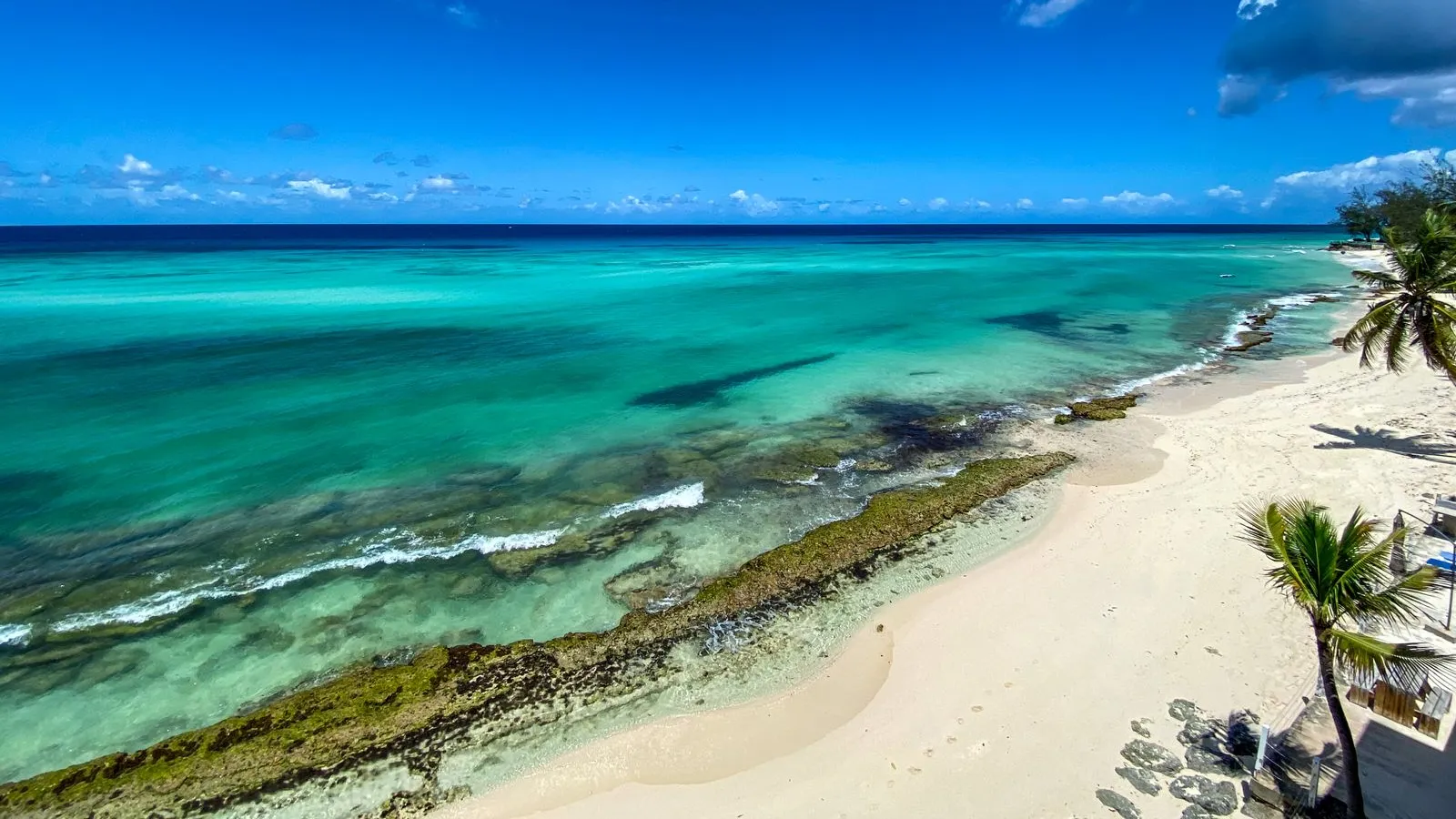
Barbados is one of the few places that built a front door for remote workers and actually left it open. If you can work from a laptop, earn in a stronger currency, and you have wanted to trade grey commutes for flying fish and warm water, this small island on the eastern edge of the Caribbean is a genuine option, not a fantasy. It suits people who want sunshine, English as the everyday language, a stable democracy, and a nomad visa that is refreshingly simple to understand.
Most newcomers cluster on the south and west coasts. The south (Oistins, Hastings, Worthing, St. Lawrence Gap) is livelier, cheaper, and full of surfers and younger nomads. The west coast (Holetown, Speightstown, the so-called Platinum Coast) is calmer, prettier, and pricier. Bridgetown, the capital, is the business and admin hub but not where most people choose to live.
Budget honestly. A single person living comfortably, renting a decent one-bedroom near the coast, eating out a few times a week and running a car, should plan for roughly US$2,500 to US$3,500 a month, and more if you want a sea view or air conditioning running all day. The trade-offs are real: many imported goods are expensive, the internet is good in populated areas but not flawless, and the island sits at the edge of the Atlantic hurricane belt from roughly June to November. Petty theft happens, so use the ordinary caution you would in any tourist town. None of that should scare you off. It should just shape your expectations.
Cost of living in Barbados
Barbados is not a cheap Southeast Asia posting, and pretending otherwise helps nobody. It is a mid-to-high cost island where a comfortable lifestyle is very achievable on a Western remote salary.
According to Numbeo, a one-bedroom apartment in a central area runs around Bds$1,767 a month (roughly US$880), and a little less outside the centre at about Bds$1,514 (around US$755). The Barbados dollar is pegged to the US dollar at two to one, which makes the mental maths easy: just halve any local price. Long-term, unfurnished rentals away from the tourist strip can be found for less, while a furnished villa with a pool is a different universe entirely.
Groceries reflect a small island that imports most of what it eats. Numbeo lists milk at about Bds$7 a litre, a dozen eggs near Bds$11.50, chicken breast around Bds$22.60 a kilo, and rice about Bds$8 a kilo. A meal at an inexpensive restaurant is roughly Bds$45 (around US$22). You save real money by shopping at local markets, buying Bajan produce and fish in season, and treating imported cheese and wine as occasional luxuries rather than staples.
Barbados Welcome Stamp visa and entry
This is the headline, and it lives up to it. The Barbados Welcome Stamp is a twelve-month visa built specifically for people whose work is location independent, whether they are employed by a company abroad or run their own business serving clients outside Barbados. The Remote Employment Act, 2020 grants it “for a period of 12 months only”, so it is not renewed as such: if you want another year, you apply again for a new stamp.
The core requirements are set in that Act and are straightforward. You need to expect an annual income of at least US$50,000 (BBD 100,000) over the next 12 months, earned outside Barbados (note that this is the expectation of income, not money that must sit in a Barbadian account). The Act sets one figure, so it does not go up if you bring a spouse or children. The fee is US$2,000 for an individual and US$3,000 for a family (BBD 4,000 and 6,000), non-refundable and due only once you are approved. A family application covers your spouse or partner and children under 26. You also need valid health insurance for the whole period. Applications are typically reviewed within about seven business days, which is fast by any visa standard.
Two conditions catch people out. First, the stamp is for remote work only: you, your spouse and your dependants all sign a declaration that you will not take a job from, or sell services to, anyone in Barbados. Second, it is a visa, not residence. The Act creates no route to permanent residence, so plan on a year (or a series of separate yearly stamps) rather than a first step towards settling.
Not sure whether you clear the bar, or how Barbados stacks up against other nomad-visa countries? Run your numbers through our digital nomad visa checker before you commit to anything. And do verify the current income figure and fees on the official site at the time you apply, because programme terms do get adjusted.
Tax residency and the 182 day rule
Here is the part people get wrong, so read it slowly, and treat it as education rather than advice.
One of the quiet perks of the Welcome Stamp is written into the law itself. The Remote Employment Act deems stamp holders not resident in Barbados for income tax, and says the income they receive is not income derived from Barbados, so your remote income is not taxed by Barbados while you are on the stamp. You still pay VAT on what you buy on the island. That is a big reason the programme is attractive. It does not, however, cancel your obligations back home. Your own country may still tax you, and some countries only release you once you have genuinely broken tax residence there.
Separately, Barbados has its own residency test for everyone not on the stamp. Under section 85(5) of the Income Tax Act, you are resident in an income (calendar) year if you spend “in the aggregate more than 182 days” in Barbados, or if you are ordinarily resident, which means a permanent home there plus notice that you intend to stay at least two consecutive income years. So 182 days is still fine and day 183 tips you over. PwC notes that arrival and departure days both count. For those who do fall into the ordinary tax net, individual income tax rates sit at around 12.5% on the first BBD 50,000 of taxable income and about 28.5% above that. Crucially, whether your worldwide income is taxed depends on domicile, not just days: a resident who is domiciled in Barbados is taxed on worldwide income, while a resident who is not domiciled is taxed more narrowly.
The 182-day line is a rule of thumb, not a magic shield. Cross-border tax is genuinely individual. Use our tax residency checker to see the questions that actually matter, and pay a cross-border accountant before you make any irreversible move.
Healthcare and insurance
Barbados has a reasonable public system anchored by the Queen Elizabeth Hospital in Bridgetown, the island’s main public hospital and its emergency and trauma centre. It works, but it can be stretched, and as a visa holder you will lean on private care for anything non-urgent.
Private options are decent for a small island. Bayview Hospital in Bridgetown handles surgery and inpatient care, Sandy Crest Medical Centre on the west coast is popular with expats for day-to-day appointments, and there are private clinics dotted along the south and west coasts. A routine private GP visit typically runs somewhere around US$50 to US$100, with specialists and diagnostics more. For anything serious or complex, many long-term residents plan to fly to the US or the UK, so an international health insurance policy with medical evacuation cover is not a luxury here, it is the sensible baseline. Remember that the Welcome Stamp requires you to hold valid health insurance anyway, so budget for a proper international plan from day one.
Money, banking and settling in
The Barbados dollar (BBD) is pegged to the US dollar at 2:1, so pricing is predictable and US dollars are widely understood. Cards are accepted in most hotels, supermarkets, and restaurants, but keep cash for markets, small vendors, minibuses, and the beach bars that make the island what it is.
Opening a local bank account as a newcomer takes patience. The main players are CIBC Caribbean, Republic Bank, and Scotiabank, and they will generally want your passport, proof of address, a reference, and evidence of your income or visa status. Expect paperwork and in-person appointments rather than a slick app. Many nomads simply run their first months on a good multi-currency account (the kind with low foreign-exchange fees and a physical card) and only open a local account once they are settled and know they are staying.
For the first weeks, a few practical things smooth everything out. Sort a local SIM early (Flow and Digicel are the two networks) so you have data the moment you land. Line up accommodation for at least the first month before you arrive, then view long-term rentals in person, because photos flatter. Get comfortable with the ZR vans and blue buses for cheap transport before deciding whether you really need to buy or rent a car. And say hello. Bajans are warm and the island runs on relationships, so the friend who has already done the move will tell you: the fastest way to settle in is to show up, be polite, and let the pace of the place slow you down.
Figures are estimates. Always check the official source.
Frequently asked questions
- Barbados: is there a digital nomad visa?
- Barbados Welcome Stamp. For people working remotely for an employer or clients outside Barbados. The stamp is granted for 12 months only; to stay longer you apply again for a new one. You need valid health insurance for the whole period. Neither you nor your spouse or dependants may take work from, or sell services to, anyone in Barbados. A family application covers your spouse or partner and children under 26. It is a visa, not residence: the Act creates no route to permanent residence.
- Barbados: when do you become a tax resident?
- Under the Income Tax Act you are resident in an income (calendar) year if you spend in the aggregate more than 182 days in Barbados, or are ordinarily resident (a permanent home plus notice that you intend to stay at least two consecutive income years). Welcome Stamp holders are the exception: the Remote Employment Act deems them not resident and says their remote income is not Barbados income, so it is not taxed there. Otherwise, a resident who is not domiciled is taxed on Barbados income and on foreign income only when a benefit is received in Barbados.
- Barbados: what is the cost of living?
- The cost of living is moderate and the local currency is the BBD. Treat any figures as estimates.
- Barbados: do you need health insurance?
- Foreigners typically rely on private clinics and should carry their own health insurance; Welcome Stamp holders must hold valid health insurance for the whole stamp period.
- Barbados: can you drive on a foreign licence?
- Visitor driving permits were abolished in October 2025, so a valid home licence is enough, though an IDP can help with rentals.
Terms worth knowing
Americas: more countries to explore
Put it to work
- Free
Digital-Nomad Visa Checker
See which digital-nomad visas you could actually get with your passport and income, ranked, with the binding reason per country.
→ - Free
Tax-Residency Reality Checker
Go beyond the 183-day myth: model the treaty tie-breaker and see whether two countries could both claim you as a tax resident.
→ - Free
Nomad Insurance Picker
Match SafetyWing, Genki, World Nomads and others to your situation, and see which policies satisfy specific visa proof requirements.
→ - Free
Banking & FX Picker
Find the right account stack to avoid fees and hold multiple currencies abroad, Wise, Revolut, N26, for your nationality and spending.
→