Country comparisons
Malta vs Cyprus
Both are sunny EU islands on the euro where English carries you a long way, so the choice is rarely about the postcard. It comes down to the fine print: Malta, with English as an official language, leaves its nomad permit holders' remote-work income untaxed for the first year and charges a flat 10 percent after that, while Cyprus offers a far roomier island, a nomad permit that can run three years and a non-dom status that lifts its defence levy on dividends and interest.
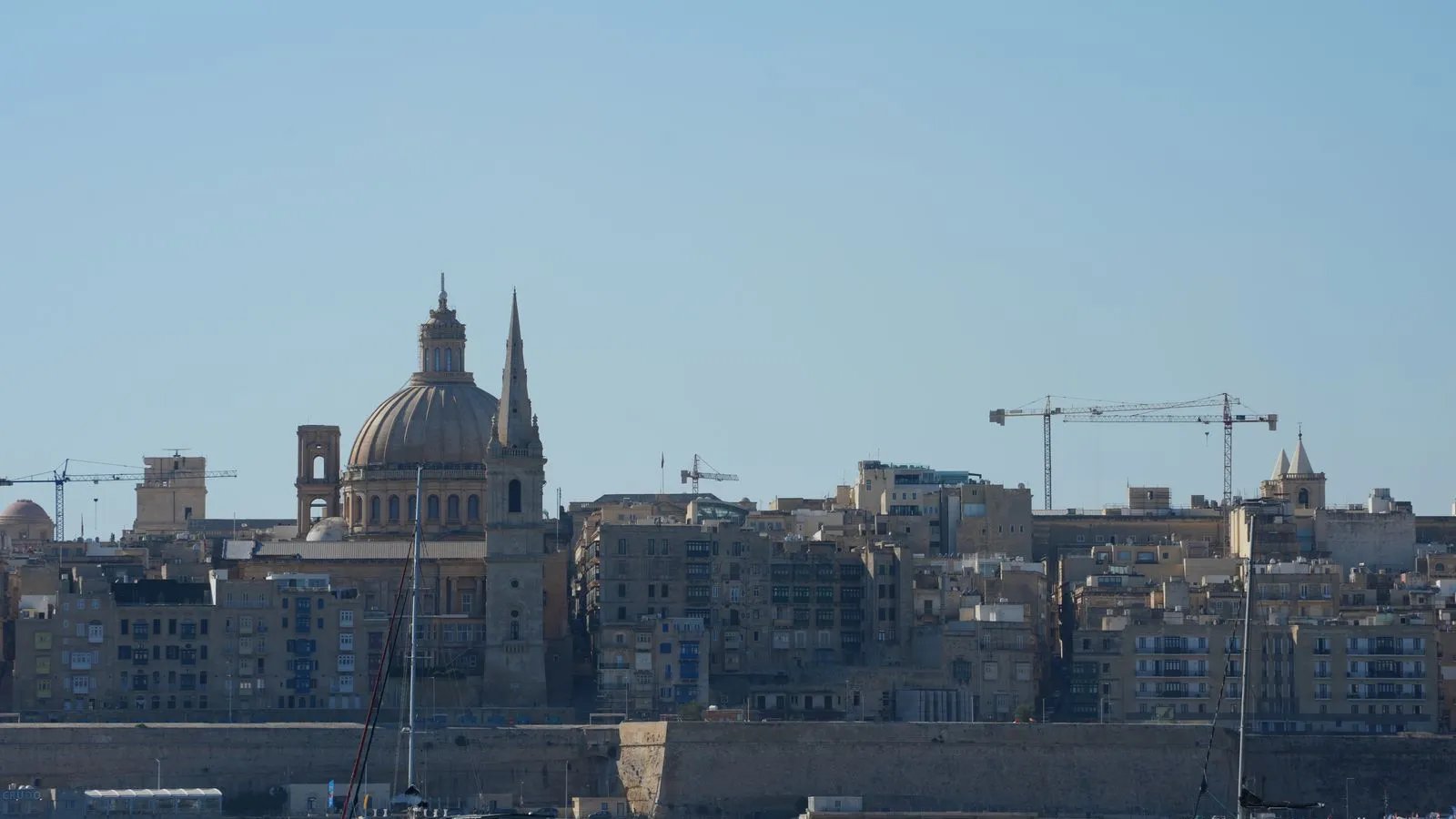
Side by side
| Malta | Cyprus | |
|---|---|---|
| Digital nomad visa | Nomad Residence Permit | Digital Nomad Visa |
| Income requirement | A minimum gross yearly income of 42,000 EUR (roughly 3,500 EUR a month) from the remote work. Anyone who applied before 1 April 2024 keeps the earlier 32,400 EUR requirement. | At least EUR 3,500/mo net, plus 20% for a spouse and 15% per child (Cyprus Digital Nomad Visa) |
| Tax residency | More than 183 days in Malta in a year makes you tax resident for that year, and if you come to Malta to establish your residence you are resident from the day you arrive, whatever the day count. Residents who are not domiciled in Malta, or not ordinarily resident, are taxed on Maltese income plus foreign income they actually bring into Malta, while foreign capital gains stay outside the charge even if remitted; a 5,000 EUR minimum tax can apply once you are ordinarily resident but not domiciled and have at least 35,000 EUR of foreign income you have not remitted. Nomad Residence Permit holders are treated separately: under the Nomad Residence Permits (Income Tax) Rules their authorised remote-work income is taxed at a flat 10%, with no charge for the first 12 months from the permit being issued, or from 1 January 2024 if that is later. | You are resident once you spend more than 183 days in Cyprus in a tax year, so 183 exactly is not enough. The 60-day route needs all four conditions together: at least 60 days in Cyprus, no more than 183 days in any other single state, a business, job or directorship in Cyprus, and a permanent home you own or rent. Since 2026 you may at the same time be tax resident in another country. Non-domiciled residents pay no Special Defence Contribution on dividends and interest until they have been Cyprus tax resident for 17 of the last 20 years. |
| Cost of living | Moderate | Moderate |
| Currency | EUR | EUR |
| Healthcare | Nomad Residence Permit applicants must hold a policy with at least 100,000 EUR of cover across the European Union, including Malta, and the United Kingdom, bought for a full year and paid in advance. Travel insurance is not accepted, and permit holders are not entitled to free state healthcare. EU visitors can use an EHIC card for public care during a stay. | Cyprus has a national General Healthcare System (GESY), but most foreigners need private or travel health insurance until they hold a residence permit and contribute. |
| Driving | EU/EEA licences are valid; many other foreign licences are accepted for short stays, but an International Driving Permit is a useful backup. | Cyprus drives on the left and an International Driving Permit is recommended alongside your national licence. |
The bottom line
Malta wins if your priority is the smoothest landing: English is an official language, and the Nomad Residence Permit asks roughly 42,000 euros gross a year (about 3,500 a month), costs about 300 euros plus 100 for the residence card and renews yearly up to four years. Its tax deal is the clearer of the two, since the permit's own tax rules charge nothing on your remote-work income for the first 12 months and a flat 10 percent after that. Cyprus asks about 3,500 euros a month net of tax, its permit runs one year and renews twice, the scheme is capped at 500 permits, and the island gives you far more room. Its non-dom status means no Special Defence Contribution on dividends and interest until you have been resident for 17 of the last 20 years, which matters more if you live off investments than off client invoices. Don't count on the much-quoted 60-day tax-residency route: it also needs a business, a job or a directorship in Cyprus and a home there, which a nomad billing foreign clients usually lacks, so expect the normal more-than-183-days test. Both sit in the mid cost band and lean on private health insurance for newcomers, and every figure here is an estimate as checked, so confirm it with the official source before you commit.
Pick Malta if you want the least friction, English as an official language and a first year with no tax on your remote-work income, then a flat 10 percent, and you don't mind a genuinely tiny island.
Pick Cyprus if you want more room than a small island gives, a nomad permit that can run three years and a non-dom status that spares dividends and interest the Special Defence Contribution for up to 17 years, and you're fine with the usual 183-day test.
Read the full guides
Put it to work
- Free
Digital-Nomad Visa Checker
See which digital-nomad visas you could actually get with your passport and income, ranked, with the binding reason per country.
→ - Free
Tax-Residency Reality Checker
Go beyond the 183-day myth: model the treaty tie-breaker and see whether two countries could both claim you as a tax resident.
→ - Free
Cost-of-Relocation Calculator
Estimate the all-in, one-time cost of moving to a country (shipping, visa fees, flights, deposits) as low, likely and high bands.
→