Countries
Malta: visas, tax & cost of living
Moving to Malta? The Nomad Residence Permit income floor of 42,000 EUR, the flat 10% nomad tax rate, the 183-day rule, cost of living and money basics.
United KingdomMalta
Your move to Malta on a United Kingdom passport
- VisitEasyVisa-free entry
- NomadFairly easyNomad visa, stricter rules
- RelocateMediumResidence with conditions
Visiting
Visa-free for up to 90 days. Travel on a passport valid for your whole stay, with a return or onward ticket and proof you can support yourself.
Passport validity: Passport valid for at least 3 months beyond your planned departure from the Schengen area and issued within the last 10 years.
Heads-up: The EU Entry/Exit System has been fully operational at Schengen borders since 10 April 2026, so non-EU travellers are registered biometrically instead of getting a passport stamp. ETIAS is scheduled to start in the last quarter of 2026 for visa-exempt non-EU travellers (around 20 EUR, valid 3 years or until the passport expires), with the exact date still to be announced.
At the border: Passport, proof of accommodation, return or onward travel, and evidence of sufficient funds may be requested.
Working remotely
Nomad Residence Permit.
Income needed: A minimum gross yearly income of 42,000 EUR (roughly 3,500 EUR a month) from the remote work. Anyone who applied before 1 April 2024 keeps the earlier 32,400 EUR requirement. (estimate)
Duration: 12 months
Fee: 300 EUR per person, non-refundable, plus 100 EUR per person for the residence card issued by Identita (estimate)
Who qualifies: For non-EU/EEA/Swiss nationals who work remotely for a foreign employer, run a foreign-registered business, or freelance for foreign clients. You cannot work for or supply services to any company based or registered in Malta, and people contracted by a foreign company to serve its Maltese subsidiary are excluded. You also need a rental or purchase agreement for a home in Malta, health insurance and a police conduct certificate. The permit runs for one year and can be renewed three times, to a maximum of four years, and each renewal asks for bank evidence that you actually lived in Malta for at least five months out of the previous twelve.
Tax and residency
More than 183 days in Malta in a year makes you tax resident for that year, and if you come to Malta to establish your residence you are resident from the day you arrive, whatever the day count. Residents who are not domiciled in Malta, or not ordinarily resident, are taxed on Maltese income plus foreign income they actually bring into Malta, while foreign capital gains stay outside the charge even if remitted; a 5,000 EUR minimum tax can apply once you are ordinarily resident but not domiciled and have at least 35,000 EUR of foreign income you have not remitted. Nomad Residence Permit holders are treated separately: under the Nomad Residence Permits (Income Tax) Rules their authorised remote-work income is taxed at a flat 10%, with no charge for the first 12 months from the permit being issued, or from 1 January 2024 if that is later. (estimate)
The UK decides residence with its Statutory Residence Test (days in the UK plus your ties). As a non-resident you are usually taxed only on UK income; where one exists, a double-tax treaty with the destination decides who taxes what.
Practical
Currency: EUR. Cost of living: mid.
Healthcare: Nomad Residence Permit applicants must hold a policy with at least 100,000 EUR of cover across the European Union, including Malta, and the United Kingdom, bought for a full year and paid in advance. Travel insurance is not accepted, and permit holders are not entitled to free state healthcare. EU visitors can use an EHIC card for public care during a stay.
Driving: EU/EEA licences are valid; many other foreign licences are accepted for short stays, but an International Driving Permit is a useful backup.
Sources: Residency Malta Agency - Nomad Residence Permit, Eligibility · Residency Malta Agency - Nomad Residence Permit, FAQs (fees, renewal, health insurance, long-term residence) · Laws of Malta - S.L. 123.210, Nomad Residence Permits (Income Tax) Rules (Legal Notice 277 of 2023) · Malta Tax and Customs Administration - Tax Residence · Laws of Malta - Income Tax Act, Cap. 123 (remittance basis, art. 4(1); minimum tax, art. 56(27)) · European Commission - Entry/Exit System fully operational on 10 April 2026, ETIAS in the last quarter of 2026 · GOV.UK: tax on foreign income · HMRC: double-taxation treaties
Estimates, not advice. Confirm with the official sources before you act.
United StatesMalta
Your move to Malta on a United States passport
- VisitEasyVisa-free entry
- NomadFairly easyNomad visa, stricter rules
- RelocateMediumResidence with conditions
Visiting
Visa-free for up to 90 days. Travel on a passport valid for your whole stay, with a return or onward ticket and proof you can support yourself.
Passport validity: Passport valid for at least 3 months beyond your planned departure from the Schengen area and issued within the last 10 years.
Heads-up: The EU Entry/Exit System has been fully operational at Schengen borders since 10 April 2026, so non-EU travellers are registered biometrically instead of getting a passport stamp. ETIAS is scheduled to start in the last quarter of 2026 for visa-exempt non-EU travellers (around 20 EUR, valid 3 years or until the passport expires), with the exact date still to be announced.
At the border: Passport, proof of accommodation, return or onward travel, and evidence of sufficient funds may be requested.
Working remotely
Nomad Residence Permit.
Income needed: A minimum gross yearly income of 42,000 EUR (roughly 3,500 EUR a month) from the remote work. Anyone who applied before 1 April 2024 keeps the earlier 32,400 EUR requirement. (estimate)
Duration: 12 months
Fee: 300 EUR per person, non-refundable, plus 100 EUR per person for the residence card issued by Identita (estimate)
Who qualifies: For non-EU/EEA/Swiss nationals who work remotely for a foreign employer, run a foreign-registered business, or freelance for foreign clients. You cannot work for or supply services to any company based or registered in Malta, and people contracted by a foreign company to serve its Maltese subsidiary are excluded. You also need a rental or purchase agreement for a home in Malta, health insurance and a police conduct certificate. The permit runs for one year and can be renewed three times, to a maximum of four years, and each renewal asks for bank evidence that you actually lived in Malta for at least five months out of the previous twelve.
Tax and residency
More than 183 days in Malta in a year makes you tax resident for that year, and if you come to Malta to establish your residence you are resident from the day you arrive, whatever the day count. Residents who are not domiciled in Malta, or not ordinarily resident, are taxed on Maltese income plus foreign income they actually bring into Malta, while foreign capital gains stay outside the charge even if remitted; a 5,000 EUR minimum tax can apply once you are ordinarily resident but not domiciled and have at least 35,000 EUR of foreign income you have not remitted. Nomad Residence Permit holders are treated separately: under the Nomad Residence Permits (Income Tax) Rules their authorised remote-work income is taxed at a flat 10%, with no charge for the first 12 months from the permit being issued, or from 1 January 2024 if that is later. (estimate)
The US taxes its citizens on worldwide income wherever you live, so you keep filing US returns abroad. The Foreign Earned Income Exclusion and the foreign tax credit are what stop you being taxed twice.
Practical
Currency: EUR. Cost of living: mid.
Healthcare: Nomad Residence Permit applicants must hold a policy with at least 100,000 EUR of cover across the European Union, including Malta, and the United Kingdom, bought for a full year and paid in advance. Travel insurance is not accepted, and permit holders are not entitled to free state healthcare. EU visitors can use an EHIC card for public care during a stay.
Driving: EU/EEA licences are valid; many other foreign licences are accepted for short stays, but an International Driving Permit is a useful backup.
Sources: Residency Malta Agency - Nomad Residence Permit, Eligibility · Residency Malta Agency - Nomad Residence Permit, FAQs (fees, renewal, health insurance, long-term residence) · Laws of Malta - S.L. 123.210, Nomad Residence Permits (Income Tax) Rules (Legal Notice 277 of 2023) · Malta Tax and Customs Administration - Tax Residence · Laws of Malta - Income Tax Act, Cap. 123 (remittance basis, art. 4(1); minimum tax, art. 56(27)) · European Commission - Entry/Exit System fully operational on 10 April 2026, ETIAS in the last quarter of 2026 · IRS: Foreign Earned Income Exclusion · IRS: tax treaties
Estimates, not advice. Confirm with the official sources before you act.
IndiaMalta
Your move to Malta on a India passport
- VisitMediumVisa required in advance
- NomadFairly easyNomad visa, stricter rules
- RelocateMediumResidence with conditions
Visiting
You need a visa, arranged at a consulate before you travel. Plan ahead: gather the documents, book the appointment, and allow time for processing.
Passport validity: Passport valid for at least 3 months beyond your planned departure from the Schengen area and issued within the last 10 years.
Heads-up: The EU Entry/Exit System has been fully operational at Schengen borders since 10 April 2026, so non-EU travellers are registered biometrically instead of getting a passport stamp. ETIAS is scheduled to start in the last quarter of 2026 for visa-exempt non-EU travellers (around 20 EUR, valid 3 years or until the passport expires), with the exact date still to be announced.
At the border: Passport, proof of accommodation, return or onward travel, and evidence of sufficient funds may be requested.
Working remotely
Nomad Residence Permit.
Income needed: A minimum gross yearly income of 42,000 EUR (roughly 3,500 EUR a month) from the remote work. Anyone who applied before 1 April 2024 keeps the earlier 32,400 EUR requirement. (estimate)
Duration: 12 months
Fee: 300 EUR per person, non-refundable, plus 100 EUR per person for the residence card issued by Identita (estimate)
Who qualifies: For non-EU/EEA/Swiss nationals who work remotely for a foreign employer, run a foreign-registered business, or freelance for foreign clients. You cannot work for or supply services to any company based or registered in Malta, and people contracted by a foreign company to serve its Maltese subsidiary are excluded. You also need a rental or purchase agreement for a home in Malta, health insurance and a police conduct certificate. The permit runs for one year and can be renewed three times, to a maximum of four years, and each renewal asks for bank evidence that you actually lived in Malta for at least five months out of the previous twelve.
Tax and residency
More than 183 days in Malta in a year makes you tax resident for that year, and if you come to Malta to establish your residence you are resident from the day you arrive, whatever the day count. Residents who are not domiciled in Malta, or not ordinarily resident, are taxed on Maltese income plus foreign income they actually bring into Malta, while foreign capital gains stay outside the charge even if remitted; a 5,000 EUR minimum tax can apply once you are ordinarily resident but not domiciled and have at least 35,000 EUR of foreign income you have not remitted. Nomad Residence Permit holders are treated separately: under the Nomad Residence Permits (Income Tax) Rules their authorised remote-work income is taxed at a flat 10%, with no charge for the first 12 months from the permit being issued, or from 1 January 2024 if that is later. (estimate)
India taxes residents on worldwide income; your status depends on the days you spend in India (broadly 182 or more in the year). As a non-resident (NRI) you are taxed only on Indian-source income, and the relevant double-tax treaty allocates the rest.
Practical
Currency: EUR. Cost of living: mid.
Healthcare: Nomad Residence Permit applicants must hold a policy with at least 100,000 EUR of cover across the European Union, including Malta, and the United Kingdom, bought for a full year and paid in advance. Travel insurance is not accepted, and permit holders are not entitled to free state healthcare. EU visitors can use an EHIC card for public care during a stay.
Driving: EU/EEA licences are valid; many other foreign licences are accepted for short stays, but an International Driving Permit is a useful backup.
Sources: Residency Malta Agency - Nomad Residence Permit, Eligibility · Residency Malta Agency - Nomad Residence Permit, FAQs (fees, renewal, health insurance, long-term residence) · Laws of Malta - S.L. 123.210, Nomad Residence Permits (Income Tax) Rules (Legal Notice 277 of 2023) · Malta Tax and Customs Administration - Tax Residence · Laws of Malta - Income Tax Act, Cap. 123 (remittance basis, art. 4(1); minimum tax, art. 56(27)) · European Commission - Entry/Exit System fully operational on 10 April 2026, ETIAS in the last quarter of 2026 · Income Tax Department, India · India: Double Taxation Avoidance Agreements
Estimates, not advice. Confirm with the official sources before you act.
GermanyMalta
Your move to Malta on a Germany passport
- VisitEasyVisa-free entry
- NomadEasyFree movement, no nomad visa needed
- RelocateEasyStraightforward residence
Visiting
You have freedom of movement here: you can live, work and stay with no visa.
Passport validity: Passport valid for at least 3 months beyond your planned departure from the Schengen area and issued within the last 10 years.
Heads-up: The EU Entry/Exit System has been fully operational at Schengen borders since 10 April 2026, so non-EU travellers are registered biometrically instead of getting a passport stamp. ETIAS is scheduled to start in the last quarter of 2026 for visa-exempt non-EU travellers (around 20 EUR, valid 3 years or until the passport expires), with the exact date still to be announced.
At the border: Passport, proof of accommodation, return or onward travel, and evidence of sufficient funds may be requested.
Working remotely
Nomad Residence Permit.
Income needed: A minimum gross yearly income of 42,000 EUR (roughly 3,500 EUR a month) from the remote work. Anyone who applied before 1 April 2024 keeps the earlier 32,400 EUR requirement. (estimate)
Duration: 12 months
Fee: 300 EUR per person, non-refundable, plus 100 EUR per person for the residence card issued by Identita (estimate)
Who qualifies: For non-EU/EEA/Swiss nationals who work remotely for a foreign employer, run a foreign-registered business, or freelance for foreign clients. You cannot work for or supply services to any company based or registered in Malta, and people contracted by a foreign company to serve its Maltese subsidiary are excluded. You also need a rental or purchase agreement for a home in Malta, health insurance and a police conduct certificate. The permit runs for one year and can be renewed three times, to a maximum of four years, and each renewal asks for bank evidence that you actually lived in Malta for at least five months out of the previous twelve.
Tax and residency
More than 183 days in Malta in a year makes you tax resident for that year, and if you come to Malta to establish your residence you are resident from the day you arrive, whatever the day count. Residents who are not domiciled in Malta, or not ordinarily resident, are taxed on Maltese income plus foreign income they actually bring into Malta, while foreign capital gains stay outside the charge even if remitted; a 5,000 EUR minimum tax can apply once you are ordinarily resident but not domiciled and have at least 35,000 EUR of foreign income you have not remitted. Nomad Residence Permit holders are treated separately: under the Nomad Residence Permits (Income Tax) Rules their authorised remote-work income is taxed at a flat 10%, with no charge for the first 12 months from the permit being issued, or from 1 January 2024 if that is later. (estimate)
Germany taxes residents on worldwide income; you become resident through a home available to you (Wohnsitz) or a habitual abode of more than six months. As a non-resident you are usually taxed only on German-source income, and where one exists a double-tax treaty with the destination decides who taxes what.
Practical
Currency: EUR. Cost of living: mid.
Healthcare: Nomad Residence Permit applicants must hold a policy with at least 100,000 EUR of cover across the European Union, including Malta, and the United Kingdom, bought for a full year and paid in advance. Travel insurance is not accepted, and permit holders are not entitled to free state healthcare. EU visitors can use an EHIC card for public care during a stay.
Driving: EU/EEA licences are valid; many other foreign licences are accepted for short stays, but an International Driving Permit is a useful backup.
Sources: Residency Malta Agency - Nomad Residence Permit, Eligibility · Residency Malta Agency - Nomad Residence Permit, FAQs (fees, renewal, health insurance, long-term residence) · Laws of Malta - S.L. 123.210, Nomad Residence Permits (Income Tax) Rules (Legal Notice 277 of 2023) · Malta Tax and Customs Administration - Tax Residence · Laws of Malta - Income Tax Act, Cap. 123 (remittance basis, art. 4(1); minimum tax, art. 56(27)) · European Commission - Entry/Exit System fully operational on 10 April 2026, ETIAS in the last quarter of 2026 · Bundeszentralamt für Steuern (BZSt) · Germany: double-taxation agreements (BMF)
Estimates, not advice. Confirm with the official sources before you act.
FranceMalta
Your move to Malta on a France passport
- VisitEasyVisa-free entry
- NomadEasyFree movement, no nomad visa needed
- RelocateEasyStraightforward residence
Visiting
You have freedom of movement here: you can live, work and stay with no visa.
Passport validity: Passport valid for at least 3 months beyond your planned departure from the Schengen area and issued within the last 10 years.
Heads-up: The EU Entry/Exit System has been fully operational at Schengen borders since 10 April 2026, so non-EU travellers are registered biometrically instead of getting a passport stamp. ETIAS is scheduled to start in the last quarter of 2026 for visa-exempt non-EU travellers (around 20 EUR, valid 3 years or until the passport expires), with the exact date still to be announced.
At the border: Passport, proof of accommodation, return or onward travel, and evidence of sufficient funds may be requested.
Working remotely
Nomad Residence Permit.
Income needed: A minimum gross yearly income of 42,000 EUR (roughly 3,500 EUR a month) from the remote work. Anyone who applied before 1 April 2024 keeps the earlier 32,400 EUR requirement. (estimate)
Duration: 12 months
Fee: 300 EUR per person, non-refundable, plus 100 EUR per person for the residence card issued by Identita (estimate)
Who qualifies: For non-EU/EEA/Swiss nationals who work remotely for a foreign employer, run a foreign-registered business, or freelance for foreign clients. You cannot work for or supply services to any company based or registered in Malta, and people contracted by a foreign company to serve its Maltese subsidiary are excluded. You also need a rental or purchase agreement for a home in Malta, health insurance and a police conduct certificate. The permit runs for one year and can be renewed three times, to a maximum of four years, and each renewal asks for bank evidence that you actually lived in Malta for at least five months out of the previous twelve.
Tax and residency
More than 183 days in Malta in a year makes you tax resident for that year, and if you come to Malta to establish your residence you are resident from the day you arrive, whatever the day count. Residents who are not domiciled in Malta, or not ordinarily resident, are taxed on Maltese income plus foreign income they actually bring into Malta, while foreign capital gains stay outside the charge even if remitted; a 5,000 EUR minimum tax can apply once you are ordinarily resident but not domiciled and have at least 35,000 EUR of foreign income you have not remitted. Nomad Residence Permit holders are treated separately: under the Nomad Residence Permits (Income Tax) Rules their authorised remote-work income is taxed at a flat 10%, with no charge for the first 12 months from the permit being issued, or from 1 January 2024 if that is later. (estimate)
France taxes you on your worldwide income if your tax home (domicile fiscal) stays there, broadly when your household, main home, main job or main economic interests are in France, so moving abroad alone may not end it. Once you genuinely settle elsewhere you are usually taxed only on French-source income, and tax treaties typically prevent paying twice through an exemption or a foreign tax credit, but treat any figures as estimates and check your situation.
Practical
Currency: EUR. Cost of living: mid.
Healthcare: Nomad Residence Permit applicants must hold a policy with at least 100,000 EUR of cover across the European Union, including Malta, and the United Kingdom, bought for a full year and paid in advance. Travel insurance is not accepted, and permit holders are not entitled to free state healthcare. EU visitors can use an EHIC card for public care during a stay.
Driving: EU/EEA licences are valid; many other foreign licences are accepted for short stays, but an International Driving Permit is a useful backup.
Sources: Residency Malta Agency - Nomad Residence Permit, Eligibility · Residency Malta Agency - Nomad Residence Permit, FAQs (fees, renewal, health insurance, long-term residence) · Laws of Malta - S.L. 123.210, Nomad Residence Permits (Income Tax) Rules (Legal Notice 277 of 2023) · Malta Tax and Customs Administration - Tax Residence · Laws of Malta - Income Tax Act, Cap. 123 (remittance basis, art. 4(1); minimum tax, art. 56(27)) · European Commission - Entry/Exit System fully operational on 10 April 2026, ETIAS in the last quarter of 2026 · impots.gouv.fr - Résidents de France · impots.gouv.fr - Les conventions internationales
Estimates, not advice. Confirm with the official sources before you act.
SpainMalta
Your move to Malta on a Spain passport
- VisitEasyVisa-free entry
- NomadEasyFree movement, no nomad visa needed
- RelocateEasyStraightforward residence
Visiting
You have freedom of movement here: you can live, work and stay with no visa.
Passport validity: Passport valid for at least 3 months beyond your planned departure from the Schengen area and issued within the last 10 years.
Heads-up: The EU Entry/Exit System has been fully operational at Schengen borders since 10 April 2026, so non-EU travellers are registered biometrically instead of getting a passport stamp. ETIAS is scheduled to start in the last quarter of 2026 for visa-exempt non-EU travellers (around 20 EUR, valid 3 years or until the passport expires), with the exact date still to be announced.
At the border: Passport, proof of accommodation, return or onward travel, and evidence of sufficient funds may be requested.
Working remotely
Nomad Residence Permit.
Income needed: A minimum gross yearly income of 42,000 EUR (roughly 3,500 EUR a month) from the remote work. Anyone who applied before 1 April 2024 keeps the earlier 32,400 EUR requirement. (estimate)
Duration: 12 months
Fee: 300 EUR per person, non-refundable, plus 100 EUR per person for the residence card issued by Identita (estimate)
Who qualifies: For non-EU/EEA/Swiss nationals who work remotely for a foreign employer, run a foreign-registered business, or freelance for foreign clients. You cannot work for or supply services to any company based or registered in Malta, and people contracted by a foreign company to serve its Maltese subsidiary are excluded. You also need a rental or purchase agreement for a home in Malta, health insurance and a police conduct certificate. The permit runs for one year and can be renewed three times, to a maximum of four years, and each renewal asks for bank evidence that you actually lived in Malta for at least five months out of the previous twelve.
Tax and residency
More than 183 days in Malta in a year makes you tax resident for that year, and if you come to Malta to establish your residence you are resident from the day you arrive, whatever the day count. Residents who are not domiciled in Malta, or not ordinarily resident, are taxed on Maltese income plus foreign income they actually bring into Malta, while foreign capital gains stay outside the charge even if remitted; a 5,000 EUR minimum tax can apply once you are ordinarily resident but not domiciled and have at least 35,000 EUR of foreign income you have not remitted. Nomad Residence Permit holders are treated separately: under the Nomad Residence Permits (Income Tax) Rules their authorised remote-work income is taxed at a flat 10%, with no charge for the first 12 months from the permit being issued, or from 1 January 2024 if that is later. (estimate)
If Spain still counts as your tax home (roughly 183+ days in the country in a year, or your main base of life and income sits there), Spain taxes your worldwide income at IRPF rates, so what you earn abroad usually counts too. The sting is softened by double-tax treaties and a foreign-tax credit, plus the Article 7.p exemption that can shelter work done abroad up to around 60,100 euros a year, but treat every figure as an estimate and check your own case before you file.
Practical
Currency: EUR. Cost of living: mid.
Healthcare: Nomad Residence Permit applicants must hold a policy with at least 100,000 EUR of cover across the European Union, including Malta, and the United Kingdom, bought for a full year and paid in advance. Travel insurance is not accepted, and permit holders are not entitled to free state healthcare. EU visitors can use an EHIC card for public care during a stay.
Driving: EU/EEA licences are valid; many other foreign licences are accepted for short stays, but an International Driving Permit is a useful backup.
Sources: Residency Malta Agency - Nomad Residence Permit, Eligibility · Residency Malta Agency - Nomad Residence Permit, FAQs (fees, renewal, health insurance, long-term residence) · Laws of Malta - S.L. 123.210, Nomad Residence Permits (Income Tax) Rules (Legal Notice 277 of 2023) · Malta Tax and Customs Administration - Tax Residence · Laws of Malta - Income Tax Act, Cap. 123 (remittance basis, art. 4(1); minimum tax, art. 56(27)) · European Commission - Entry/Exit System fully operational on 10 April 2026, ETIAS in the last quarter of 2026 · Agencia Tributaria: persona física residente en España · Agencia Tributaria: obtención de rentas extranjeras, reglas generales
Estimates, not advice. Confirm with the official sources before you act.
ItalyMalta
Your move to Malta on a Italy passport
- VisitEasyVisa-free entry
- NomadEasyFree movement, no nomad visa needed
- RelocateEasyStraightforward residence
Visiting
You have freedom of movement here: you can live, work and stay with no visa.
Passport validity: Passport valid for at least 3 months beyond your planned departure from the Schengen area and issued within the last 10 years.
Heads-up: The EU Entry/Exit System has been fully operational at Schengen borders since 10 April 2026, so non-EU travellers are registered biometrically instead of getting a passport stamp. ETIAS is scheduled to start in the last quarter of 2026 for visa-exempt non-EU travellers (around 20 EUR, valid 3 years or until the passport expires), with the exact date still to be announced.
At the border: Passport, proof of accommodation, return or onward travel, and evidence of sufficient funds may be requested.
Working remotely
Nomad Residence Permit.
Income needed: A minimum gross yearly income of 42,000 EUR (roughly 3,500 EUR a month) from the remote work. Anyone who applied before 1 April 2024 keeps the earlier 32,400 EUR requirement. (estimate)
Duration: 12 months
Fee: 300 EUR per person, non-refundable, plus 100 EUR per person for the residence card issued by Identita (estimate)
Who qualifies: For non-EU/EEA/Swiss nationals who work remotely for a foreign employer, run a foreign-registered business, or freelance for foreign clients. You cannot work for or supply services to any company based or registered in Malta, and people contracted by a foreign company to serve its Maltese subsidiary are excluded. You also need a rental or purchase agreement for a home in Malta, health insurance and a police conduct certificate. The permit runs for one year and can be renewed three times, to a maximum of four years, and each renewal asks for bank evidence that you actually lived in Malta for at least five months out of the previous twelve.
Tax and residency
More than 183 days in Malta in a year makes you tax resident for that year, and if you come to Malta to establish your residence you are resident from the day you arrive, whatever the day count. Residents who are not domiciled in Malta, or not ordinarily resident, are taxed on Maltese income plus foreign income they actually bring into Malta, while foreign capital gains stay outside the charge even if remitted; a 5,000 EUR minimum tax can apply once you are ordinarily resident but not domiciled and have at least 35,000 EUR of foreign income you have not remitted. Nomad Residence Permit holders are treated separately: under the Nomad Residence Permits (Income Tax) Rules their authorised remote-work income is taxed at a flat 10%, with no charge for the first 12 months from the permit being issued, or from 1 January 2024 if that is later. (estimate)
Italy generally treats you as a tax resident if for most of the year (roughly 183 days or more) your home, family or registration ties are here, and residents are taxed on worldwide income wherever they live. The relief is usually a foreign tax credit for tax already paid abroad, often shaped by Italy's double-taxation treaties, so the same income should not be taxed twice.
Practical
Currency: EUR. Cost of living: mid.
Healthcare: Nomad Residence Permit applicants must hold a policy with at least 100,000 EUR of cover across the European Union, including Malta, and the United Kingdom, bought for a full year and paid in advance. Travel insurance is not accepted, and permit holders are not entitled to free state healthcare. EU visitors can use an EHIC card for public care during a stay.
Driving: EU/EEA licences are valid; many other foreign licences are accepted for short stays, but an International Driving Permit is a useful backup.
Sources: Residency Malta Agency - Nomad Residence Permit, Eligibility · Residency Malta Agency - Nomad Residence Permit, FAQs (fees, renewal, health insurance, long-term residence) · Laws of Malta - S.L. 123.210, Nomad Residence Permits (Income Tax) Rules (Legal Notice 277 of 2023) · Malta Tax and Customs Administration - Tax Residence · Laws of Malta - Income Tax Act, Cap. 123 (remittance basis, art. 4(1); minimum tax, art. 56(27)) · European Commission - Entry/Exit System fully operational on 10 April 2026, ETIAS in the last quarter of 2026 · Agenzia delle Entrate, Residence for tax purposes · Agenzia delle Entrate, Bilateral agreements to prevent double taxation
Estimates, not advice. Confirm with the official sources before you act.
CanadaMalta
Your move to Malta on a Canada passport
- VisitEasyVisa-free entry
- NomadFairly easyNomad visa, stricter rules
- RelocateMediumResidence with conditions
Visiting
Visa-free for up to 90 days. Travel on a passport valid for your whole stay, with a return or onward ticket and proof you can support yourself.
Passport validity: Passport valid for at least 3 months beyond your planned departure from the Schengen area and issued within the last 10 years.
Heads-up: The EU Entry/Exit System has been fully operational at Schengen borders since 10 April 2026, so non-EU travellers are registered biometrically instead of getting a passport stamp. ETIAS is scheduled to start in the last quarter of 2026 for visa-exempt non-EU travellers (around 20 EUR, valid 3 years or until the passport expires), with the exact date still to be announced.
At the border: Passport, proof of accommodation, return or onward travel, and evidence of sufficient funds may be requested.
Working remotely
Nomad Residence Permit.
Income needed: A minimum gross yearly income of 42,000 EUR (roughly 3,500 EUR a month) from the remote work. Anyone who applied before 1 April 2024 keeps the earlier 32,400 EUR requirement. (estimate)
Duration: 12 months
Fee: 300 EUR per person, non-refundable, plus 100 EUR per person for the residence card issued by Identita (estimate)
Who qualifies: For non-EU/EEA/Swiss nationals who work remotely for a foreign employer, run a foreign-registered business, or freelance for foreign clients. You cannot work for or supply services to any company based or registered in Malta, and people contracted by a foreign company to serve its Maltese subsidiary are excluded. You also need a rental or purchase agreement for a home in Malta, health insurance and a police conduct certificate. The permit runs for one year and can be renewed three times, to a maximum of four years, and each renewal asks for bank evidence that you actually lived in Malta for at least five months out of the previous twelve.
Tax and residency
More than 183 days in Malta in a year makes you tax resident for that year, and if you come to Malta to establish your residence you are resident from the day you arrive, whatever the day count. Residents who are not domiciled in Malta, or not ordinarily resident, are taxed on Maltese income plus foreign income they actually bring into Malta, while foreign capital gains stay outside the charge even if remitted; a 5,000 EUR minimum tax can apply once you are ordinarily resident but not domiciled and have at least 35,000 EUR of foreign income you have not remitted. Nomad Residence Permit holders are treated separately: under the Nomad Residence Permits (Income Tax) Rules their authorised remote-work income is taxed at a flat 10%, with no charge for the first 12 months from the permit being issued, or from 1 January 2024 if that is later. (estimate)
Canada taxes you on residency, not on holding the passport, so as long as the CRA still treats you as a resident (kept home, family or strong ties) you generally owe Canadian tax on your worldwide income. The relief is usually a foreign tax credit for tax you already paid abroad, often topped up by a tax treaty, though the exact amounts are only estimates until you check your own case.
Practical
Currency: EUR. Cost of living: mid.
Healthcare: Nomad Residence Permit applicants must hold a policy with at least 100,000 EUR of cover across the European Union, including Malta, and the United Kingdom, bought for a full year and paid in advance. Travel insurance is not accepted, and permit holders are not entitled to free state healthcare. EU visitors can use an EHIC card for public care during a stay.
Driving: EU/EEA licences are valid; many other foreign licences are accepted for short stays, but an International Driving Permit is a useful backup.
Sources: Residency Malta Agency - Nomad Residence Permit, Eligibility · Residency Malta Agency - Nomad Residence Permit, FAQs (fees, renewal, health insurance, long-term residence) · Laws of Malta - S.L. 123.210, Nomad Residence Permits (Income Tax) Rules (Legal Notice 277 of 2023) · Malta Tax and Customs Administration - Tax Residence · Laws of Malta - Income Tax Act, Cap. 123 (remittance basis, art. 4(1); minimum tax, art. 56(27)) · European Commission - Entry/Exit System fully operational on 10 April 2026, ETIAS in the last quarter of 2026 · Canada Revenue Agency, Determining your residency status · Department of Finance Canada, Tax treaties in force
Estimates, not advice. Confirm with the official sources before you act.
AustraliaMalta
Your move to Malta on a Australia passport
- VisitEasyVisa-free entry
- NomadFairly easyNomad visa, stricter rules
- RelocateMediumResidence with conditions
Visiting
Visa-free for up to 90 days. Travel on a passport valid for your whole stay, with a return or onward ticket and proof you can support yourself.
Passport validity: Passport valid for at least 3 months beyond your planned departure from the Schengen area and issued within the last 10 years.
Heads-up: The EU Entry/Exit System has been fully operational at Schengen borders since 10 April 2026, so non-EU travellers are registered biometrically instead of getting a passport stamp. ETIAS is scheduled to start in the last quarter of 2026 for visa-exempt non-EU travellers (around 20 EUR, valid 3 years or until the passport expires), with the exact date still to be announced.
At the border: Passport, proof of accommodation, return or onward travel, and evidence of sufficient funds may be requested.
Working remotely
Nomad Residence Permit.
Income needed: A minimum gross yearly income of 42,000 EUR (roughly 3,500 EUR a month) from the remote work. Anyone who applied before 1 April 2024 keeps the earlier 32,400 EUR requirement. (estimate)
Duration: 12 months
Fee: 300 EUR per person, non-refundable, plus 100 EUR per person for the residence card issued by Identita (estimate)
Who qualifies: For non-EU/EEA/Swiss nationals who work remotely for a foreign employer, run a foreign-registered business, or freelance for foreign clients. You cannot work for or supply services to any company based or registered in Malta, and people contracted by a foreign company to serve its Maltese subsidiary are excluded. You also need a rental or purchase agreement for a home in Malta, health insurance and a police conduct certificate. The permit runs for one year and can be renewed three times, to a maximum of four years, and each renewal asks for bank evidence that you actually lived in Malta for at least five months out of the previous twelve.
Tax and residency
More than 183 days in Malta in a year makes you tax resident for that year, and if you come to Malta to establish your residence you are resident from the day you arrive, whatever the day count. Residents who are not domiciled in Malta, or not ordinarily resident, are taxed on Maltese income plus foreign income they actually bring into Malta, while foreign capital gains stay outside the charge even if remitted; a 5,000 EUR minimum tax can apply once you are ordinarily resident but not domiciled and have at least 35,000 EUR of foreign income you have not remitted. Nomad Residence Permit holders are treated separately: under the Nomad Residence Permits (Income Tax) Rules their authorised remote-work income is taxed at a flat 10%, with no charge for the first 12 months from the permit being issued, or from 1 January 2024 if that is later. (estimate)
If you stay an Australian resident for tax purposes, Australia generally taxes your worldwide income wherever you live, with residency turned on the moment your real home and ties are here (a continuous stay of roughly 6 months can be enough). To soften double tax, you can usually claim a Foreign Income Tax Offset for tax already paid abroad, capped at the Australian tax on that income, and treaties may help too, so treat these figures as estimates and check your own case.
Practical
Currency: EUR. Cost of living: mid.
Healthcare: Nomad Residence Permit applicants must hold a policy with at least 100,000 EUR of cover across the European Union, including Malta, and the United Kingdom, bought for a full year and paid in advance. Travel insurance is not accepted, and permit holders are not entitled to free state healthcare. EU visitors can use an EHIC card for public care during a stay.
Driving: EU/EEA licences are valid; many other foreign licences are accepted for short stays, but an International Driving Permit is a useful backup.
Sources: Residency Malta Agency - Nomad Residence Permit, Eligibility · Residency Malta Agency - Nomad Residence Permit, FAQs (fees, renewal, health insurance, long-term residence) · Laws of Malta - S.L. 123.210, Nomad Residence Permits (Income Tax) Rules (Legal Notice 277 of 2023) · Malta Tax and Customs Administration - Tax Residence · Laws of Malta - Income Tax Act, Cap. 123 (remittance basis, art. 4(1); minimum tax, art. 56(27)) · European Commission - Entry/Exit System fully operational on 10 April 2026, ETIAS in the last quarter of 2026 · Australian Taxation Office, Australian resident for tax purposes · Australian Taxation Office, International tax agreements (tax treaties)
Estimates, not advice. Confirm with the official sources before you act.
BrazilMalta
Your move to Malta on a Brazil passport
- VisitEasyVisa-free entry
- NomadFairly easyNomad visa, stricter rules
- RelocateMediumResidence with conditions
Visiting
Visa-free for up to 90 days. Travel on a passport valid for your whole stay, with a return or onward ticket and proof you can support yourself.
Passport validity: Passport valid for at least 3 months beyond your planned departure from the Schengen area and issued within the last 10 years.
Heads-up: The EU Entry/Exit System has been fully operational at Schengen borders since 10 April 2026, so non-EU travellers are registered biometrically instead of getting a passport stamp. ETIAS is scheduled to start in the last quarter of 2026 for visa-exempt non-EU travellers (around 20 EUR, valid 3 years or until the passport expires), with the exact date still to be announced.
At the border: Passport, proof of accommodation, return or onward travel, and evidence of sufficient funds may be requested.
Working remotely
Nomad Residence Permit.
Income needed: A minimum gross yearly income of 42,000 EUR (roughly 3,500 EUR a month) from the remote work. Anyone who applied before 1 April 2024 keeps the earlier 32,400 EUR requirement. (estimate)
Duration: 12 months
Fee: 300 EUR per person, non-refundable, plus 100 EUR per person for the residence card issued by Identita (estimate)
Who qualifies: For non-EU/EEA/Swiss nationals who work remotely for a foreign employer, run a foreign-registered business, or freelance for foreign clients. You cannot work for or supply services to any company based or registered in Malta, and people contracted by a foreign company to serve its Maltese subsidiary are excluded. You also need a rental or purchase agreement for a home in Malta, health insurance and a police conduct certificate. The permit runs for one year and can be renewed three times, to a maximum of four years, and each renewal asks for bank evidence that you actually lived in Malta for at least five months out of the previous twelve.
Tax and residency
More than 183 days in Malta in a year makes you tax resident for that year, and if you come to Malta to establish your residence you are resident from the day you arrive, whatever the day count. Residents who are not domiciled in Malta, or not ordinarily resident, are taxed on Maltese income plus foreign income they actually bring into Malta, while foreign capital gains stay outside the charge even if remitted; a 5,000 EUR minimum tax can apply once you are ordinarily resident but not domiciled and have at least 35,000 EUR of foreign income you have not remitted. Nomad Residence Permit holders are treated separately: under the Nomad Residence Permits (Income Tax) Rules their authorised remote-work income is taxed at a flat 10%, with no charge for the first 12 months from the permit being issued, or from 1 January 2024 if that is later. (estimate)
If Brazil still counts you as tax-resident, usually triggered by a permanent visa, a temporary visa plus a job, or roughly 183 days in the country within any 12 months, the Receita Federal taxes your worldwide income, so you keep filing the annual return wherever you live. The relief is real but partial: tax paid abroad can normally be credited against what you owe in Brazil under a treaty or recognised reciprocity, so most people are not taxed twice on the same income.
Practical
Currency: EUR. Cost of living: mid.
Healthcare: Nomad Residence Permit applicants must hold a policy with at least 100,000 EUR of cover across the European Union, including Malta, and the United Kingdom, bought for a full year and paid in advance. Travel insurance is not accepted, and permit holders are not entitled to free state healthcare. EU visitors can use an EHIC card for public care during a stay.
Driving: EU/EEA licences are valid; many other foreign licences are accepted for short stays, but an International Driving Permit is a useful backup.
Sources: Residency Malta Agency - Nomad Residence Permit, Eligibility · Residency Malta Agency - Nomad Residence Permit, FAQs (fees, renewal, health insurance, long-term residence) · Laws of Malta - S.L. 123.210, Nomad Residence Permits (Income Tax) Rules (Legal Notice 277 of 2023) · Malta Tax and Customs Administration - Tax Residence · Laws of Malta - Income Tax Act, Cap. 123 (remittance basis, art. 4(1); minimum tax, art. 56(27)) · European Commission - Entry/Exit System fully operational on 10 April 2026, ETIAS in the last quarter of 2026 · Receita Federal, Acordos para evitar a dupla tributação · Receita Federal, Imposto sobre a Renda da Pessoa Física (IRPF)
Estimates, not advice. Confirm with the official sources before you act.
MexicoMalta
Your move to Malta on a Mexico passport
- VisitEasyVisa-free entry
- NomadFairly easyNomad visa, stricter rules
- RelocateMediumResidence with conditions
Visiting
Visa-free for up to 90 days. Travel on a passport valid for your whole stay, with a return or onward ticket and proof you can support yourself.
Passport validity: Passport valid for at least 3 months beyond your planned departure from the Schengen area and issued within the last 10 years.
Heads-up: The EU Entry/Exit System has been fully operational at Schengen borders since 10 April 2026, so non-EU travellers are registered biometrically instead of getting a passport stamp. ETIAS is scheduled to start in the last quarter of 2026 for visa-exempt non-EU travellers (around 20 EUR, valid 3 years or until the passport expires), with the exact date still to be announced.
At the border: Passport, proof of accommodation, return or onward travel, and evidence of sufficient funds may be requested.
Working remotely
Nomad Residence Permit.
Income needed: A minimum gross yearly income of 42,000 EUR (roughly 3,500 EUR a month) from the remote work. Anyone who applied before 1 April 2024 keeps the earlier 32,400 EUR requirement. (estimate)
Duration: 12 months
Fee: 300 EUR per person, non-refundable, plus 100 EUR per person for the residence card issued by Identita (estimate)
Who qualifies: For non-EU/EEA/Swiss nationals who work remotely for a foreign employer, run a foreign-registered business, or freelance for foreign clients. You cannot work for or supply services to any company based or registered in Malta, and people contracted by a foreign company to serve its Maltese subsidiary are excluded. You also need a rental or purchase agreement for a home in Malta, health insurance and a police conduct certificate. The permit runs for one year and can be renewed three times, to a maximum of four years, and each renewal asks for bank evidence that you actually lived in Malta for at least five months out of the previous twelve.
Tax and residency
More than 183 days in Malta in a year makes you tax resident for that year, and if you come to Malta to establish your residence you are resident from the day you arrive, whatever the day count. Residents who are not domiciled in Malta, or not ordinarily resident, are taxed on Maltese income plus foreign income they actually bring into Malta, while foreign capital gains stay outside the charge even if remitted; a 5,000 EUR minimum tax can apply once you are ordinarily resident but not domiciled and have at least 35,000 EUR of foreign income you have not remitted. Nomad Residence Permit holders are treated separately: under the Nomad Residence Permits (Income Tax) Rules their authorised remote-work income is taxed at a flat 10%, with no charge for the first 12 months from the permit being issued, or from 1 January 2024 if that is later. (estimate)
Mexico taxes you on your worldwide income once you count as a tax resident, which usually means your main home or your center of life is here (very roughly, spending more than about 183 days a year can tip the balance). The good news is the SAT lets you credit foreign income tax you already paid, and Mexico's double-taxation treaties mean the same money should not normally be taxed twice.
Practical
Currency: EUR. Cost of living: mid.
Healthcare: Nomad Residence Permit applicants must hold a policy with at least 100,000 EUR of cover across the European Union, including Malta, and the United Kingdom, bought for a full year and paid in advance. Travel insurance is not accepted, and permit holders are not entitled to free state healthcare. EU visitors can use an EHIC card for public care during a stay.
Driving: EU/EEA licences are valid; many other foreign licences are accepted for short stays, but an International Driving Permit is a useful backup.
Sources: Residency Malta Agency - Nomad Residence Permit, Eligibility · Residency Malta Agency - Nomad Residence Permit, FAQs (fees, renewal, health insurance, long-term residence) · Laws of Malta - S.L. 123.210, Nomad Residence Permits (Income Tax) Rules (Legal Notice 277 of 2023) · Malta Tax and Customs Administration - Tax Residence · Laws of Malta - Income Tax Act, Cap. 123 (remittance basis, art. 4(1); minimum tax, art. 56(27)) · European Commission - Entry/Exit System fully operational on 10 April 2026, ETIAS in the last quarter of 2026 · SAT - Servicio de Administración Tributaria · SAT - Tratados en Materia Fiscal (para evitar la doble tributación)
Estimates, not advice. Confirm with the official sources before you act.
PhilippinesMalta
Your move to Malta on a Philippines passport
- VisitMediumVisa required in advance
- NomadFairly easyNomad visa, stricter rules
- RelocateMediumResidence with conditions
Visiting
You need a visa, arranged at a consulate before you travel. Plan ahead: gather the documents, book the appointment, and allow time for processing.
Passport validity: Passport valid for at least 3 months beyond your planned departure from the Schengen area and issued within the last 10 years.
Heads-up: The EU Entry/Exit System has been fully operational at Schengen borders since 10 April 2026, so non-EU travellers are registered biometrically instead of getting a passport stamp. ETIAS is scheduled to start in the last quarter of 2026 for visa-exempt non-EU travellers (around 20 EUR, valid 3 years or until the passport expires), with the exact date still to be announced.
At the border: Passport, proof of accommodation, return or onward travel, and evidence of sufficient funds may be requested.
Working remotely
Nomad Residence Permit.
Income needed: A minimum gross yearly income of 42,000 EUR (roughly 3,500 EUR a month) from the remote work. Anyone who applied before 1 April 2024 keeps the earlier 32,400 EUR requirement. (estimate)
Duration: 12 months
Fee: 300 EUR per person, non-refundable, plus 100 EUR per person for the residence card issued by Identita (estimate)
Who qualifies: For non-EU/EEA/Swiss nationals who work remotely for a foreign employer, run a foreign-registered business, or freelance for foreign clients. You cannot work for or supply services to any company based or registered in Malta, and people contracted by a foreign company to serve its Maltese subsidiary are excluded. You also need a rental or purchase agreement for a home in Malta, health insurance and a police conduct certificate. The permit runs for one year and can be renewed three times, to a maximum of four years, and each renewal asks for bank evidence that you actually lived in Malta for at least five months out of the previous twelve.
Tax and residency
More than 183 days in Malta in a year makes you tax resident for that year, and if you come to Malta to establish your residence you are resident from the day you arrive, whatever the day count. Residents who are not domiciled in Malta, or not ordinarily resident, are taxed on Maltese income plus foreign income they actually bring into Malta, while foreign capital gains stay outside the charge even if remitted; a 5,000 EUR minimum tax can apply once you are ordinarily resident but not domiciled and have at least 35,000 EUR of foreign income you have not remitted. Nomad Residence Permit holders are treated separately: under the Nomad Residence Permits (Income Tax) Rules their authorised remote-work income is taxed at a flat 10%, with no charge for the first 12 months from the permit being issued, or from 1 January 2024 if that is later. (estimate)
If you stay a resident citizen, the Philippines taxes your worldwide income, but once you genuinely live and work abroad you usually count as a non-resident citizen and are taxed only on income from Philippine sources. The exact line depends on how long you are out and your ties back home, so treat these as estimates, and a foreign tax credit can offset tax already paid abroad.
Practical
Currency: EUR. Cost of living: mid.
Healthcare: Nomad Residence Permit applicants must hold a policy with at least 100,000 EUR of cover across the European Union, including Malta, and the United Kingdom, bought for a full year and paid in advance. Travel insurance is not accepted, and permit holders are not entitled to free state healthcare. EU visitors can use an EHIC card for public care during a stay.
Driving: EU/EEA licences are valid; many other foreign licences are accepted for short stays, but an International Driving Permit is a useful backup.
Sources: Residency Malta Agency - Nomad Residence Permit, Eligibility · Residency Malta Agency - Nomad Residence Permit, FAQs (fees, renewal, health insurance, long-term residence) · Laws of Malta - S.L. 123.210, Nomad Residence Permits (Income Tax) Rules (Legal Notice 277 of 2023) · Malta Tax and Customs Administration - Tax Residence · Laws of Malta - Income Tax Act, Cap. 123 (remittance basis, art. 4(1); minimum tax, art. 56(27)) · European Commission - Entry/Exit System fully operational on 10 April 2026, ETIAS in the last quarter of 2026 · BIR - Taxation of Foreign Source Income · BIR - Taxation of Non-Residents
Estimates, not advice. Confirm with the official sources before you act.
NigeriaMalta
Your move to Malta on a Nigeria passport
- VisitMediumVisa required in advance
- NomadFairly easyNomad visa, stricter rules
- RelocateMediumResidence with conditions
Visiting
You need a visa, arranged at a consulate before you travel. Plan ahead: gather the documents, book the appointment, and allow time for processing.
Passport validity: Passport valid for at least 3 months beyond your planned departure from the Schengen area and issued within the last 10 years.
Heads-up: The EU Entry/Exit System has been fully operational at Schengen borders since 10 April 2026, so non-EU travellers are registered biometrically instead of getting a passport stamp. ETIAS is scheduled to start in the last quarter of 2026 for visa-exempt non-EU travellers (around 20 EUR, valid 3 years or until the passport expires), with the exact date still to be announced.
At the border: Passport, proof of accommodation, return or onward travel, and evidence of sufficient funds may be requested.
Working remotely
Nomad Residence Permit.
Income needed: A minimum gross yearly income of 42,000 EUR (roughly 3,500 EUR a month) from the remote work. Anyone who applied before 1 April 2024 keeps the earlier 32,400 EUR requirement. (estimate)
Duration: 12 months
Fee: 300 EUR per person, non-refundable, plus 100 EUR per person for the residence card issued by Identita (estimate)
Who qualifies: For non-EU/EEA/Swiss nationals who work remotely for a foreign employer, run a foreign-registered business, or freelance for foreign clients. You cannot work for or supply services to any company based or registered in Malta, and people contracted by a foreign company to serve its Maltese subsidiary are excluded. You also need a rental or purchase agreement for a home in Malta, health insurance and a police conduct certificate. The permit runs for one year and can be renewed three times, to a maximum of four years, and each renewal asks for bank evidence that you actually lived in Malta for at least five months out of the previous twelve.
Tax and residency
More than 183 days in Malta in a year makes you tax resident for that year, and if you come to Malta to establish your residence you are resident from the day you arrive, whatever the day count. Residents who are not domiciled in Malta, or not ordinarily resident, are taxed on Maltese income plus foreign income they actually bring into Malta, while foreign capital gains stay outside the charge even if remitted; a 5,000 EUR minimum tax can apply once you are ordinarily resident but not domiciled and have at least 35,000 EUR of foreign income you have not remitted. Nomad Residence Permit holders are treated separately: under the Nomad Residence Permits (Income Tax) Rules their authorised remote-work income is taxed at a flat 10%, with no charge for the first 12 months from the permit being issued, or from 1 January 2024 if that is later. (estimate)
If Nigeria still counts you as resident, roughly 183 or more days in the country in a year, or you keep a home, habitual abode or close family and economic ties there, you are generally taxed on your worldwide income, not just what you earn in Nigeria. There is usually a foreign tax credit, and Nigeria's tax treaties, so tax you already paid abroad can typically be set against your Nigerian bill, but treat these figures as estimates and check the current rules before you file.
Practical
Currency: EUR. Cost of living: mid.
Healthcare: Nomad Residence Permit applicants must hold a policy with at least 100,000 EUR of cover across the European Union, including Malta, and the United Kingdom, bought for a full year and paid in advance. Travel insurance is not accepted, and permit holders are not entitled to free state healthcare. EU visitors can use an EHIC card for public care during a stay.
Driving: EU/EEA licences are valid; many other foreign licences are accepted for short stays, but an International Driving Permit is a useful backup.
Sources: Residency Malta Agency - Nomad Residence Permit, Eligibility · Residency Malta Agency - Nomad Residence Permit, FAQs (fees, renewal, health insurance, long-term residence) · Laws of Malta - S.L. 123.210, Nomad Residence Permits (Income Tax) Rules (Legal Notice 277 of 2023) · Malta Tax and Customs Administration - Tax Residence · Laws of Malta - Income Tax Act, Cap. 123 (remittance basis, art. 4(1); minimum tax, art. 56(27)) · European Commission - Entry/Exit System fully operational on 10 April 2026, ETIAS in the last quarter of 2026 · Federal Inland Revenue Service (FIRS) · FIRS - Tax Treaties and Related Matters
Estimates, not advice. Confirm with the official sources before you act.
VietnamMalta
Your move to Malta on a Vietnam passport
- VisitMediumVisa required in advance
- NomadFairly easyNomad visa, stricter rules
- RelocateMediumResidence with conditions
Visiting
You need a visa, arranged at a consulate before you travel. Plan ahead: gather the documents, book the appointment, and allow time for processing.
Passport validity: Passport valid for at least 3 months beyond your planned departure from the Schengen area and issued within the last 10 years.
Heads-up: The EU Entry/Exit System has been fully operational at Schengen borders since 10 April 2026, so non-EU travellers are registered biometrically instead of getting a passport stamp. ETIAS is scheduled to start in the last quarter of 2026 for visa-exempt non-EU travellers (around 20 EUR, valid 3 years or until the passport expires), with the exact date still to be announced.
At the border: Passport, proof of accommodation, return or onward travel, and evidence of sufficient funds may be requested.
Working remotely
Nomad Residence Permit.
Income needed: A minimum gross yearly income of 42,000 EUR (roughly 3,500 EUR a month) from the remote work. Anyone who applied before 1 April 2024 keeps the earlier 32,400 EUR requirement. (estimate)
Duration: 12 months
Fee: 300 EUR per person, non-refundable, plus 100 EUR per person for the residence card issued by Identita (estimate)
Who qualifies: For non-EU/EEA/Swiss nationals who work remotely for a foreign employer, run a foreign-registered business, or freelance for foreign clients. You cannot work for or supply services to any company based or registered in Malta, and people contracted by a foreign company to serve its Maltese subsidiary are excluded. You also need a rental or purchase agreement for a home in Malta, health insurance and a police conduct certificate. The permit runs for one year and can be renewed three times, to a maximum of four years, and each renewal asks for bank evidence that you actually lived in Malta for at least five months out of the previous twelve.
Tax and residency
More than 183 days in Malta in a year makes you tax resident for that year, and if you come to Malta to establish your residence you are resident from the day you arrive, whatever the day count. Residents who are not domiciled in Malta, or not ordinarily resident, are taxed on Maltese income plus foreign income they actually bring into Malta, while foreign capital gains stay outside the charge even if remitted; a 5,000 EUR minimum tax can apply once you are ordinarily resident but not domiciled and have at least 35,000 EUR of foreign income you have not remitted. Nomad Residence Permit holders are treated separately: under the Nomad Residence Permits (Income Tax) Rules their authorised remote-work income is taxed at a flat 10%, with no charge for the first 12 months from the permit being issued, or from 1 January 2024 if that is later. (estimate)
Vietnam treats you as a tax resident once you spend roughly 183 days there in a calendar year (or any rolling 12 months) or keep a permanent home, and residents are taxed on worldwide income at progressive rates of around 5% to 35%; there is no foreign-earned-income exclusion, but Vietnam's tax treaties and a foreign tax credit usually stop the same income being taxed twice.
Practical
Currency: EUR. Cost of living: mid.
Healthcare: Nomad Residence Permit applicants must hold a policy with at least 100,000 EUR of cover across the European Union, including Malta, and the United Kingdom, bought for a full year and paid in advance. Travel insurance is not accepted, and permit holders are not entitled to free state healthcare. EU visitors can use an EHIC card for public care during a stay.
Driving: EU/EEA licences are valid; many other foreign licences are accepted for short stays, but an International Driving Permit is a useful backup.
Sources: Residency Malta Agency - Nomad Residence Permit, Eligibility · Residency Malta Agency - Nomad Residence Permit, FAQs (fees, renewal, health insurance, long-term residence) · Laws of Malta - S.L. 123.210, Nomad Residence Permits (Income Tax) Rules (Legal Notice 277 of 2023) · Malta Tax and Customs Administration - Tax Residence · Laws of Malta - Income Tax Act, Cap. 123 (remittance basis, art. 4(1); minimum tax, art. 56(27)) · European Commission - Entry/Exit System fully operational on 10 April 2026, ETIAS in the last quarter of 2026 · General Department of Taxation (Tổng cục Thuế) · GDT - Agreements for Avoidance of Double Taxation
Estimates, not advice. Confirm with the official sources before you act.
Should you move to Malta?
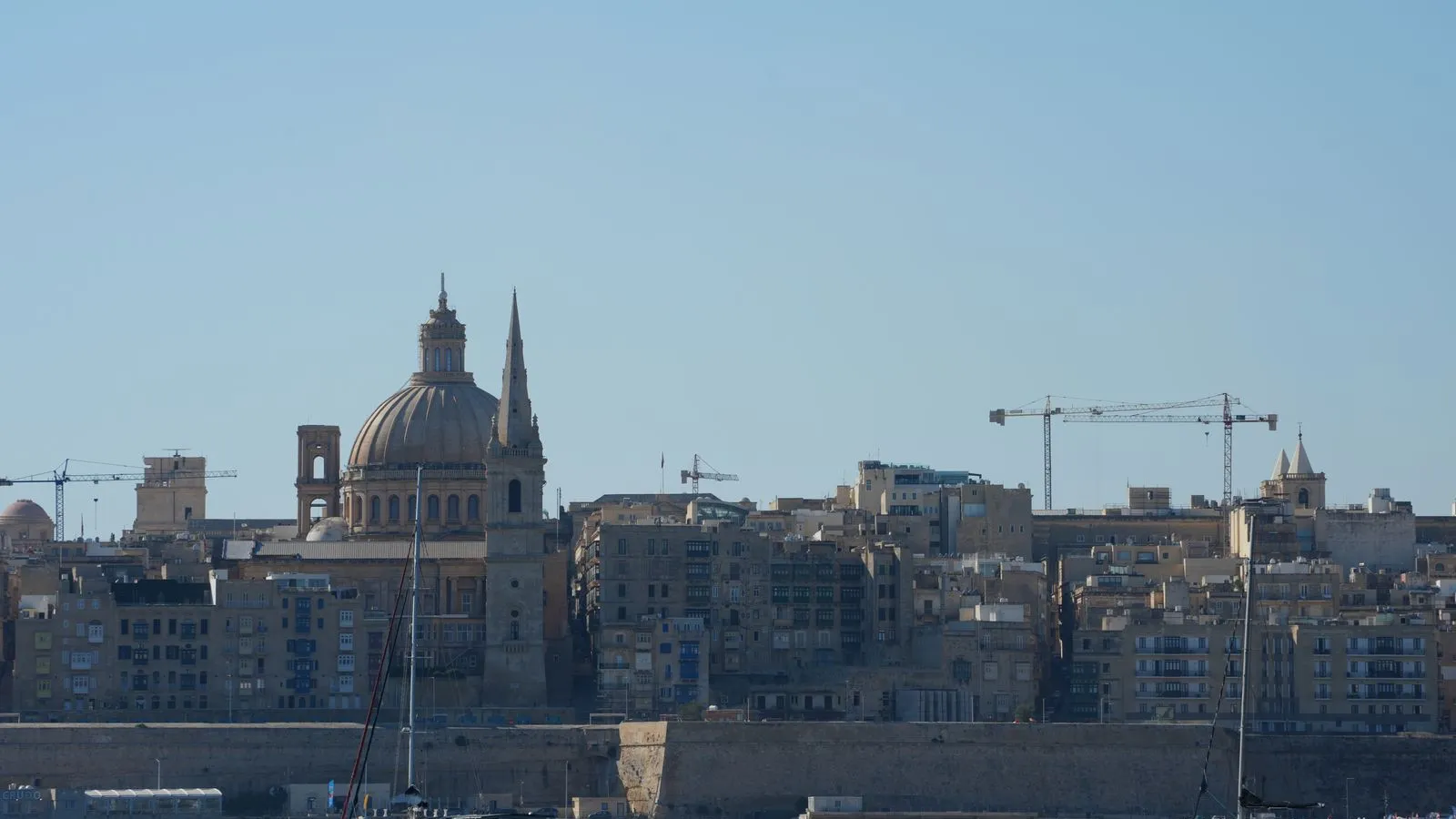
Malta is a small Mediterranean island state where English is one of the official languages, so you can sign a lease, set up a phone, or book a doctor without ever picking up Maltese. That single fact removes a lot of the friction that makes other moves exhausting. The sun shows up most of the year, the sea is rarely more than a short ride away, and the expat and remote-work community here is large and well worn, which means you are almost never the first person to hit a given snag. If you want warmth, English, and an easy on-ramp into Europe, Malta suits you well.
Who should think twice? The island is genuinely tiny, and after a while that smallness can start to feel like walls closing in. There is not much in the way of dramatic countryside or weekend escapes that do not involve a ferry or a flight. Traffic is heavier than a place this size has any right to produce, and the construction noise in the busier towns is real. If you need space, quiet, or four proper seasons, Malta will probably wear thin.
Cost of living in Malta
Malta sits in a mid cost band, and a comfortable single budget tends to land somewhere around 1,800 to 2,800 euros a month once rent is in. The currency is the euro, which keeps things simple if you are coming from elsewhere in the eurozone. Where you live moves the number more than anything else. Sliema and St Julian’s are the glossy, walkable, sea-facing towns where most newcomers gravitate, and you pay for that with the highest rents on the island. Head south or inland to places like the Three Cities, Zabbar, or the towns away from the coast, and the same money buys you noticeably more room.
Day to day, eating out is affordable by Western European standards, groceries are reasonable if a little inflated by the fact that almost everything is imported, and a car is optional given how compact the island is. Two honest line items to plan for: summer here is hot and humid, so air conditioning runs hard from roughly June through September and your electricity bill follows it up. Tap water is desalinated and safe but tastes off to many people, so a lot of residents buy bottled or filter at home. Treat all of these as estimates rather than fixed costs, because your neighbourhood, your habits, and the season shift them.
Malta digital nomad visa and entry
If you hold an EU, EEA, or Swiss passport, you have freedom of movement: no visa, you simply register once you settle in. Everyone else usually looks at the Nomad Residence Permit. It is built for non-EU/EEA/Swiss nationals who work remotely for a foreign employer, run a foreign-registered business, or freelance for foreign clients. The income bar is a minimum of 42,000 euros gross a year, which works out at roughly 3,500 euros a month from that remote work. If you applied before 1 April 2024 you keep the older 32,400 euro requirement. Budget 300 euros per person for the non-refundable application, plus another 100 euros per person for the residence card itself. Treat the income figure as an estimate, not a fixed line, since these thresholds drift and the official page is where the current number lives.
Three conditions catch people out. You cannot work for, or sell services to, any company based or registered in Malta, and that includes being contracted by a foreign employer to service its Maltese subsidiary; doing it can cost you the permit. You need a rental or purchase agreement for an actual home before the card is issued, and the card is only issued against a twelve-month lease. And the permit is a one-year document that can be renewed three times, to a maximum of four years, with each renewal asking for bank statements showing you genuinely lived in Malta for at least five months of the previous twelve. Worth knowing before you plan around it: Residency Malta states plainly that this permit does not lead to permanent or long-term residency or to citizenship, and moving onto the Malta Permanent Residence Programme means renouncing it and applying separately.
Before you hold any permit, short stays follow the Schengen rule: 90 days in any rolling 180. That matters if you are scouting before you commit, so count your days carefully and do not assume the clock resets when you leave and come back. Two border changes are worth knowing if you carry a non-EU passport. The EU Entry/Exit System has been fully operational since 10 April 2026, so instead of a stamp you are registered biometrically on the way in and out. ETIAS is scheduled for the last quarter of 2026 for visa-exempt non-EU travellers (around 20 euros, valid three years or until your passport expires), with the exact start date still to be announced. None of that affects EU citizens.
Tax residency and how it works
Spend more than 183 days in Malta in a year and you become tax resident for that year. The part people miss is the other half of the same rule: if you come to Malta to establish your residence, the tax authority treats you as resident from the day you arrive, whatever your day count says. Someone taking a one-year lease and a residence card is doing exactly that, so do not plan on staying under a threshold.
Malta’s better-known wrinkle is the non-domiciled treatment. If you are resident here but either not domiciled or not ordinarily resident, you are taxed on your Maltese income and on foreign income only when you actually remit it, meaning when you bring it into Malta, while foreign capital gains stay outside the charge even if you do remit them. Once you are ordinarily resident but not domiciled and have at least 35,000 euros of foreign income you have not brought in, a minimum tax of 5,000 euros a year can apply.
If you are here on the Nomad Residence Permit, though, that remittance picture is not your picture, and this is the detail worth getting right. A separate set of rules, the Nomad Residence Permits (Income Tax) Rules, taxes your authorised remote-work income at a flat 10%, remitted or not. There is no charge at all for the first twelve months, counted from when your permit was issued or from 1 January 2024 if that is later, unless you tell Residency Malta your stay is not merely casual. If you already pay at least 10% on that income somewhere else, double-tax relief is treated as settling the Maltese charge. Read all of this as the shape of the rules rather than a calculation you can run yourself, confirm your own situation against the official sources below, and remember that your home country may still have a claim depending on its own residence test and any treaty.
Healthcare and insurance
Malta runs a public health system, and EU visitors can lean on an EHIC card for state care during a stay. For most foreigners settling here, though, the practical answer is private health insurance, both because it is often a condition of residence and because it gets you faster access and English-speaking private clinics, which are plentiful on the island. On the Nomad Residence Permit it is not optional and the specification is precise: at least 100,000 euros of cover across the European Union including Malta, plus the UK, bought for a full year and paid up front. Travel insurance is explicitly not accepted, monthly-premium policies are not accepted, and permit holders get no free state healthcare, so the private policy is genuinely your whole safety net. Decide what you actually need, since a young remote worker and a family relocating have very different requirements, and check the current rules before you rely on any single arrangement.
Money, banking and settling in
The currency is the euro, so card payments and transfers from elsewhere in the eurozone are seamless. The one thing newcomers consistently warn each other about is opening a local bank account: it can be slow, paperwork-heavy, and oddly cautious, sometimes taking weeks and several visits. Many people bridge the gap with a multi-currency app account in the meantime and only chase a local account once they have a residence card and an address to show.
Beyond that, settling in is one of the easier parts of the Malta experience. An eSIM gets you online the moment you land, and you can swap to a local SIM or contract once you are set up, all of it handled in English. Because so much of daily life runs in English already, the usual relocation chores, registering, signing, sorting utilities, feel a lot less daunting than they would somewhere you do not speak the language. Lean on the established expat community for the small local knowledge that no official page captures.
Figures are estimates. Always check the official source linked below.
Frequently asked questions
- Malta: is there a digital nomad visa?
- Nomad Residence Permit. For non-EU/EEA/Swiss nationals who work remotely for a foreign employer, run a foreign-registered business, or freelance for foreign clients. You cannot work for or supply services to any company based or registered in Malta, and people contracted by a foreign company to serve its Maltese subsidiary are excluded. You also need a rental or purchase agreement for a home in Malta, health insurance and a police conduct certificate. The permit runs for one year and can be renewed three times, to a maximum of four years, and each renewal asks for bank evidence that you actually lived in Malta for at least five months out of the previous twelve.
- Malta: when do you become a tax resident?
- More than 183 days in Malta in a year makes you tax resident for that year, and if you come to Malta to establish your residence you are resident from the day you arrive, whatever the day count. Residents who are not domiciled in Malta, or not ordinarily resident, are taxed on Maltese income plus foreign income they actually bring into Malta, while foreign capital gains stay outside the charge even if remitted; a 5,000 EUR minimum tax can apply once you are ordinarily resident but not domiciled and have at least 35,000 EUR of foreign income you have not remitted. Nomad Residence Permit holders are treated separately: under the Nomad Residence Permits (Income Tax) Rules their authorised remote-work income is taxed at a flat 10%, with no charge for the first 12 months from the permit being issued, or from 1 January 2024 if that is later.
- Malta: what is the cost of living?
- The cost of living is moderate and the local currency is the EUR. Treat any figures as estimates.
- Malta: do you need health insurance?
- Nomad Residence Permit applicants must hold a policy with at least 100,000 EUR of cover across the European Union, including Malta, and the United Kingdom, bought for a full year and paid in advance. Travel insurance is not accepted, and permit holders are not entitled to free state healthcare. EU visitors can use an EHIC card for public care during a stay.
- Malta: can you drive on a foreign licence?
- EU/EEA licences are valid; many other foreign licences are accepted for short stays, but an International Driving Permit is a useful backup.
Terms worth knowing
Europe: more countries to explore
Put it to work
- Free
Digital-Nomad Visa Checker
See which digital-nomad visas you could actually get with your passport and income, ranked, with the binding reason per country.
→ - Free
Tax-Residency Reality Checker
Go beyond the 183-day myth: model the treaty tie-breaker and see whether two countries could both claim you as a tax resident.
→ - Free
Nomad Insurance Picker
Match SafetyWing, Genki, World Nomads and others to your situation, and see which policies satisfy specific visa proof requirements.
→ - Free
Banking & FX Picker
Find the right account stack to avoid fees and hold multiple currencies abroad, Wise, Revolut, N26, for your nationality and spending.
→ - Free
Schengen 90/180 Calculator
Count how many of your 90 Schengen days are left and the earliest date you can re-enter. All math runs in your browser, nothing is sent anywhere.
→