Countries
Andorra: visas, tax & cost of living
Moving to Andorra as a remote worker: honest costs, the digital nomad residence permit and the other routes, the 10% tax and 183-day rule, healthcare, banking.
United KingdomAndorra
Your move to Andorra on a United Kingdom passport
- VisitEasyVisa-free entry
- NomadFairly easyNomad visa, stricter rules
- RelocateMediumResidence with conditions
Visiting
Visa-free for up to 90 days. Travel on a passport valid for your whole stay, with a return or onward ticket and proof you can support yourself.
Passport validity: Valid passport (or EU national ID card for EU citizens); Andorra sets no separate visa requirement of its own.
Heads-up: Andorra is reachable only overland through Schengen France or Spain, so from late 2026 visa-exempt non-EU travellers will likely need ETIAS authorisation for that Schengen transit.
At the border: Passport or EU ID card; non-EU travellers needing a Schengen visa must hold a multiple-entry visa to re-enter Schengen after Andorra.
Working remotely
Residence permit for digital nomads (Law 42/2022, Decree 212/2023).
Income needed: No fixed euro figure in the law: you must prove sufficient economic means for yourself and your dependants. Estimate: advisers commonly apply 3x the Andorran minimum wage (about EUR 4,700 a month at the EUR 1,568.67 rate from July 2026) plus 1x per dependant (estimate)
Duration: 24 months
Fee: EUR 224.61 for the residence application; the prior digital-nomad qualification from the Ministry of Economy is free (estimate)
Who qualifies: Foreign nationals (EU citizens included) whose work needs no fixed location, in one of three profiles: employee of an employer based in another country, self-employed with clients not resident in Andorra, or working for a foreign company you hold a stake in or help run. An Andorran employer or Andorran clients are outside this permit. Steps: a favourable ruling from the Ministry of Economy, then the residence application. You need health and incapacity insurance valid in Andorra, a home you own or rent there, and a signed commitment to live in Andorra at least 90 days per calendar year. Places are capped by quota (50 a year in the 2023 quota decree). It is a full residence authorisation: 2 years, then renewals of 2, 3 and 10 years, with family reunification allowed; no investment or AFA deposit is required.
Tax and residency
Under article 8 of Llei 5/2014 you are tax resident if you stay in Andorra more than 183 days in the calendar year (sporadic absences count as days here unless you prove tax residence elsewhere), or if the main base of your activities or economic interests is here; residence is also presumed when your spouse and minor children live here. The nomad permit's 90-day minimum does not by itself make you tax resident. Residents pay IRPF on worldwide income: a 10% rate after a EUR 24,000 exempt amount, with a 50% rebate that makes the effective rate about 5% between EUR 24,000 and 40,000 (an estimate; check your own case). (estimate)
The UK decides residence with its Statutory Residence Test (days in the UK plus your ties). As a non-resident you are usually taxed only on UK income; where one exists, a double-tax treaty with the destination decides who taxes what.
Practical
Currency: EUR. Cost of living: mid.
Healthcare: Non-residents and newly arrived nomads have no access to the public CASS system and should hold private health insurance valid in Andorra (the EHIC/GHIC is not accepted).
Driving: EU and most national licenses are accepted, but non-EU visitors are advised to carry an International Driving Permit alongside their home license.
Sources: Govern d'Andorra: residence for digital nomads (D.3) · e-tramits: D.3 digital nomad residence procedure and fee (checked 2026-09-27) · Decree 212/2023 (BOPA 65, 17 May 2023): the three digital nomad profiles · Law 42/2022 (BOPA 148, 22 Dec 2022), art. 51: digital nomad residence requirements · e-tramits: D.1 residence without work (passive residency) requirements and fees · Llei 5/2014 on personal income tax (IRPF), art. 8 tax residence · Govern d'Andorra: minimum wage EUR 1,568.67 a month from July 2026 · Visit Andorra: passports, visas and customs · US State Department: Andorra travel information · Andorra Ministry of Foreign Affairs (entry and travel) · Andorra tax authority (Impostos) · GOV.UK: tax on foreign income · HMRC: double-taxation treaties
Estimates, not advice. Confirm with the official sources before you act.
United StatesAndorra
Your move to Andorra on a United States passport
- VisitEasyVisa-free entry
- NomadFairly easyNomad visa, stricter rules
- RelocateMediumResidence with conditions
Visiting
Visa-free for up to 90 days. Travel on a passport valid for your whole stay, with a return or onward ticket and proof you can support yourself.
Passport validity: Valid passport (or EU national ID card for EU citizens); Andorra sets no separate visa requirement of its own.
Heads-up: Andorra is reachable only overland through Schengen France or Spain, so from late 2026 visa-exempt non-EU travellers will likely need ETIAS authorisation for that Schengen transit.
At the border: Passport or EU ID card; non-EU travellers needing a Schengen visa must hold a multiple-entry visa to re-enter Schengen after Andorra.
Working remotely
Residence permit for digital nomads (Law 42/2022, Decree 212/2023).
Income needed: No fixed euro figure in the law: you must prove sufficient economic means for yourself and your dependants. Estimate: advisers commonly apply 3x the Andorran minimum wage (about EUR 4,700 a month at the EUR 1,568.67 rate from July 2026) plus 1x per dependant (estimate)
Duration: 24 months
Fee: EUR 224.61 for the residence application; the prior digital-nomad qualification from the Ministry of Economy is free (estimate)
Who qualifies: Foreign nationals (EU citizens included) whose work needs no fixed location, in one of three profiles: employee of an employer based in another country, self-employed with clients not resident in Andorra, or working for a foreign company you hold a stake in or help run. An Andorran employer or Andorran clients are outside this permit. Steps: a favourable ruling from the Ministry of Economy, then the residence application. You need health and incapacity insurance valid in Andorra, a home you own or rent there, and a signed commitment to live in Andorra at least 90 days per calendar year. Places are capped by quota (50 a year in the 2023 quota decree). It is a full residence authorisation: 2 years, then renewals of 2, 3 and 10 years, with family reunification allowed; no investment or AFA deposit is required.
Tax and residency
Under article 8 of Llei 5/2014 you are tax resident if you stay in Andorra more than 183 days in the calendar year (sporadic absences count as days here unless you prove tax residence elsewhere), or if the main base of your activities or economic interests is here; residence is also presumed when your spouse and minor children live here. The nomad permit's 90-day minimum does not by itself make you tax resident. Residents pay IRPF on worldwide income: a 10% rate after a EUR 24,000 exempt amount, with a 50% rebate that makes the effective rate about 5% between EUR 24,000 and 40,000 (an estimate; check your own case). (estimate)
The US taxes its citizens on worldwide income wherever you live, so you keep filing US returns abroad. The Foreign Earned Income Exclusion and the foreign tax credit are what stop you being taxed twice.
Practical
Currency: EUR. Cost of living: mid.
Healthcare: Non-residents and newly arrived nomads have no access to the public CASS system and should hold private health insurance valid in Andorra (the EHIC/GHIC is not accepted).
Driving: EU and most national licenses are accepted, but non-EU visitors are advised to carry an International Driving Permit alongside their home license.
Sources: Govern d'Andorra: residence for digital nomads (D.3) · e-tramits: D.3 digital nomad residence procedure and fee (checked 2026-09-27) · Decree 212/2023 (BOPA 65, 17 May 2023): the three digital nomad profiles · Law 42/2022 (BOPA 148, 22 Dec 2022), art. 51: digital nomad residence requirements · e-tramits: D.1 residence without work (passive residency) requirements and fees · Llei 5/2014 on personal income tax (IRPF), art. 8 tax residence · Govern d'Andorra: minimum wage EUR 1,568.67 a month from July 2026 · Visit Andorra: passports, visas and customs · US State Department: Andorra travel information · Andorra Ministry of Foreign Affairs (entry and travel) · Andorra tax authority (Impostos) · IRS: Foreign Earned Income Exclusion · IRS: tax treaties
Estimates, not advice. Confirm with the official sources before you act.
IndiaAndorra
Your move to Andorra on a India passport
- VisitMediumVisa required in advance
- NomadFairly easyNomad visa, stricter rules
- RelocateMediumResidence with conditions
Visiting
You need a visa, arranged at a consulate before you travel. Plan ahead: gather the documents, book the appointment, and allow time for processing.
Passport validity: Valid passport (or EU national ID card for EU citizens); Andorra sets no separate visa requirement of its own.
Heads-up: Andorra is reachable only overland through Schengen France or Spain, so from late 2026 visa-exempt non-EU travellers will likely need ETIAS authorisation for that Schengen transit.
At the border: Passport or EU ID card; non-EU travellers needing a Schengen visa must hold a multiple-entry visa to re-enter Schengen after Andorra.
Working remotely
Residence permit for digital nomads (Law 42/2022, Decree 212/2023).
Income needed: No fixed euro figure in the law: you must prove sufficient economic means for yourself and your dependants. Estimate: advisers commonly apply 3x the Andorran minimum wage (about EUR 4,700 a month at the EUR 1,568.67 rate from July 2026) plus 1x per dependant (estimate)
Duration: 24 months
Fee: EUR 224.61 for the residence application; the prior digital-nomad qualification from the Ministry of Economy is free (estimate)
Who qualifies: Foreign nationals (EU citizens included) whose work needs no fixed location, in one of three profiles: employee of an employer based in another country, self-employed with clients not resident in Andorra, or working for a foreign company you hold a stake in or help run. An Andorran employer or Andorran clients are outside this permit. Steps: a favourable ruling from the Ministry of Economy, then the residence application. You need health and incapacity insurance valid in Andorra, a home you own or rent there, and a signed commitment to live in Andorra at least 90 days per calendar year. Places are capped by quota (50 a year in the 2023 quota decree). It is a full residence authorisation: 2 years, then renewals of 2, 3 and 10 years, with family reunification allowed; no investment or AFA deposit is required.
Tax and residency
Under article 8 of Llei 5/2014 you are tax resident if you stay in Andorra more than 183 days in the calendar year (sporadic absences count as days here unless you prove tax residence elsewhere), or if the main base of your activities or economic interests is here; residence is also presumed when your spouse and minor children live here. The nomad permit's 90-day minimum does not by itself make you tax resident. Residents pay IRPF on worldwide income: a 10% rate after a EUR 24,000 exempt amount, with a 50% rebate that makes the effective rate about 5% between EUR 24,000 and 40,000 (an estimate; check your own case). (estimate)
India taxes residents on worldwide income; your status depends on the days you spend in India (broadly 182 or more in the year). As a non-resident (NRI) you are taxed only on Indian-source income, and the relevant double-tax treaty allocates the rest.
Practical
Currency: EUR. Cost of living: mid.
Healthcare: Non-residents and newly arrived nomads have no access to the public CASS system and should hold private health insurance valid in Andorra (the EHIC/GHIC is not accepted).
Driving: EU and most national licenses are accepted, but non-EU visitors are advised to carry an International Driving Permit alongside their home license.
Sources: Govern d'Andorra: residence for digital nomads (D.3) · e-tramits: D.3 digital nomad residence procedure and fee (checked 2026-09-27) · Decree 212/2023 (BOPA 65, 17 May 2023): the three digital nomad profiles · Law 42/2022 (BOPA 148, 22 Dec 2022), art. 51: digital nomad residence requirements · e-tramits: D.1 residence without work (passive residency) requirements and fees · Llei 5/2014 on personal income tax (IRPF), art. 8 tax residence · Govern d'Andorra: minimum wage EUR 1,568.67 a month from July 2026 · Visit Andorra: passports, visas and customs · US State Department: Andorra travel information · Andorra Ministry of Foreign Affairs (entry and travel) · Andorra tax authority (Impostos) · Income Tax Department, India · India: Double Taxation Avoidance Agreements
Estimates, not advice. Confirm with the official sources before you act.
GermanyAndorra
Your move to Andorra on a Germany passport
- VisitEasyVisa-free entry
- NomadFairly easyNomad visa, stricter rules
- RelocateMediumResidence with conditions
Visiting
Visa-free for up to short stays. Travel on a passport valid for your whole stay, with a return or onward ticket and proof you can support yourself.
Passport validity: Valid passport (or EU national ID card for EU citizens); Andorra sets no separate visa requirement of its own.
Heads-up: Andorra is reachable only overland through Schengen France or Spain, so from late 2026 visa-exempt non-EU travellers will likely need ETIAS authorisation for that Schengen transit.
At the border: Passport or EU ID card; non-EU travellers needing a Schengen visa must hold a multiple-entry visa to re-enter Schengen after Andorra.
Working remotely
Residence permit for digital nomads (Law 42/2022, Decree 212/2023).
Income needed: No fixed euro figure in the law: you must prove sufficient economic means for yourself and your dependants. Estimate: advisers commonly apply 3x the Andorran minimum wage (about EUR 4,700 a month at the EUR 1,568.67 rate from July 2026) plus 1x per dependant (estimate)
Duration: 24 months
Fee: EUR 224.61 for the residence application; the prior digital-nomad qualification from the Ministry of Economy is free (estimate)
Who qualifies: Foreign nationals (EU citizens included) whose work needs no fixed location, in one of three profiles: employee of an employer based in another country, self-employed with clients not resident in Andorra, or working for a foreign company you hold a stake in or help run. An Andorran employer or Andorran clients are outside this permit. Steps: a favourable ruling from the Ministry of Economy, then the residence application. You need health and incapacity insurance valid in Andorra, a home you own or rent there, and a signed commitment to live in Andorra at least 90 days per calendar year. Places are capped by quota (50 a year in the 2023 quota decree). It is a full residence authorisation: 2 years, then renewals of 2, 3 and 10 years, with family reunification allowed; no investment or AFA deposit is required.
Tax and residency
Under article 8 of Llei 5/2014 you are tax resident if you stay in Andorra more than 183 days in the calendar year (sporadic absences count as days here unless you prove tax residence elsewhere), or if the main base of your activities or economic interests is here; residence is also presumed when your spouse and minor children live here. The nomad permit's 90-day minimum does not by itself make you tax resident. Residents pay IRPF on worldwide income: a 10% rate after a EUR 24,000 exempt amount, with a 50% rebate that makes the effective rate about 5% between EUR 24,000 and 40,000 (an estimate; check your own case). (estimate)
Germany taxes residents on worldwide income; you become resident through a home available to you (Wohnsitz) or a habitual abode of more than six months. As a non-resident you are usually taxed only on German-source income, and where one exists a double-tax treaty with the destination decides who taxes what.
Practical
Currency: EUR. Cost of living: mid.
Healthcare: Non-residents and newly arrived nomads have no access to the public CASS system and should hold private health insurance valid in Andorra (the EHIC/GHIC is not accepted).
Driving: EU and most national licenses are accepted, but non-EU visitors are advised to carry an International Driving Permit alongside their home license.
Sources: Govern d'Andorra: residence for digital nomads (D.3) · e-tramits: D.3 digital nomad residence procedure and fee (checked 2026-09-27) · Decree 212/2023 (BOPA 65, 17 May 2023): the three digital nomad profiles · Law 42/2022 (BOPA 148, 22 Dec 2022), art. 51: digital nomad residence requirements · e-tramits: D.1 residence without work (passive residency) requirements and fees · Llei 5/2014 on personal income tax (IRPF), art. 8 tax residence · Govern d'Andorra: minimum wage EUR 1,568.67 a month from July 2026 · Visit Andorra: passports, visas and customs · US State Department: Andorra travel information · Andorra Ministry of Foreign Affairs (entry and travel) · Andorra tax authority (Impostos) · Bundeszentralamt für Steuern (BZSt) · Germany: double-taxation agreements (BMF)
Estimates, not advice. Confirm with the official sources before you act.
FranceAndorra
Your move to Andorra on a France passport
- VisitEasyVisa-free entry
- NomadFairly easyNomad visa, stricter rules
- RelocateMediumResidence with conditions
Visiting
Visa-free for up to short stays. Travel on a passport valid for your whole stay, with a return or onward ticket and proof you can support yourself.
Passport validity: Valid passport (or EU national ID card for EU citizens); Andorra sets no separate visa requirement of its own.
Heads-up: Andorra is reachable only overland through Schengen France or Spain, so from late 2026 visa-exempt non-EU travellers will likely need ETIAS authorisation for that Schengen transit.
At the border: Passport or EU ID card; non-EU travellers needing a Schengen visa must hold a multiple-entry visa to re-enter Schengen after Andorra.
Working remotely
Residence permit for digital nomads (Law 42/2022, Decree 212/2023).
Income needed: No fixed euro figure in the law: you must prove sufficient economic means for yourself and your dependants. Estimate: advisers commonly apply 3x the Andorran minimum wage (about EUR 4,700 a month at the EUR 1,568.67 rate from July 2026) plus 1x per dependant (estimate)
Duration: 24 months
Fee: EUR 224.61 for the residence application; the prior digital-nomad qualification from the Ministry of Economy is free (estimate)
Who qualifies: Foreign nationals (EU citizens included) whose work needs no fixed location, in one of three profiles: employee of an employer based in another country, self-employed with clients not resident in Andorra, or working for a foreign company you hold a stake in or help run. An Andorran employer or Andorran clients are outside this permit. Steps: a favourable ruling from the Ministry of Economy, then the residence application. You need health and incapacity insurance valid in Andorra, a home you own or rent there, and a signed commitment to live in Andorra at least 90 days per calendar year. Places are capped by quota (50 a year in the 2023 quota decree). It is a full residence authorisation: 2 years, then renewals of 2, 3 and 10 years, with family reunification allowed; no investment or AFA deposit is required.
Tax and residency
Under article 8 of Llei 5/2014 you are tax resident if you stay in Andorra more than 183 days in the calendar year (sporadic absences count as days here unless you prove tax residence elsewhere), or if the main base of your activities or economic interests is here; residence is also presumed when your spouse and minor children live here. The nomad permit's 90-day minimum does not by itself make you tax resident. Residents pay IRPF on worldwide income: a 10% rate after a EUR 24,000 exempt amount, with a 50% rebate that makes the effective rate about 5% between EUR 24,000 and 40,000 (an estimate; check your own case). (estimate)
France taxes you on your worldwide income if your tax home (domicile fiscal) stays there, broadly when your household, main home, main job or main economic interests are in France, so moving abroad alone may not end it. Once you genuinely settle elsewhere you are usually taxed only on French-source income, and tax treaties typically prevent paying twice through an exemption or a foreign tax credit, but treat any figures as estimates and check your situation.
Practical
Currency: EUR. Cost of living: mid.
Healthcare: Non-residents and newly arrived nomads have no access to the public CASS system and should hold private health insurance valid in Andorra (the EHIC/GHIC is not accepted).
Driving: EU and most national licenses are accepted, but non-EU visitors are advised to carry an International Driving Permit alongside their home license.
Sources: Govern d'Andorra: residence for digital nomads (D.3) · e-tramits: D.3 digital nomad residence procedure and fee (checked 2026-09-27) · Decree 212/2023 (BOPA 65, 17 May 2023): the three digital nomad profiles · Law 42/2022 (BOPA 148, 22 Dec 2022), art. 51: digital nomad residence requirements · e-tramits: D.1 residence without work (passive residency) requirements and fees · Llei 5/2014 on personal income tax (IRPF), art. 8 tax residence · Govern d'Andorra: minimum wage EUR 1,568.67 a month from July 2026 · Visit Andorra: passports, visas and customs · US State Department: Andorra travel information · Andorra Ministry of Foreign Affairs (entry and travel) · Andorra tax authority (Impostos) · impots.gouv.fr - Résidents de France · impots.gouv.fr - Les conventions internationales
Estimates, not advice. Confirm with the official sources before you act.
SpainAndorra
Your move to Andorra on a Spain passport
- VisitEasyVisa-free entry
- NomadFairly easyNomad visa, stricter rules
- RelocateMediumResidence with conditions
Visiting
Visa-free for up to short stays. Travel on a passport valid for your whole stay, with a return or onward ticket and proof you can support yourself.
Passport validity: Valid passport (or EU national ID card for EU citizens); Andorra sets no separate visa requirement of its own.
Heads-up: Andorra is reachable only overland through Schengen France or Spain, so from late 2026 visa-exempt non-EU travellers will likely need ETIAS authorisation for that Schengen transit.
At the border: Passport or EU ID card; non-EU travellers needing a Schengen visa must hold a multiple-entry visa to re-enter Schengen after Andorra.
Working remotely
Residence permit for digital nomads (Law 42/2022, Decree 212/2023).
Income needed: No fixed euro figure in the law: you must prove sufficient economic means for yourself and your dependants. Estimate: advisers commonly apply 3x the Andorran minimum wage (about EUR 4,700 a month at the EUR 1,568.67 rate from July 2026) plus 1x per dependant (estimate)
Duration: 24 months
Fee: EUR 224.61 for the residence application; the prior digital-nomad qualification from the Ministry of Economy is free (estimate)
Who qualifies: Foreign nationals (EU citizens included) whose work needs no fixed location, in one of three profiles: employee of an employer based in another country, self-employed with clients not resident in Andorra, or working for a foreign company you hold a stake in or help run. An Andorran employer or Andorran clients are outside this permit. Steps: a favourable ruling from the Ministry of Economy, then the residence application. You need health and incapacity insurance valid in Andorra, a home you own or rent there, and a signed commitment to live in Andorra at least 90 days per calendar year. Places are capped by quota (50 a year in the 2023 quota decree). It is a full residence authorisation: 2 years, then renewals of 2, 3 and 10 years, with family reunification allowed; no investment or AFA deposit is required.
Tax and residency
Under article 8 of Llei 5/2014 you are tax resident if you stay in Andorra more than 183 days in the calendar year (sporadic absences count as days here unless you prove tax residence elsewhere), or if the main base of your activities or economic interests is here; residence is also presumed when your spouse and minor children live here. The nomad permit's 90-day minimum does not by itself make you tax resident. Residents pay IRPF on worldwide income: a 10% rate after a EUR 24,000 exempt amount, with a 50% rebate that makes the effective rate about 5% between EUR 24,000 and 40,000 (an estimate; check your own case). (estimate)
If Spain still counts as your tax home (roughly 183+ days in the country in a year, or your main base of life and income sits there), Spain taxes your worldwide income at IRPF rates, so what you earn abroad usually counts too. The sting is softened by double-tax treaties and a foreign-tax credit, plus the Article 7.p exemption that can shelter work done abroad up to around 60,100 euros a year, but treat every figure as an estimate and check your own case before you file.
Practical
Currency: EUR. Cost of living: mid.
Healthcare: Non-residents and newly arrived nomads have no access to the public CASS system and should hold private health insurance valid in Andorra (the EHIC/GHIC is not accepted).
Driving: EU and most national licenses are accepted, but non-EU visitors are advised to carry an International Driving Permit alongside their home license.
Sources: Govern d'Andorra: residence for digital nomads (D.3) · e-tramits: D.3 digital nomad residence procedure and fee (checked 2026-09-27) · Decree 212/2023 (BOPA 65, 17 May 2023): the three digital nomad profiles · Law 42/2022 (BOPA 148, 22 Dec 2022), art. 51: digital nomad residence requirements · e-tramits: D.1 residence without work (passive residency) requirements and fees · Llei 5/2014 on personal income tax (IRPF), art. 8 tax residence · Govern d'Andorra: minimum wage EUR 1,568.67 a month from July 2026 · Visit Andorra: passports, visas and customs · US State Department: Andorra travel information · Andorra Ministry of Foreign Affairs (entry and travel) · Andorra tax authority (Impostos) · Agencia Tributaria: persona física residente en España · Agencia Tributaria: obtención de rentas extranjeras, reglas generales
Estimates, not advice. Confirm with the official sources before you act.
ItalyAndorra
Your move to Andorra on a Italy passport
- VisitEasyVisa-free entry
- NomadFairly easyNomad visa, stricter rules
- RelocateMediumResidence with conditions
Visiting
Visa-free for up to short stays. Travel on a passport valid for your whole stay, with a return or onward ticket and proof you can support yourself.
Passport validity: Valid passport (or EU national ID card for EU citizens); Andorra sets no separate visa requirement of its own.
Heads-up: Andorra is reachable only overland through Schengen France or Spain, so from late 2026 visa-exempt non-EU travellers will likely need ETIAS authorisation for that Schengen transit.
At the border: Passport or EU ID card; non-EU travellers needing a Schengen visa must hold a multiple-entry visa to re-enter Schengen after Andorra.
Working remotely
Residence permit for digital nomads (Law 42/2022, Decree 212/2023).
Income needed: No fixed euro figure in the law: you must prove sufficient economic means for yourself and your dependants. Estimate: advisers commonly apply 3x the Andorran minimum wage (about EUR 4,700 a month at the EUR 1,568.67 rate from July 2026) plus 1x per dependant (estimate)
Duration: 24 months
Fee: EUR 224.61 for the residence application; the prior digital-nomad qualification from the Ministry of Economy is free (estimate)
Who qualifies: Foreign nationals (EU citizens included) whose work needs no fixed location, in one of three profiles: employee of an employer based in another country, self-employed with clients not resident in Andorra, or working for a foreign company you hold a stake in or help run. An Andorran employer or Andorran clients are outside this permit. Steps: a favourable ruling from the Ministry of Economy, then the residence application. You need health and incapacity insurance valid in Andorra, a home you own or rent there, and a signed commitment to live in Andorra at least 90 days per calendar year. Places are capped by quota (50 a year in the 2023 quota decree). It is a full residence authorisation: 2 years, then renewals of 2, 3 and 10 years, with family reunification allowed; no investment or AFA deposit is required.
Tax and residency
Under article 8 of Llei 5/2014 you are tax resident if you stay in Andorra more than 183 days in the calendar year (sporadic absences count as days here unless you prove tax residence elsewhere), or if the main base of your activities or economic interests is here; residence is also presumed when your spouse and minor children live here. The nomad permit's 90-day minimum does not by itself make you tax resident. Residents pay IRPF on worldwide income: a 10% rate after a EUR 24,000 exempt amount, with a 50% rebate that makes the effective rate about 5% between EUR 24,000 and 40,000 (an estimate; check your own case). (estimate)
Italy generally treats you as a tax resident if for most of the year (roughly 183 days or more) your home, family or registration ties are here, and residents are taxed on worldwide income wherever they live. The relief is usually a foreign tax credit for tax already paid abroad, often shaped by Italy's double-taxation treaties, so the same income should not be taxed twice.
Practical
Currency: EUR. Cost of living: mid.
Healthcare: Non-residents and newly arrived nomads have no access to the public CASS system and should hold private health insurance valid in Andorra (the EHIC/GHIC is not accepted).
Driving: EU and most national licenses are accepted, but non-EU visitors are advised to carry an International Driving Permit alongside their home license.
Sources: Govern d'Andorra: residence for digital nomads (D.3) · e-tramits: D.3 digital nomad residence procedure and fee (checked 2026-09-27) · Decree 212/2023 (BOPA 65, 17 May 2023): the three digital nomad profiles · Law 42/2022 (BOPA 148, 22 Dec 2022), art. 51: digital nomad residence requirements · e-tramits: D.1 residence without work (passive residency) requirements and fees · Llei 5/2014 on personal income tax (IRPF), art. 8 tax residence · Govern d'Andorra: minimum wage EUR 1,568.67 a month from July 2026 · Visit Andorra: passports, visas and customs · US State Department: Andorra travel information · Andorra Ministry of Foreign Affairs (entry and travel) · Andorra tax authority (Impostos) · Agenzia delle Entrate, Residence for tax purposes · Agenzia delle Entrate, Bilateral agreements to prevent double taxation
Estimates, not advice. Confirm with the official sources before you act.
CanadaAndorra
Your move to Andorra on a Canada passport
- VisitEasyVisa-free entry
- NomadFairly easyNomad visa, stricter rules
- RelocateMediumResidence with conditions
Visiting
Visa-free for up to 90 days. Travel on a passport valid for your whole stay, with a return or onward ticket and proof you can support yourself.
Passport validity: Valid passport (or EU national ID card for EU citizens); Andorra sets no separate visa requirement of its own.
Heads-up: Andorra is reachable only overland through Schengen France or Spain, so from late 2026 visa-exempt non-EU travellers will likely need ETIAS authorisation for that Schengen transit.
At the border: Passport or EU ID card; non-EU travellers needing a Schengen visa must hold a multiple-entry visa to re-enter Schengen after Andorra.
Working remotely
Residence permit for digital nomads (Law 42/2022, Decree 212/2023).
Income needed: No fixed euro figure in the law: you must prove sufficient economic means for yourself and your dependants. Estimate: advisers commonly apply 3x the Andorran minimum wage (about EUR 4,700 a month at the EUR 1,568.67 rate from July 2026) plus 1x per dependant (estimate)
Duration: 24 months
Fee: EUR 224.61 for the residence application; the prior digital-nomad qualification from the Ministry of Economy is free (estimate)
Who qualifies: Foreign nationals (EU citizens included) whose work needs no fixed location, in one of three profiles: employee of an employer based in another country, self-employed with clients not resident in Andorra, or working for a foreign company you hold a stake in or help run. An Andorran employer or Andorran clients are outside this permit. Steps: a favourable ruling from the Ministry of Economy, then the residence application. You need health and incapacity insurance valid in Andorra, a home you own or rent there, and a signed commitment to live in Andorra at least 90 days per calendar year. Places are capped by quota (50 a year in the 2023 quota decree). It is a full residence authorisation: 2 years, then renewals of 2, 3 and 10 years, with family reunification allowed; no investment or AFA deposit is required.
Tax and residency
Under article 8 of Llei 5/2014 you are tax resident if you stay in Andorra more than 183 days in the calendar year (sporadic absences count as days here unless you prove tax residence elsewhere), or if the main base of your activities or economic interests is here; residence is also presumed when your spouse and minor children live here. The nomad permit's 90-day minimum does not by itself make you tax resident. Residents pay IRPF on worldwide income: a 10% rate after a EUR 24,000 exempt amount, with a 50% rebate that makes the effective rate about 5% between EUR 24,000 and 40,000 (an estimate; check your own case). (estimate)
Canada taxes you on residency, not on holding the passport, so as long as the CRA still treats you as a resident (kept home, family or strong ties) you generally owe Canadian tax on your worldwide income. The relief is usually a foreign tax credit for tax you already paid abroad, often topped up by a tax treaty, though the exact amounts are only estimates until you check your own case.
Practical
Currency: EUR. Cost of living: mid.
Healthcare: Non-residents and newly arrived nomads have no access to the public CASS system and should hold private health insurance valid in Andorra (the EHIC/GHIC is not accepted).
Driving: EU and most national licenses are accepted, but non-EU visitors are advised to carry an International Driving Permit alongside their home license.
Sources: Govern d'Andorra: residence for digital nomads (D.3) · e-tramits: D.3 digital nomad residence procedure and fee (checked 2026-09-27) · Decree 212/2023 (BOPA 65, 17 May 2023): the three digital nomad profiles · Law 42/2022 (BOPA 148, 22 Dec 2022), art. 51: digital nomad residence requirements · e-tramits: D.1 residence without work (passive residency) requirements and fees · Llei 5/2014 on personal income tax (IRPF), art. 8 tax residence · Govern d'Andorra: minimum wage EUR 1,568.67 a month from July 2026 · Visit Andorra: passports, visas and customs · US State Department: Andorra travel information · Andorra Ministry of Foreign Affairs (entry and travel) · Andorra tax authority (Impostos) · Canada Revenue Agency, Determining your residency status · Department of Finance Canada, Tax treaties in force
Estimates, not advice. Confirm with the official sources before you act.
AustraliaAndorra
Your move to Andorra on a Australia passport
- VisitEasyVisa-free entry
- NomadFairly easyNomad visa, stricter rules
- RelocateMediumResidence with conditions
Visiting
Visa-free for up to 90 days. Travel on a passport valid for your whole stay, with a return or onward ticket and proof you can support yourself.
Passport validity: Valid passport (or EU national ID card for EU citizens); Andorra sets no separate visa requirement of its own.
Heads-up: Andorra is reachable only overland through Schengen France or Spain, so from late 2026 visa-exempt non-EU travellers will likely need ETIAS authorisation for that Schengen transit.
At the border: Passport or EU ID card; non-EU travellers needing a Schengen visa must hold a multiple-entry visa to re-enter Schengen after Andorra.
Working remotely
Residence permit for digital nomads (Law 42/2022, Decree 212/2023).
Income needed: No fixed euro figure in the law: you must prove sufficient economic means for yourself and your dependants. Estimate: advisers commonly apply 3x the Andorran minimum wage (about EUR 4,700 a month at the EUR 1,568.67 rate from July 2026) plus 1x per dependant (estimate)
Duration: 24 months
Fee: EUR 224.61 for the residence application; the prior digital-nomad qualification from the Ministry of Economy is free (estimate)
Who qualifies: Foreign nationals (EU citizens included) whose work needs no fixed location, in one of three profiles: employee of an employer based in another country, self-employed with clients not resident in Andorra, or working for a foreign company you hold a stake in or help run. An Andorran employer or Andorran clients are outside this permit. Steps: a favourable ruling from the Ministry of Economy, then the residence application. You need health and incapacity insurance valid in Andorra, a home you own or rent there, and a signed commitment to live in Andorra at least 90 days per calendar year. Places are capped by quota (50 a year in the 2023 quota decree). It is a full residence authorisation: 2 years, then renewals of 2, 3 and 10 years, with family reunification allowed; no investment or AFA deposit is required.
Tax and residency
Under article 8 of Llei 5/2014 you are tax resident if you stay in Andorra more than 183 days in the calendar year (sporadic absences count as days here unless you prove tax residence elsewhere), or if the main base of your activities or economic interests is here; residence is also presumed when your spouse and minor children live here. The nomad permit's 90-day minimum does not by itself make you tax resident. Residents pay IRPF on worldwide income: a 10% rate after a EUR 24,000 exempt amount, with a 50% rebate that makes the effective rate about 5% between EUR 24,000 and 40,000 (an estimate; check your own case). (estimate)
If you stay an Australian resident for tax purposes, Australia generally taxes your worldwide income wherever you live, with residency turned on the moment your real home and ties are here (a continuous stay of roughly 6 months can be enough). To soften double tax, you can usually claim a Foreign Income Tax Offset for tax already paid abroad, capped at the Australian tax on that income, and treaties may help too, so treat these figures as estimates and check your own case.
Practical
Currency: EUR. Cost of living: mid.
Healthcare: Non-residents and newly arrived nomads have no access to the public CASS system and should hold private health insurance valid in Andorra (the EHIC/GHIC is not accepted).
Driving: EU and most national licenses are accepted, but non-EU visitors are advised to carry an International Driving Permit alongside their home license.
Sources: Govern d'Andorra: residence for digital nomads (D.3) · e-tramits: D.3 digital nomad residence procedure and fee (checked 2026-09-27) · Decree 212/2023 (BOPA 65, 17 May 2023): the three digital nomad profiles · Law 42/2022 (BOPA 148, 22 Dec 2022), art. 51: digital nomad residence requirements · e-tramits: D.1 residence without work (passive residency) requirements and fees · Llei 5/2014 on personal income tax (IRPF), art. 8 tax residence · Govern d'Andorra: minimum wage EUR 1,568.67 a month from July 2026 · Visit Andorra: passports, visas and customs · US State Department: Andorra travel information · Andorra Ministry of Foreign Affairs (entry and travel) · Andorra tax authority (Impostos) · Australian Taxation Office, Australian resident for tax purposes · Australian Taxation Office, International tax agreements (tax treaties)
Estimates, not advice. Confirm with the official sources before you act.
BrazilAndorra
Your move to Andorra on a Brazil passport
- VisitEasyVisa-free entry
- NomadFairly easyNomad visa, stricter rules
- RelocateMediumResidence with conditions
Visiting
Visa-free for up to 90 days. Travel on a passport valid for your whole stay, with a return or onward ticket and proof you can support yourself.
Passport validity: Valid passport (or EU national ID card for EU citizens); Andorra sets no separate visa requirement of its own.
Heads-up: Andorra is reachable only overland through Schengen France or Spain, so from late 2026 visa-exempt non-EU travellers will likely need ETIAS authorisation for that Schengen transit.
At the border: Passport or EU ID card; non-EU travellers needing a Schengen visa must hold a multiple-entry visa to re-enter Schengen after Andorra.
Working remotely
Residence permit for digital nomads (Law 42/2022, Decree 212/2023).
Income needed: No fixed euro figure in the law: you must prove sufficient economic means for yourself and your dependants. Estimate: advisers commonly apply 3x the Andorran minimum wage (about EUR 4,700 a month at the EUR 1,568.67 rate from July 2026) plus 1x per dependant (estimate)
Duration: 24 months
Fee: EUR 224.61 for the residence application; the prior digital-nomad qualification from the Ministry of Economy is free (estimate)
Who qualifies: Foreign nationals (EU citizens included) whose work needs no fixed location, in one of three profiles: employee of an employer based in another country, self-employed with clients not resident in Andorra, or working for a foreign company you hold a stake in or help run. An Andorran employer or Andorran clients are outside this permit. Steps: a favourable ruling from the Ministry of Economy, then the residence application. You need health and incapacity insurance valid in Andorra, a home you own or rent there, and a signed commitment to live in Andorra at least 90 days per calendar year. Places are capped by quota (50 a year in the 2023 quota decree). It is a full residence authorisation: 2 years, then renewals of 2, 3 and 10 years, with family reunification allowed; no investment or AFA deposit is required.
Tax and residency
Under article 8 of Llei 5/2014 you are tax resident if you stay in Andorra more than 183 days in the calendar year (sporadic absences count as days here unless you prove tax residence elsewhere), or if the main base of your activities or economic interests is here; residence is also presumed when your spouse and minor children live here. The nomad permit's 90-day minimum does not by itself make you tax resident. Residents pay IRPF on worldwide income: a 10% rate after a EUR 24,000 exempt amount, with a 50% rebate that makes the effective rate about 5% between EUR 24,000 and 40,000 (an estimate; check your own case). (estimate)
If Brazil still counts you as tax-resident, usually triggered by a permanent visa, a temporary visa plus a job, or roughly 183 days in the country within any 12 months, the Receita Federal taxes your worldwide income, so you keep filing the annual return wherever you live. The relief is real but partial: tax paid abroad can normally be credited against what you owe in Brazil under a treaty or recognised reciprocity, so most people are not taxed twice on the same income.
Practical
Currency: EUR. Cost of living: mid.
Healthcare: Non-residents and newly arrived nomads have no access to the public CASS system and should hold private health insurance valid in Andorra (the EHIC/GHIC is not accepted).
Driving: EU and most national licenses are accepted, but non-EU visitors are advised to carry an International Driving Permit alongside their home license.
Sources: Govern d'Andorra: residence for digital nomads (D.3) · e-tramits: D.3 digital nomad residence procedure and fee (checked 2026-09-27) · Decree 212/2023 (BOPA 65, 17 May 2023): the three digital nomad profiles · Law 42/2022 (BOPA 148, 22 Dec 2022), art. 51: digital nomad residence requirements · e-tramits: D.1 residence without work (passive residency) requirements and fees · Llei 5/2014 on personal income tax (IRPF), art. 8 tax residence · Govern d'Andorra: minimum wage EUR 1,568.67 a month from July 2026 · Visit Andorra: passports, visas and customs · US State Department: Andorra travel information · Andorra Ministry of Foreign Affairs (entry and travel) · Andorra tax authority (Impostos) · Receita Federal, Acordos para evitar a dupla tributação · Receita Federal, Imposto sobre a Renda da Pessoa Física (IRPF)
Estimates, not advice. Confirm with the official sources before you act.
MexicoAndorra
Your move to Andorra on a Mexico passport
- VisitEasyVisa-free entry
- NomadFairly easyNomad visa, stricter rules
- RelocateMediumResidence with conditions
Visiting
Visa-free for up to 90 days. Travel on a passport valid for your whole stay, with a return or onward ticket and proof you can support yourself.
Passport validity: Valid passport (or EU national ID card for EU citizens); Andorra sets no separate visa requirement of its own.
Heads-up: Andorra is reachable only overland through Schengen France or Spain, so from late 2026 visa-exempt non-EU travellers will likely need ETIAS authorisation for that Schengen transit.
At the border: Passport or EU ID card; non-EU travellers needing a Schengen visa must hold a multiple-entry visa to re-enter Schengen after Andorra.
Working remotely
Residence permit for digital nomads (Law 42/2022, Decree 212/2023).
Income needed: No fixed euro figure in the law: you must prove sufficient economic means for yourself and your dependants. Estimate: advisers commonly apply 3x the Andorran minimum wage (about EUR 4,700 a month at the EUR 1,568.67 rate from July 2026) plus 1x per dependant (estimate)
Duration: 24 months
Fee: EUR 224.61 for the residence application; the prior digital-nomad qualification from the Ministry of Economy is free (estimate)
Who qualifies: Foreign nationals (EU citizens included) whose work needs no fixed location, in one of three profiles: employee of an employer based in another country, self-employed with clients not resident in Andorra, or working for a foreign company you hold a stake in or help run. An Andorran employer or Andorran clients are outside this permit. Steps: a favourable ruling from the Ministry of Economy, then the residence application. You need health and incapacity insurance valid in Andorra, a home you own or rent there, and a signed commitment to live in Andorra at least 90 days per calendar year. Places are capped by quota (50 a year in the 2023 quota decree). It is a full residence authorisation: 2 years, then renewals of 2, 3 and 10 years, with family reunification allowed; no investment or AFA deposit is required.
Tax and residency
Under article 8 of Llei 5/2014 you are tax resident if you stay in Andorra more than 183 days in the calendar year (sporadic absences count as days here unless you prove tax residence elsewhere), or if the main base of your activities or economic interests is here; residence is also presumed when your spouse and minor children live here. The nomad permit's 90-day minimum does not by itself make you tax resident. Residents pay IRPF on worldwide income: a 10% rate after a EUR 24,000 exempt amount, with a 50% rebate that makes the effective rate about 5% between EUR 24,000 and 40,000 (an estimate; check your own case). (estimate)
Mexico taxes you on your worldwide income once you count as a tax resident, which usually means your main home or your center of life is here (very roughly, spending more than about 183 days a year can tip the balance). The good news is the SAT lets you credit foreign income tax you already paid, and Mexico's double-taxation treaties mean the same money should not normally be taxed twice.
Practical
Currency: EUR. Cost of living: mid.
Healthcare: Non-residents and newly arrived nomads have no access to the public CASS system and should hold private health insurance valid in Andorra (the EHIC/GHIC is not accepted).
Driving: EU and most national licenses are accepted, but non-EU visitors are advised to carry an International Driving Permit alongside their home license.
Sources: Govern d'Andorra: residence for digital nomads (D.3) · e-tramits: D.3 digital nomad residence procedure and fee (checked 2026-09-27) · Decree 212/2023 (BOPA 65, 17 May 2023): the three digital nomad profiles · Law 42/2022 (BOPA 148, 22 Dec 2022), art. 51: digital nomad residence requirements · e-tramits: D.1 residence without work (passive residency) requirements and fees · Llei 5/2014 on personal income tax (IRPF), art. 8 tax residence · Govern d'Andorra: minimum wage EUR 1,568.67 a month from July 2026 · Visit Andorra: passports, visas and customs · US State Department: Andorra travel information · Andorra Ministry of Foreign Affairs (entry and travel) · Andorra tax authority (Impostos) · SAT - Servicio de Administración Tributaria · SAT - Tratados en Materia Fiscal (para evitar la doble tributación)
Estimates, not advice. Confirm with the official sources before you act.
PhilippinesAndorra
Your move to Andorra on a Philippines passport
- VisitMediumVisa required in advance
- NomadFairly easyNomad visa, stricter rules
- RelocateMediumResidence with conditions
Visiting
You need a visa, arranged at a consulate before you travel. Plan ahead: gather the documents, book the appointment, and allow time for processing.
Passport validity: Valid passport (or EU national ID card for EU citizens); Andorra sets no separate visa requirement of its own.
Heads-up: Andorra is reachable only overland through Schengen France or Spain, so from late 2026 visa-exempt non-EU travellers will likely need ETIAS authorisation for that Schengen transit.
At the border: Passport or EU ID card; non-EU travellers needing a Schengen visa must hold a multiple-entry visa to re-enter Schengen after Andorra.
Working remotely
Residence permit for digital nomads (Law 42/2022, Decree 212/2023).
Income needed: No fixed euro figure in the law: you must prove sufficient economic means for yourself and your dependants. Estimate: advisers commonly apply 3x the Andorran minimum wage (about EUR 4,700 a month at the EUR 1,568.67 rate from July 2026) plus 1x per dependant (estimate)
Duration: 24 months
Fee: EUR 224.61 for the residence application; the prior digital-nomad qualification from the Ministry of Economy is free (estimate)
Who qualifies: Foreign nationals (EU citizens included) whose work needs no fixed location, in one of three profiles: employee of an employer based in another country, self-employed with clients not resident in Andorra, or working for a foreign company you hold a stake in or help run. An Andorran employer or Andorran clients are outside this permit. Steps: a favourable ruling from the Ministry of Economy, then the residence application. You need health and incapacity insurance valid in Andorra, a home you own or rent there, and a signed commitment to live in Andorra at least 90 days per calendar year. Places are capped by quota (50 a year in the 2023 quota decree). It is a full residence authorisation: 2 years, then renewals of 2, 3 and 10 years, with family reunification allowed; no investment or AFA deposit is required.
Tax and residency
Under article 8 of Llei 5/2014 you are tax resident if you stay in Andorra more than 183 days in the calendar year (sporadic absences count as days here unless you prove tax residence elsewhere), or if the main base of your activities or economic interests is here; residence is also presumed when your spouse and minor children live here. The nomad permit's 90-day minimum does not by itself make you tax resident. Residents pay IRPF on worldwide income: a 10% rate after a EUR 24,000 exempt amount, with a 50% rebate that makes the effective rate about 5% between EUR 24,000 and 40,000 (an estimate; check your own case). (estimate)
If you stay a resident citizen, the Philippines taxes your worldwide income, but once you genuinely live and work abroad you usually count as a non-resident citizen and are taxed only on income from Philippine sources. The exact line depends on how long you are out and your ties back home, so treat these as estimates, and a foreign tax credit can offset tax already paid abroad.
Practical
Currency: EUR. Cost of living: mid.
Healthcare: Non-residents and newly arrived nomads have no access to the public CASS system and should hold private health insurance valid in Andorra (the EHIC/GHIC is not accepted).
Driving: EU and most national licenses are accepted, but non-EU visitors are advised to carry an International Driving Permit alongside their home license.
Sources: Govern d'Andorra: residence for digital nomads (D.3) · e-tramits: D.3 digital nomad residence procedure and fee (checked 2026-09-27) · Decree 212/2023 (BOPA 65, 17 May 2023): the three digital nomad profiles · Law 42/2022 (BOPA 148, 22 Dec 2022), art. 51: digital nomad residence requirements · e-tramits: D.1 residence without work (passive residency) requirements and fees · Llei 5/2014 on personal income tax (IRPF), art. 8 tax residence · Govern d'Andorra: minimum wage EUR 1,568.67 a month from July 2026 · Visit Andorra: passports, visas and customs · US State Department: Andorra travel information · Andorra Ministry of Foreign Affairs (entry and travel) · Andorra tax authority (Impostos) · BIR - Taxation of Foreign Source Income · BIR - Taxation of Non-Residents
Estimates, not advice. Confirm with the official sources before you act.
NigeriaAndorra
Your move to Andorra on a Nigeria passport
- VisitMediumVisa required in advance
- NomadFairly easyNomad visa, stricter rules
- RelocateMediumResidence with conditions
Visiting
You need a visa, arranged at a consulate before you travel. Plan ahead: gather the documents, book the appointment, and allow time for processing.
Passport validity: Valid passport (or EU national ID card for EU citizens); Andorra sets no separate visa requirement of its own.
Heads-up: Andorra is reachable only overland through Schengen France or Spain, so from late 2026 visa-exempt non-EU travellers will likely need ETIAS authorisation for that Schengen transit.
At the border: Passport or EU ID card; non-EU travellers needing a Schengen visa must hold a multiple-entry visa to re-enter Schengen after Andorra.
Working remotely
Residence permit for digital nomads (Law 42/2022, Decree 212/2023).
Income needed: No fixed euro figure in the law: you must prove sufficient economic means for yourself and your dependants. Estimate: advisers commonly apply 3x the Andorran minimum wage (about EUR 4,700 a month at the EUR 1,568.67 rate from July 2026) plus 1x per dependant (estimate)
Duration: 24 months
Fee: EUR 224.61 for the residence application; the prior digital-nomad qualification from the Ministry of Economy is free (estimate)
Who qualifies: Foreign nationals (EU citizens included) whose work needs no fixed location, in one of three profiles: employee of an employer based in another country, self-employed with clients not resident in Andorra, or working for a foreign company you hold a stake in or help run. An Andorran employer or Andorran clients are outside this permit. Steps: a favourable ruling from the Ministry of Economy, then the residence application. You need health and incapacity insurance valid in Andorra, a home you own or rent there, and a signed commitment to live in Andorra at least 90 days per calendar year. Places are capped by quota (50 a year in the 2023 quota decree). It is a full residence authorisation: 2 years, then renewals of 2, 3 and 10 years, with family reunification allowed; no investment or AFA deposit is required.
Tax and residency
Under article 8 of Llei 5/2014 you are tax resident if you stay in Andorra more than 183 days in the calendar year (sporadic absences count as days here unless you prove tax residence elsewhere), or if the main base of your activities or economic interests is here; residence is also presumed when your spouse and minor children live here. The nomad permit's 90-day minimum does not by itself make you tax resident. Residents pay IRPF on worldwide income: a 10% rate after a EUR 24,000 exempt amount, with a 50% rebate that makes the effective rate about 5% between EUR 24,000 and 40,000 (an estimate; check your own case). (estimate)
If Nigeria still counts you as resident, roughly 183 or more days in the country in a year, or you keep a home, habitual abode or close family and economic ties there, you are generally taxed on your worldwide income, not just what you earn in Nigeria. There is usually a foreign tax credit, and Nigeria's tax treaties, so tax you already paid abroad can typically be set against your Nigerian bill, but treat these figures as estimates and check the current rules before you file.
Practical
Currency: EUR. Cost of living: mid.
Healthcare: Non-residents and newly arrived nomads have no access to the public CASS system and should hold private health insurance valid in Andorra (the EHIC/GHIC is not accepted).
Driving: EU and most national licenses are accepted, but non-EU visitors are advised to carry an International Driving Permit alongside their home license.
Sources: Govern d'Andorra: residence for digital nomads (D.3) · e-tramits: D.3 digital nomad residence procedure and fee (checked 2026-09-27) · Decree 212/2023 (BOPA 65, 17 May 2023): the three digital nomad profiles · Law 42/2022 (BOPA 148, 22 Dec 2022), art. 51: digital nomad residence requirements · e-tramits: D.1 residence without work (passive residency) requirements and fees · Llei 5/2014 on personal income tax (IRPF), art. 8 tax residence · Govern d'Andorra: minimum wage EUR 1,568.67 a month from July 2026 · Visit Andorra: passports, visas and customs · US State Department: Andorra travel information · Andorra Ministry of Foreign Affairs (entry and travel) · Andorra tax authority (Impostos) · Federal Inland Revenue Service (FIRS) · FIRS - Tax Treaties and Related Matters
Estimates, not advice. Confirm with the official sources before you act.
VietnamAndorra
Your move to Andorra on a Vietnam passport
- VisitMediumVisa required in advance
- NomadFairly easyNomad visa, stricter rules
- RelocateMediumResidence with conditions
Visiting
You need a visa, arranged at a consulate before you travel. Plan ahead: gather the documents, book the appointment, and allow time for processing.
Passport validity: Valid passport (or EU national ID card for EU citizens); Andorra sets no separate visa requirement of its own.
Heads-up: Andorra is reachable only overland through Schengen France or Spain, so from late 2026 visa-exempt non-EU travellers will likely need ETIAS authorisation for that Schengen transit.
At the border: Passport or EU ID card; non-EU travellers needing a Schengen visa must hold a multiple-entry visa to re-enter Schengen after Andorra.
Working remotely
Residence permit for digital nomads (Law 42/2022, Decree 212/2023).
Income needed: No fixed euro figure in the law: you must prove sufficient economic means for yourself and your dependants. Estimate: advisers commonly apply 3x the Andorran minimum wage (about EUR 4,700 a month at the EUR 1,568.67 rate from July 2026) plus 1x per dependant (estimate)
Duration: 24 months
Fee: EUR 224.61 for the residence application; the prior digital-nomad qualification from the Ministry of Economy is free (estimate)
Who qualifies: Foreign nationals (EU citizens included) whose work needs no fixed location, in one of three profiles: employee of an employer based in another country, self-employed with clients not resident in Andorra, or working for a foreign company you hold a stake in or help run. An Andorran employer or Andorran clients are outside this permit. Steps: a favourable ruling from the Ministry of Economy, then the residence application. You need health and incapacity insurance valid in Andorra, a home you own or rent there, and a signed commitment to live in Andorra at least 90 days per calendar year. Places are capped by quota (50 a year in the 2023 quota decree). It is a full residence authorisation: 2 years, then renewals of 2, 3 and 10 years, with family reunification allowed; no investment or AFA deposit is required.
Tax and residency
Under article 8 of Llei 5/2014 you are tax resident if you stay in Andorra more than 183 days in the calendar year (sporadic absences count as days here unless you prove tax residence elsewhere), or if the main base of your activities or economic interests is here; residence is also presumed when your spouse and minor children live here. The nomad permit's 90-day minimum does not by itself make you tax resident. Residents pay IRPF on worldwide income: a 10% rate after a EUR 24,000 exempt amount, with a 50% rebate that makes the effective rate about 5% between EUR 24,000 and 40,000 (an estimate; check your own case). (estimate)
Vietnam treats you as a tax resident once you spend roughly 183 days there in a calendar year (or any rolling 12 months) or keep a permanent home, and residents are taxed on worldwide income at progressive rates of around 5% to 35%; there is no foreign-earned-income exclusion, but Vietnam's tax treaties and a foreign tax credit usually stop the same income being taxed twice.
Practical
Currency: EUR. Cost of living: mid.
Healthcare: Non-residents and newly arrived nomads have no access to the public CASS system and should hold private health insurance valid in Andorra (the EHIC/GHIC is not accepted).
Driving: EU and most national licenses are accepted, but non-EU visitors are advised to carry an International Driving Permit alongside their home license.
Sources: Govern d'Andorra: residence for digital nomads (D.3) · e-tramits: D.3 digital nomad residence procedure and fee (checked 2026-09-27) · Decree 212/2023 (BOPA 65, 17 May 2023): the three digital nomad profiles · Law 42/2022 (BOPA 148, 22 Dec 2022), art. 51: digital nomad residence requirements · e-tramits: D.1 residence without work (passive residency) requirements and fees · Llei 5/2014 on personal income tax (IRPF), art. 8 tax residence · Govern d'Andorra: minimum wage EUR 1,568.67 a month from July 2026 · Visit Andorra: passports, visas and customs · US State Department: Andorra travel information · Andorra Ministry of Foreign Affairs (entry and travel) · Andorra tax authority (Impostos) · General Department of Taxation (Tổng cục Thuế) · GDT - Agreements for Avoidance of Double Taxation
Estimates, not advice. Confirm with the official sources before you act.
Should you move to Andorra?
Andorra is a tiny Pyrenean country wedged between France and Spain, and it attracts a very specific kind of remote worker: someone with real, stable income who wants low taxes, mountain air, and a quiet, safe base rather than a buzzy nomad scene. If that is you, it can be a genuinely good fit. If you are looking for a cheap, easy place to land for a few months on a laptop, look elsewhere. Andorra makes you commit.
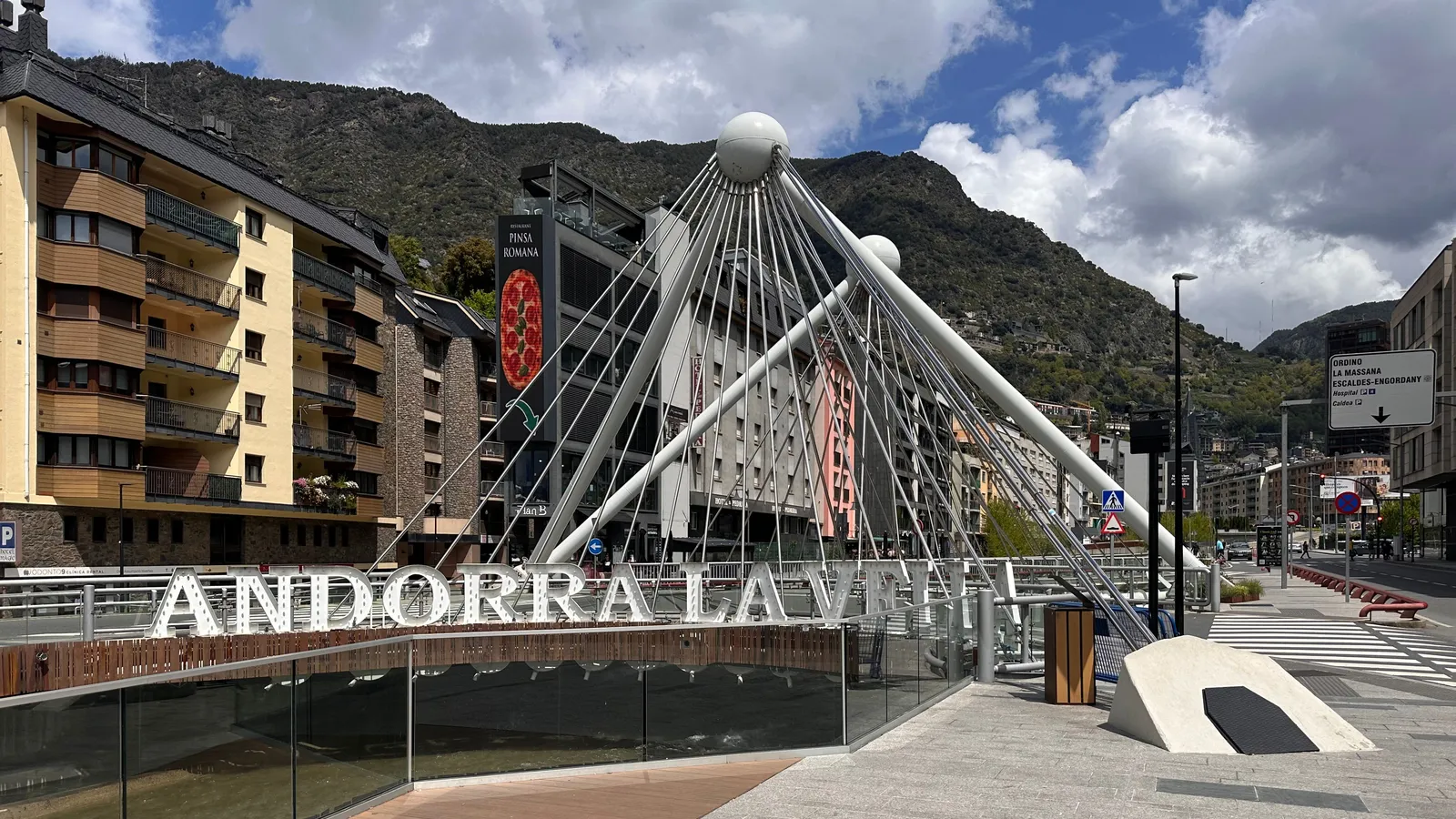
Most newcomers settle in or around the capital, Andorra la Vella, and neighbouring Escaldes-Engordany, with La Massana and Encamp popular for a bit more space. The whole country has under 90,000 people (Wikipedia), so “hub” here means a handful of walkable towns, not a metropolis.
Budget honestly. A single person renting a one-bedroom flat should plan for roughly 2,000 to 2,600 euros a month all in, and a couple or small family closer to 3,500 to 4,500 euros, depending heavily on rent. The trade-offs are real: there is no airport (you drive around three hours to Barcelona or Toulouse), winters are long and snowy at altitude, Catalan is the official language, and residency demands serious money up front. What you get back is low crime, clean air, excellent skiing on your doorstep, and one of the lightest tax regimes in Europe.
Cost of living in Andorra
Andorra is not a budget destination. Rent is the big line item and supply is tight. According to Numbeo (mid 2026), a one-bedroom flat in the centre runs around 1,240 euros a month, and roughly 920 euros outside the centre. A three-bedroom in the centre is around 2,250 euros. Finding anything at all can be the harder problem, since long-term rentals turn over slowly and ski-season demand squeezes the market.
Day-to-day spending is closer to Spanish than Swiss prices. A meal at an inexpensive restaurant is around 15 euros, and dinner for two at a mid-range place about 45 euros. Basic utilities for an 85 square metre flat land near 126 euros a month. Numbeo estimates monthly costs excluding rent at roughly 780 euros for one person and around 2,840 euros for a family of four. Groceries benefit from Andorra’s low sales tax (IGI is just 4.5 percent), so a supermarket shop and, famously, alcohol, tobacco and electronics are noticeably cheaper than across the border. Treat all these as ballpark figures and price your own shortlist before you commit.
Andorra residency and entry: the digital nomad permit and the other routes
Andorra is not in the EU or the Schengen area, so you cannot simply turn up and work long-term. It does have a dedicated residence permit for digital nomads, created by Law 42/2022 and taking applications since mid-2023, plus two older routes that cost far more to get into.
The digital nomad residence permit (residència per a nòmada digital) is the one most remote workers want. It covers people whose work needs no fixed location, in one of three profiles set by Decree 212/2023: an employee of an employer based in another country, a self-employed person whose clients are not resident in Andorra, or someone working for a foreign company they own a stake in or help run. An Andorran employer or Andorran clients fall outside it. You apply in two steps: a free qualification from the Ministry of Economy (decided within 15 working days), then the residence application itself, which costs 224.61 euros according to the official procedure page. You need health and incapacity insurance valid in Andorra, a home you own or rent there, and a signed commitment to live in Andorra at least 90 days per calendar year. You also have to prove “sufficient economic means” for yourself and anyone you support. The law sets no euro figure: advisers commonly work to three times the Andorran minimum wage (roughly 4,700 euros a month at the 1,568.67 euro rate in force since July 2026) plus one more minimum wage per dependant, so treat that as an estimate. Places are capped by quota (50 a year in the 2023 quota decree). In return you get a genuine residence authorisation: 2 years at first, then renewals of 2, 3 and 10 years, and your family can join you through family reunification. The law’s list of requirements has no 600,000 euro investment and no deposit.
Passive residency (residència sense activitat lucrativa) is for people with income from outside Andorra who will not carry on a professional activity here. The main applicant must invest at least 600,000 euros in Andorran assets (property, a stake in an Andorran company, or Andorran debt and financial instruments), lodge a non-interest deposit of 47,500 euros with the Andorran Financial Authority plus 9,500 euros per dependant, show income above 300 percent of the minimum wage (plus 100 percent per dependant), hold health cover, and live in Andorra at least 90 days a year. The application fee is 2,500 euros plus 500 euros per dependant.
Self-employed residency (residència i treball per compte propi, often called active residency) is for people who set up and run a business in Andorra. Outside the liberal professions, you need a foreign-investment authorisation, a stake of more than 34 percent in the Andorran company, a board seat with real management, and a 50,000 euro non-interest deposit with the Financial Authority, which is waived when the Ministry of Economy qualifies the company as digital-economy, entrepreneurship or innovation work.
These rules change and the income figure above is an estimate, so confirm the current requirements on the official Andorran government portal before you plan anything. To sanity-check which route fits your situation, run our digital nomad visa checker first.
Tax residency and the 183 day rule
Low tax is the whole draw, so understand how you get there. Under article 8 of the income tax law (Llei 5/2014), you are an Andorran tax resident if you stay more than 183 days in the calendar year, and short absences still count as days in Andorra unless you prove you are tax resident somewhere else. You are also resident if the main base of your activities or economic interests is here, and residence is presumed when your spouse and minor children live here. Neither the nomad permit nor passive residency makes you tax resident on its own: their 90-day minimum is an immigration rule, and whether Andorra taxes you depends on those tests.
Personal income tax (IRPF) tops out at just 10 percent. Under the income tax law, the first 24,000 euros is exempt and a 50 percent rebate brings the effective rate on the slice from 24,000 to 40,000 euros down to about 5 percent; above 40,000 euros you pay 10 percent. Corporate tax is also 10 percent, and there is no general wealth tax. Sales tax (IGI) is famously low at 4.5 percent.
The important honesty here: leaving your old country’s tax net is the hard part, not qualifying for Andorra’s. Many countries look at where you really live, and some have exit taxes or trailing rules. This is educational, not advice, and Andorra is a “your money, your life” decision, so get a cross-border accountant before you move. Our tax residency checker is a useful starting point for mapping the 183-day question across two countries.
Healthcare and insurance
Andorra runs a social security system called CASS (Caixa Andorrana de Seguretat Social). It reimburses most care rather than making it free at the point of use: roughly 75 percent of outpatient care and medicines, around 90 percent of hospitalisation, and 100 percent of work-related accidents, per Wikipedia’s health overview. The main hospital is Nostra Senyora de Meritxell in Escaldes-Engordany, backed by a network of primary care centres.
Here is the practical part for newcomers: passive residents are not covered by CASS and are required to hold full private health insurance. Only people paying into the system through work get CASS coverage, so budget for a private policy from a local or international insurer for your first years at least. Many residents keep private cover anyway to top up the reimbursement gap. Care quality is high, but the system is small, so complex or specialist treatment sometimes means a trip to Barcelona or Toulouse.
Money, banking and settling in
Opening an Andorran bank account is a real hurdle, not a formality. The country’s banks (names like Andbank, MoraBanc and Crèdit Andorrà) apply strict due diligence, and an account is often tied to your residency application, which creates a chicken-and-egg dance. Expect to provide source-of-funds documents, references, and patience, and expect the process to take weeks rather than days.
For your first weeks, keep a working account abroad and a multi-currency card (Wise or similar) so you are not stranded while paperwork clears. The euro is the currency even though Andorra is outside the EU, so card payments and ATMs behave normally. Learn a little Catalan or lean on your Spanish and French, since official business runs in Catalan and warmth goes a long way in a small country. Get a local gestor (an administrative agent) early: they smooth residency, banking and tax registration in a way that is genuinely worth the fee. Settle in slowly, and the mountains do the rest.
Figures are estimates. Always check the official source.
Frequently asked questions
- Andorra: is there a digital nomad visa?
- Residence permit for digital nomads (Law 42/2022, Decree 212/2023). Foreign nationals (EU citizens included) whose work needs no fixed location, in one of three profiles: employee of an employer based in another country, self-employed with clients not resident in Andorra, or working for a foreign company you hold a stake in or help run. An Andorran employer or Andorran clients are outside this permit. Steps: a favourable ruling from the Ministry of Economy, then the residence application. You need health and incapacity insurance valid in Andorra, a home you own or rent there, and a signed commitment to live in Andorra at least 90 days per calendar year. Places are capped by quota (50 a year in the 2023 quota decree). It is a full residence authorisation: 2 years, then renewals of 2, 3 and 10 years, with family reunification allowed; no investment or AFA deposit is required.
- Andorra: when do you become a tax resident?
- Under article 8 of Llei 5/2014 you are tax resident if you stay in Andorra more than 183 days in the calendar year (sporadic absences count as days here unless you prove tax residence elsewhere), or if the main base of your activities or economic interests is here; residence is also presumed when your spouse and minor children live here. The nomad permit's 90-day minimum does not by itself make you tax resident. Residents pay IRPF on worldwide income: a 10% rate after a EUR 24,000 exempt amount, with a 50% rebate that makes the effective rate about 5% between EUR 24,000 and 40,000 (an estimate; check your own case).
- Andorra: what is the cost of living?
- The cost of living is moderate and the local currency is the EUR. Treat any figures as estimates.
- Andorra: do you need health insurance?
- Non-residents and newly arrived nomads have no access to the public CASS system and should hold private health insurance valid in Andorra (the EHIC/GHIC is not accepted).
- Andorra: can you drive on a foreign licence?
- EU and most national licenses are accepted, but non-EU visitors are advised to carry an International Driving Permit alongside their home license.
Terms worth knowing
Europe: more countries to explore
Put it to work
- Free
Digital-Nomad Visa Checker
See which digital-nomad visas you could actually get with your passport and income, ranked, with the binding reason per country.
→ - Free
Tax-Residency Reality Checker
Go beyond the 183-day myth: model the treaty tie-breaker and see whether two countries could both claim you as a tax resident.
→ - Free
Nomad Insurance Picker
Match SafetyWing, Genki, World Nomads and others to your situation, and see which policies satisfy specific visa proof requirements.
→ - Free
Banking & FX Picker
Find the right account stack to avoid fees and hold multiple currencies abroad, Wise, Revolut, N26, for your nationality and spending.
→