Countries
Estonia: visas, tax & cost of living
Move to Estonia: the digital nomad visa, the 183-day tax residency rule, a flat 22% income tax, and a mid-range cost of living for remote workers.
United KingdomEstonia
Your move to Estonia on a United Kingdom passport
- VisitEasyVisa-free entry
- NomadEasyNomad visa, likely eligible
- RelocateFairly easyClear residence route
Visiting
Visa-free for up to 90 days. Travel on a passport valid for your whole stay, with a return or onward ticket and proof you can support yourself.
Passport validity: Issued within the last 10 years and valid at least 3 months beyond your planned departure from the Schengen area.
Heads-up: EES biometric registration is now fully operational at the border (no fee, record valid 3 years); ETIAS pre-authorisation is expected in the last quarter of 2026 at around EUR 20, but applies only to visa-exempt nationalities.
At the border: The border officer scans your passport and may ask your purpose, return ticket and accommodation; Schengen-visa applicants must show travel insurance of at least 30,000 EUR and proof of funds (about 70 EUR per day).
Working remotely
Estonia Digital Nomad Visa.
Income needed: ~4,500 EUR/month evidenced over the prior 6 months (Digital Nomad Visa), derived from a 150 EUR/day sufficient-means rate so it moves whenever that rate is revised; Estonia's own pages differ on net vs gross, so confirm with the PBGB (estimate)
Duration: 12 months
Fee: ~120 EUR (estimate)
Who qualifies: Location-independent remote workers: employed by a company registered abroad, running their own foreign-registered business, or freelancing mainly for clients outside Estonia, showing about EUR 4,500 a month over the prior 6 months plus health insurance covering the whole stay. It is a visa, not a residence permit. The long-stay D visa runs up to 12 months and cannot be renewed or extended. You may apply for a second one, but no foreigner may spend more than 548 days on long-stay visas within any 730 consecutive days, and the time builds no path to permanent residence or citizenship. Three application routes only, all in person with biometrics: an Estonian representation that handles visas, a VFS Global office acting for Estonia, or a Police and Border Guard Board office if you are already legally in Estonia.
Tax and residency
Two independent triggers: your permanent place of residence is in Estonia, OR you stay at least 183 days within 12 consecutive calendar months. It is at least 183, not more than 183, so day 183 already makes you resident, and the permanent-home test carries no day count at all. Residents pay Estonian income tax on worldwide income at a flat 22%, the rate since 2025 after the rise to 24% planned for 2026 was cancelled. The digital nomad visa carries no tax break of its own. (estimate)
The UK decides residence with its Statutory Residence Test (days in the UK plus your ties). As a non-resident you are usually taxed only on UK income; where one exists, a double-tax treaty with the destination decides who taxes what.
Double-tax treaty: yes, in force since 1994
Practical
Currency: EUR. Cost of living: mid.
Healthcare: Foreigners need private or travel health insurance; access to Estonia's state system comes once you have residence and are contributing.
Healthcare agreement: A UK GHIC or valid EHIC gives state-provided medically necessary care on the same terms as a local for short visits.
Driving: British photocard licences are accepted for visits without an IDP, but US and Indian visitors should carry an International Driving Permit alongside their licence.
Sources: Estonian Police and Border Guard Board (PBGB): long-term (D) visa, including the documents required when the purpose of stay is teleworking. Validity up to 12 months, with up to 365 days of stay within 12 consecutive months · Estonian Police and Border Guard Board (PBGB): state fee amounts. EUR 120 for a long-stay D visa and EUR 90 for a short-stay C visa at a foreign representation · Republic of Estonia, e-Residency programme: FAQs about Estonia's Digital Nomad Visa. Gives the EUR 150 per day sufficient-means rate behind the EUR 4,500 figure, describes it as "gross of tax", states that renewal or extension is not possible, and quotes the ceiling of 548 days on long-stay visas within 730 consecutive days · Republic of Estonia, e-Residency programme: Digital Nomad Visa landing page. States the same EUR 4,500 threshold as "net/monthly", which contradicts the FAQ above, so net versus gross is unresolved on Estonia's own pages · Estonian Tax and Customs Board (EMTA): determining residency. "A resident of Estonia is a person whose permanent place of residence is in Estonia or who stays in Estonia for at least 183 days within 12 consecutive calendar months." · Estonian Tax and Customs Board (EMTA): tax rates. Income tax on a resident natural person is 22% from 2025, with a basic exemption of EUR 700 a month in 2026 · GOV.UK: tax on foreign income · HMRC: double-taxation treaties
Estimates, not advice. Confirm with the official sources before you act.
United StatesEstonia
Your move to Estonia on a United States passport
- VisitEasyVisa-free entry
- NomadEasyNomad visa, likely eligible
- RelocateFairly easyClear residence route
Visiting
Visa-free for up to 90 days. Travel on a passport valid for your whole stay, with a return or onward ticket and proof you can support yourself.
Passport validity: Issued within the last 10 years and valid at least 3 months beyond your planned departure from the Schengen area.
Heads-up: EES biometric registration is now fully operational at the border (no fee, record valid 3 years); ETIAS pre-authorisation is expected in the last quarter of 2026 at around EUR 20, but applies only to visa-exempt nationalities.
At the border: The border officer scans your passport and may ask your purpose, return ticket and accommodation; Schengen-visa applicants must show travel insurance of at least 30,000 EUR and proof of funds (about 70 EUR per day).
Working remotely
Estonia Digital Nomad Visa.
Income needed: ~4,500 EUR/month evidenced over the prior 6 months (Digital Nomad Visa), derived from a 150 EUR/day sufficient-means rate so it moves whenever that rate is revised; Estonia's own pages differ on net vs gross, so confirm with the PBGB (estimate)
Duration: 12 months
Fee: ~120 EUR (estimate)
Who qualifies: Location-independent remote workers: employed by a company registered abroad, running their own foreign-registered business, or freelancing mainly for clients outside Estonia, showing about EUR 4,500 a month over the prior 6 months plus health insurance covering the whole stay. It is a visa, not a residence permit. The long-stay D visa runs up to 12 months and cannot be renewed or extended. You may apply for a second one, but no foreigner may spend more than 548 days on long-stay visas within any 730 consecutive days, and the time builds no path to permanent residence or citizenship. Three application routes only, all in person with biometrics: an Estonian representation that handles visas, a VFS Global office acting for Estonia, or a Police and Border Guard Board office if you are already legally in Estonia.
Tax and residency
Two independent triggers: your permanent place of residence is in Estonia, OR you stay at least 183 days within 12 consecutive calendar months. It is at least 183, not more than 183, so day 183 already makes you resident, and the permanent-home test carries no day count at all. Residents pay Estonian income tax on worldwide income at a flat 22%, the rate since 2025 after the rise to 24% planned for 2026 was cancelled. The digital nomad visa carries no tax break of its own. (estimate)
The US taxes its citizens on worldwide income wherever you live, so you keep filing US returns abroad. The Foreign Earned Income Exclusion and the foreign tax credit are what stop you being taxed twice.
Double-tax treaty: yes, in force since 1998
Practical
Currency: EUR. Cost of living: mid.
Healthcare: Foreigners need private or travel health insurance; access to Estonia's state system comes once you have residence and are contributing.
Driving: British photocard licences are accepted for visits without an IDP, but US and Indian visitors should carry an International Driving Permit alongside their licence.
Sources: Estonian Police and Border Guard Board (PBGB): long-term (D) visa, including the documents required when the purpose of stay is teleworking. Validity up to 12 months, with up to 365 days of stay within 12 consecutive months · Estonian Police and Border Guard Board (PBGB): state fee amounts. EUR 120 for a long-stay D visa and EUR 90 for a short-stay C visa at a foreign representation · Republic of Estonia, e-Residency programme: FAQs about Estonia's Digital Nomad Visa. Gives the EUR 150 per day sufficient-means rate behind the EUR 4,500 figure, describes it as "gross of tax", states that renewal or extension is not possible, and quotes the ceiling of 548 days on long-stay visas within 730 consecutive days · Republic of Estonia, e-Residency programme: Digital Nomad Visa landing page. States the same EUR 4,500 threshold as "net/monthly", which contradicts the FAQ above, so net versus gross is unresolved on Estonia's own pages · Estonian Tax and Customs Board (EMTA): determining residency. "A resident of Estonia is a person whose permanent place of residence is in Estonia or who stays in Estonia for at least 183 days within 12 consecutive calendar months." · Estonian Tax and Customs Board (EMTA): tax rates. Income tax on a resident natural person is 22% from 2025, with a basic exemption of EUR 700 a month in 2026 · IRS: Foreign Earned Income Exclusion · IRS: tax treaties
Estimates, not advice. Confirm with the official sources before you act.
IndiaEstonia
Your move to Estonia on a India passport
- VisitMediumVisa required in advance
- NomadFairly easyNomad visa, stricter rules
- RelocateMediumResidence with conditions
Visiting
You need a visa, arranged at a consulate before you travel. Plan ahead: gather the documents, book the appointment, and allow time for processing.
Passport validity: Issued within the last 10 years and valid at least 3 months beyond your planned departure from the Schengen area.
Heads-up: EES biometric registration is now fully operational at the border (no fee, record valid 3 years); ETIAS pre-authorisation is expected in the last quarter of 2026 at around EUR 20, but applies only to visa-exempt nationalities.
At the border: The border officer scans your passport and may ask your purpose, return ticket and accommodation; Schengen-visa applicants must show travel insurance of at least 30,000 EUR and proof of funds (about 70 EUR per day).
Working remotely
Estonia Digital Nomad Visa.
Income needed: ~4,500 EUR/month evidenced over the prior 6 months (Digital Nomad Visa), derived from a 150 EUR/day sufficient-means rate so it moves whenever that rate is revised; Estonia's own pages differ on net vs gross, so confirm with the PBGB (estimate)
Duration: 12 months
Fee: ~120 EUR (estimate)
Who qualifies: Location-independent remote workers: employed by a company registered abroad, running their own foreign-registered business, or freelancing mainly for clients outside Estonia, showing about EUR 4,500 a month over the prior 6 months plus health insurance covering the whole stay. It is a visa, not a residence permit. The long-stay D visa runs up to 12 months and cannot be renewed or extended. You may apply for a second one, but no foreigner may spend more than 548 days on long-stay visas within any 730 consecutive days, and the time builds no path to permanent residence or citizenship. Three application routes only, all in person with biometrics: an Estonian representation that handles visas, a VFS Global office acting for Estonia, or a Police and Border Guard Board office if you are already legally in Estonia.
Tax and residency
Two independent triggers: your permanent place of residence is in Estonia, OR you stay at least 183 days within 12 consecutive calendar months. It is at least 183, not more than 183, so day 183 already makes you resident, and the permanent-home test carries no day count at all. Residents pay Estonian income tax on worldwide income at a flat 22%, the rate since 2025 after the rise to 24% planned for 2026 was cancelled. The digital nomad visa carries no tax break of its own. (estimate)
India taxes residents on worldwide income; your status depends on the days you spend in India (broadly 182 or more in the year). As a non-resident (NRI) you are taxed only on Indian-source income, and the relevant double-tax treaty allocates the rest.
Double-tax treaty: yes, in force since 2012
Practical
Currency: EUR. Cost of living: mid.
Healthcare: Foreigners need private or travel health insurance; access to Estonia's state system comes once you have residence and are contributing.
Driving: British photocard licences are accepted for visits without an IDP, but US and Indian visitors should carry an International Driving Permit alongside their licence.
Sources: Estonian Police and Border Guard Board (PBGB): long-term (D) visa, including the documents required when the purpose of stay is teleworking. Validity up to 12 months, with up to 365 days of stay within 12 consecutive months · Estonian Police and Border Guard Board (PBGB): state fee amounts. EUR 120 for a long-stay D visa and EUR 90 for a short-stay C visa at a foreign representation · Republic of Estonia, e-Residency programme: FAQs about Estonia's Digital Nomad Visa. Gives the EUR 150 per day sufficient-means rate behind the EUR 4,500 figure, describes it as "gross of tax", states that renewal or extension is not possible, and quotes the ceiling of 548 days on long-stay visas within 730 consecutive days · Republic of Estonia, e-Residency programme: Digital Nomad Visa landing page. States the same EUR 4,500 threshold as "net/monthly", which contradicts the FAQ above, so net versus gross is unresolved on Estonia's own pages · Estonian Tax and Customs Board (EMTA): determining residency. "A resident of Estonia is a person whose permanent place of residence is in Estonia or who stays in Estonia for at least 183 days within 12 consecutive calendar months." · Estonian Tax and Customs Board (EMTA): tax rates. Income tax on a resident natural person is 22% from 2025, with a basic exemption of EUR 700 a month in 2026 · Income Tax Department, India · India: Double Taxation Avoidance Agreements
Estimates, not advice. Confirm with the official sources before you act.
GermanyEstonia
Your move to Estonia on a Germany passport
- VisitEasyVisa-free entry
- NomadEasyFree movement, no nomad visa needed
- RelocateEasyStraightforward residence
Visiting
You have freedom of movement here: you can live, work and stay with no visa.
Passport validity: Issued within the last 10 years and valid at least 3 months beyond your planned departure from the Schengen area.
Heads-up: EES biometric registration is now fully operational at the border (no fee, record valid 3 years); ETIAS pre-authorisation is expected in the last quarter of 2026 at around EUR 20, but applies only to visa-exempt nationalities.
At the border: The border officer scans your passport and may ask your purpose, return ticket and accommodation; Schengen-visa applicants must show travel insurance of at least 30,000 EUR and proof of funds (about 70 EUR per day).
Working remotely
Estonia Digital Nomad Visa.
Income needed: ~4,500 EUR/month evidenced over the prior 6 months (Digital Nomad Visa), derived from a 150 EUR/day sufficient-means rate so it moves whenever that rate is revised; Estonia's own pages differ on net vs gross, so confirm with the PBGB (estimate)
Duration: 12 months
Fee: ~120 EUR (estimate)
Who qualifies: Location-independent remote workers: employed by a company registered abroad, running their own foreign-registered business, or freelancing mainly for clients outside Estonia, showing about EUR 4,500 a month over the prior 6 months plus health insurance covering the whole stay. It is a visa, not a residence permit. The long-stay D visa runs up to 12 months and cannot be renewed or extended. You may apply for a second one, but no foreigner may spend more than 548 days on long-stay visas within any 730 consecutive days, and the time builds no path to permanent residence or citizenship. Three application routes only, all in person with biometrics: an Estonian representation that handles visas, a VFS Global office acting for Estonia, or a Police and Border Guard Board office if you are already legally in Estonia.
Tax and residency
Two independent triggers: your permanent place of residence is in Estonia, OR you stay at least 183 days within 12 consecutive calendar months. It is at least 183, not more than 183, so day 183 already makes you resident, and the permanent-home test carries no day count at all. Residents pay Estonian income tax on worldwide income at a flat 22%, the rate since 2025 after the rise to 24% planned for 2026 was cancelled. The digital nomad visa carries no tax break of its own. (estimate)
Germany taxes residents on worldwide income; you become resident through a home available to you (Wohnsitz) or a habitual abode of more than six months. As a non-resident you are usually taxed only on German-source income, and where one exists a double-tax treaty with the destination decides who taxes what.
Double-tax treaty: yes, in force since 1994
Practical
Currency: EUR. Cost of living: mid.
Healthcare: Foreigners need private or travel health insurance; access to Estonia's state system comes once you have residence and are contributing.
Driving: British photocard licences are accepted for visits without an IDP, but US and Indian visitors should carry an International Driving Permit alongside their licence.
Sources: Estonian Police and Border Guard Board (PBGB): long-term (D) visa, including the documents required when the purpose of stay is teleworking. Validity up to 12 months, with up to 365 days of stay within 12 consecutive months · Estonian Police and Border Guard Board (PBGB): state fee amounts. EUR 120 for a long-stay D visa and EUR 90 for a short-stay C visa at a foreign representation · Republic of Estonia, e-Residency programme: FAQs about Estonia's Digital Nomad Visa. Gives the EUR 150 per day sufficient-means rate behind the EUR 4,500 figure, describes it as "gross of tax", states that renewal or extension is not possible, and quotes the ceiling of 548 days on long-stay visas within 730 consecutive days · Republic of Estonia, e-Residency programme: Digital Nomad Visa landing page. States the same EUR 4,500 threshold as "net/monthly", which contradicts the FAQ above, so net versus gross is unresolved on Estonia's own pages · Estonian Tax and Customs Board (EMTA): determining residency. "A resident of Estonia is a person whose permanent place of residence is in Estonia or who stays in Estonia for at least 183 days within 12 consecutive calendar months." · Estonian Tax and Customs Board (EMTA): tax rates. Income tax on a resident natural person is 22% from 2025, with a basic exemption of EUR 700 a month in 2026 · Bundeszentralamt für Steuern (BZSt) · Germany: double-taxation agreements (BMF)
Estimates, not advice. Confirm with the official sources before you act.
FranceEstonia
Your move to Estonia on a France passport
- VisitEasyVisa-free entry
- NomadEasyFree movement, no nomad visa needed
- RelocateEasyStraightforward residence
Visiting
You have freedom of movement here: you can live, work and stay with no visa.
Passport validity: Issued within the last 10 years and valid at least 3 months beyond your planned departure from the Schengen area.
Heads-up: EES biometric registration is now fully operational at the border (no fee, record valid 3 years); ETIAS pre-authorisation is expected in the last quarter of 2026 at around EUR 20, but applies only to visa-exempt nationalities.
At the border: The border officer scans your passport and may ask your purpose, return ticket and accommodation; Schengen-visa applicants must show travel insurance of at least 30,000 EUR and proof of funds (about 70 EUR per day).
Working remotely
Estonia Digital Nomad Visa.
Income needed: ~4,500 EUR/month evidenced over the prior 6 months (Digital Nomad Visa), derived from a 150 EUR/day sufficient-means rate so it moves whenever that rate is revised; Estonia's own pages differ on net vs gross, so confirm with the PBGB (estimate)
Duration: 12 months
Fee: ~120 EUR (estimate)
Who qualifies: Location-independent remote workers: employed by a company registered abroad, running their own foreign-registered business, or freelancing mainly for clients outside Estonia, showing about EUR 4,500 a month over the prior 6 months plus health insurance covering the whole stay. It is a visa, not a residence permit. The long-stay D visa runs up to 12 months and cannot be renewed or extended. You may apply for a second one, but no foreigner may spend more than 548 days on long-stay visas within any 730 consecutive days, and the time builds no path to permanent residence or citizenship. Three application routes only, all in person with biometrics: an Estonian representation that handles visas, a VFS Global office acting for Estonia, or a Police and Border Guard Board office if you are already legally in Estonia.
Tax and residency
Two independent triggers: your permanent place of residence is in Estonia, OR you stay at least 183 days within 12 consecutive calendar months. It is at least 183, not more than 183, so day 183 already makes you resident, and the permanent-home test carries no day count at all. Residents pay Estonian income tax on worldwide income at a flat 22%, the rate since 2025 after the rise to 24% planned for 2026 was cancelled. The digital nomad visa carries no tax break of its own. (estimate)
France taxes you on your worldwide income if your tax home (domicile fiscal) stays there, broadly when your household, main home, main job or main economic interests are in France, so moving abroad alone may not end it. Once you genuinely settle elsewhere you are usually taxed only on French-source income, and tax treaties typically prevent paying twice through an exemption or a foreign tax credit, but treat any figures as estimates and check your situation.
Double-tax treaty: yes, in force since 1996
Practical
Currency: EUR. Cost of living: mid.
Healthcare: Foreigners need private or travel health insurance; access to Estonia's state system comes once you have residence and are contributing.
Driving: British photocard licences are accepted for visits without an IDP, but US and Indian visitors should carry an International Driving Permit alongside their licence.
Sources: Estonian Police and Border Guard Board (PBGB): long-term (D) visa, including the documents required when the purpose of stay is teleworking. Validity up to 12 months, with up to 365 days of stay within 12 consecutive months · Estonian Police and Border Guard Board (PBGB): state fee amounts. EUR 120 for a long-stay D visa and EUR 90 for a short-stay C visa at a foreign representation · Republic of Estonia, e-Residency programme: FAQs about Estonia's Digital Nomad Visa. Gives the EUR 150 per day sufficient-means rate behind the EUR 4,500 figure, describes it as "gross of tax", states that renewal or extension is not possible, and quotes the ceiling of 548 days on long-stay visas within 730 consecutive days · Republic of Estonia, e-Residency programme: Digital Nomad Visa landing page. States the same EUR 4,500 threshold as "net/monthly", which contradicts the FAQ above, so net versus gross is unresolved on Estonia's own pages · Estonian Tax and Customs Board (EMTA): determining residency. "A resident of Estonia is a person whose permanent place of residence is in Estonia or who stays in Estonia for at least 183 days within 12 consecutive calendar months." · Estonian Tax and Customs Board (EMTA): tax rates. Income tax on a resident natural person is 22% from 2025, with a basic exemption of EUR 700 a month in 2026 · impots.gouv.fr - Résidents de France · impots.gouv.fr - Les conventions internationales
Estimates, not advice. Confirm with the official sources before you act.
SpainEstonia
Your move to Estonia on a Spain passport
- VisitEasyVisa-free entry
- NomadEasyFree movement, no nomad visa needed
- RelocateEasyStraightforward residence
Visiting
You have freedom of movement here: you can live, work and stay with no visa.
Passport validity: Issued within the last 10 years and valid at least 3 months beyond your planned departure from the Schengen area.
Heads-up: EES biometric registration is now fully operational at the border (no fee, record valid 3 years); ETIAS pre-authorisation is expected in the last quarter of 2026 at around EUR 20, but applies only to visa-exempt nationalities.
At the border: The border officer scans your passport and may ask your purpose, return ticket and accommodation; Schengen-visa applicants must show travel insurance of at least 30,000 EUR and proof of funds (about 70 EUR per day).
Working remotely
Estonia Digital Nomad Visa.
Income needed: ~4,500 EUR/month evidenced over the prior 6 months (Digital Nomad Visa), derived from a 150 EUR/day sufficient-means rate so it moves whenever that rate is revised; Estonia's own pages differ on net vs gross, so confirm with the PBGB (estimate)
Duration: 12 months
Fee: ~120 EUR (estimate)
Who qualifies: Location-independent remote workers: employed by a company registered abroad, running their own foreign-registered business, or freelancing mainly for clients outside Estonia, showing about EUR 4,500 a month over the prior 6 months plus health insurance covering the whole stay. It is a visa, not a residence permit. The long-stay D visa runs up to 12 months and cannot be renewed or extended. You may apply for a second one, but no foreigner may spend more than 548 days on long-stay visas within any 730 consecutive days, and the time builds no path to permanent residence or citizenship. Three application routes only, all in person with biometrics: an Estonian representation that handles visas, a VFS Global office acting for Estonia, or a Police and Border Guard Board office if you are already legally in Estonia.
Tax and residency
Two independent triggers: your permanent place of residence is in Estonia, OR you stay at least 183 days within 12 consecutive calendar months. It is at least 183, not more than 183, so day 183 already makes you resident, and the permanent-home test carries no day count at all. Residents pay Estonian income tax on worldwide income at a flat 22%, the rate since 2025 after the rise to 24% planned for 2026 was cancelled. The digital nomad visa carries no tax break of its own. (estimate)
If Spain still counts as your tax home (roughly 183+ days in the country in a year, or your main base of life and income sits there), Spain taxes your worldwide income at IRPF rates, so what you earn abroad usually counts too. The sting is softened by double-tax treaties and a foreign-tax credit, plus the Article 7.p exemption that can shelter work done abroad up to around 60,100 euros a year, but treat every figure as an estimate and check your own case before you file.
Double-tax treaty: yes, in force since 2005
Practical
Currency: EUR. Cost of living: mid.
Healthcare: Foreigners need private or travel health insurance; access to Estonia's state system comes once you have residence and are contributing.
Driving: British photocard licences are accepted for visits without an IDP, but US and Indian visitors should carry an International Driving Permit alongside their licence.
Sources: Estonian Police and Border Guard Board (PBGB): long-term (D) visa, including the documents required when the purpose of stay is teleworking. Validity up to 12 months, with up to 365 days of stay within 12 consecutive months · Estonian Police and Border Guard Board (PBGB): state fee amounts. EUR 120 for a long-stay D visa and EUR 90 for a short-stay C visa at a foreign representation · Republic of Estonia, e-Residency programme: FAQs about Estonia's Digital Nomad Visa. Gives the EUR 150 per day sufficient-means rate behind the EUR 4,500 figure, describes it as "gross of tax", states that renewal or extension is not possible, and quotes the ceiling of 548 days on long-stay visas within 730 consecutive days · Republic of Estonia, e-Residency programme: Digital Nomad Visa landing page. States the same EUR 4,500 threshold as "net/monthly", which contradicts the FAQ above, so net versus gross is unresolved on Estonia's own pages · Estonian Tax and Customs Board (EMTA): determining residency. "A resident of Estonia is a person whose permanent place of residence is in Estonia or who stays in Estonia for at least 183 days within 12 consecutive calendar months." · Estonian Tax and Customs Board (EMTA): tax rates. Income tax on a resident natural person is 22% from 2025, with a basic exemption of EUR 700 a month in 2026 · Agencia Tributaria: persona física residente en España · Agencia Tributaria: obtención de rentas extranjeras, reglas generales
Estimates, not advice. Confirm with the official sources before you act.
ItalyEstonia
Your move to Estonia on a Italy passport
- VisitEasyVisa-free entry
- NomadEasyFree movement, no nomad visa needed
- RelocateEasyStraightforward residence
Visiting
You have freedom of movement here: you can live, work and stay with no visa.
Passport validity: Issued within the last 10 years and valid at least 3 months beyond your planned departure from the Schengen area.
Heads-up: EES biometric registration is now fully operational at the border (no fee, record valid 3 years); ETIAS pre-authorisation is expected in the last quarter of 2026 at around EUR 20, but applies only to visa-exempt nationalities.
At the border: The border officer scans your passport and may ask your purpose, return ticket and accommodation; Schengen-visa applicants must show travel insurance of at least 30,000 EUR and proof of funds (about 70 EUR per day).
Working remotely
Estonia Digital Nomad Visa.
Income needed: ~4,500 EUR/month evidenced over the prior 6 months (Digital Nomad Visa), derived from a 150 EUR/day sufficient-means rate so it moves whenever that rate is revised; Estonia's own pages differ on net vs gross, so confirm with the PBGB (estimate)
Duration: 12 months
Fee: ~120 EUR (estimate)
Who qualifies: Location-independent remote workers: employed by a company registered abroad, running their own foreign-registered business, or freelancing mainly for clients outside Estonia, showing about EUR 4,500 a month over the prior 6 months plus health insurance covering the whole stay. It is a visa, not a residence permit. The long-stay D visa runs up to 12 months and cannot be renewed or extended. You may apply for a second one, but no foreigner may spend more than 548 days on long-stay visas within any 730 consecutive days, and the time builds no path to permanent residence or citizenship. Three application routes only, all in person with biometrics: an Estonian representation that handles visas, a VFS Global office acting for Estonia, or a Police and Border Guard Board office if you are already legally in Estonia.
Tax and residency
Two independent triggers: your permanent place of residence is in Estonia, OR you stay at least 183 days within 12 consecutive calendar months. It is at least 183, not more than 183, so day 183 already makes you resident, and the permanent-home test carries no day count at all. Residents pay Estonian income tax on worldwide income at a flat 22%, the rate since 2025 after the rise to 24% planned for 2026 was cancelled. The digital nomad visa carries no tax break of its own. (estimate)
Italy generally treats you as a tax resident if for most of the year (roughly 183 days or more) your home, family or registration ties are here, and residents are taxed on worldwide income wherever they live. The relief is usually a foreign tax credit for tax already paid abroad, often shaped by Italy's double-taxation treaties, so the same income should not be taxed twice.
Double-tax treaty: yes, in force since 2001
Practical
Currency: EUR. Cost of living: mid.
Healthcare: Foreigners need private or travel health insurance; access to Estonia's state system comes once you have residence and are contributing.
Driving: British photocard licences are accepted for visits without an IDP, but US and Indian visitors should carry an International Driving Permit alongside their licence.
Sources: Estonian Police and Border Guard Board (PBGB): long-term (D) visa, including the documents required when the purpose of stay is teleworking. Validity up to 12 months, with up to 365 days of stay within 12 consecutive months · Estonian Police and Border Guard Board (PBGB): state fee amounts. EUR 120 for a long-stay D visa and EUR 90 for a short-stay C visa at a foreign representation · Republic of Estonia, e-Residency programme: FAQs about Estonia's Digital Nomad Visa. Gives the EUR 150 per day sufficient-means rate behind the EUR 4,500 figure, describes it as "gross of tax", states that renewal or extension is not possible, and quotes the ceiling of 548 days on long-stay visas within 730 consecutive days · Republic of Estonia, e-Residency programme: Digital Nomad Visa landing page. States the same EUR 4,500 threshold as "net/monthly", which contradicts the FAQ above, so net versus gross is unresolved on Estonia's own pages · Estonian Tax and Customs Board (EMTA): determining residency. "A resident of Estonia is a person whose permanent place of residence is in Estonia or who stays in Estonia for at least 183 days within 12 consecutive calendar months." · Estonian Tax and Customs Board (EMTA): tax rates. Income tax on a resident natural person is 22% from 2025, with a basic exemption of EUR 700 a month in 2026 · Agenzia delle Entrate, Residence for tax purposes · Agenzia delle Entrate, Bilateral agreements to prevent double taxation
Estimates, not advice. Confirm with the official sources before you act.
CanadaEstonia
Your move to Estonia on a Canada passport
- VisitEasyVisa-free entry
- NomadEasyNomad visa, likely eligible
- RelocateFairly easyClear residence route
Visiting
Visa-free for up to 90 days. Travel on a passport valid for your whole stay, with a return or onward ticket and proof you can support yourself.
Passport validity: Issued within the last 10 years and valid at least 3 months beyond your planned departure from the Schengen area.
Heads-up: EES biometric registration is now fully operational at the border (no fee, record valid 3 years); ETIAS pre-authorisation is expected in the last quarter of 2026 at around EUR 20, but applies only to visa-exempt nationalities.
At the border: The border officer scans your passport and may ask your purpose, return ticket and accommodation; Schengen-visa applicants must show travel insurance of at least 30,000 EUR and proof of funds (about 70 EUR per day).
Working remotely
Estonia Digital Nomad Visa.
Income needed: ~4,500 EUR/month evidenced over the prior 6 months (Digital Nomad Visa), derived from a 150 EUR/day sufficient-means rate so it moves whenever that rate is revised; Estonia's own pages differ on net vs gross, so confirm with the PBGB (estimate)
Duration: 12 months
Fee: ~120 EUR (estimate)
Who qualifies: Location-independent remote workers: employed by a company registered abroad, running their own foreign-registered business, or freelancing mainly for clients outside Estonia, showing about EUR 4,500 a month over the prior 6 months plus health insurance covering the whole stay. It is a visa, not a residence permit. The long-stay D visa runs up to 12 months and cannot be renewed or extended. You may apply for a second one, but no foreigner may spend more than 548 days on long-stay visas within any 730 consecutive days, and the time builds no path to permanent residence or citizenship. Three application routes only, all in person with biometrics: an Estonian representation that handles visas, a VFS Global office acting for Estonia, or a Police and Border Guard Board office if you are already legally in Estonia.
Tax and residency
Two independent triggers: your permanent place of residence is in Estonia, OR you stay at least 183 days within 12 consecutive calendar months. It is at least 183, not more than 183, so day 183 already makes you resident, and the permanent-home test carries no day count at all. Residents pay Estonian income tax on worldwide income at a flat 22%, the rate since 2025 after the rise to 24% planned for 2026 was cancelled. The digital nomad visa carries no tax break of its own. (estimate)
Canada taxes you on residency, not on holding the passport, so as long as the CRA still treats you as a resident (kept home, family or strong ties) you generally owe Canadian tax on your worldwide income. The relief is usually a foreign tax credit for tax you already paid abroad, often topped up by a tax treaty, though the exact amounts are only estimates until you check your own case.
Double-tax treaty: yes, in force since 1996
Practical
Currency: EUR. Cost of living: mid.
Healthcare: Foreigners need private or travel health insurance; access to Estonia's state system comes once you have residence and are contributing.
Driving: British photocard licences are accepted for visits without an IDP, but US and Indian visitors should carry an International Driving Permit alongside their licence.
Working-holiday visa: yes, ages 18-35
Sources: Estonian Police and Border Guard Board (PBGB): long-term (D) visa, including the documents required when the purpose of stay is teleworking. Validity up to 12 months, with up to 365 days of stay within 12 consecutive months · Estonian Police and Border Guard Board (PBGB): state fee amounts. EUR 120 for a long-stay D visa and EUR 90 for a short-stay C visa at a foreign representation · Republic of Estonia, e-Residency programme: FAQs about Estonia's Digital Nomad Visa. Gives the EUR 150 per day sufficient-means rate behind the EUR 4,500 figure, describes it as "gross of tax", states that renewal or extension is not possible, and quotes the ceiling of 548 days on long-stay visas within 730 consecutive days · Republic of Estonia, e-Residency programme: Digital Nomad Visa landing page. States the same EUR 4,500 threshold as "net/monthly", which contradicts the FAQ above, so net versus gross is unresolved on Estonia's own pages · Estonian Tax and Customs Board (EMTA): determining residency. "A resident of Estonia is a person whose permanent place of residence is in Estonia or who stays in Estonia for at least 183 days within 12 consecutive calendar months." · Estonian Tax and Customs Board (EMTA): tax rates. Income tax on a resident natural person is 22% from 2025, with a basic exemption of EUR 700 a month in 2026 · Canada Revenue Agency, Determining your residency status · Department of Finance Canada, Tax treaties in force
Estimates, not advice. Confirm with the official sources before you act.
AustraliaEstonia
Your move to Estonia on a Australia passport
- VisitEasyVisa-free entry
- NomadEasyNomad visa, likely eligible
- RelocateFairly easyClear residence route
Visiting
Visa-free for up to 90 days. Travel on a passport valid for your whole stay, with a return or onward ticket and proof you can support yourself.
Passport validity: Issued within the last 10 years and valid at least 3 months beyond your planned departure from the Schengen area.
Heads-up: EES biometric registration is now fully operational at the border (no fee, record valid 3 years); ETIAS pre-authorisation is expected in the last quarter of 2026 at around EUR 20, but applies only to visa-exempt nationalities.
At the border: The border officer scans your passport and may ask your purpose, return ticket and accommodation; Schengen-visa applicants must show travel insurance of at least 30,000 EUR and proof of funds (about 70 EUR per day).
Working remotely
Estonia Digital Nomad Visa.
Income needed: ~4,500 EUR/month evidenced over the prior 6 months (Digital Nomad Visa), derived from a 150 EUR/day sufficient-means rate so it moves whenever that rate is revised; Estonia's own pages differ on net vs gross, so confirm with the PBGB (estimate)
Duration: 12 months
Fee: ~120 EUR (estimate)
Who qualifies: Location-independent remote workers: employed by a company registered abroad, running their own foreign-registered business, or freelancing mainly for clients outside Estonia, showing about EUR 4,500 a month over the prior 6 months plus health insurance covering the whole stay. It is a visa, not a residence permit. The long-stay D visa runs up to 12 months and cannot be renewed or extended. You may apply for a second one, but no foreigner may spend more than 548 days on long-stay visas within any 730 consecutive days, and the time builds no path to permanent residence or citizenship. Three application routes only, all in person with biometrics: an Estonian representation that handles visas, a VFS Global office acting for Estonia, or a Police and Border Guard Board office if you are already legally in Estonia.
Tax and residency
Two independent triggers: your permanent place of residence is in Estonia, OR you stay at least 183 days within 12 consecutive calendar months. It is at least 183, not more than 183, so day 183 already makes you resident, and the permanent-home test carries no day count at all. Residents pay Estonian income tax on worldwide income at a flat 22%, the rate since 2025 after the rise to 24% planned for 2026 was cancelled. The digital nomad visa carries no tax break of its own. (estimate)
If you stay an Australian resident for tax purposes, Australia generally taxes your worldwide income wherever you live, with residency turned on the moment your real home and ties are here (a continuous stay of roughly 6 months can be enough). To soften double tax, you can usually claim a Foreign Income Tax Offset for tax already paid abroad, capped at the Australian tax on that income, and treaties may help too, so treat these figures as estimates and check your own case.
Double-tax treaty: none
Practical
Currency: EUR. Cost of living: mid.
Healthcare: Foreigners need private or travel health insurance; access to Estonia's state system comes once you have residence and are contributing.
Driving: British photocard licences are accepted for visits without an IDP, but US and Indian visitors should carry an International Driving Permit alongside their licence.
Working-holiday visa: yes, ages 18-30
Sources: Estonian Police and Border Guard Board (PBGB): long-term (D) visa, including the documents required when the purpose of stay is teleworking. Validity up to 12 months, with up to 365 days of stay within 12 consecutive months · Estonian Police and Border Guard Board (PBGB): state fee amounts. EUR 120 for a long-stay D visa and EUR 90 for a short-stay C visa at a foreign representation · Republic of Estonia, e-Residency programme: FAQs about Estonia's Digital Nomad Visa. Gives the EUR 150 per day sufficient-means rate behind the EUR 4,500 figure, describes it as "gross of tax", states that renewal or extension is not possible, and quotes the ceiling of 548 days on long-stay visas within 730 consecutive days · Republic of Estonia, e-Residency programme: Digital Nomad Visa landing page. States the same EUR 4,500 threshold as "net/monthly", which contradicts the FAQ above, so net versus gross is unresolved on Estonia's own pages · Estonian Tax and Customs Board (EMTA): determining residency. "A resident of Estonia is a person whose permanent place of residence is in Estonia or who stays in Estonia for at least 183 days within 12 consecutive calendar months." · Estonian Tax and Customs Board (EMTA): tax rates. Income tax on a resident natural person is 22% from 2025, with a basic exemption of EUR 700 a month in 2026 · Australian Taxation Office, Australian resident for tax purposes · Australian Taxation Office, International tax agreements (tax treaties)
Estimates, not advice. Confirm with the official sources before you act.
BrazilEstonia
Your move to Estonia on a Brazil passport
- VisitEasyVisa-free entry
- NomadEasyNomad visa, likely eligible
- RelocateFairly easyClear residence route
Visiting
Visa-free for up to 90 days. Travel on a passport valid for your whole stay, with a return or onward ticket and proof you can support yourself.
Passport validity: Issued within the last 10 years and valid at least 3 months beyond your planned departure from the Schengen area.
Heads-up: EES biometric registration is now fully operational at the border (no fee, record valid 3 years); ETIAS pre-authorisation is expected in the last quarter of 2026 at around EUR 20, but applies only to visa-exempt nationalities.
At the border: The border officer scans your passport and may ask your purpose, return ticket and accommodation; Schengen-visa applicants must show travel insurance of at least 30,000 EUR and proof of funds (about 70 EUR per day).
Working remotely
Estonia Digital Nomad Visa.
Income needed: ~4,500 EUR/month evidenced over the prior 6 months (Digital Nomad Visa), derived from a 150 EUR/day sufficient-means rate so it moves whenever that rate is revised; Estonia's own pages differ on net vs gross, so confirm with the PBGB (estimate)
Duration: 12 months
Fee: ~120 EUR (estimate)
Who qualifies: Location-independent remote workers: employed by a company registered abroad, running their own foreign-registered business, or freelancing mainly for clients outside Estonia, showing about EUR 4,500 a month over the prior 6 months plus health insurance covering the whole stay. It is a visa, not a residence permit. The long-stay D visa runs up to 12 months and cannot be renewed or extended. You may apply for a second one, but no foreigner may spend more than 548 days on long-stay visas within any 730 consecutive days, and the time builds no path to permanent residence or citizenship. Three application routes only, all in person with biometrics: an Estonian representation that handles visas, a VFS Global office acting for Estonia, or a Police and Border Guard Board office if you are already legally in Estonia.
Tax and residency
Two independent triggers: your permanent place of residence is in Estonia, OR you stay at least 183 days within 12 consecutive calendar months. It is at least 183, not more than 183, so day 183 already makes you resident, and the permanent-home test carries no day count at all. Residents pay Estonian income tax on worldwide income at a flat 22%, the rate since 2025 after the rise to 24% planned for 2026 was cancelled. The digital nomad visa carries no tax break of its own. (estimate)
If Brazil still counts you as tax-resident, usually triggered by a permanent visa, a temporary visa plus a job, or roughly 183 days in the country within any 12 months, the Receita Federal taxes your worldwide income, so you keep filing the annual return wherever you live. The relief is real but partial: tax paid abroad can normally be credited against what you owe in Brazil under a treaty or recognised reciprocity, so most people are not taxed twice on the same income.
Double-tax treaty: none
Practical
Currency: EUR. Cost of living: mid.
Healthcare: Foreigners need private or travel health insurance; access to Estonia's state system comes once you have residence and are contributing.
Driving: British photocard licences are accepted for visits without an IDP, but US and Indian visitors should carry an International Driving Permit alongside their licence.
Sources: Estonian Police and Border Guard Board (PBGB): long-term (D) visa, including the documents required when the purpose of stay is teleworking. Validity up to 12 months, with up to 365 days of stay within 12 consecutive months · Estonian Police and Border Guard Board (PBGB): state fee amounts. EUR 120 for a long-stay D visa and EUR 90 for a short-stay C visa at a foreign representation · Republic of Estonia, e-Residency programme: FAQs about Estonia's Digital Nomad Visa. Gives the EUR 150 per day sufficient-means rate behind the EUR 4,500 figure, describes it as "gross of tax", states that renewal or extension is not possible, and quotes the ceiling of 548 days on long-stay visas within 730 consecutive days · Republic of Estonia, e-Residency programme: Digital Nomad Visa landing page. States the same EUR 4,500 threshold as "net/monthly", which contradicts the FAQ above, so net versus gross is unresolved on Estonia's own pages · Estonian Tax and Customs Board (EMTA): determining residency. "A resident of Estonia is a person whose permanent place of residence is in Estonia or who stays in Estonia for at least 183 days within 12 consecutive calendar months." · Estonian Tax and Customs Board (EMTA): tax rates. Income tax on a resident natural person is 22% from 2025, with a basic exemption of EUR 700 a month in 2026 · Receita Federal, Acordos para evitar a dupla tributação · Receita Federal, Imposto sobre a Renda da Pessoa Física (IRPF)
Estimates, not advice. Confirm with the official sources before you act.
MexicoEstonia
Your move to Estonia on a Mexico passport
- VisitEasyVisa-free entry
- NomadEasyNomad visa, likely eligible
- RelocateFairly easyClear residence route
Visiting
Visa-free for up to 90 days. Travel on a passport valid for your whole stay, with a return or onward ticket and proof you can support yourself.
Passport validity: Issued within the last 10 years and valid at least 3 months beyond your planned departure from the Schengen area.
Heads-up: EES biometric registration is now fully operational at the border (no fee, record valid 3 years); ETIAS pre-authorisation is expected in the last quarter of 2026 at around EUR 20, but applies only to visa-exempt nationalities.
At the border: The border officer scans your passport and may ask your purpose, return ticket and accommodation; Schengen-visa applicants must show travel insurance of at least 30,000 EUR and proof of funds (about 70 EUR per day).
Working remotely
Estonia Digital Nomad Visa.
Income needed: ~4,500 EUR/month evidenced over the prior 6 months (Digital Nomad Visa), derived from a 150 EUR/day sufficient-means rate so it moves whenever that rate is revised; Estonia's own pages differ on net vs gross, so confirm with the PBGB (estimate)
Duration: 12 months
Fee: ~120 EUR (estimate)
Who qualifies: Location-independent remote workers: employed by a company registered abroad, running their own foreign-registered business, or freelancing mainly for clients outside Estonia, showing about EUR 4,500 a month over the prior 6 months plus health insurance covering the whole stay. It is a visa, not a residence permit. The long-stay D visa runs up to 12 months and cannot be renewed or extended. You may apply for a second one, but no foreigner may spend more than 548 days on long-stay visas within any 730 consecutive days, and the time builds no path to permanent residence or citizenship. Three application routes only, all in person with biometrics: an Estonian representation that handles visas, a VFS Global office acting for Estonia, or a Police and Border Guard Board office if you are already legally in Estonia.
Tax and residency
Two independent triggers: your permanent place of residence is in Estonia, OR you stay at least 183 days within 12 consecutive calendar months. It is at least 183, not more than 183, so day 183 already makes you resident, and the permanent-home test carries no day count at all. Residents pay Estonian income tax on worldwide income at a flat 22%, the rate since 2025 after the rise to 24% planned for 2026 was cancelled. The digital nomad visa carries no tax break of its own. (estimate)
Mexico taxes you on your worldwide income once you count as a tax resident, which usually means your main home or your center of life is here (very roughly, spending more than about 183 days a year can tip the balance). The good news is the SAT lets you credit foreign income tax you already paid, and Mexico's double-taxation treaties mean the same money should not normally be taxed twice.
Double-tax treaty: yes, in force since 2014
Practical
Currency: EUR. Cost of living: mid.
Healthcare: Foreigners need private or travel health insurance; access to Estonia's state system comes once you have residence and are contributing.
Driving: British photocard licences are accepted for visits without an IDP, but US and Indian visitors should carry an International Driving Permit alongside their licence.
Sources: Estonian Police and Border Guard Board (PBGB): long-term (D) visa, including the documents required when the purpose of stay is teleworking. Validity up to 12 months, with up to 365 days of stay within 12 consecutive months · Estonian Police and Border Guard Board (PBGB): state fee amounts. EUR 120 for a long-stay D visa and EUR 90 for a short-stay C visa at a foreign representation · Republic of Estonia, e-Residency programme: FAQs about Estonia's Digital Nomad Visa. Gives the EUR 150 per day sufficient-means rate behind the EUR 4,500 figure, describes it as "gross of tax", states that renewal or extension is not possible, and quotes the ceiling of 548 days on long-stay visas within 730 consecutive days · Republic of Estonia, e-Residency programme: Digital Nomad Visa landing page. States the same EUR 4,500 threshold as "net/monthly", which contradicts the FAQ above, so net versus gross is unresolved on Estonia's own pages · Estonian Tax and Customs Board (EMTA): determining residency. "A resident of Estonia is a person whose permanent place of residence is in Estonia or who stays in Estonia for at least 183 days within 12 consecutive calendar months." · Estonian Tax and Customs Board (EMTA): tax rates. Income tax on a resident natural person is 22% from 2025, with a basic exemption of EUR 700 a month in 2026 · SAT - Servicio de Administración Tributaria · SAT - Tratados en Materia Fiscal (para evitar la doble tributación)
Estimates, not advice. Confirm with the official sources before you act.
PhilippinesEstonia
Your move to Estonia on a Philippines passport
- VisitMediumVisa required in advance
- NomadFairly easyNomad visa, stricter rules
- RelocateMediumResidence with conditions
Visiting
You need a visa, arranged at a consulate before you travel. Plan ahead: gather the documents, book the appointment, and allow time for processing.
Passport validity: Issued within the last 10 years and valid at least 3 months beyond your planned departure from the Schengen area.
Heads-up: EES biometric registration is now fully operational at the border (no fee, record valid 3 years); ETIAS pre-authorisation is expected in the last quarter of 2026 at around EUR 20, but applies only to visa-exempt nationalities.
At the border: The border officer scans your passport and may ask your purpose, return ticket and accommodation; Schengen-visa applicants must show travel insurance of at least 30,000 EUR and proof of funds (about 70 EUR per day).
Working remotely
Estonia Digital Nomad Visa.
Income needed: ~4,500 EUR/month evidenced over the prior 6 months (Digital Nomad Visa), derived from a 150 EUR/day sufficient-means rate so it moves whenever that rate is revised; Estonia's own pages differ on net vs gross, so confirm with the PBGB (estimate)
Duration: 12 months
Fee: ~120 EUR (estimate)
Who qualifies: Location-independent remote workers: employed by a company registered abroad, running their own foreign-registered business, or freelancing mainly for clients outside Estonia, showing about EUR 4,500 a month over the prior 6 months plus health insurance covering the whole stay. It is a visa, not a residence permit. The long-stay D visa runs up to 12 months and cannot be renewed or extended. You may apply for a second one, but no foreigner may spend more than 548 days on long-stay visas within any 730 consecutive days, and the time builds no path to permanent residence or citizenship. Three application routes only, all in person with biometrics: an Estonian representation that handles visas, a VFS Global office acting for Estonia, or a Police and Border Guard Board office if you are already legally in Estonia.
Tax and residency
Two independent triggers: your permanent place of residence is in Estonia, OR you stay at least 183 days within 12 consecutive calendar months. It is at least 183, not more than 183, so day 183 already makes you resident, and the permanent-home test carries no day count at all. Residents pay Estonian income tax on worldwide income at a flat 22%, the rate since 2025 after the rise to 24% planned for 2026 was cancelled. The digital nomad visa carries no tax break of its own. (estimate)
If you stay a resident citizen, the Philippines taxes your worldwide income, but once you genuinely live and work abroad you usually count as a non-resident citizen and are taxed only on income from Philippine sources. The exact line depends on how long you are out and your ties back home, so treat these as estimates, and a foreign tax credit can offset tax already paid abroad.
Double-tax treaty: none
Practical
Currency: EUR. Cost of living: mid.
Healthcare: Foreigners need private or travel health insurance; access to Estonia's state system comes once you have residence and are contributing.
Driving: British photocard licences are accepted for visits without an IDP, but US and Indian visitors should carry an International Driving Permit alongside their licence.
Sources: Estonian Police and Border Guard Board (PBGB): long-term (D) visa, including the documents required when the purpose of stay is teleworking. Validity up to 12 months, with up to 365 days of stay within 12 consecutive months · Estonian Police and Border Guard Board (PBGB): state fee amounts. EUR 120 for a long-stay D visa and EUR 90 for a short-stay C visa at a foreign representation · Republic of Estonia, e-Residency programme: FAQs about Estonia's Digital Nomad Visa. Gives the EUR 150 per day sufficient-means rate behind the EUR 4,500 figure, describes it as "gross of tax", states that renewal or extension is not possible, and quotes the ceiling of 548 days on long-stay visas within 730 consecutive days · Republic of Estonia, e-Residency programme: Digital Nomad Visa landing page. States the same EUR 4,500 threshold as "net/monthly", which contradicts the FAQ above, so net versus gross is unresolved on Estonia's own pages · Estonian Tax and Customs Board (EMTA): determining residency. "A resident of Estonia is a person whose permanent place of residence is in Estonia or who stays in Estonia for at least 183 days within 12 consecutive calendar months." · Estonian Tax and Customs Board (EMTA): tax rates. Income tax on a resident natural person is 22% from 2025, with a basic exemption of EUR 700 a month in 2026 · BIR - Taxation of Foreign Source Income · BIR - Taxation of Non-Residents
Estimates, not advice. Confirm with the official sources before you act.
NigeriaEstonia
Your move to Estonia on a Nigeria passport
- VisitMediumVisa required in advance
- NomadFairly easyNomad visa, stricter rules
- RelocateMediumResidence with conditions
Visiting
You need a visa, arranged at a consulate before you travel. Plan ahead: gather the documents, book the appointment, and allow time for processing.
Passport validity: Issued within the last 10 years and valid at least 3 months beyond your planned departure from the Schengen area.
Heads-up: EES biometric registration is now fully operational at the border (no fee, record valid 3 years); ETIAS pre-authorisation is expected in the last quarter of 2026 at around EUR 20, but applies only to visa-exempt nationalities.
At the border: The border officer scans your passport and may ask your purpose, return ticket and accommodation; Schengen-visa applicants must show travel insurance of at least 30,000 EUR and proof of funds (about 70 EUR per day).
Working remotely
Estonia Digital Nomad Visa.
Income needed: ~4,500 EUR/month evidenced over the prior 6 months (Digital Nomad Visa), derived from a 150 EUR/day sufficient-means rate so it moves whenever that rate is revised; Estonia's own pages differ on net vs gross, so confirm with the PBGB (estimate)
Duration: 12 months
Fee: ~120 EUR (estimate)
Who qualifies: Location-independent remote workers: employed by a company registered abroad, running their own foreign-registered business, or freelancing mainly for clients outside Estonia, showing about EUR 4,500 a month over the prior 6 months plus health insurance covering the whole stay. It is a visa, not a residence permit. The long-stay D visa runs up to 12 months and cannot be renewed or extended. You may apply for a second one, but no foreigner may spend more than 548 days on long-stay visas within any 730 consecutive days, and the time builds no path to permanent residence or citizenship. Three application routes only, all in person with biometrics: an Estonian representation that handles visas, a VFS Global office acting for Estonia, or a Police and Border Guard Board office if you are already legally in Estonia.
Tax and residency
Two independent triggers: your permanent place of residence is in Estonia, OR you stay at least 183 days within 12 consecutive calendar months. It is at least 183, not more than 183, so day 183 already makes you resident, and the permanent-home test carries no day count at all. Residents pay Estonian income tax on worldwide income at a flat 22%, the rate since 2025 after the rise to 24% planned for 2026 was cancelled. The digital nomad visa carries no tax break of its own. (estimate)
If Nigeria still counts you as resident, roughly 183 or more days in the country in a year, or you keep a home, habitual abode or close family and economic ties there, you are generally taxed on your worldwide income, not just what you earn in Nigeria. There is usually a foreign tax credit, and Nigeria's tax treaties, so tax you already paid abroad can typically be set against your Nigerian bill, but treat these figures as estimates and check the current rules before you file.
Double-tax treaty: none
Practical
Currency: EUR. Cost of living: mid.
Healthcare: Foreigners need private or travel health insurance; access to Estonia's state system comes once you have residence and are contributing.
Driving: British photocard licences are accepted for visits without an IDP, but US and Indian visitors should carry an International Driving Permit alongside their licence.
Sources: Estonian Police and Border Guard Board (PBGB): long-term (D) visa, including the documents required when the purpose of stay is teleworking. Validity up to 12 months, with up to 365 days of stay within 12 consecutive months · Estonian Police and Border Guard Board (PBGB): state fee amounts. EUR 120 for a long-stay D visa and EUR 90 for a short-stay C visa at a foreign representation · Republic of Estonia, e-Residency programme: FAQs about Estonia's Digital Nomad Visa. Gives the EUR 150 per day sufficient-means rate behind the EUR 4,500 figure, describes it as "gross of tax", states that renewal or extension is not possible, and quotes the ceiling of 548 days on long-stay visas within 730 consecutive days · Republic of Estonia, e-Residency programme: Digital Nomad Visa landing page. States the same EUR 4,500 threshold as "net/monthly", which contradicts the FAQ above, so net versus gross is unresolved on Estonia's own pages · Estonian Tax and Customs Board (EMTA): determining residency. "A resident of Estonia is a person whose permanent place of residence is in Estonia or who stays in Estonia for at least 183 days within 12 consecutive calendar months." · Estonian Tax and Customs Board (EMTA): tax rates. Income tax on a resident natural person is 22% from 2025, with a basic exemption of EUR 700 a month in 2026 · Federal Inland Revenue Service (FIRS) · FIRS - Tax Treaties and Related Matters
Estimates, not advice. Confirm with the official sources before you act.
VietnamEstonia
Your move to Estonia on a Vietnam passport
- VisitMediumVisa required in advance
- NomadFairly easyNomad visa, stricter rules
- RelocateMediumResidence with conditions
Visiting
You need a visa, arranged at a consulate before you travel. Plan ahead: gather the documents, book the appointment, and allow time for processing.
Passport validity: Issued within the last 10 years and valid at least 3 months beyond your planned departure from the Schengen area.
Heads-up: EES biometric registration is now fully operational at the border (no fee, record valid 3 years); ETIAS pre-authorisation is expected in the last quarter of 2026 at around EUR 20, but applies only to visa-exempt nationalities.
At the border: The border officer scans your passport and may ask your purpose, return ticket and accommodation; Schengen-visa applicants must show travel insurance of at least 30,000 EUR and proof of funds (about 70 EUR per day).
Working remotely
Estonia Digital Nomad Visa.
Income needed: ~4,500 EUR/month evidenced over the prior 6 months (Digital Nomad Visa), derived from a 150 EUR/day sufficient-means rate so it moves whenever that rate is revised; Estonia's own pages differ on net vs gross, so confirm with the PBGB (estimate)
Duration: 12 months
Fee: ~120 EUR (estimate)
Who qualifies: Location-independent remote workers: employed by a company registered abroad, running their own foreign-registered business, or freelancing mainly for clients outside Estonia, showing about EUR 4,500 a month over the prior 6 months plus health insurance covering the whole stay. It is a visa, not a residence permit. The long-stay D visa runs up to 12 months and cannot be renewed or extended. You may apply for a second one, but no foreigner may spend more than 548 days on long-stay visas within any 730 consecutive days, and the time builds no path to permanent residence or citizenship. Three application routes only, all in person with biometrics: an Estonian representation that handles visas, a VFS Global office acting for Estonia, or a Police and Border Guard Board office if you are already legally in Estonia.
Tax and residency
Two independent triggers: your permanent place of residence is in Estonia, OR you stay at least 183 days within 12 consecutive calendar months. It is at least 183, not more than 183, so day 183 already makes you resident, and the permanent-home test carries no day count at all. Residents pay Estonian income tax on worldwide income at a flat 22%, the rate since 2025 after the rise to 24% planned for 2026 was cancelled. The digital nomad visa carries no tax break of its own. (estimate)
Vietnam treats you as a tax resident once you spend roughly 183 days there in a calendar year (or any rolling 12 months) or keep a permanent home, and residents are taxed on worldwide income at progressive rates of around 5% to 35%; there is no foreign-earned-income exclusion, but Vietnam's tax treaties and a foreign tax credit usually stop the same income being taxed twice.
Double-tax treaty: yes, in force since 2017
Practical
Currency: EUR. Cost of living: mid.
Healthcare: Foreigners need private or travel health insurance; access to Estonia's state system comes once you have residence and are contributing.
Driving: British photocard licences are accepted for visits without an IDP, but US and Indian visitors should carry an International Driving Permit alongside their licence.
Sources: Estonian Police and Border Guard Board (PBGB): long-term (D) visa, including the documents required when the purpose of stay is teleworking. Validity up to 12 months, with up to 365 days of stay within 12 consecutive months · Estonian Police and Border Guard Board (PBGB): state fee amounts. EUR 120 for a long-stay D visa and EUR 90 for a short-stay C visa at a foreign representation · Republic of Estonia, e-Residency programme: FAQs about Estonia's Digital Nomad Visa. Gives the EUR 150 per day sufficient-means rate behind the EUR 4,500 figure, describes it as "gross of tax", states that renewal or extension is not possible, and quotes the ceiling of 548 days on long-stay visas within 730 consecutive days · Republic of Estonia, e-Residency programme: Digital Nomad Visa landing page. States the same EUR 4,500 threshold as "net/monthly", which contradicts the FAQ above, so net versus gross is unresolved on Estonia's own pages · Estonian Tax and Customs Board (EMTA): determining residency. "A resident of Estonia is a person whose permanent place of residence is in Estonia or who stays in Estonia for at least 183 days within 12 consecutive calendar months." · Estonian Tax and Customs Board (EMTA): tax rates. Income tax on a resident natural person is 22% from 2025, with a basic exemption of EUR 700 a month in 2026 · General Department of Taxation (Tổng cục Thuế) · GDT - Agreements for Avoidance of Double Taxation
Estimates, not advice. Confirm with the official sources before you act.
Should you move to Estonia?
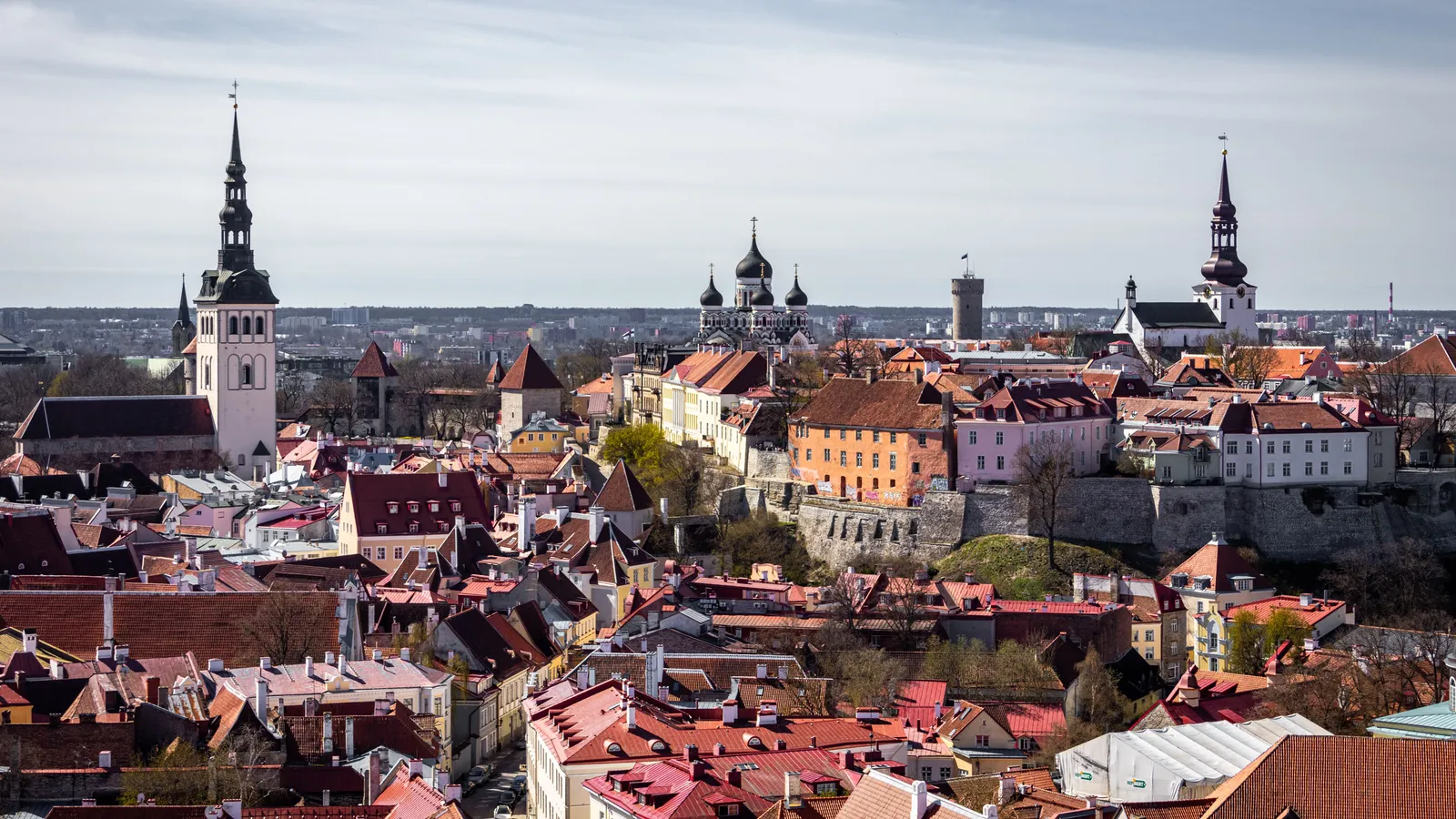
If you love fast, fully digital admin and you do not mind a long northern winter, Estonia is a quiet gem. Tallinn is the main hub. You get a medieval old town, strong cafe wifi, a real startup scene, and the ability to run almost your whole life online. Costs land in the mid range for Europe, more than the Caucasus or the Balkans but well below Berlin or Amsterdam, so a remote salary stretches nicely here.
Estonia digital nomad visa and entry
Estonia really does run a dedicated Digital Nomad Visa for remote workers and location-independent freelancers. It is separate from the better-known e-Residency programme. The headline ask is proof of income over the six months before you apply, at roughly 4,500 euros a month, so it leans toward higher earners. One honest caveat: Estonia’s own pages disagree on whether that is gross or net. The programme FAQ calls it “gross of tax” while the Digital Nomad Visa landing page calls it “net/monthly”, so ask the Police and Border Guard Board which they will apply to you before you build a plan around it. The number itself is derived, not fixed. It comes from a sufficient-means rate of 150 euros a day, so it moves whenever that rate is revised.
Two things the brochures skip. The visa cannot be renewed or extended. You may apply for a second one, but no foreigner may spend more than 548 days on long-stay visas within any 730 consecutive days, so plan the exit at the same time as the arrival. And it is a visa, not a residence permit, so the months here build no clock toward permanent residence or Estonian citizenship. There are three ways in, all in person and with biometrics: an Estonian representation that handles visas, a VFS Global office acting for Estonia, or a Police and Border Guard Board office if you are already legally in the country. Work out which route you actually need. e-Residency lets you run an Estonian company online, but it is not a right to live here.
Tax residency and what to check
There are two triggers here, and they work independently of each other. The tax board’s own wording is that you are a resident if your permanent place of residence is in Estonia, or if you stay in Estonia for at least 183 days within 12 consecutive calendar months. Read that threshold slowly, because it is the part people get wrong. It is at least 183, not more than 183, so day 183 already puts you inside. And the permanent-home test carries no day count at all, so a flat you keep here can make you resident on its own.
Once you are resident, Estonia taxes your worldwide income at its flat rate of 22 percent, unchanged since 2025 after the rise to 24 percent once planned for 2026 was cancelled. There is a basic exemption of 700 euros a month in 2026. The digital nomad visa brings no tax break of its own. Rates and the treatment of foreign income do shift over time, so treat any number as an estimate and confirm with the tax authority before you plan around it. Counting days is what keeps many short-stay nomads outside the local net, but only if you count to 182 and only if you avoid putting down a permanent home.
Figures are estimates. Always check the official source linked below.
At a glance
- Currency
- EUR
- Cost of living
- Moderate
- Digital-nomad visa
- Yes
Frequently asked questions
- Estonia: is there a digital nomad visa?
- Estonia Digital Nomad Visa. Location-independent remote workers: employed by a company registered abroad, running their own foreign-registered business, or freelancing mainly for clients outside Estonia, showing about EUR 4,500 a month over the prior 6 months plus health insurance covering the whole stay. It is a visa, not a residence permit. The long-stay D visa runs up to 12 months and cannot be renewed or extended. You may apply for a second one, but no foreigner may spend more than 548 days on long-stay visas within any 730 consecutive days, and the time builds no path to permanent residence or citizenship. Three application routes only, all in person with biometrics: an Estonian representation that handles visas, a VFS Global office acting for Estonia, or a Police and Border Guard Board office if you are already legally in Estonia.
- Estonia: when do you become a tax resident?
- Two independent triggers: your permanent place of residence is in Estonia, OR you stay at least 183 days within 12 consecutive calendar months. It is at least 183, not more than 183, so day 183 already makes you resident, and the permanent-home test carries no day count at all. Residents pay Estonian income tax on worldwide income at a flat 22%, the rate since 2025 after the rise to 24% planned for 2026 was cancelled. The digital nomad visa carries no tax break of its own.
- Estonia: what is the cost of living?
- The cost of living is moderate and the local currency is the EUR. Treat any figures as estimates.
- Estonia: do you need health insurance?
- Foreigners need private or travel health insurance; access to Estonia's state system comes once you have residence and are contributing.
- Estonia: can you drive on a foreign licence?
- British photocard licences are accepted for visits without an IDP, but US and Indian visitors should carry an International Driving Permit alongside their licence.
Guides for this country
Terms worth knowing
Europe: more countries to explore
Put it to work
- Free
Digital-Nomad Visa Checker
See which digital-nomad visas you could actually get with your passport and income, ranked, with the binding reason per country.
→ - Free
Tax-Residency Reality Checker
Go beyond the 183-day myth: model the treaty tie-breaker and see whether two countries could both claim you as a tax resident.
→ - Free
Nomad Insurance Picker
Match SafetyWing, Genki, World Nomads and others to your situation, and see which policies satisfy specific visa proof requirements.
→ - Free
Banking & FX Picker
Find the right account stack to avoid fees and hold multiple currencies abroad, Wise, Revolut, N26, for your nationality and spending.
→