Countries
Bhutan: visas, tax & cost of living
Thinking of Bhutan as a remote-work base? No digital nomad visa, a ~USD 100/night fee, real costs, tax, healthcare and banking, honestly explained.
United KingdomBhutan
Your move to Bhutan on a United Kingdom passport
- VisitFairly easyVisa on arrival, e-visa or travel authorization (ETA)
- NomadMediumNo nomad visa, other route
- RelocateMediumResidence with conditions
Visiting
You need an e-visa. Apply online before you travel and carry the approval. It is usually quick, but leave a few days of buffer.
Passport validity: Passport valid for at least 6 months from your date of arrival, with a blank page for the entry stamp.
Heads-up: A stamp-less visa regime began on 27 February 2026, and a 5 percent GST on tourism services (excluding the SDF) started 1 January 2026.
At the border: Visa clearance must be obtained online before travel (you cannot buy flights without it); bring your approved visa, passport, and proof of the Sustainable Development Fee. Stays over two weeks may require an HIV test result from the prior 6 months.
Working remotely
No dedicated nomad visa; the usual route is a standard residence permit.
Tax and residency
Spending 183 days or more in Bhutan in a tax year generally makes you a tax resident taxed on worldwide income, while non-residents are taxed only on Bhutan-sourced income. (estimate)
The UK decides residence with its Statutory Residence Test (days in the UK plus your ties). As a non-resident you are usually taxed only on UK income; where one exists, a double-tax treaty with the destination decides who taxes what.
Practical
Currency: BTN. Cost of living: high.
Healthcare: Bhutan provides free basic public healthcare to citizens, but foreigners should expect to pay and carry travel or international health insurance, as advanced care often means evacuation abroad.
Driving: An International Driving Permit alongside your home licence is recommended; traffic drives on the left and tourist movement is largely restricted to permitted districts.
Sources: Department of Immigration, Ministry of Home Affairs · Bhutan Immigration Services Portal · Official Bhutan tourism visa page · Department of Revenue and Customs (tax authority) · US State Department Bhutan travel information · GOV.UK: tax on foreign income · HMRC: double-taxation treaties
Estimates, not advice. Confirm with the official sources before you act.
United StatesBhutan
Your move to Bhutan on a United States passport
- VisitFairly easyVisa on arrival, e-visa or travel authorization (ETA)
- NomadMediumNo nomad visa, other route
- RelocateMediumResidence with conditions
Visiting
You need an e-visa. Apply online before you travel and carry the approval. It is usually quick, but leave a few days of buffer.
Passport validity: Passport valid for at least 6 months from your date of arrival, with a blank page for the entry stamp.
Heads-up: A stamp-less visa regime began on 27 February 2026, and a 5 percent GST on tourism services (excluding the SDF) started 1 January 2026.
At the border: Visa clearance must be obtained online before travel (you cannot buy flights without it); bring your approved visa, passport, and proof of the Sustainable Development Fee. Stays over two weeks may require an HIV test result from the prior 6 months.
Working remotely
No dedicated nomad visa; the usual route is a standard residence permit.
Tax and residency
Spending 183 days or more in Bhutan in a tax year generally makes you a tax resident taxed on worldwide income, while non-residents are taxed only on Bhutan-sourced income. (estimate)
The US taxes its citizens on worldwide income wherever you live, so you keep filing US returns abroad. The Foreign Earned Income Exclusion and the foreign tax credit are what stop you being taxed twice.
Practical
Currency: BTN. Cost of living: high.
Healthcare: Bhutan provides free basic public healthcare to citizens, but foreigners should expect to pay and carry travel or international health insurance, as advanced care often means evacuation abroad.
Driving: An International Driving Permit alongside your home licence is recommended; traffic drives on the left and tourist movement is largely restricted to permitted districts.
Sources: Department of Immigration, Ministry of Home Affairs · Bhutan Immigration Services Portal · Official Bhutan tourism visa page · Department of Revenue and Customs (tax authority) · US State Department Bhutan travel information · IRS: Foreign Earned Income Exclusion · IRS: tax treaties
Estimates, not advice. Confirm with the official sources before you act.
IndiaBhutan
Your move to Bhutan on a India passport
- VisitHardExceeds visa-free stay
- NomadMediumNo nomad visa, other route
- RelocateMediumResidence with conditions
Visiting
Visa-free for up to 14 days. Travel on a passport valid for your whole stay, with a return or onward ticket and proof you can support yourself.
Passport validity: Passport valid for at least 6 months from your date of arrival, with a blank page for the entry stamp.
Heads-up: A stamp-less visa regime began on 27 February 2026, and a 5 percent GST on tourism services (excluding the SDF) started 1 January 2026.
At the border: Visa clearance must be obtained online before travel (you cannot buy flights without it); bring your approved visa, passport, and proof of the Sustainable Development Fee. Stays over two weeks may require an HIV test result from the prior 6 months.
Working remotely
No dedicated nomad visa; the usual route is a standard residence permit.
Tax and residency
Spending 183 days or more in Bhutan in a tax year generally makes you a tax resident taxed on worldwide income, while non-residents are taxed only on Bhutan-sourced income. (estimate)
India taxes residents on worldwide income; your status depends on the days you spend in India (broadly 182 or more in the year). As a non-resident (NRI) you are taxed only on Indian-source income, and the relevant double-tax treaty allocates the rest.
Practical
Currency: BTN. Cost of living: high.
Healthcare: Bhutan provides free basic public healthcare to citizens, but foreigners should expect to pay and carry travel or international health insurance, as advanced care often means evacuation abroad.
Driving: An International Driving Permit alongside your home licence is recommended; traffic drives on the left and tourist movement is largely restricted to permitted districts.
Sources: Department of Immigration, Ministry of Home Affairs · Bhutan Immigration Services Portal · Official Bhutan tourism visa page · Department of Revenue and Customs (tax authority) · US State Department Bhutan travel information · Income Tax Department, India · India: Double Taxation Avoidance Agreements
Estimates, not advice. Confirm with the official sources before you act.
GermanyBhutan
Your move to Bhutan on a Germany passport
- VisitFairly easyVisa on arrival, e-visa or travel authorization (ETA)
- NomadMediumNo nomad visa, other route
- RelocateMediumResidence with conditions
Visiting
You need an e-visa. Apply online before you travel and carry the approval. It is usually quick, but leave a few days of buffer.
Passport validity: Passport valid for at least 6 months from your date of arrival, with a blank page for the entry stamp.
Heads-up: A stamp-less visa regime began on 27 February 2026, and a 5 percent GST on tourism services (excluding the SDF) started 1 January 2026.
At the border: Visa clearance must be obtained online before travel (you cannot buy flights without it); bring your approved visa, passport, and proof of the Sustainable Development Fee. Stays over two weeks may require an HIV test result from the prior 6 months.
Working remotely
No dedicated nomad visa; the usual route is a standard residence permit.
Tax and residency
Spending 183 days or more in Bhutan in a tax year generally makes you a tax resident taxed on worldwide income, while non-residents are taxed only on Bhutan-sourced income. (estimate)
Germany taxes residents on worldwide income; you become resident through a home available to you (Wohnsitz) or a habitual abode of more than six months. As a non-resident you are usually taxed only on German-source income, and where one exists a double-tax treaty with the destination decides who taxes what.
Practical
Currency: BTN. Cost of living: high.
Healthcare: Bhutan provides free basic public healthcare to citizens, but foreigners should expect to pay and carry travel or international health insurance, as advanced care often means evacuation abroad.
Driving: An International Driving Permit alongside your home licence is recommended; traffic drives on the left and tourist movement is largely restricted to permitted districts.
Sources: Department of Immigration, Ministry of Home Affairs · Bhutan Immigration Services Portal · Official Bhutan tourism visa page · Department of Revenue and Customs (tax authority) · US State Department Bhutan travel information · Bundeszentralamt für Steuern (BZSt) · Germany: double-taxation agreements (BMF)
Estimates, not advice. Confirm with the official sources before you act.
FranceBhutan
Your move to Bhutan on a France passport
- VisitFairly easyVisa on arrival, e-visa or travel authorization (ETA)
- NomadMediumNo nomad visa, other route
- RelocateMediumResidence with conditions
Visiting
You need an e-visa. Apply online before you travel and carry the approval. It is usually quick, but leave a few days of buffer.
Passport validity: Passport valid for at least 6 months from your date of arrival, with a blank page for the entry stamp.
Heads-up: A stamp-less visa regime began on 27 February 2026, and a 5 percent GST on tourism services (excluding the SDF) started 1 January 2026.
At the border: Visa clearance must be obtained online before travel (you cannot buy flights without it); bring your approved visa, passport, and proof of the Sustainable Development Fee. Stays over two weeks may require an HIV test result from the prior 6 months.
Working remotely
No dedicated nomad visa; the usual route is a standard residence permit.
Tax and residency
Spending 183 days or more in Bhutan in a tax year generally makes you a tax resident taxed on worldwide income, while non-residents are taxed only on Bhutan-sourced income. (estimate)
France taxes you on your worldwide income if your tax home (domicile fiscal) stays there, broadly when your household, main home, main job or main economic interests are in France, so moving abroad alone may not end it. Once you genuinely settle elsewhere you are usually taxed only on French-source income, and tax treaties typically prevent paying twice through an exemption or a foreign tax credit, but treat any figures as estimates and check your situation.
Practical
Currency: BTN. Cost of living: high.
Healthcare: Bhutan provides free basic public healthcare to citizens, but foreigners should expect to pay and carry travel or international health insurance, as advanced care often means evacuation abroad.
Driving: An International Driving Permit alongside your home licence is recommended; traffic drives on the left and tourist movement is largely restricted to permitted districts.
Sources: Department of Immigration, Ministry of Home Affairs · Bhutan Immigration Services Portal · Official Bhutan tourism visa page · Department of Revenue and Customs (tax authority) · US State Department Bhutan travel information · impots.gouv.fr - Résidents de France · impots.gouv.fr - Les conventions internationales
Estimates, not advice. Confirm with the official sources before you act.
SpainBhutan
Your move to Bhutan on a Spain passport
- VisitFairly easyVisa on arrival, e-visa or travel authorization (ETA)
- NomadMediumNo nomad visa, other route
- RelocateMediumResidence with conditions
Visiting
You need an e-visa. Apply online before you travel and carry the approval. It is usually quick, but leave a few days of buffer.
Passport validity: Passport valid for at least 6 months from your date of arrival, with a blank page for the entry stamp.
Heads-up: A stamp-less visa regime began on 27 February 2026, and a 5 percent GST on tourism services (excluding the SDF) started 1 January 2026.
At the border: Visa clearance must be obtained online before travel (you cannot buy flights without it); bring your approved visa, passport, and proof of the Sustainable Development Fee. Stays over two weeks may require an HIV test result from the prior 6 months.
Working remotely
No dedicated nomad visa; the usual route is a standard residence permit.
Tax and residency
Spending 183 days or more in Bhutan in a tax year generally makes you a tax resident taxed on worldwide income, while non-residents are taxed only on Bhutan-sourced income. (estimate)
If Spain still counts as your tax home (roughly 183+ days in the country in a year, or your main base of life and income sits there), Spain taxes your worldwide income at IRPF rates, so what you earn abroad usually counts too. The sting is softened by double-tax treaties and a foreign-tax credit, plus the Article 7.p exemption that can shelter work done abroad up to around 60,100 euros a year, but treat every figure as an estimate and check your own case before you file.
Practical
Currency: BTN. Cost of living: high.
Healthcare: Bhutan provides free basic public healthcare to citizens, but foreigners should expect to pay and carry travel or international health insurance, as advanced care often means evacuation abroad.
Driving: An International Driving Permit alongside your home licence is recommended; traffic drives on the left and tourist movement is largely restricted to permitted districts.
Sources: Department of Immigration, Ministry of Home Affairs · Bhutan Immigration Services Portal · Official Bhutan tourism visa page · Department of Revenue and Customs (tax authority) · US State Department Bhutan travel information · Agencia Tributaria: persona física residente en España · Agencia Tributaria: obtención de rentas extranjeras, reglas generales
Estimates, not advice. Confirm with the official sources before you act.
ItalyBhutan
Your move to Bhutan on a Italy passport
- VisitFairly easyVisa on arrival, e-visa or travel authorization (ETA)
- NomadMediumNo nomad visa, other route
- RelocateMediumResidence with conditions
Visiting
You need an e-visa. Apply online before you travel and carry the approval. It is usually quick, but leave a few days of buffer.
Passport validity: Passport valid for at least 6 months from your date of arrival, with a blank page for the entry stamp.
Heads-up: A stamp-less visa regime began on 27 February 2026, and a 5 percent GST on tourism services (excluding the SDF) started 1 January 2026.
At the border: Visa clearance must be obtained online before travel (you cannot buy flights without it); bring your approved visa, passport, and proof of the Sustainable Development Fee. Stays over two weeks may require an HIV test result from the prior 6 months.
Working remotely
No dedicated nomad visa; the usual route is a standard residence permit.
Tax and residency
Spending 183 days or more in Bhutan in a tax year generally makes you a tax resident taxed on worldwide income, while non-residents are taxed only on Bhutan-sourced income. (estimate)
Italy generally treats you as a tax resident if for most of the year (roughly 183 days or more) your home, family or registration ties are here, and residents are taxed on worldwide income wherever they live. The relief is usually a foreign tax credit for tax already paid abroad, often shaped by Italy's double-taxation treaties, so the same income should not be taxed twice.
Practical
Currency: BTN. Cost of living: high.
Healthcare: Bhutan provides free basic public healthcare to citizens, but foreigners should expect to pay and carry travel or international health insurance, as advanced care often means evacuation abroad.
Driving: An International Driving Permit alongside your home licence is recommended; traffic drives on the left and tourist movement is largely restricted to permitted districts.
Sources: Department of Immigration, Ministry of Home Affairs · Bhutan Immigration Services Portal · Official Bhutan tourism visa page · Department of Revenue and Customs (tax authority) · US State Department Bhutan travel information · Agenzia delle Entrate, Residence for tax purposes · Agenzia delle Entrate, Bilateral agreements to prevent double taxation
Estimates, not advice. Confirm with the official sources before you act.
CanadaBhutan
Your move to Bhutan on a Canada passport
- VisitFairly easyVisa on arrival, e-visa or travel authorization (ETA)
- NomadMediumNo nomad visa, other route
- RelocateMediumResidence with conditions
Visiting
You need an e-visa. Apply online before you travel and carry the approval. It is usually quick, but leave a few days of buffer.
Passport validity: Passport valid for at least 6 months from your date of arrival, with a blank page for the entry stamp.
Heads-up: A stamp-less visa regime began on 27 February 2026, and a 5 percent GST on tourism services (excluding the SDF) started 1 January 2026.
At the border: Visa clearance must be obtained online before travel (you cannot buy flights without it); bring your approved visa, passport, and proof of the Sustainable Development Fee. Stays over two weeks may require an HIV test result from the prior 6 months.
Working remotely
No dedicated nomad visa; the usual route is a standard residence permit.
Tax and residency
Spending 183 days or more in Bhutan in a tax year generally makes you a tax resident taxed on worldwide income, while non-residents are taxed only on Bhutan-sourced income. (estimate)
Canada taxes you on residency, not on holding the passport, so as long as the CRA still treats you as a resident (kept home, family or strong ties) you generally owe Canadian tax on your worldwide income. The relief is usually a foreign tax credit for tax you already paid abroad, often topped up by a tax treaty, though the exact amounts are only estimates until you check your own case.
Practical
Currency: BTN. Cost of living: high.
Healthcare: Bhutan provides free basic public healthcare to citizens, but foreigners should expect to pay and carry travel or international health insurance, as advanced care often means evacuation abroad.
Driving: An International Driving Permit alongside your home licence is recommended; traffic drives on the left and tourist movement is largely restricted to permitted districts.
Sources: Department of Immigration, Ministry of Home Affairs · Bhutan Immigration Services Portal · Official Bhutan tourism visa page · Department of Revenue and Customs (tax authority) · US State Department Bhutan travel information · Canada Revenue Agency, Determining your residency status · Department of Finance Canada, Tax treaties in force
Estimates, not advice. Confirm with the official sources before you act.
AustraliaBhutan
Your move to Bhutan on a Australia passport
- VisitFairly easyVisa on arrival, e-visa or travel authorization (ETA)
- NomadMediumNo nomad visa, other route
- RelocateMediumResidence with conditions
Visiting
You need an e-visa. Apply online before you travel and carry the approval. It is usually quick, but leave a few days of buffer.
Passport validity: Passport valid for at least 6 months from your date of arrival, with a blank page for the entry stamp.
Heads-up: A stamp-less visa regime began on 27 February 2026, and a 5 percent GST on tourism services (excluding the SDF) started 1 January 2026.
At the border: Visa clearance must be obtained online before travel (you cannot buy flights without it); bring your approved visa, passport, and proof of the Sustainable Development Fee. Stays over two weeks may require an HIV test result from the prior 6 months.
Working remotely
No dedicated nomad visa; the usual route is a standard residence permit.
Tax and residency
Spending 183 days or more in Bhutan in a tax year generally makes you a tax resident taxed on worldwide income, while non-residents are taxed only on Bhutan-sourced income. (estimate)
If you stay an Australian resident for tax purposes, Australia generally taxes your worldwide income wherever you live, with residency turned on the moment your real home and ties are here (a continuous stay of roughly 6 months can be enough). To soften double tax, you can usually claim a Foreign Income Tax Offset for tax already paid abroad, capped at the Australian tax on that income, and treaties may help too, so treat these figures as estimates and check your own case.
Practical
Currency: BTN. Cost of living: high.
Healthcare: Bhutan provides free basic public healthcare to citizens, but foreigners should expect to pay and carry travel or international health insurance, as advanced care often means evacuation abroad.
Driving: An International Driving Permit alongside your home licence is recommended; traffic drives on the left and tourist movement is largely restricted to permitted districts.
Sources: Department of Immigration, Ministry of Home Affairs · Bhutan Immigration Services Portal · Official Bhutan tourism visa page · Department of Revenue and Customs (tax authority) · US State Department Bhutan travel information · Australian Taxation Office, Australian resident for tax purposes · Australian Taxation Office, International tax agreements (tax treaties)
Estimates, not advice. Confirm with the official sources before you act.
BrazilBhutan
Your move to Bhutan on a Brazil passport
- VisitFairly easyVisa on arrival, e-visa or travel authorization (ETA)
- NomadMediumNo nomad visa, other route
- RelocateMediumResidence with conditions
Visiting
You need an e-visa. Apply online before you travel and carry the approval. It is usually quick, but leave a few days of buffer.
Passport validity: Passport valid for at least 6 months from your date of arrival, with a blank page for the entry stamp.
Heads-up: A stamp-less visa regime began on 27 February 2026, and a 5 percent GST on tourism services (excluding the SDF) started 1 January 2026.
At the border: Visa clearance must be obtained online before travel (you cannot buy flights without it); bring your approved visa, passport, and proof of the Sustainable Development Fee. Stays over two weeks may require an HIV test result from the prior 6 months.
Working remotely
No dedicated nomad visa; the usual route is a standard residence permit.
Tax and residency
Spending 183 days or more in Bhutan in a tax year generally makes you a tax resident taxed on worldwide income, while non-residents are taxed only on Bhutan-sourced income. (estimate)
If Brazil still counts you as tax-resident, usually triggered by a permanent visa, a temporary visa plus a job, or roughly 183 days in the country within any 12 months, the Receita Federal taxes your worldwide income, so you keep filing the annual return wherever you live. The relief is real but partial: tax paid abroad can normally be credited against what you owe in Brazil under a treaty or recognised reciprocity, so most people are not taxed twice on the same income.
Practical
Currency: BTN. Cost of living: high.
Healthcare: Bhutan provides free basic public healthcare to citizens, but foreigners should expect to pay and carry travel or international health insurance, as advanced care often means evacuation abroad.
Driving: An International Driving Permit alongside your home licence is recommended; traffic drives on the left and tourist movement is largely restricted to permitted districts.
Sources: Department of Immigration, Ministry of Home Affairs · Bhutan Immigration Services Portal · Official Bhutan tourism visa page · Department of Revenue and Customs (tax authority) · US State Department Bhutan travel information · Receita Federal, Acordos para evitar a dupla tributação · Receita Federal, Imposto sobre a Renda da Pessoa Física (IRPF)
Estimates, not advice. Confirm with the official sources before you act.
MexicoBhutan
Your move to Bhutan on a Mexico passport
- VisitFairly easyVisa on arrival, e-visa or travel authorization (ETA)
- NomadMediumNo nomad visa, other route
- RelocateMediumResidence with conditions
Visiting
You need an e-visa. Apply online before you travel and carry the approval. It is usually quick, but leave a few days of buffer.
Passport validity: Passport valid for at least 6 months from your date of arrival, with a blank page for the entry stamp.
Heads-up: A stamp-less visa regime began on 27 February 2026, and a 5 percent GST on tourism services (excluding the SDF) started 1 January 2026.
At the border: Visa clearance must be obtained online before travel (you cannot buy flights without it); bring your approved visa, passport, and proof of the Sustainable Development Fee. Stays over two weeks may require an HIV test result from the prior 6 months.
Working remotely
No dedicated nomad visa; the usual route is a standard residence permit.
Tax and residency
Spending 183 days or more in Bhutan in a tax year generally makes you a tax resident taxed on worldwide income, while non-residents are taxed only on Bhutan-sourced income. (estimate)
Mexico taxes you on your worldwide income once you count as a tax resident, which usually means your main home or your center of life is here (very roughly, spending more than about 183 days a year can tip the balance). The good news is the SAT lets you credit foreign income tax you already paid, and Mexico's double-taxation treaties mean the same money should not normally be taxed twice.
Practical
Currency: BTN. Cost of living: high.
Healthcare: Bhutan provides free basic public healthcare to citizens, but foreigners should expect to pay and carry travel or international health insurance, as advanced care often means evacuation abroad.
Driving: An International Driving Permit alongside your home licence is recommended; traffic drives on the left and tourist movement is largely restricted to permitted districts.
Sources: Department of Immigration, Ministry of Home Affairs · Bhutan Immigration Services Portal · Official Bhutan tourism visa page · Department of Revenue and Customs (tax authority) · US State Department Bhutan travel information · SAT - Servicio de Administración Tributaria · SAT - Tratados en Materia Fiscal (para evitar la doble tributación)
Estimates, not advice. Confirm with the official sources before you act.
PhilippinesBhutan
Your move to Bhutan on a Philippines passport
- VisitFairly easyVisa on arrival, e-visa or travel authorization (ETA)
- NomadMediumNo nomad visa, other route
- RelocateMediumResidence with conditions
Visiting
You need an e-visa. Apply online before you travel and carry the approval. It is usually quick, but leave a few days of buffer.
Passport validity: Passport valid for at least 6 months from your date of arrival, with a blank page for the entry stamp.
Heads-up: A stamp-less visa regime began on 27 February 2026, and a 5 percent GST on tourism services (excluding the SDF) started 1 January 2026.
At the border: Visa clearance must be obtained online before travel (you cannot buy flights without it); bring your approved visa, passport, and proof of the Sustainable Development Fee. Stays over two weeks may require an HIV test result from the prior 6 months.
Working remotely
No dedicated nomad visa; the usual route is a standard residence permit.
Tax and residency
Spending 183 days or more in Bhutan in a tax year generally makes you a tax resident taxed on worldwide income, while non-residents are taxed only on Bhutan-sourced income. (estimate)
If you stay a resident citizen, the Philippines taxes your worldwide income, but once you genuinely live and work abroad you usually count as a non-resident citizen and are taxed only on income from Philippine sources. The exact line depends on how long you are out and your ties back home, so treat these as estimates, and a foreign tax credit can offset tax already paid abroad.
Practical
Currency: BTN. Cost of living: high.
Healthcare: Bhutan provides free basic public healthcare to citizens, but foreigners should expect to pay and carry travel or international health insurance, as advanced care often means evacuation abroad.
Driving: An International Driving Permit alongside your home licence is recommended; traffic drives on the left and tourist movement is largely restricted to permitted districts.
Sources: Department of Immigration, Ministry of Home Affairs · Bhutan Immigration Services Portal · Official Bhutan tourism visa page · Department of Revenue and Customs (tax authority) · US State Department Bhutan travel information · BIR - Taxation of Foreign Source Income · BIR - Taxation of Non-Residents
Estimates, not advice. Confirm with the official sources before you act.
NigeriaBhutan
Your move to Bhutan on a Nigeria passport
- VisitFairly easyVisa on arrival, e-visa or travel authorization (ETA)
- NomadMediumNo nomad visa, other route
- RelocateMediumResidence with conditions
Visiting
You need an e-visa. Apply online before you travel and carry the approval. It is usually quick, but leave a few days of buffer.
Passport validity: Passport valid for at least 6 months from your date of arrival, with a blank page for the entry stamp.
Heads-up: A stamp-less visa regime began on 27 February 2026, and a 5 percent GST on tourism services (excluding the SDF) started 1 January 2026.
At the border: Visa clearance must be obtained online before travel (you cannot buy flights without it); bring your approved visa, passport, and proof of the Sustainable Development Fee. Stays over two weeks may require an HIV test result from the prior 6 months.
Working remotely
No dedicated nomad visa; the usual route is a standard residence permit.
Tax and residency
Spending 183 days or more in Bhutan in a tax year generally makes you a tax resident taxed on worldwide income, while non-residents are taxed only on Bhutan-sourced income. (estimate)
If Nigeria still counts you as resident, roughly 183 or more days in the country in a year, or you keep a home, habitual abode or close family and economic ties there, you are generally taxed on your worldwide income, not just what you earn in Nigeria. There is usually a foreign tax credit, and Nigeria's tax treaties, so tax you already paid abroad can typically be set against your Nigerian bill, but treat these figures as estimates and check the current rules before you file.
Practical
Currency: BTN. Cost of living: high.
Healthcare: Bhutan provides free basic public healthcare to citizens, but foreigners should expect to pay and carry travel or international health insurance, as advanced care often means evacuation abroad.
Driving: An International Driving Permit alongside your home licence is recommended; traffic drives on the left and tourist movement is largely restricted to permitted districts.
Sources: Department of Immigration, Ministry of Home Affairs · Bhutan Immigration Services Portal · Official Bhutan tourism visa page · Department of Revenue and Customs (tax authority) · US State Department Bhutan travel information · Federal Inland Revenue Service (FIRS) · FIRS - Tax Treaties and Related Matters
Estimates, not advice. Confirm with the official sources before you act.
VietnamBhutan
Your move to Bhutan on a Vietnam passport
- VisitFairly easyVisa on arrival, e-visa or travel authorization (ETA)
- NomadMediumNo nomad visa, other route
- RelocateMediumResidence with conditions
Visiting
You need an e-visa. Apply online before you travel and carry the approval. It is usually quick, but leave a few days of buffer.
Passport validity: Passport valid for at least 6 months from your date of arrival, with a blank page for the entry stamp.
Heads-up: A stamp-less visa regime began on 27 February 2026, and a 5 percent GST on tourism services (excluding the SDF) started 1 January 2026.
At the border: Visa clearance must be obtained online before travel (you cannot buy flights without it); bring your approved visa, passport, and proof of the Sustainable Development Fee. Stays over two weeks may require an HIV test result from the prior 6 months.
Working remotely
No dedicated nomad visa; the usual route is a standard residence permit.
Tax and residency
Spending 183 days or more in Bhutan in a tax year generally makes you a tax resident taxed on worldwide income, while non-residents are taxed only on Bhutan-sourced income. (estimate)
Vietnam treats you as a tax resident once you spend roughly 183 days there in a calendar year (or any rolling 12 months) or keep a permanent home, and residents are taxed on worldwide income at progressive rates of around 5% to 35%; there is no foreign-earned-income exclusion, but Vietnam's tax treaties and a foreign tax credit usually stop the same income being taxed twice.
Practical
Currency: BTN. Cost of living: high.
Healthcare: Bhutan provides free basic public healthcare to citizens, but foreigners should expect to pay and carry travel or international health insurance, as advanced care often means evacuation abroad.
Driving: An International Driving Permit alongside your home licence is recommended; traffic drives on the left and tourist movement is largely restricted to permitted districts.
Sources: Department of Immigration, Ministry of Home Affairs · Bhutan Immigration Services Portal · Official Bhutan tourism visa page · Department of Revenue and Customs (tax authority) · US State Department Bhutan travel information · General Department of Taxation (Tổng cục Thuế) · GDT - Agreements for Avoidance of Double Taxation
Estimates, not advice. Confirm with the official sources before you act.
Should you move to Bhutan?
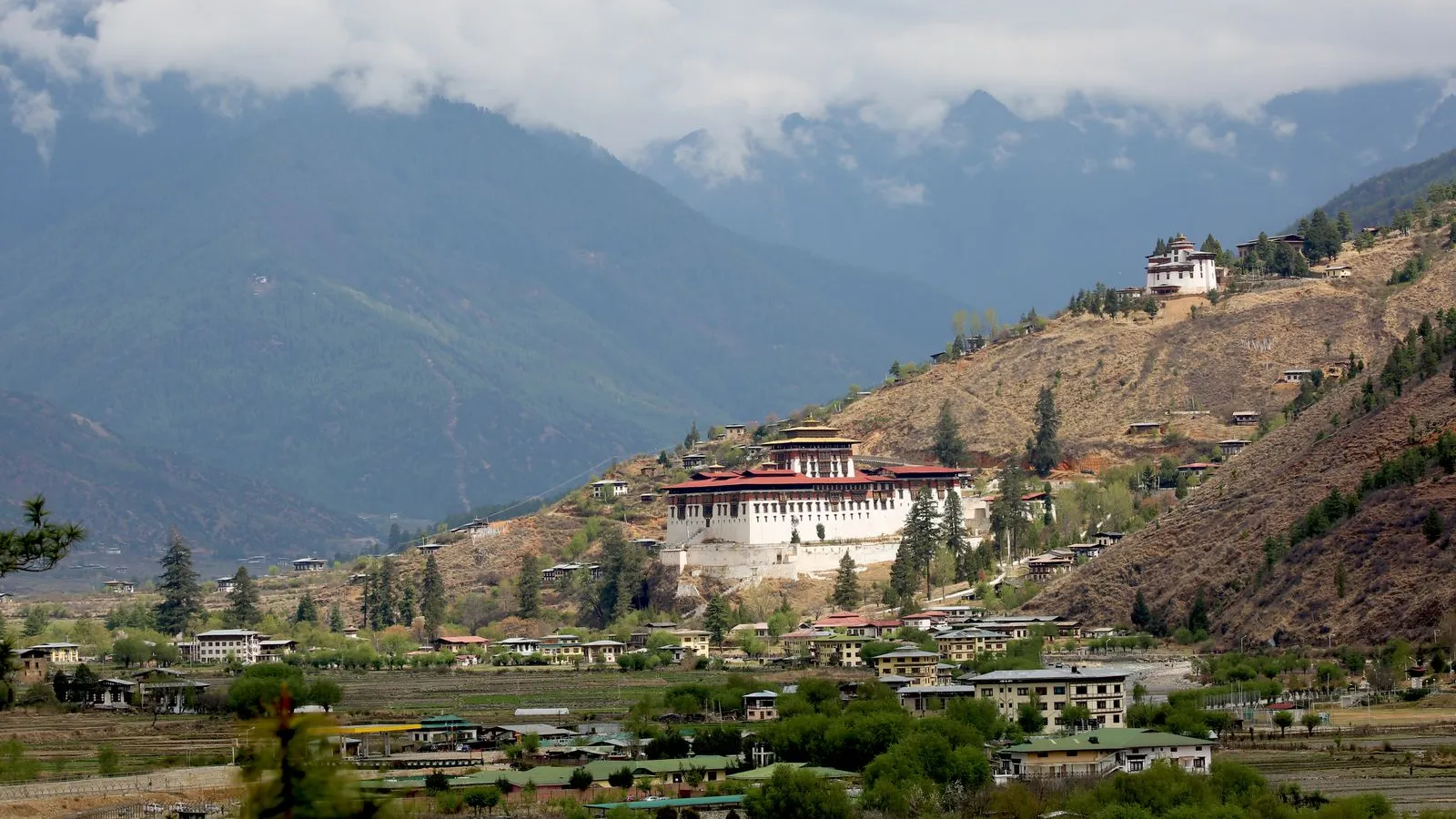
Let me be honest with you before you fall in love with the photos. Bhutan is one of the most beautiful, safe, and culturally intact places on earth, and it is also just about the hardest country in this whole series to actually live in as a remote worker. There is no residence route for a freelancer or an employee of a foreign company. What exists is a tourist entry, and that tourist entry carries a daily fee that reshapes the entire cost maths of a stay.
So who does Bhutan suit? Honestly, a short, deliberate, well funded stay of a few weeks, not a base. It suits someone who wants a mindful reset in the Himalayas and can absorb the cost, not a nomad chasing cheap rent and fast wifi. The hubs are few: Thimphu (the capital, and the only place that feels like a small city), Paro (home of the one international airport), and Punakha in the warmer valley. Power in the towns is generally reliable, since Bhutan runs on its own hydropower, but connectivity thins out fast once you leave the main valleys.
Here is the number that decides everything. As a visitor you pay a Sustainable Development Fee of around USD 100 per night (Bhutan Tourism). That is roughly USD 3,000 a month in government fee alone, before rent, before food, before anything. Your living costs on top are modest by Western standards, but the SDF is the trade-off, and no amount of budgeting makes it disappear.
Cost of living in Bhutan
Away from the fee, day to day life is inexpensive. The currency is the ngultrum (Nu.), pegged one to one with the Indian rupee, so roughly Nu.86 to the US dollar in 2026. Treat every figure here as a rough estimate: Bhutan has a thin data sample and a small rental market, so numbers move.
According to Numbeo (updated mid 2026), a one bedroom apartment runs around Nu.8,000 to Nu.10,000 a month (roughly USD 95 to USD 120), a meal at a simple restaurant sits near Nu.250 (about USD 3), and staples are cheap: a litre of milk around Nu.70, a dozen eggs around Nu.165. Basic utilities land near Nu.3,300 and home internet around Nu.2,400 a month. On paper a single person could live on a few hundred dollars plus rent.
But read that in context. Those rents reflect the local market, and a furnished place a foreigner can actually book short term will cost more. And again, the SDF towers over all of it. Realistically, budget the fee first (around USD 3,000 a month) and treat the cheap groceries as a pleasant footnote, not the headline.
Bhutan digital nomad visa and entry
Plainly: Bhutan has no digital nomad visa, no freelancer visa, and no easy residence permit for remote workers. Anyone telling you otherwise is guessing.
What exists is a tourist visa. You apply online for around USD 40 through the official immigration portal (immi.gov.bt), and it grants up to 90 days. On top of the visa you pay the Sustainable Development Fee of about USD 100 per person per night, currently set for the window running September 2023 through August 2027 (Visa policy of Bhutan). Children get a reduced rate and the very young are exempt, but for a working adult, assume the full USD 100. Indian nationals sit under a separate, much cheaper arrangement (a permit rather than the standard SDF).
Working for a Bhutanese employer legally requires a work permit that a local company sponsors, which is a different world from freelancing on a laptop. There is one thing worth watching: Gelephu Mindfulness City, a large special administrative region Bhutan is building in the south to attract foreign investment and residents. It may eventually open genuine long stay routes, but it is early, and nothing there is a settled nomad path yet. Before you plan anything, run your situation through our digital nomad visa checker and verify with the immigration portal, because this is the section that most often catches people out.
Tax residency and the 183 day rule
This is educational, not tax advice, and Bhutan is a genuine edge case. Because there is no remote work route, most visitors never become tax resident here, and that is the practical reality for a nomad.
The general principle most countries use, including the idea baked into Bhutan’s income tax framework, is the 183 day rule: spend more than roughly half the year physically present and a country can treat you as tax resident. Bhutan’s personal income tax is administered by the Department of Revenue and Customs (drc.gov.bt), it is progressive, and lower incomes fall under a tax free threshold. But Bhutan largely taxes Bhutan sourced income, and as a short stay visitor without a work permit you are not earning Bhutanese income. The sharper question is usually your home country and wherever else you spend time. Map that honestly with our tax residency checker, and if real money is involved, confirm the specifics with the DRC and a professional. Treat every rate and threshold as an estimate to verify before you go.
Healthcare and insurance
Bhutan provides free basic public healthcare to its citizens as part of the Gross National Happiness philosophy (Healthcare in Bhutan). The main facility is the Jigme Dorji Wangchuck National Referral Hospital in Thimphu. For routine issues in the capital, care is competent and cheap.
The honest limitation: for anything serious (complex surgery, cancer, major trauma) Bhutan itself refers patients onward, often to India. As a foreigner you should assume you will pay privately and, crucially, that you may need to be evacuated to Bangkok or Delhi. So travel and medical insurance with strong emergency evacuation cover is not optional here, it is the single most important thing you buy before the flight. Roads are mountainous, weather closes them, and the nearest advanced hospital can be a border and a flight away. Price a policy that explicitly covers Himalayan altitude and air evacuation.
Money, banking and settling in
Bhutan is a cash economy, and opening a local bank account (Bank of Bhutan, Bhutan National Bank, and a few others) effectively requires residency or a work permit, so as a visitor you will not be getting one. The local mobile payment apps that Bhutanese use everywhere are tied to those local accounts, so they are largely closed to you too.
Practically, that means carry cash. Indian rupees are widely usable alongside ngultrum. ATMs exist in Thimphu and Paro but thin out in the valleys, and international card acceptance is limited mostly to bigger hotels and tour operators, so do not rely on tapping a card. Bring more cash than feels comfortable, tell your home bank you are travelling, and keep a backup card separate. Connectivity comes from Bhutan Telecom and TashiCell: buy a local SIM on arrival, expect solid 4G in towns and patchy signal on the trails, and never promise a client a live call from a remote valley. Bhutan is calm, remarkably safe, and slow in the best and most bureaucratic senses. Come for the reset, plan the money in advance, and go in with your eyes open.
Figures are estimates. Always check the official source.
Frequently asked questions
- Bhutan: is there a digital nomad visa?
- No dedicated digital nomad visa; most people use a standard residence permit instead.
- Bhutan: when do you become a tax resident?
- Spending 183 days or more in Bhutan in a tax year generally makes you a tax resident taxed on worldwide income, while non-residents are taxed only on Bhutan-sourced income.
- Bhutan: what is the cost of living?
- The cost of living is high and the local currency is the BTN. Treat any figures as estimates.
- Bhutan: do you need health insurance?
- Bhutan provides free basic public healthcare to citizens, but foreigners should expect to pay and carry travel or international health insurance, as advanced care often means evacuation abroad.
- Bhutan: can you drive on a foreign licence?
- An International Driving Permit alongside your home licence is recommended; traffic drives on the left and tourist movement is largely restricted to permitted districts.
Terms worth knowing
Asia: more countries to explore
Put it to work
- Free
Digital-Nomad Visa Checker
See which digital-nomad visas you could actually get with your passport and income, ranked, with the binding reason per country.
→ - Free
Tax-Residency Reality Checker
Go beyond the 183-day myth: model the treaty tie-breaker and see whether two countries could both claim you as a tax resident.
→ - Free
Nomad Insurance Picker
Match SafetyWing, Genki, World Nomads and others to your situation, and see which policies satisfy specific visa proof requirements.
→ - Free
Banking & FX Picker
Find the right account stack to avoid fees and hold multiple currencies abroad, Wise, Revolut, N26, for your nationality and spending.
→