Countries
Botswana: visas, tax & cost of living
Thinking of moving to Botswana as a remote worker? Honest 2026 guide to cost of living, the no-nomad-visa reality, tax, healthcare and banking.
United KingdomBotswana
Your move to Botswana on a United Kingdom passport
- VisitEasyVisa-free entry
- NomadMediumNo nomad visa, other route
- RelocateMediumResidence with conditions
Visiting
Visa-free for up to 90 days. Travel on a passport valid for your whole stay, with a return or onward ticket and proof you can support yourself.
Passport validity: Passport valid for at least 6 months beyond arrival with at least 3 blank pages.
At the border: Valid passport for an entry stamp; many nationalities get up to 90 days visa free; proof of yellow fever vaccination if arriving from a risk country; full birth certificate for accompanying children under 18; declare cash of 10,000 pula or more.
Working remotely
No dedicated nomad visa; the usual route is a standard residence permit.
Tax and residency
You are likely a tax resident if you keep a permanent home in Botswana and spend at least 183 days there in the tax year; Botswana broadly taxes income sourced in the country, so most foreign income is usually outside the net though certain foreign investment income can be taxed. (estimate)
The UK decides residence with its Statutory Residence Test (days in the UK plus your ties). As a non-resident you are usually taxed only on UK income; where one exists, a double-tax treaty with the destination decides who taxes what.
Practical
Currency: BWP. Cost of living: mid.
Healthcare: Public care is limited for foreigners and private hospitals often expect cash or proof of cover up front, so comprehensive private insurance with medical evacuation is strongly advised.
Driving: An International Driving Permit alongside your home licence is recommended, and driving is on the left.
Sources: Government of Botswana, visa applications · Botswana Unified Revenue Service, individuals · UK FCDO, Botswana entry requirements · US State Department, Botswana travel information · Botswana Tourism Organisation, health · GOV.UK: tax on foreign income · HMRC: double-taxation treaties
Estimates, not advice. Confirm with the official sources before you act.
United StatesBotswana
Your move to Botswana on a United States passport
- VisitEasyVisa-free entry
- NomadMediumNo nomad visa, other route
- RelocateMediumResidence with conditions
Visiting
Visa-free for up to 90 days. Travel on a passport valid for your whole stay, with a return or onward ticket and proof you can support yourself.
Passport validity: Passport valid for at least 6 months beyond arrival with at least 3 blank pages.
At the border: Valid passport for an entry stamp; many nationalities get up to 90 days visa free; proof of yellow fever vaccination if arriving from a risk country; full birth certificate for accompanying children under 18; declare cash of 10,000 pula or more.
Working remotely
No dedicated nomad visa; the usual route is a standard residence permit.
Tax and residency
You are likely a tax resident if you keep a permanent home in Botswana and spend at least 183 days there in the tax year; Botswana broadly taxes income sourced in the country, so most foreign income is usually outside the net though certain foreign investment income can be taxed. (estimate)
The US taxes its citizens on worldwide income wherever you live, so you keep filing US returns abroad. The Foreign Earned Income Exclusion and the foreign tax credit are what stop you being taxed twice.
Practical
Currency: BWP. Cost of living: mid.
Healthcare: Public care is limited for foreigners and private hospitals often expect cash or proof of cover up front, so comprehensive private insurance with medical evacuation is strongly advised.
Driving: An International Driving Permit alongside your home licence is recommended, and driving is on the left.
Sources: Government of Botswana, visa applications · Botswana Unified Revenue Service, individuals · UK FCDO, Botswana entry requirements · US State Department, Botswana travel information · Botswana Tourism Organisation, health · IRS: Foreign Earned Income Exclusion · IRS: tax treaties
Estimates, not advice. Confirm with the official sources before you act.
IndiaBotswana
Your move to Botswana on a India passport
- VisitFairly easyVisa on arrival, e-visa or travel authorization (ETA)
- NomadMediumNo nomad visa, other route
- RelocateMediumResidence with conditions
Visiting
You need an e-visa. Apply online before you travel and carry the approval. It is usually quick, but leave a few days of buffer.
Passport validity: Passport valid for at least 6 months beyond arrival with at least 3 blank pages.
At the border: Valid passport for an entry stamp; many nationalities get up to 90 days visa free; proof of yellow fever vaccination if arriving from a risk country; full birth certificate for accompanying children under 18; declare cash of 10,000 pula or more.
Working remotely
No dedicated nomad visa; the usual route is a standard residence permit.
Tax and residency
You are likely a tax resident if you keep a permanent home in Botswana and spend at least 183 days there in the tax year; Botswana broadly taxes income sourced in the country, so most foreign income is usually outside the net though certain foreign investment income can be taxed. (estimate)
India taxes residents on worldwide income; your status depends on the days you spend in India (broadly 182 or more in the year). As a non-resident (NRI) you are taxed only on Indian-source income, and the relevant double-tax treaty allocates the rest.
Practical
Currency: BWP. Cost of living: mid.
Healthcare: Public care is limited for foreigners and private hospitals often expect cash or proof of cover up front, so comprehensive private insurance with medical evacuation is strongly advised.
Driving: An International Driving Permit alongside your home licence is recommended, and driving is on the left.
Sources: Government of Botswana, visa applications · Botswana Unified Revenue Service, individuals · UK FCDO, Botswana entry requirements · US State Department, Botswana travel information · Botswana Tourism Organisation, health · Income Tax Department, India · India: Double Taxation Avoidance Agreements
Estimates, not advice. Confirm with the official sources before you act.
GermanyBotswana
Your move to Botswana on a Germany passport
- VisitEasyVisa-free entry
- NomadMediumNo nomad visa, other route
- RelocateMediumResidence with conditions
Visiting
Visa-free for up to 90 days. Travel on a passport valid for your whole stay, with a return or onward ticket and proof you can support yourself.
Passport validity: Passport valid for at least 6 months beyond arrival with at least 3 blank pages.
At the border: Valid passport for an entry stamp; many nationalities get up to 90 days visa free; proof of yellow fever vaccination if arriving from a risk country; full birth certificate for accompanying children under 18; declare cash of 10,000 pula or more.
Working remotely
No dedicated nomad visa; the usual route is a standard residence permit.
Tax and residency
You are likely a tax resident if you keep a permanent home in Botswana and spend at least 183 days there in the tax year; Botswana broadly taxes income sourced in the country, so most foreign income is usually outside the net though certain foreign investment income can be taxed. (estimate)
Germany taxes residents on worldwide income; you become resident through a home available to you (Wohnsitz) or a habitual abode of more than six months. As a non-resident you are usually taxed only on German-source income, and where one exists a double-tax treaty with the destination decides who taxes what.
Practical
Currency: BWP. Cost of living: mid.
Healthcare: Public care is limited for foreigners and private hospitals often expect cash or proof of cover up front, so comprehensive private insurance with medical evacuation is strongly advised.
Driving: An International Driving Permit alongside your home licence is recommended, and driving is on the left.
Sources: Government of Botswana, visa applications · Botswana Unified Revenue Service, individuals · UK FCDO, Botswana entry requirements · US State Department, Botswana travel information · Botswana Tourism Organisation, health · Bundeszentralamt für Steuern (BZSt) · Germany: double-taxation agreements (BMF)
Estimates, not advice. Confirm with the official sources before you act.
FranceBotswana
Your move to Botswana on a France passport
- VisitEasyVisa-free entry
- NomadMediumNo nomad visa, other route
- RelocateMediumResidence with conditions
Visiting
Visa-free for up to 90 days. Travel on a passport valid for your whole stay, with a return or onward ticket and proof you can support yourself.
Passport validity: Passport valid for at least 6 months beyond arrival with at least 3 blank pages.
At the border: Valid passport for an entry stamp; many nationalities get up to 90 days visa free; proof of yellow fever vaccination if arriving from a risk country; full birth certificate for accompanying children under 18; declare cash of 10,000 pula or more.
Working remotely
No dedicated nomad visa; the usual route is a standard residence permit.
Tax and residency
You are likely a tax resident if you keep a permanent home in Botswana and spend at least 183 days there in the tax year; Botswana broadly taxes income sourced in the country, so most foreign income is usually outside the net though certain foreign investment income can be taxed. (estimate)
France taxes you on your worldwide income if your tax home (domicile fiscal) stays there, broadly when your household, main home, main job or main economic interests are in France, so moving abroad alone may not end it. Once you genuinely settle elsewhere you are usually taxed only on French-source income, and tax treaties typically prevent paying twice through an exemption or a foreign tax credit, but treat any figures as estimates and check your situation.
Practical
Currency: BWP. Cost of living: mid.
Healthcare: Public care is limited for foreigners and private hospitals often expect cash or proof of cover up front, so comprehensive private insurance with medical evacuation is strongly advised.
Driving: An International Driving Permit alongside your home licence is recommended, and driving is on the left.
Sources: Government of Botswana, visa applications · Botswana Unified Revenue Service, individuals · UK FCDO, Botswana entry requirements · US State Department, Botswana travel information · Botswana Tourism Organisation, health · impots.gouv.fr - Résidents de France · impots.gouv.fr - Les conventions internationales
Estimates, not advice. Confirm with the official sources before you act.
SpainBotswana
Your move to Botswana on a Spain passport
- VisitEasyVisa-free entry
- NomadMediumNo nomad visa, other route
- RelocateMediumResidence with conditions
Visiting
Visa-free for up to 90 days. Travel on a passport valid for your whole stay, with a return or onward ticket and proof you can support yourself.
Passport validity: Passport valid for at least 6 months beyond arrival with at least 3 blank pages.
At the border: Valid passport for an entry stamp; many nationalities get up to 90 days visa free; proof of yellow fever vaccination if arriving from a risk country; full birth certificate for accompanying children under 18; declare cash of 10,000 pula or more.
Working remotely
No dedicated nomad visa; the usual route is a standard residence permit.
Tax and residency
You are likely a tax resident if you keep a permanent home in Botswana and spend at least 183 days there in the tax year; Botswana broadly taxes income sourced in the country, so most foreign income is usually outside the net though certain foreign investment income can be taxed. (estimate)
If Spain still counts as your tax home (roughly 183+ days in the country in a year, or your main base of life and income sits there), Spain taxes your worldwide income at IRPF rates, so what you earn abroad usually counts too. The sting is softened by double-tax treaties and a foreign-tax credit, plus the Article 7.p exemption that can shelter work done abroad up to around 60,100 euros a year, but treat every figure as an estimate and check your own case before you file.
Practical
Currency: BWP. Cost of living: mid.
Healthcare: Public care is limited for foreigners and private hospitals often expect cash or proof of cover up front, so comprehensive private insurance with medical evacuation is strongly advised.
Driving: An International Driving Permit alongside your home licence is recommended, and driving is on the left.
Sources: Government of Botswana, visa applications · Botswana Unified Revenue Service, individuals · UK FCDO, Botswana entry requirements · US State Department, Botswana travel information · Botswana Tourism Organisation, health · Agencia Tributaria: persona física residente en España · Agencia Tributaria: obtención de rentas extranjeras, reglas generales
Estimates, not advice. Confirm with the official sources before you act.
ItalyBotswana
Your move to Botswana on a Italy passport
- VisitEasyVisa-free entry
- NomadMediumNo nomad visa, other route
- RelocateMediumResidence with conditions
Visiting
Visa-free for up to 90 days. Travel on a passport valid for your whole stay, with a return or onward ticket and proof you can support yourself.
Passport validity: Passport valid for at least 6 months beyond arrival with at least 3 blank pages.
At the border: Valid passport for an entry stamp; many nationalities get up to 90 days visa free; proof of yellow fever vaccination if arriving from a risk country; full birth certificate for accompanying children under 18; declare cash of 10,000 pula or more.
Working remotely
No dedicated nomad visa; the usual route is a standard residence permit.
Tax and residency
You are likely a tax resident if you keep a permanent home in Botswana and spend at least 183 days there in the tax year; Botswana broadly taxes income sourced in the country, so most foreign income is usually outside the net though certain foreign investment income can be taxed. (estimate)
Italy generally treats you as a tax resident if for most of the year (roughly 183 days or more) your home, family or registration ties are here, and residents are taxed on worldwide income wherever they live. The relief is usually a foreign tax credit for tax already paid abroad, often shaped by Italy's double-taxation treaties, so the same income should not be taxed twice.
Practical
Currency: BWP. Cost of living: mid.
Healthcare: Public care is limited for foreigners and private hospitals often expect cash or proof of cover up front, so comprehensive private insurance with medical evacuation is strongly advised.
Driving: An International Driving Permit alongside your home licence is recommended, and driving is on the left.
Sources: Government of Botswana, visa applications · Botswana Unified Revenue Service, individuals · UK FCDO, Botswana entry requirements · US State Department, Botswana travel information · Botswana Tourism Organisation, health · Agenzia delle Entrate, Residence for tax purposes · Agenzia delle Entrate, Bilateral agreements to prevent double taxation
Estimates, not advice. Confirm with the official sources before you act.
CanadaBotswana
Your move to Botswana on a Canada passport
- VisitEasyVisa-free entry
- NomadMediumNo nomad visa, other route
- RelocateMediumResidence with conditions
Visiting
Visa-free for up to 90 days. Travel on a passport valid for your whole stay, with a return or onward ticket and proof you can support yourself.
Passport validity: Passport valid for at least 6 months beyond arrival with at least 3 blank pages.
At the border: Valid passport for an entry stamp; many nationalities get up to 90 days visa free; proof of yellow fever vaccination if arriving from a risk country; full birth certificate for accompanying children under 18; declare cash of 10,000 pula or more.
Working remotely
No dedicated nomad visa; the usual route is a standard residence permit.
Tax and residency
You are likely a tax resident if you keep a permanent home in Botswana and spend at least 183 days there in the tax year; Botswana broadly taxes income sourced in the country, so most foreign income is usually outside the net though certain foreign investment income can be taxed. (estimate)
Canada taxes you on residency, not on holding the passport, so as long as the CRA still treats you as a resident (kept home, family or strong ties) you generally owe Canadian tax on your worldwide income. The relief is usually a foreign tax credit for tax you already paid abroad, often topped up by a tax treaty, though the exact amounts are only estimates until you check your own case.
Practical
Currency: BWP. Cost of living: mid.
Healthcare: Public care is limited for foreigners and private hospitals often expect cash or proof of cover up front, so comprehensive private insurance with medical evacuation is strongly advised.
Driving: An International Driving Permit alongside your home licence is recommended, and driving is on the left.
Sources: Government of Botswana, visa applications · Botswana Unified Revenue Service, individuals · UK FCDO, Botswana entry requirements · US State Department, Botswana travel information · Botswana Tourism Organisation, health · Canada Revenue Agency, Determining your residency status · Department of Finance Canada, Tax treaties in force
Estimates, not advice. Confirm with the official sources before you act.
AustraliaBotswana
Your move to Botswana on a Australia passport
- VisitEasyVisa-free entry
- NomadMediumNo nomad visa, other route
- RelocateMediumResidence with conditions
Visiting
Visa-free for up to 90 days. Travel on a passport valid for your whole stay, with a return or onward ticket and proof you can support yourself.
Passport validity: Passport valid for at least 6 months beyond arrival with at least 3 blank pages.
At the border: Valid passport for an entry stamp; many nationalities get up to 90 days visa free; proof of yellow fever vaccination if arriving from a risk country; full birth certificate for accompanying children under 18; declare cash of 10,000 pula or more.
Working remotely
No dedicated nomad visa; the usual route is a standard residence permit.
Tax and residency
You are likely a tax resident if you keep a permanent home in Botswana and spend at least 183 days there in the tax year; Botswana broadly taxes income sourced in the country, so most foreign income is usually outside the net though certain foreign investment income can be taxed. (estimate)
If you stay an Australian resident for tax purposes, Australia generally taxes your worldwide income wherever you live, with residency turned on the moment your real home and ties are here (a continuous stay of roughly 6 months can be enough). To soften double tax, you can usually claim a Foreign Income Tax Offset for tax already paid abroad, capped at the Australian tax on that income, and treaties may help too, so treat these figures as estimates and check your own case.
Practical
Currency: BWP. Cost of living: mid.
Healthcare: Public care is limited for foreigners and private hospitals often expect cash or proof of cover up front, so comprehensive private insurance with medical evacuation is strongly advised.
Driving: An International Driving Permit alongside your home licence is recommended, and driving is on the left.
Sources: Government of Botswana, visa applications · Botswana Unified Revenue Service, individuals · UK FCDO, Botswana entry requirements · US State Department, Botswana travel information · Botswana Tourism Organisation, health · Australian Taxation Office, Australian resident for tax purposes · Australian Taxation Office, International tax agreements (tax treaties)
Estimates, not advice. Confirm with the official sources before you act.
BrazilBotswana
Your move to Botswana on a Brazil passport
- VisitEasyVisa-free entry
- NomadMediumNo nomad visa, other route
- RelocateMediumResidence with conditions
Visiting
Visa-free for up to 90 days. Travel on a passport valid for your whole stay, with a return or onward ticket and proof you can support yourself.
Passport validity: Passport valid for at least 6 months beyond arrival with at least 3 blank pages.
At the border: Valid passport for an entry stamp; many nationalities get up to 90 days visa free; proof of yellow fever vaccination if arriving from a risk country; full birth certificate for accompanying children under 18; declare cash of 10,000 pula or more.
Working remotely
No dedicated nomad visa; the usual route is a standard residence permit.
Tax and residency
You are likely a tax resident if you keep a permanent home in Botswana and spend at least 183 days there in the tax year; Botswana broadly taxes income sourced in the country, so most foreign income is usually outside the net though certain foreign investment income can be taxed. (estimate)
If Brazil still counts you as tax-resident, usually triggered by a permanent visa, a temporary visa plus a job, or roughly 183 days in the country within any 12 months, the Receita Federal taxes your worldwide income, so you keep filing the annual return wherever you live. The relief is real but partial: tax paid abroad can normally be credited against what you owe in Brazil under a treaty or recognised reciprocity, so most people are not taxed twice on the same income.
Practical
Currency: BWP. Cost of living: mid.
Healthcare: Public care is limited for foreigners and private hospitals often expect cash or proof of cover up front, so comprehensive private insurance with medical evacuation is strongly advised.
Driving: An International Driving Permit alongside your home licence is recommended, and driving is on the left.
Sources: Government of Botswana, visa applications · Botswana Unified Revenue Service, individuals · UK FCDO, Botswana entry requirements · US State Department, Botswana travel information · Botswana Tourism Organisation, health · Receita Federal, Acordos para evitar a dupla tributação · Receita Federal, Imposto sobre a Renda da Pessoa Física (IRPF)
Estimates, not advice. Confirm with the official sources before you act.
MexicoBotswana
Your move to Botswana on a Mexico passport
- VisitEasyVisa-free entry
- NomadMediumNo nomad visa, other route
- RelocateMediumResidence with conditions
Visiting
Visa-free for up to 90 days. Travel on a passport valid for your whole stay, with a return or onward ticket and proof you can support yourself.
Passport validity: Passport valid for at least 6 months beyond arrival with at least 3 blank pages.
At the border: Valid passport for an entry stamp; many nationalities get up to 90 days visa free; proof of yellow fever vaccination if arriving from a risk country; full birth certificate for accompanying children under 18; declare cash of 10,000 pula or more.
Working remotely
No dedicated nomad visa; the usual route is a standard residence permit.
Tax and residency
You are likely a tax resident if you keep a permanent home in Botswana and spend at least 183 days there in the tax year; Botswana broadly taxes income sourced in the country, so most foreign income is usually outside the net though certain foreign investment income can be taxed. (estimate)
Mexico taxes you on your worldwide income once you count as a tax resident, which usually means your main home or your center of life is here (very roughly, spending more than about 183 days a year can tip the balance). The good news is the SAT lets you credit foreign income tax you already paid, and Mexico's double-taxation treaties mean the same money should not normally be taxed twice.
Practical
Currency: BWP. Cost of living: mid.
Healthcare: Public care is limited for foreigners and private hospitals often expect cash or proof of cover up front, so comprehensive private insurance with medical evacuation is strongly advised.
Driving: An International Driving Permit alongside your home licence is recommended, and driving is on the left.
Sources: Government of Botswana, visa applications · Botswana Unified Revenue Service, individuals · UK FCDO, Botswana entry requirements · US State Department, Botswana travel information · Botswana Tourism Organisation, health · SAT - Servicio de Administración Tributaria · SAT - Tratados en Materia Fiscal (para evitar la doble tributación)
Estimates, not advice. Confirm with the official sources before you act.
PhilippinesBotswana
Your move to Botswana on a Philippines passport
- VisitFairly easyVisa on arrival, e-visa or travel authorization (ETA)
- NomadMediumNo nomad visa, other route
- RelocateMediumResidence with conditions
Visiting
You need an e-visa. Apply online before you travel and carry the approval. It is usually quick, but leave a few days of buffer.
Passport validity: Passport valid for at least 6 months beyond arrival with at least 3 blank pages.
At the border: Valid passport for an entry stamp; many nationalities get up to 90 days visa free; proof of yellow fever vaccination if arriving from a risk country; full birth certificate for accompanying children under 18; declare cash of 10,000 pula or more.
Working remotely
No dedicated nomad visa; the usual route is a standard residence permit.
Tax and residency
You are likely a tax resident if you keep a permanent home in Botswana and spend at least 183 days there in the tax year; Botswana broadly taxes income sourced in the country, so most foreign income is usually outside the net though certain foreign investment income can be taxed. (estimate)
If you stay a resident citizen, the Philippines taxes your worldwide income, but once you genuinely live and work abroad you usually count as a non-resident citizen and are taxed only on income from Philippine sources. The exact line depends on how long you are out and your ties back home, so treat these as estimates, and a foreign tax credit can offset tax already paid abroad.
Practical
Currency: BWP. Cost of living: mid.
Healthcare: Public care is limited for foreigners and private hospitals often expect cash or proof of cover up front, so comprehensive private insurance with medical evacuation is strongly advised.
Driving: An International Driving Permit alongside your home licence is recommended, and driving is on the left.
Sources: Government of Botswana, visa applications · Botswana Unified Revenue Service, individuals · UK FCDO, Botswana entry requirements · US State Department, Botswana travel information · Botswana Tourism Organisation, health · BIR - Taxation of Foreign Source Income · BIR - Taxation of Non-Residents
Estimates, not advice. Confirm with the official sources before you act.
NigeriaBotswana
Your move to Botswana on a Nigeria passport
- VisitFairly easyVisa on arrival, e-visa or travel authorization (ETA)
- NomadMediumNo nomad visa, other route
- RelocateMediumResidence with conditions
Visiting
You need an e-visa. Apply online before you travel and carry the approval. It is usually quick, but leave a few days of buffer.
Passport validity: Passport valid for at least 6 months beyond arrival with at least 3 blank pages.
At the border: Valid passport for an entry stamp; many nationalities get up to 90 days visa free; proof of yellow fever vaccination if arriving from a risk country; full birth certificate for accompanying children under 18; declare cash of 10,000 pula or more.
Working remotely
No dedicated nomad visa; the usual route is a standard residence permit.
Tax and residency
You are likely a tax resident if you keep a permanent home in Botswana and spend at least 183 days there in the tax year; Botswana broadly taxes income sourced in the country, so most foreign income is usually outside the net though certain foreign investment income can be taxed. (estimate)
If Nigeria still counts you as resident, roughly 183 or more days in the country in a year, or you keep a home, habitual abode or close family and economic ties there, you are generally taxed on your worldwide income, not just what you earn in Nigeria. There is usually a foreign tax credit, and Nigeria's tax treaties, so tax you already paid abroad can typically be set against your Nigerian bill, but treat these figures as estimates and check the current rules before you file.
Practical
Currency: BWP. Cost of living: mid.
Healthcare: Public care is limited for foreigners and private hospitals often expect cash or proof of cover up front, so comprehensive private insurance with medical evacuation is strongly advised.
Driving: An International Driving Permit alongside your home licence is recommended, and driving is on the left.
Sources: Government of Botswana, visa applications · Botswana Unified Revenue Service, individuals · UK FCDO, Botswana entry requirements · US State Department, Botswana travel information · Botswana Tourism Organisation, health · Federal Inland Revenue Service (FIRS) · FIRS - Tax Treaties and Related Matters
Estimates, not advice. Confirm with the official sources before you act.
VietnamBotswana
Your move to Botswana on a Vietnam passport
- VisitFairly easyVisa on arrival, e-visa or travel authorization (ETA)
- NomadMediumNo nomad visa, other route
- RelocateMediumResidence with conditions
Visiting
You need an e-visa. Apply online before you travel and carry the approval. It is usually quick, but leave a few days of buffer.
Passport validity: Passport valid for at least 6 months beyond arrival with at least 3 blank pages.
At the border: Valid passport for an entry stamp; many nationalities get up to 90 days visa free; proof of yellow fever vaccination if arriving from a risk country; full birth certificate for accompanying children under 18; declare cash of 10,000 pula or more.
Working remotely
No dedicated nomad visa; the usual route is a standard residence permit.
Tax and residency
You are likely a tax resident if you keep a permanent home in Botswana and spend at least 183 days there in the tax year; Botswana broadly taxes income sourced in the country, so most foreign income is usually outside the net though certain foreign investment income can be taxed. (estimate)
Vietnam treats you as a tax resident once you spend roughly 183 days there in a calendar year (or any rolling 12 months) or keep a permanent home, and residents are taxed on worldwide income at progressive rates of around 5% to 35%; there is no foreign-earned-income exclusion, but Vietnam's tax treaties and a foreign tax credit usually stop the same income being taxed twice.
Practical
Currency: BWP. Cost of living: mid.
Healthcare: Public care is limited for foreigners and private hospitals often expect cash or proof of cover up front, so comprehensive private insurance with medical evacuation is strongly advised.
Driving: An International Driving Permit alongside your home licence is recommended, and driving is on the left.
Sources: Government of Botswana, visa applications · Botswana Unified Revenue Service, individuals · UK FCDO, Botswana entry requirements · US State Department, Botswana travel information · Botswana Tourism Organisation, health · General Department of Taxation (Tổng cục Thuế) · GDT - Agreements for Avoidance of Double Taxation
Estimates, not advice. Confirm with the official sources before you act.
Should you move to Botswana?
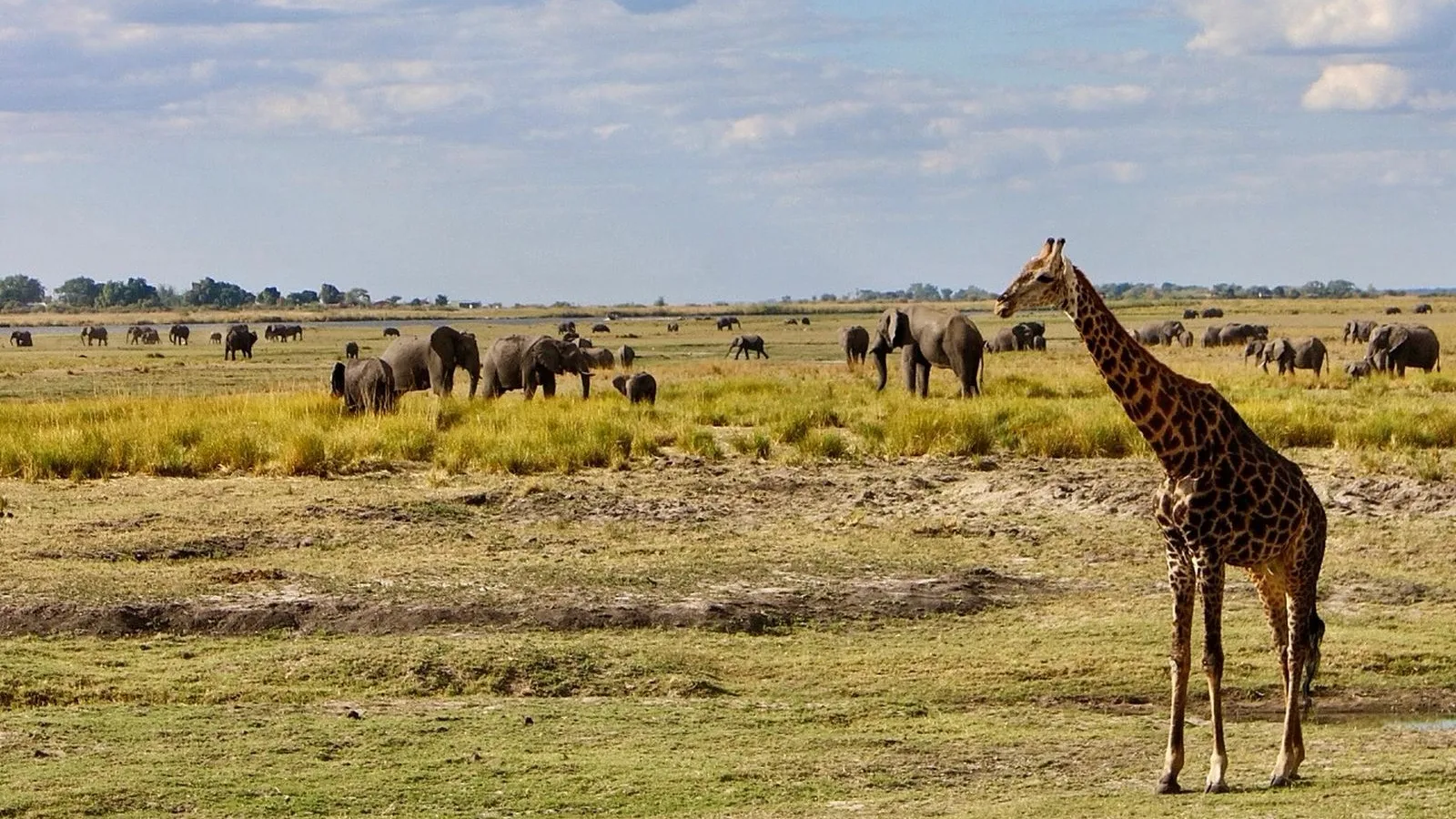
Let me be honest up front: Botswana is not on most digital nomad shortlists, and there is a reason for that. There is no nomad visa, the internet is fine but not blazing, and it costs more than you would guess from a map of southern Africa. So who is it actually for? People who want stability over buzz. Botswana is one of Africa’s longest-running democracies, English is an official language and used everywhere in business, the crime rate is low by regional standards, and you are a short drive from some of the best safari country on the planet (the Okavango Delta, Chobe, the Kalahari).
Two places anchor most foreigners. Gaborone, the capital, is where the jobs, embassies, malls and reliable connectivity are. It is functional rather than beautiful, but it works. Maun, up north, is the gateway to the Delta: smaller, hotter, more of a bush-town-with-an-airport feel, popular with people in tourism and conservation. A comfortable single person should budget somewhere around P13,000 to P20,000 a month (roughly $950 to $1,450), depending on how much you eat out and where you rent.
The trade-offs are real. Summers are brutally hot and increasingly dry. Load-shedding (rolling power cuts) has hit the region hard in recent years, so a backup plan for power and connectivity matters. Bureaucracy is slow and paper-heavy. And distances are large: without a car, life outside the cities is genuinely difficult. If you want a walkable, cheap, fast-wifi nomad hub, this is not it. If you want safety, space, wildlife and a stable base, keep reading.
Cost of living in Botswana
Here is the surprise for most people: Botswana is not cheap. The pula is a relatively strong currency, and imported goods carry the cost of a landlocked supply chain.
According to Numbeo’s Botswana cost-of-living data (mid-2026), a one-bedroom flat in a city centre runs around P3,900 a month (about $285), and roughly P2,500 (about $180) outside the centre, though good, secure, furnished places aimed at expats sit well above those averages. Estimated monthly costs for one person, excluding rent, land near P7,200 (about $525).
On the ground that looks like: milk around P19 a litre, a loaf of bread near P11.50, a kilo of chicken fillets about P68. A basic restaurant meal is roughly P125 (about $9), and dinner for two at a mid-range place around P400 (about $29). Home internet is on the pricier side at about P555 a month (roughly $40) for broadband. All of these move with the exchange rate (about 13.7 pula to the US dollar per xe.com at the time of writing), so treat every figure here as an estimate and verify before you go.
Botswana residence and entry (there is no digital nomad visa)
Plainly: Botswana does not offer a digital nomad visa, and as of 2026 there is no dedicated remote-worker route. Do not wait for one.
What actually exists is the standard tourist-entry-then-permit path, administered by the immigration authorities under the Government of Botswana. Many nationalities (including the UK, EU, US, Canada and Australia) can enter visa-free as tourists for up to 90 days. That is enough for a long scouting trip, but it does not grant the right to live or work there, and overstaying is taken seriously.
To stay longer you need the right permit, and there is no way around the paperwork:
- A residence permit paired with a work permit if you will be employed by or contracting through a Botswana entity. Employers usually drive this process.
- An investor route if you are setting up or buying into a business, which requires showing genuine capital and, often, local job creation.
- A retirement or self-sufficiency basis in some cases, where you prove independent income and are not taking a local job.
If you are a fully remote employee of a foreign company, none of these fits cleanly, which is the honest catch. Many people in that position simply live on repeated tourist entries, but that is a grey area and not a stable long-term plan. Before you commit, sanity-check your situation with our digital nomad visa checker and get proper local immigration advice, because the rules shift and enforcement varies.
Tax residency and the 183-day rule
This section is educational, not tax advice, and Botswana’s rules have a friendly quirk worth understanding.
Botswana taxes on a territorial basis: income is generally taxable only if its source is within Botswana, according to PwC’s Botswana tax summary. For a genuine remote worker earning from clients abroad, that distinction matters a great deal, though “source” can be argued and services tied to Botswana work can be pulled in, so do not assume foreign income is automatically untouched.
On residency, PwC describes two broad tests: you can be caught by keeping a permanent place of abode in Botswana while present there at any point in the tax year, or simply by being physically present for 183 days or more in the current or the previous tax year, per PwC’s residence rules. Either limb can make you resident. Resident income tax is progressive, with a tax-free band up to around P48,000 and a top marginal rate of about 25% above roughly P156,000. Non-residents face different starting bands. The tax authority is the Botswana Unified Revenue Service, or BURS.
The 183-day idea travels with you, so your home country may still consider you resident too. Run your own numbers through our tax residency checker and then talk to a cross-border accountant before you file anything.
Healthcare and insurance
Botswana’s public health system is free or near-free at the point of use and has been a regional model on some fronts, but it is stretched, and the main state referral hospital, Princess Marina in Gaborone, can mean long waits. Most expats and better-off locals use private care.
The private option people name most is Bokamoso Private Hospital in Gaborone, alongside Sidilega and Gaborone Private Hospital; Maun has smaller private clinics but serious cases are flown to Gaborone or, sometimes, South Africa. That evacuation risk is the reason to take insurance seriously here.
You will want either an international health policy or a local medical aid scheme such as BOMAID or Pula Medical Aid Fund. Whatever you choose, make sure it explicitly covers medical evacuation, because from a bush town that is the coverage that actually saves you. Costs vary widely by age and plan, so get current quotes rather than trusting any number here.
Money, banking and settling in
Opening a local bank account (First National Bank Botswana, Standard Chartered, Absa and Stanbic are the usual names) generally requires a residence permit, a local address and proof of income, so it is realistically a post-permit step, not a first-week one. Until then, a good multi-currency card (Wise, Revolut) plus cash covers you.
Cards work fine in Gaborone malls, hotels and larger shops, but carry pula for markets, taxis and anywhere rural. Get a local SIM (Mascom, Orange or beMobile) on arrival for mobile data and mobile-money, which is widely used. Sort a car early if you are heading beyond the cities, keep a power bank and offline maps for load-shedding and long empty roads, and expect any official process to take longer than you were told. Botswana rewards patience, and it gives back space, safety and quiet in return.
Figures are estimates. Always check the official source.
Frequently asked questions
- Botswana: is there a digital nomad visa?
- No dedicated digital nomad visa; most people use a standard residence permit instead.
- Botswana: when do you become a tax resident?
- You are likely a tax resident if you keep a permanent home in Botswana and spend at least 183 days there in the tax year; Botswana broadly taxes income sourced in the country, so most foreign income is usually outside the net though certain foreign investment income can be taxed.
- Botswana: what is the cost of living?
- The cost of living is moderate and the local currency is the BWP. Treat any figures as estimates.
- Botswana: do you need health insurance?
- Public care is limited for foreigners and private hospitals often expect cash or proof of cover up front, so comprehensive private insurance with medical evacuation is strongly advised.
- Botswana: can you drive on a foreign licence?
- An International Driving Permit alongside your home licence is recommended, and driving is on the left.
Terms worth knowing
Africa: more countries to explore
Put it to work
- Free
Digital-Nomad Visa Checker
See which digital-nomad visas you could actually get with your passport and income, ranked, with the binding reason per country.
→ - Free
Tax-Residency Reality Checker
Go beyond the 183-day myth: model the treaty tie-breaker and see whether two countries could both claim you as a tax resident.
→ - Free
Nomad Insurance Picker
Match SafetyWing, Genki, World Nomads and others to your situation, and see which policies satisfy specific visa proof requirements.
→ - Free
Banking & FX Picker
Find the right account stack to avoid fees and hold multiple currencies abroad, Wise, Revolut, N26, for your nationality and spending.
→