Countries
Cape Verde: visas, tax & cost of living
Thinking of moving to Cape Verde as a remote worker? Honest guide to the Remote Working Programme, cost of living, tax, healthcare and banking.
United KingdomCape Verde
Your move to Cape Verde on a United Kingdom passport
- VisitHardExceeds visa-free stay
- NomadFairly easyNomad visa, stricter rules
- RelocateMediumResidence with conditions
Visiting
Visa-free for up to 30 days. Travel on a passport valid for your whole stay, with a return or onward ticket and proof you can support yourself.
Passport validity: Passport valid for at least 6 months beyond your intended stay.
Heads-up: From 1 January 2026, visa on arrival was ended for citizens of 96 countries, who must now obtain a visa before travel.
At the border: Pre-register on the EASE portal (ease.gov.cv) at least 5 days before travel and pay the airport security tax (about 3,400 CVE); proof of insurance and accommodation may be requested.
Working remotely
Cabo Verde Remote Working Program.
Income needed: about 1,500 EUR average monthly bank balance over the prior 6 months (about 2,700 EUR if bringing family) (estimate)
Savings option: Qualification is based on holding the required average bank balance rather than a salary.
Duration: 12 months
Fee: about 20 EUR visa fee plus a 34 EUR airport tax on arrival (estimate)
Who qualifies: Remote workers, freelancers or self-employed earning from clients or companies outside Cape Verde, with health insurance and accommodation.
Tax and residency
Spending more than 183 days in a calendar year (or keeping a habitual home there) generally makes you tax resident and taxed on worldwide income; non-residents are taxed only on Cape Verde source income. (estimate)
The UK decides residence with its Statutory Residence Test (days in the UK plus your ties). As a non-resident you are usually taxed only on UK income; where one exists, a double-tax treaty with the destination decides who taxes what.
Practical
Currency: CVE. Cost of living: mid.
Healthcare: Public care is basic and concentrated in Praia and Mindelo, so foreigners are strongly advised to carry private travel or expat insurance covering medical evacuation.
Driving: Carry an International Driving Permit alongside your home licence when driving or renting a car.
Sources: Cabo Verde Remote Working Program (official tourism portal) · EASE pre-registration portal · Portal Consular - Visas (Ministry of Foreign Affairs) · PwC Tax Summaries - Cabo Verde individual residence · UK FCDO - Cape Verde entry requirements · GOV.UK: tax on foreign income · HMRC: double-taxation treaties
Estimates, not advice. Confirm with the official sources before you act.
United StatesCape Verde
Your move to Cape Verde on a United States passport
- VisitHardExceeds visa-free stay
- NomadFairly easyNomad visa, stricter rules
- RelocateMediumResidence with conditions
Visiting
Visa-free for up to 30 days. Travel on a passport valid for your whole stay, with a return or onward ticket and proof you can support yourself.
Passport validity: Passport valid for at least 6 months beyond your intended stay.
Heads-up: From 1 January 2026, visa on arrival was ended for citizens of 96 countries, who must now obtain a visa before travel.
At the border: Pre-register on the EASE portal (ease.gov.cv) at least 5 days before travel and pay the airport security tax (about 3,400 CVE); proof of insurance and accommodation may be requested.
Working remotely
Cabo Verde Remote Working Program.
Income needed: about 1,500 EUR average monthly bank balance over the prior 6 months (about 2,700 EUR if bringing family) (estimate)
Savings option: Qualification is based on holding the required average bank balance rather than a salary.
Duration: 12 months
Fee: about 20 EUR visa fee plus a 34 EUR airport tax on arrival (estimate)
Who qualifies: Remote workers, freelancers or self-employed earning from clients or companies outside Cape Verde, with health insurance and accommodation.
Tax and residency
Spending more than 183 days in a calendar year (or keeping a habitual home there) generally makes you tax resident and taxed on worldwide income; non-residents are taxed only on Cape Verde source income. (estimate)
The US taxes its citizens on worldwide income wherever you live, so you keep filing US returns abroad. The Foreign Earned Income Exclusion and the foreign tax credit are what stop you being taxed twice.
Practical
Currency: CVE. Cost of living: mid.
Healthcare: Public care is basic and concentrated in Praia and Mindelo, so foreigners are strongly advised to carry private travel or expat insurance covering medical evacuation.
Driving: Carry an International Driving Permit alongside your home licence when driving or renting a car.
Sources: Cabo Verde Remote Working Program (official tourism portal) · EASE pre-registration portal · Portal Consular - Visas (Ministry of Foreign Affairs) · PwC Tax Summaries - Cabo Verde individual residence · UK FCDO - Cape Verde entry requirements · IRS: Foreign Earned Income Exclusion · IRS: tax treaties
Estimates, not advice. Confirm with the official sources before you act.
IndiaCape Verde
Your move to Cape Verde on a India passport
- VisitFairly easyVisa on arrival, e-visa or travel authorization (ETA)
- NomadFairly easyNomad visa, stricter rules
- RelocateMediumResidence with conditions
Visiting
You can get a visa on arrival. Carry the fee and the documents the border asks for, and confirm the current rules before you fly.
Passport validity: Passport valid for at least 6 months beyond your intended stay.
Heads-up: From 1 January 2026, visa on arrival was ended for citizens of 96 countries, who must now obtain a visa before travel.
At the border: Pre-register on the EASE portal (ease.gov.cv) at least 5 days before travel and pay the airport security tax (about 3,400 CVE); proof of insurance and accommodation may be requested.
Working remotely
Cabo Verde Remote Working Program.
Income needed: about 1,500 EUR average monthly bank balance over the prior 6 months (about 2,700 EUR if bringing family) (estimate)
Savings option: Qualification is based on holding the required average bank balance rather than a salary.
Duration: 12 months
Fee: about 20 EUR visa fee plus a 34 EUR airport tax on arrival (estimate)
Who qualifies: Remote workers, freelancers or self-employed earning from clients or companies outside Cape Verde, with health insurance and accommodation.
Tax and residency
Spending more than 183 days in a calendar year (or keeping a habitual home there) generally makes you tax resident and taxed on worldwide income; non-residents are taxed only on Cape Verde source income. (estimate)
India taxes residents on worldwide income; your status depends on the days you spend in India (broadly 182 or more in the year). As a non-resident (NRI) you are taxed only on Indian-source income, and the relevant double-tax treaty allocates the rest.
Practical
Currency: CVE. Cost of living: mid.
Healthcare: Public care is basic and concentrated in Praia and Mindelo, so foreigners are strongly advised to carry private travel or expat insurance covering medical evacuation.
Driving: Carry an International Driving Permit alongside your home licence when driving or renting a car.
Sources: Cabo Verde Remote Working Program (official tourism portal) · EASE pre-registration portal · Portal Consular - Visas (Ministry of Foreign Affairs) · PwC Tax Summaries - Cabo Verde individual residence · UK FCDO - Cape Verde entry requirements · Income Tax Department, India · India: Double Taxation Avoidance Agreements
Estimates, not advice. Confirm with the official sources before you act.
GermanyCape Verde
Your move to Cape Verde on a Germany passport
- VisitHardExceeds visa-free stay
- NomadFairly easyNomad visa, stricter rules
- RelocateMediumResidence with conditions
Visiting
Visa-free for up to 30 days. Travel on a passport valid for your whole stay, with a return or onward ticket and proof you can support yourself.
Passport validity: Passport valid for at least 6 months beyond your intended stay.
Heads-up: From 1 January 2026, visa on arrival was ended for citizens of 96 countries, who must now obtain a visa before travel.
At the border: Pre-register on the EASE portal (ease.gov.cv) at least 5 days before travel and pay the airport security tax (about 3,400 CVE); proof of insurance and accommodation may be requested.
Working remotely
Cabo Verde Remote Working Program.
Income needed: about 1,500 EUR average monthly bank balance over the prior 6 months (about 2,700 EUR if bringing family) (estimate)
Savings option: Qualification is based on holding the required average bank balance rather than a salary.
Duration: 12 months
Fee: about 20 EUR visa fee plus a 34 EUR airport tax on arrival (estimate)
Who qualifies: Remote workers, freelancers or self-employed earning from clients or companies outside Cape Verde, with health insurance and accommodation.
Tax and residency
Spending more than 183 days in a calendar year (or keeping a habitual home there) generally makes you tax resident and taxed on worldwide income; non-residents are taxed only on Cape Verde source income. (estimate)
Germany taxes residents on worldwide income; you become resident through a home available to you (Wohnsitz) or a habitual abode of more than six months. As a non-resident you are usually taxed only on German-source income, and where one exists a double-tax treaty with the destination decides who taxes what.
Practical
Currency: CVE. Cost of living: mid.
Healthcare: Public care is basic and concentrated in Praia and Mindelo, so foreigners are strongly advised to carry private travel or expat insurance covering medical evacuation.
Driving: Carry an International Driving Permit alongside your home licence when driving or renting a car.
Sources: Cabo Verde Remote Working Program (official tourism portal) · EASE pre-registration portal · Portal Consular - Visas (Ministry of Foreign Affairs) · PwC Tax Summaries - Cabo Verde individual residence · UK FCDO - Cape Verde entry requirements · Bundeszentralamt für Steuern (BZSt) · Germany: double-taxation agreements (BMF)
Estimates, not advice. Confirm with the official sources before you act.
FranceCape Verde
Your move to Cape Verde on a France passport
- VisitHardExceeds visa-free stay
- NomadFairly easyNomad visa, stricter rules
- RelocateMediumResidence with conditions
Visiting
Visa-free for up to 30 days. Travel on a passport valid for your whole stay, with a return or onward ticket and proof you can support yourself.
Passport validity: Passport valid for at least 6 months beyond your intended stay.
Heads-up: From 1 January 2026, visa on arrival was ended for citizens of 96 countries, who must now obtain a visa before travel.
At the border: Pre-register on the EASE portal (ease.gov.cv) at least 5 days before travel and pay the airport security tax (about 3,400 CVE); proof of insurance and accommodation may be requested.
Working remotely
Cabo Verde Remote Working Program.
Income needed: about 1,500 EUR average monthly bank balance over the prior 6 months (about 2,700 EUR if bringing family) (estimate)
Savings option: Qualification is based on holding the required average bank balance rather than a salary.
Duration: 12 months
Fee: about 20 EUR visa fee plus a 34 EUR airport tax on arrival (estimate)
Who qualifies: Remote workers, freelancers or self-employed earning from clients or companies outside Cape Verde, with health insurance and accommodation.
Tax and residency
Spending more than 183 days in a calendar year (or keeping a habitual home there) generally makes you tax resident and taxed on worldwide income; non-residents are taxed only on Cape Verde source income. (estimate)
France taxes you on your worldwide income if your tax home (domicile fiscal) stays there, broadly when your household, main home, main job or main economic interests are in France, so moving abroad alone may not end it. Once you genuinely settle elsewhere you are usually taxed only on French-source income, and tax treaties typically prevent paying twice through an exemption or a foreign tax credit, but treat any figures as estimates and check your situation.
Practical
Currency: CVE. Cost of living: mid.
Healthcare: Public care is basic and concentrated in Praia and Mindelo, so foreigners are strongly advised to carry private travel or expat insurance covering medical evacuation.
Driving: Carry an International Driving Permit alongside your home licence when driving or renting a car.
Sources: Cabo Verde Remote Working Program (official tourism portal) · EASE pre-registration portal · Portal Consular - Visas (Ministry of Foreign Affairs) · PwC Tax Summaries - Cabo Verde individual residence · UK FCDO - Cape Verde entry requirements · impots.gouv.fr - Résidents de France · impots.gouv.fr - Les conventions internationales
Estimates, not advice. Confirm with the official sources before you act.
SpainCape Verde
Your move to Cape Verde on a Spain passport
- VisitHardExceeds visa-free stay
- NomadFairly easyNomad visa, stricter rules
- RelocateMediumResidence with conditions
Visiting
Visa-free for up to 30 days. Travel on a passport valid for your whole stay, with a return or onward ticket and proof you can support yourself.
Passport validity: Passport valid for at least 6 months beyond your intended stay.
Heads-up: From 1 January 2026, visa on arrival was ended for citizens of 96 countries, who must now obtain a visa before travel.
At the border: Pre-register on the EASE portal (ease.gov.cv) at least 5 days before travel and pay the airport security tax (about 3,400 CVE); proof of insurance and accommodation may be requested.
Working remotely
Cabo Verde Remote Working Program.
Income needed: about 1,500 EUR average monthly bank balance over the prior 6 months (about 2,700 EUR if bringing family) (estimate)
Savings option: Qualification is based on holding the required average bank balance rather than a salary.
Duration: 12 months
Fee: about 20 EUR visa fee plus a 34 EUR airport tax on arrival (estimate)
Who qualifies: Remote workers, freelancers or self-employed earning from clients or companies outside Cape Verde, with health insurance and accommodation.
Tax and residency
Spending more than 183 days in a calendar year (or keeping a habitual home there) generally makes you tax resident and taxed on worldwide income; non-residents are taxed only on Cape Verde source income. (estimate)
If Spain still counts as your tax home (roughly 183+ days in the country in a year, or your main base of life and income sits there), Spain taxes your worldwide income at IRPF rates, so what you earn abroad usually counts too. The sting is softened by double-tax treaties and a foreign-tax credit, plus the Article 7.p exemption that can shelter work done abroad up to around 60,100 euros a year, but treat every figure as an estimate and check your own case before you file.
Practical
Currency: CVE. Cost of living: mid.
Healthcare: Public care is basic and concentrated in Praia and Mindelo, so foreigners are strongly advised to carry private travel or expat insurance covering medical evacuation.
Driving: Carry an International Driving Permit alongside your home licence when driving or renting a car.
Sources: Cabo Verde Remote Working Program (official tourism portal) · EASE pre-registration portal · Portal Consular - Visas (Ministry of Foreign Affairs) · PwC Tax Summaries - Cabo Verde individual residence · UK FCDO - Cape Verde entry requirements · Agencia Tributaria: persona física residente en España · Agencia Tributaria: obtención de rentas extranjeras, reglas generales
Estimates, not advice. Confirm with the official sources before you act.
ItalyCape Verde
Your move to Cape Verde on a Italy passport
- VisitHardExceeds visa-free stay
- NomadFairly easyNomad visa, stricter rules
- RelocateMediumResidence with conditions
Visiting
Visa-free for up to 30 days. Travel on a passport valid for your whole stay, with a return or onward ticket and proof you can support yourself.
Passport validity: Passport valid for at least 6 months beyond your intended stay.
Heads-up: From 1 January 2026, visa on arrival was ended for citizens of 96 countries, who must now obtain a visa before travel.
At the border: Pre-register on the EASE portal (ease.gov.cv) at least 5 days before travel and pay the airport security tax (about 3,400 CVE); proof of insurance and accommodation may be requested.
Working remotely
Cabo Verde Remote Working Program.
Income needed: about 1,500 EUR average monthly bank balance over the prior 6 months (about 2,700 EUR if bringing family) (estimate)
Savings option: Qualification is based on holding the required average bank balance rather than a salary.
Duration: 12 months
Fee: about 20 EUR visa fee plus a 34 EUR airport tax on arrival (estimate)
Who qualifies: Remote workers, freelancers or self-employed earning from clients or companies outside Cape Verde, with health insurance and accommodation.
Tax and residency
Spending more than 183 days in a calendar year (or keeping a habitual home there) generally makes you tax resident and taxed on worldwide income; non-residents are taxed only on Cape Verde source income. (estimate)
Italy generally treats you as a tax resident if for most of the year (roughly 183 days or more) your home, family or registration ties are here, and residents are taxed on worldwide income wherever they live. The relief is usually a foreign tax credit for tax already paid abroad, often shaped by Italy's double-taxation treaties, so the same income should not be taxed twice.
Practical
Currency: CVE. Cost of living: mid.
Healthcare: Public care is basic and concentrated in Praia and Mindelo, so foreigners are strongly advised to carry private travel or expat insurance covering medical evacuation.
Driving: Carry an International Driving Permit alongside your home licence when driving or renting a car.
Sources: Cabo Verde Remote Working Program (official tourism portal) · EASE pre-registration portal · Portal Consular - Visas (Ministry of Foreign Affairs) · PwC Tax Summaries - Cabo Verde individual residence · UK FCDO - Cape Verde entry requirements · Agenzia delle Entrate, Residence for tax purposes · Agenzia delle Entrate, Bilateral agreements to prevent double taxation
Estimates, not advice. Confirm with the official sources before you act.
CanadaCape Verde
Your move to Cape Verde on a Canada passport
- VisitHardExceeds visa-free stay
- NomadFairly easyNomad visa, stricter rules
- RelocateMediumResidence with conditions
Visiting
Visa-free for up to 30 days. Travel on a passport valid for your whole stay, with a return or onward ticket and proof you can support yourself.
Passport validity: Passport valid for at least 6 months beyond your intended stay.
Heads-up: From 1 January 2026, visa on arrival was ended for citizens of 96 countries, who must now obtain a visa before travel.
At the border: Pre-register on the EASE portal (ease.gov.cv) at least 5 days before travel and pay the airport security tax (about 3,400 CVE); proof of insurance and accommodation may be requested.
Working remotely
Cabo Verde Remote Working Program.
Income needed: about 1,500 EUR average monthly bank balance over the prior 6 months (about 2,700 EUR if bringing family) (estimate)
Savings option: Qualification is based on holding the required average bank balance rather than a salary.
Duration: 12 months
Fee: about 20 EUR visa fee plus a 34 EUR airport tax on arrival (estimate)
Who qualifies: Remote workers, freelancers or self-employed earning from clients or companies outside Cape Verde, with health insurance and accommodation.
Tax and residency
Spending more than 183 days in a calendar year (or keeping a habitual home there) generally makes you tax resident and taxed on worldwide income; non-residents are taxed only on Cape Verde source income. (estimate)
Canada taxes you on residency, not on holding the passport, so as long as the CRA still treats you as a resident (kept home, family or strong ties) you generally owe Canadian tax on your worldwide income. The relief is usually a foreign tax credit for tax you already paid abroad, often topped up by a tax treaty, though the exact amounts are only estimates until you check your own case.
Practical
Currency: CVE. Cost of living: mid.
Healthcare: Public care is basic and concentrated in Praia and Mindelo, so foreigners are strongly advised to carry private travel or expat insurance covering medical evacuation.
Driving: Carry an International Driving Permit alongside your home licence when driving or renting a car.
Sources: Cabo Verde Remote Working Program (official tourism portal) · EASE pre-registration portal · Portal Consular - Visas (Ministry of Foreign Affairs) · PwC Tax Summaries - Cabo Verde individual residence · UK FCDO - Cape Verde entry requirements · Canada Revenue Agency, Determining your residency status · Department of Finance Canada, Tax treaties in force
Estimates, not advice. Confirm with the official sources before you act.
AustraliaCape Verde
Your move to Cape Verde on a Australia passport
- VisitFairly easyVisa on arrival, e-visa or travel authorization (ETA)
- NomadFairly easyNomad visa, stricter rules
- RelocateMediumResidence with conditions
Visiting
You can get a visa on arrival. Carry the fee and the documents the border asks for, and confirm the current rules before you fly.
Passport validity: Passport valid for at least 6 months beyond your intended stay.
Heads-up: From 1 January 2026, visa on arrival was ended for citizens of 96 countries, who must now obtain a visa before travel.
At the border: Pre-register on the EASE portal (ease.gov.cv) at least 5 days before travel and pay the airport security tax (about 3,400 CVE); proof of insurance and accommodation may be requested.
Working remotely
Cabo Verde Remote Working Program.
Income needed: about 1,500 EUR average monthly bank balance over the prior 6 months (about 2,700 EUR if bringing family) (estimate)
Savings option: Qualification is based on holding the required average bank balance rather than a salary.
Duration: 12 months
Fee: about 20 EUR visa fee plus a 34 EUR airport tax on arrival (estimate)
Who qualifies: Remote workers, freelancers or self-employed earning from clients or companies outside Cape Verde, with health insurance and accommodation.
Tax and residency
Spending more than 183 days in a calendar year (or keeping a habitual home there) generally makes you tax resident and taxed on worldwide income; non-residents are taxed only on Cape Verde source income. (estimate)
If you stay an Australian resident for tax purposes, Australia generally taxes your worldwide income wherever you live, with residency turned on the moment your real home and ties are here (a continuous stay of roughly 6 months can be enough). To soften double tax, you can usually claim a Foreign Income Tax Offset for tax already paid abroad, capped at the Australian tax on that income, and treaties may help too, so treat these figures as estimates and check your own case.
Practical
Currency: CVE. Cost of living: mid.
Healthcare: Public care is basic and concentrated in Praia and Mindelo, so foreigners are strongly advised to carry private travel or expat insurance covering medical evacuation.
Driving: Carry an International Driving Permit alongside your home licence when driving or renting a car.
Sources: Cabo Verde Remote Working Program (official tourism portal) · EASE pre-registration portal · Portal Consular - Visas (Ministry of Foreign Affairs) · PwC Tax Summaries - Cabo Verde individual residence · UK FCDO - Cape Verde entry requirements · Australian Taxation Office, Australian resident for tax purposes · Australian Taxation Office, International tax agreements (tax treaties)
Estimates, not advice. Confirm with the official sources before you act.
BrazilCape Verde
Your move to Cape Verde on a Brazil passport
- VisitHardExceeds visa-free stay
- NomadFairly easyNomad visa, stricter rules
- RelocateMediumResidence with conditions
Visiting
Visa-free for up to 30 days. Travel on a passport valid for your whole stay, with a return or onward ticket and proof you can support yourself.
Passport validity: Passport valid for at least 6 months beyond your intended stay.
Heads-up: From 1 January 2026, visa on arrival was ended for citizens of 96 countries, who must now obtain a visa before travel.
At the border: Pre-register on the EASE portal (ease.gov.cv) at least 5 days before travel and pay the airport security tax (about 3,400 CVE); proof of insurance and accommodation may be requested.
Working remotely
Cabo Verde Remote Working Program.
Income needed: about 1,500 EUR average monthly bank balance over the prior 6 months (about 2,700 EUR if bringing family) (estimate)
Savings option: Qualification is based on holding the required average bank balance rather than a salary.
Duration: 12 months
Fee: about 20 EUR visa fee plus a 34 EUR airport tax on arrival (estimate)
Who qualifies: Remote workers, freelancers or self-employed earning from clients or companies outside Cape Verde, with health insurance and accommodation.
Tax and residency
Spending more than 183 days in a calendar year (or keeping a habitual home there) generally makes you tax resident and taxed on worldwide income; non-residents are taxed only on Cape Verde source income. (estimate)
If Brazil still counts you as tax-resident, usually triggered by a permanent visa, a temporary visa plus a job, or roughly 183 days in the country within any 12 months, the Receita Federal taxes your worldwide income, so you keep filing the annual return wherever you live. The relief is real but partial: tax paid abroad can normally be credited against what you owe in Brazil under a treaty or recognised reciprocity, so most people are not taxed twice on the same income.
Practical
Currency: CVE. Cost of living: mid.
Healthcare: Public care is basic and concentrated in Praia and Mindelo, so foreigners are strongly advised to carry private travel or expat insurance covering medical evacuation.
Driving: Carry an International Driving Permit alongside your home licence when driving or renting a car.
Sources: Cabo Verde Remote Working Program (official tourism portal) · EASE pre-registration portal · Portal Consular - Visas (Ministry of Foreign Affairs) · PwC Tax Summaries - Cabo Verde individual residence · UK FCDO - Cape Verde entry requirements · Receita Federal, Acordos para evitar a dupla tributação · Receita Federal, Imposto sobre a Renda da Pessoa Física (IRPF)
Estimates, not advice. Confirm with the official sources before you act.
MexicoCape Verde
Your move to Cape Verde on a Mexico passport
- VisitFairly easyVisa on arrival, e-visa or travel authorization (ETA)
- NomadFairly easyNomad visa, stricter rules
- RelocateMediumResidence with conditions
Visiting
You can get a visa on arrival. Carry the fee and the documents the border asks for, and confirm the current rules before you fly.
Passport validity: Passport valid for at least 6 months beyond your intended stay.
Heads-up: From 1 January 2026, visa on arrival was ended for citizens of 96 countries, who must now obtain a visa before travel.
At the border: Pre-register on the EASE portal (ease.gov.cv) at least 5 days before travel and pay the airport security tax (about 3,400 CVE); proof of insurance and accommodation may be requested.
Working remotely
Cabo Verde Remote Working Program.
Income needed: about 1,500 EUR average monthly bank balance over the prior 6 months (about 2,700 EUR if bringing family) (estimate)
Savings option: Qualification is based on holding the required average bank balance rather than a salary.
Duration: 12 months
Fee: about 20 EUR visa fee plus a 34 EUR airport tax on arrival (estimate)
Who qualifies: Remote workers, freelancers or self-employed earning from clients or companies outside Cape Verde, with health insurance and accommodation.
Tax and residency
Spending more than 183 days in a calendar year (or keeping a habitual home there) generally makes you tax resident and taxed on worldwide income; non-residents are taxed only on Cape Verde source income. (estimate)
Mexico taxes you on your worldwide income once you count as a tax resident, which usually means your main home or your center of life is here (very roughly, spending more than about 183 days a year can tip the balance). The good news is the SAT lets you credit foreign income tax you already paid, and Mexico's double-taxation treaties mean the same money should not normally be taxed twice.
Practical
Currency: CVE. Cost of living: mid.
Healthcare: Public care is basic and concentrated in Praia and Mindelo, so foreigners are strongly advised to carry private travel or expat insurance covering medical evacuation.
Driving: Carry an International Driving Permit alongside your home licence when driving or renting a car.
Sources: Cabo Verde Remote Working Program (official tourism portal) · EASE pre-registration portal · Portal Consular - Visas (Ministry of Foreign Affairs) · PwC Tax Summaries - Cabo Verde individual residence · UK FCDO - Cape Verde entry requirements · SAT - Servicio de Administración Tributaria · SAT - Tratados en Materia Fiscal (para evitar la doble tributación)
Estimates, not advice. Confirm with the official sources before you act.
PhilippinesCape Verde
Your move to Cape Verde on a Philippines passport
- VisitFairly easyVisa on arrival, e-visa or travel authorization (ETA)
- NomadFairly easyNomad visa, stricter rules
- RelocateMediumResidence with conditions
Visiting
You can get a visa on arrival. Carry the fee and the documents the border asks for, and confirm the current rules before you fly.
Passport validity: Passport valid for at least 6 months beyond your intended stay.
Heads-up: From 1 January 2026, visa on arrival was ended for citizens of 96 countries, who must now obtain a visa before travel.
At the border: Pre-register on the EASE portal (ease.gov.cv) at least 5 days before travel and pay the airport security tax (about 3,400 CVE); proof of insurance and accommodation may be requested.
Working remotely
Cabo Verde Remote Working Program.
Income needed: about 1,500 EUR average monthly bank balance over the prior 6 months (about 2,700 EUR if bringing family) (estimate)
Savings option: Qualification is based on holding the required average bank balance rather than a salary.
Duration: 12 months
Fee: about 20 EUR visa fee plus a 34 EUR airport tax on arrival (estimate)
Who qualifies: Remote workers, freelancers or self-employed earning from clients or companies outside Cape Verde, with health insurance and accommodation.
Tax and residency
Spending more than 183 days in a calendar year (or keeping a habitual home there) generally makes you tax resident and taxed on worldwide income; non-residents are taxed only on Cape Verde source income. (estimate)
If you stay a resident citizen, the Philippines taxes your worldwide income, but once you genuinely live and work abroad you usually count as a non-resident citizen and are taxed only on income from Philippine sources. The exact line depends on how long you are out and your ties back home, so treat these as estimates, and a foreign tax credit can offset tax already paid abroad.
Practical
Currency: CVE. Cost of living: mid.
Healthcare: Public care is basic and concentrated in Praia and Mindelo, so foreigners are strongly advised to carry private travel or expat insurance covering medical evacuation.
Driving: Carry an International Driving Permit alongside your home licence when driving or renting a car.
Sources: Cabo Verde Remote Working Program (official tourism portal) · EASE pre-registration portal · Portal Consular - Visas (Ministry of Foreign Affairs) · PwC Tax Summaries - Cabo Verde individual residence · UK FCDO - Cape Verde entry requirements · BIR - Taxation of Foreign Source Income · BIR - Taxation of Non-Residents
Estimates, not advice. Confirm with the official sources before you act.
NigeriaCape Verde
Your move to Cape Verde on a Nigeria passport
- VisitEasyVisa-free entry
- NomadFairly easyNomad visa, stricter rules
- RelocateMediumResidence with conditions
Visiting
Visa-free for up to short stays. Travel on a passport valid for your whole stay, with a return or onward ticket and proof you can support yourself.
Passport validity: Passport valid for at least 6 months beyond your intended stay.
Heads-up: From 1 January 2026, visa on arrival was ended for citizens of 96 countries, who must now obtain a visa before travel.
At the border: Pre-register on the EASE portal (ease.gov.cv) at least 5 days before travel and pay the airport security tax (about 3,400 CVE); proof of insurance and accommodation may be requested.
Working remotely
Cabo Verde Remote Working Program.
Income needed: about 1,500 EUR average monthly bank balance over the prior 6 months (about 2,700 EUR if bringing family) (estimate)
Savings option: Qualification is based on holding the required average bank balance rather than a salary.
Duration: 12 months
Fee: about 20 EUR visa fee plus a 34 EUR airport tax on arrival (estimate)
Who qualifies: Remote workers, freelancers or self-employed earning from clients or companies outside Cape Verde, with health insurance and accommodation.
Tax and residency
Spending more than 183 days in a calendar year (or keeping a habitual home there) generally makes you tax resident and taxed on worldwide income; non-residents are taxed only on Cape Verde source income. (estimate)
If Nigeria still counts you as resident, roughly 183 or more days in the country in a year, or you keep a home, habitual abode or close family and economic ties there, you are generally taxed on your worldwide income, not just what you earn in Nigeria. There is usually a foreign tax credit, and Nigeria's tax treaties, so tax you already paid abroad can typically be set against your Nigerian bill, but treat these figures as estimates and check the current rules before you file.
Practical
Currency: CVE. Cost of living: mid.
Healthcare: Public care is basic and concentrated in Praia and Mindelo, so foreigners are strongly advised to carry private travel or expat insurance covering medical evacuation.
Driving: Carry an International Driving Permit alongside your home licence when driving or renting a car.
Sources: Cabo Verde Remote Working Program (official tourism portal) · EASE pre-registration portal · Portal Consular - Visas (Ministry of Foreign Affairs) · PwC Tax Summaries - Cabo Verde individual residence · UK FCDO - Cape Verde entry requirements · Federal Inland Revenue Service (FIRS) · FIRS - Tax Treaties and Related Matters
Estimates, not advice. Confirm with the official sources before you act.
VietnamCape Verde
Your move to Cape Verde on a Vietnam passport
- VisitFairly easyVisa on arrival, e-visa or travel authorization (ETA)
- NomadFairly easyNomad visa, stricter rules
- RelocateMediumResidence with conditions
Visiting
You can get a visa on arrival. Carry the fee and the documents the border asks for, and confirm the current rules before you fly.
Passport validity: Passport valid for at least 6 months beyond your intended stay.
Heads-up: From 1 January 2026, visa on arrival was ended for citizens of 96 countries, who must now obtain a visa before travel.
At the border: Pre-register on the EASE portal (ease.gov.cv) at least 5 days before travel and pay the airport security tax (about 3,400 CVE); proof of insurance and accommodation may be requested.
Working remotely
Cabo Verde Remote Working Program.
Income needed: about 1,500 EUR average monthly bank balance over the prior 6 months (about 2,700 EUR if bringing family) (estimate)
Savings option: Qualification is based on holding the required average bank balance rather than a salary.
Duration: 12 months
Fee: about 20 EUR visa fee plus a 34 EUR airport tax on arrival (estimate)
Who qualifies: Remote workers, freelancers or self-employed earning from clients or companies outside Cape Verde, with health insurance and accommodation.
Tax and residency
Spending more than 183 days in a calendar year (or keeping a habitual home there) generally makes you tax resident and taxed on worldwide income; non-residents are taxed only on Cape Verde source income. (estimate)
Vietnam treats you as a tax resident once you spend roughly 183 days there in a calendar year (or any rolling 12 months) or keep a permanent home, and residents are taxed on worldwide income at progressive rates of around 5% to 35%; there is no foreign-earned-income exclusion, but Vietnam's tax treaties and a foreign tax credit usually stop the same income being taxed twice.
Practical
Currency: CVE. Cost of living: mid.
Healthcare: Public care is basic and concentrated in Praia and Mindelo, so foreigners are strongly advised to carry private travel or expat insurance covering medical evacuation.
Driving: Carry an International Driving Permit alongside your home licence when driving or renting a car.
Sources: Cabo Verde Remote Working Program (official tourism portal) · EASE pre-registration portal · Portal Consular - Visas (Ministry of Foreign Affairs) · PwC Tax Summaries - Cabo Verde individual residence · UK FCDO - Cape Verde entry requirements · General Department of Taxation (Tổng cục Thuế) · GDT - Agreements for Avoidance of Double Taxation
Estimates, not advice. Confirm with the official sources before you act.
Should you move to Cape Verde?
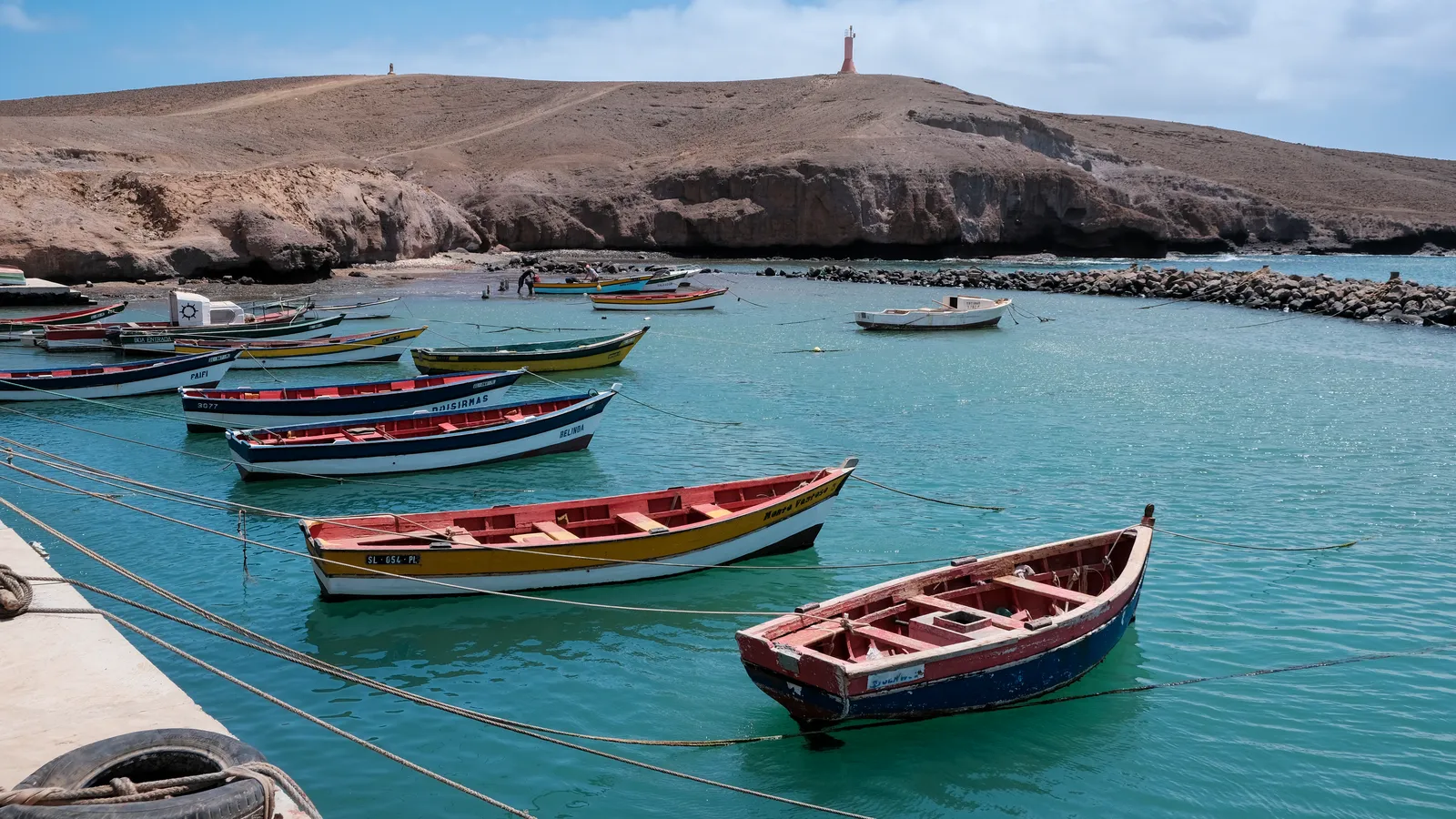
Cape Verde is a scatter of ten volcanic islands out in the Atlantic, a few hundred kilometres off Senegal, and it makes sense for a very particular kind of remote worker: someone who wants year-round warmth, an easy European time zone, and beaches at the end of the working day, and who is genuinely relaxed about rough edges. This is not Lisbon with better weather. It is a small, developing, mid-Atlantic nation where water is scarce, power flickers, and “we’ll sort it tomorrow” is a way of life.
The islands split into camps. Sal (the town of Santa Maria) and Boa Vista are flat, sun-baked, and built around resorts, kite-surfing, and package tourism, so they are the easiest landing pad and also the priciest. Santiago, home to the capital Praia, is the most urban and the most authentically Cape Verdean: real neighbourhoods, real markets, less polish. São Vicente (Mindelo) is the cultural heart, with live music most nights and a walkable, faded-elegant port town. Most first-time nomads start in Santa Maria for the infrastructure, then decide whether they want something more local.
Budget honestly. A single remote worker can live reasonably on roughly €900 to €1,500 a month, leaning cheaper on Santiago or São Vicente and more expensive on the resort islands, where almost everything is imported. The trade-offs are real: patchy internet, occasional power and water cuts, a hazy Saharan dust season (the bruma seca), limited healthcare, and a language barrier once you leave the tourist strip. If those things would ruin your month, look elsewhere. If they read as adventure, few places give you this much sun and sea for the money.
Cost of living in Cape Verde
The currency is the Cape Verdean escudo (CVE), pegged to the euro at roughly 110 escudos to €1, which makes budgeting refreshingly predictable, and euros are widely accepted on the tourist islands anyway.
Rent is the swing factor. Per Numbeo, a one-bedroom flat runs around €375 a month in a city centre and closer to €225 outside the centre, though on Sal and Boa Vista a furnished place aimed at foreigners will often cost more than that. Expect utilities of roughly €130 a month for a small apartment and home broadband around €47, when it is available and behaving.
Food is a tale of two baskets. Local produce, fish, and street food are cheap: a meal at a simple restaurant is about €5, and a sit-down dinner for two runs near €48. Anything imported (cheese, cereal, wine, most packaged goods) is dear, because it arrived by boat. A single person’s monthly costs excluding rent land near €690 by Numbeo’s estimate, which feels high if you shop like a local and low if you live on imports. Treat all of these as ballpark figures and verify current prices before you commit.
Cape Verde Remote Working Programme (the digital nomad route)
Cape Verde does have a genuine route for remote workers. It launched the Remote Working Programme in December 2020, one of the earlier “nomad visas” in the world, aimed squarely at people employed or self-employed abroad who want to base themselves in the islands.
The core requirements, per Nomad Girl’s breakdown, are financial rather than salary-based: you show an average bank balance of around €1,500 over the previous six months as an individual, or roughly €2,700 for a family. The permit is valid for six months and is renewable. Fees are modest, in the region of a €20 visa fee plus a €34 airport security charge, and you typically finalise the stamp within about 30 days of arrival. Eligibility centres on the better-connected islands, Sal, Boa Vista, and Santiago (Praia), where the banking and paperwork actually function.
Two honest caveats. First, some applicants have reported the online process stalling or going quiet, so build in a fallback: many people simply enter on the standard tourist entry (Cape Verde uses a pre-arrival EASE registration rather than a visa for most Western passports) and stay within the permitted window. Second, holding the Remote Working permit grants temporary residence, not tax residence, which matters for the next section. Confirm the current rules on an official channel before you fly, and you can sanity-check your situation with our digital nomad visa checker.
Tax residency and the 183 day rule
Here is the educational version, not advice. Like most countries, Cape Verde generally treats you as a tax resident once you spend more than 183 days there in a 12-month period, or once your main home and life are clearly based there. Residents are, in principle, taxable on worldwide income under the personal income tax (IRPS/IUR), with progressive rates that climb into the mid-twenties percent at the top; non-residents are taxed only on Cape Verde-source income. Treat every rate as an estimate and check the current schedule before relying on it.
The wrinkle for nomads is that the Remote Working Programme is explicitly designed not to make you a Cape Verde tax resident, and it assumes you keep paying tax at home. That is convenient, but staying past six months, renewing repeatedly, or making the islands your genuine base can quietly flip your status, and leaving your home country does not automatically end your obligations there either. This is exactly the kind of thing worth modelling before you go: our tax residency checker walks through the day-counting, and a cross-border accountant is money well spent if your income is meaningful.
Healthcare and insurance
Be clear-eyed here. The UK Foreign Office describes healthcare in Cape Verde as very basic and limited. Real hospitals exist only in Praia (Hospital Agostinho Neto) and Mindelo (Hospital Baptista de Sousa), with smaller clinics on the other islands and thin coverage on Boa Vista and the outer islands. Serious cases are routinely evacuated abroad, usually to Portugal or the Canary Islands, and some islands lack the airport capacity for easy medical air transport.
The practical takeaways: bring any prescription medication you rely on, because supply is patchy and some drugs are simply unavailable. Comprehensive private travel or international health insurance is essential, not optional, and it must include medical evacuation, since a European GHIC is not accepted here. For day-to-day care, private clinics on Sal and in Praia are workable for minor issues and reasonably priced by European standards, but you are insuring against the big event, not the sniffle. Providers like Cigna Global, SafetyWing, or a solid travel policy are the usual choices; compare evacuation limits carefully.
Money, banking and settling in
Cape Verde still runs largely on cash. Cards are accepted at hotels, larger restaurants, and supermarkets on the tourist islands, but the moment you go local you will want escudos in your pocket. ATMs run on the domestic Vinti4 network and can be temperamental with foreign cards, so carry a backup card and some euros as a cushion. Opening a local bank account as a newcomer is slow and paperwork-heavy, so most nomads lean on a multi-currency account (Wise or Revolut) and withdraw as needed.
A few things smooth the first weeks. The time zone is UTC-1, which means near-perfect overlap with the UK and mainland Europe, a genuine advantage for client calls. Portuguese is official and Cape Verdean Creole (Kriolu) is what people actually speak, per WorldData; English is fine in resorts and thin elsewhere, so a little Portuguese buys a lot of goodwill. On safety, crime is generally low but petty theft happens in Praia, Santa Maria, and on Boa Vista, so the usual precautions apply: watch your bag, skip unlit areas at night. Sort a local SIM (CVMovel or Unitel T+) on day one, expect the internet to wobble, keep a mobile-data hotspot as backup, and pick your island for connectivity before you fall in love with the view.
Figures are estimates. Always check the official source.
Frequently asked questions
- Cape Verde: is there a digital nomad visa?
- Cabo Verde Remote Working Program. Remote workers, freelancers or self-employed earning from clients or companies outside Cape Verde, with health insurance and accommodation.
- Cape Verde: when do you become a tax resident?
- Spending more than 183 days in a calendar year (or keeping a habitual home there) generally makes you tax resident and taxed on worldwide income; non-residents are taxed only on Cape Verde source income.
- Cape Verde: what is the cost of living?
- The cost of living is moderate and the local currency is the CVE. Treat any figures as estimates.
- Cape Verde: do you need health insurance?
- Public care is basic and concentrated in Praia and Mindelo, so foreigners are strongly advised to carry private travel or expat insurance covering medical evacuation.
- Cape Verde: can you drive on a foreign licence?
- Carry an International Driving Permit alongside your home licence when driving or renting a car.
Terms worth knowing
Africa: more countries to explore
Put it to work
- Free
Digital-Nomad Visa Checker
See which digital-nomad visas you could actually get with your passport and income, ranked, with the binding reason per country.
→ - Free
Tax-Residency Reality Checker
Go beyond the 183-day myth: model the treaty tie-breaker and see whether two countries could both claim you as a tax resident.
→ - Free
Nomad Insurance Picker
Match SafetyWing, Genki, World Nomads and others to your situation, and see which policies satisfy specific visa proof requirements.
→ - Free
Banking & FX Picker
Find the right account stack to avoid fees and hold multiple currencies abroad, Wise, Revolut, N26, for your nationality and spending.
→