Countries
Maldives: visas, tax & cost of living
No nomad visa for the Maldives: the honest route is a 30-day tourist stay extendable toward 90 days, plus real costs, tax, healthcare and banking tips.
United KingdomMaldives
Your move to Maldives on a United Kingdom passport
- VisitFairly easyVisa on arrival, e-visa or travel authorization (ETA)
- NomadMediumNo nomad visa, other route
- RelocateMediumResidence with conditions
Visiting
You can get a visa on arrival. Carry the fee and the documents the border asks for, and confirm the current rules before you fly.
Passport validity: Passport with a machine-readable zone valid for at least 1 month (estimate, confirm before travel)
At the border: Free 30-day visa on arrival for most nationalities, extendable to 90 days; officers may ask for a return ticket, confirmed accommodation and sufficient funds, plus the IMUGA Traveller Declaration filed within 96 hours of travel.
Working remotely
No dedicated nomad visa; the usual route is a standard residence permit.
Tax and residency
Likely a tax resident if you stay more than 183 days in a year, in which case worldwide income is in scope; non-residents and temporary residents are generally taxed only on Maldives-source income (estimate, confirm with MIRA). (estimate)
The UK decides residence with its Statutory Residence Test (days in the UK plus your ties). As a non-resident you are usually taxed only on UK income; where one exists, a double-tax treaty with the destination decides who taxes what.
Practical
Currency: MVR. Cost of living: high.
Healthcare: No public cover for visitors and private care plus medical evacuation to India or Sri Lanka can be costly, so comprehensive travel or international health insurance is essential.
Driving: Bring an International Driving Permit alongside your home licence to rent a vehicle, and note driving is on the left.
Sources: Maldives Immigration: Tourist Visa on Arrival · Maldives Immigration: Work Visa · MIRA: Income Tax for Individuals · MIRA: Income Tax Act (Law 25/2019) · IMUGA Traveller Declaration portal · GOV.UK: tax on foreign income · HMRC: double-taxation treaties
Estimates, not advice. Confirm with the official sources before you act.
United StatesMaldives
Your move to Maldives on a United States passport
- VisitFairly easyVisa on arrival, e-visa or travel authorization (ETA)
- NomadMediumNo nomad visa, other route
- RelocateMediumResidence with conditions
Visiting
You can get a visa on arrival. Carry the fee and the documents the border asks for, and confirm the current rules before you fly.
Passport validity: Passport with a machine-readable zone valid for at least 1 month (estimate, confirm before travel)
At the border: Free 30-day visa on arrival for most nationalities, extendable to 90 days; officers may ask for a return ticket, confirmed accommodation and sufficient funds, plus the IMUGA Traveller Declaration filed within 96 hours of travel.
Working remotely
No dedicated nomad visa; the usual route is a standard residence permit.
Tax and residency
Likely a tax resident if you stay more than 183 days in a year, in which case worldwide income is in scope; non-residents and temporary residents are generally taxed only on Maldives-source income (estimate, confirm with MIRA). (estimate)
The US taxes its citizens on worldwide income wherever you live, so you keep filing US returns abroad. The Foreign Earned Income Exclusion and the foreign tax credit are what stop you being taxed twice.
Practical
Currency: MVR. Cost of living: high.
Healthcare: No public cover for visitors and private care plus medical evacuation to India or Sri Lanka can be costly, so comprehensive travel or international health insurance is essential.
Driving: Bring an International Driving Permit alongside your home licence to rent a vehicle, and note driving is on the left.
Sources: Maldives Immigration: Tourist Visa on Arrival · Maldives Immigration: Work Visa · MIRA: Income Tax for Individuals · MIRA: Income Tax Act (Law 25/2019) · IMUGA Traveller Declaration portal · IRS: Foreign Earned Income Exclusion · IRS: tax treaties
Estimates, not advice. Confirm with the official sources before you act.
IndiaMaldives
Your move to Maldives on a India passport
- VisitFairly easyVisa on arrival, e-visa or travel authorization (ETA)
- NomadMediumNo nomad visa, other route
- RelocateMediumResidence with conditions
Visiting
You can get a visa on arrival. Carry the fee and the documents the border asks for, and confirm the current rules before you fly.
Passport validity: Passport with a machine-readable zone valid for at least 1 month (estimate, confirm before travel)
At the border: Free 30-day visa on arrival for most nationalities, extendable to 90 days; officers may ask for a return ticket, confirmed accommodation and sufficient funds, plus the IMUGA Traveller Declaration filed within 96 hours of travel.
Working remotely
No dedicated nomad visa; the usual route is a standard residence permit.
Tax and residency
Likely a tax resident if you stay more than 183 days in a year, in which case worldwide income is in scope; non-residents and temporary residents are generally taxed only on Maldives-source income (estimate, confirm with MIRA). (estimate)
India taxes residents on worldwide income; your status depends on the days you spend in India (broadly 182 or more in the year). As a non-resident (NRI) you are taxed only on Indian-source income, and the relevant double-tax treaty allocates the rest.
Practical
Currency: MVR. Cost of living: high.
Healthcare: No public cover for visitors and private care plus medical evacuation to India or Sri Lanka can be costly, so comprehensive travel or international health insurance is essential.
Driving: Bring an International Driving Permit alongside your home licence to rent a vehicle, and note driving is on the left.
Sources: Maldives Immigration: Tourist Visa on Arrival · Maldives Immigration: Work Visa · MIRA: Income Tax for Individuals · MIRA: Income Tax Act (Law 25/2019) · IMUGA Traveller Declaration portal · Income Tax Department, India · India: Double Taxation Avoidance Agreements
Estimates, not advice. Confirm with the official sources before you act.
GermanyMaldives
Your move to Maldives on a Germany passport
- VisitFairly easyVisa on arrival, e-visa or travel authorization (ETA)
- NomadMediumNo nomad visa, other route
- RelocateMediumResidence with conditions
Visiting
You can get a visa on arrival. Carry the fee and the documents the border asks for, and confirm the current rules before you fly.
Passport validity: Passport with a machine-readable zone valid for at least 1 month (estimate, confirm before travel)
At the border: Free 30-day visa on arrival for most nationalities, extendable to 90 days; officers may ask for a return ticket, confirmed accommodation and sufficient funds, plus the IMUGA Traveller Declaration filed within 96 hours of travel.
Working remotely
No dedicated nomad visa; the usual route is a standard residence permit.
Tax and residency
Likely a tax resident if you stay more than 183 days in a year, in which case worldwide income is in scope; non-residents and temporary residents are generally taxed only on Maldives-source income (estimate, confirm with MIRA). (estimate)
Germany taxes residents on worldwide income; you become resident through a home available to you (Wohnsitz) or a habitual abode of more than six months. As a non-resident you are usually taxed only on German-source income, and where one exists a double-tax treaty with the destination decides who taxes what.
Practical
Currency: MVR. Cost of living: high.
Healthcare: No public cover for visitors and private care plus medical evacuation to India or Sri Lanka can be costly, so comprehensive travel or international health insurance is essential.
Driving: Bring an International Driving Permit alongside your home licence to rent a vehicle, and note driving is on the left.
Sources: Maldives Immigration: Tourist Visa on Arrival · Maldives Immigration: Work Visa · MIRA: Income Tax for Individuals · MIRA: Income Tax Act (Law 25/2019) · IMUGA Traveller Declaration portal · Bundeszentralamt für Steuern (BZSt) · Germany: double-taxation agreements (BMF)
Estimates, not advice. Confirm with the official sources before you act.
FranceMaldives
Your move to Maldives on a France passport
- VisitFairly easyVisa on arrival, e-visa or travel authorization (ETA)
- NomadMediumNo nomad visa, other route
- RelocateMediumResidence with conditions
Visiting
You can get a visa on arrival. Carry the fee and the documents the border asks for, and confirm the current rules before you fly.
Passport validity: Passport with a machine-readable zone valid for at least 1 month (estimate, confirm before travel)
At the border: Free 30-day visa on arrival for most nationalities, extendable to 90 days; officers may ask for a return ticket, confirmed accommodation and sufficient funds, plus the IMUGA Traveller Declaration filed within 96 hours of travel.
Working remotely
No dedicated nomad visa; the usual route is a standard residence permit.
Tax and residency
Likely a tax resident if you stay more than 183 days in a year, in which case worldwide income is in scope; non-residents and temporary residents are generally taxed only on Maldives-source income (estimate, confirm with MIRA). (estimate)
France taxes you on your worldwide income if your tax home (domicile fiscal) stays there, broadly when your household, main home, main job or main economic interests are in France, so moving abroad alone may not end it. Once you genuinely settle elsewhere you are usually taxed only on French-source income, and tax treaties typically prevent paying twice through an exemption or a foreign tax credit, but treat any figures as estimates and check your situation.
Practical
Currency: MVR. Cost of living: high.
Healthcare: No public cover for visitors and private care plus medical evacuation to India or Sri Lanka can be costly, so comprehensive travel or international health insurance is essential.
Driving: Bring an International Driving Permit alongside your home licence to rent a vehicle, and note driving is on the left.
Sources: Maldives Immigration: Tourist Visa on Arrival · Maldives Immigration: Work Visa · MIRA: Income Tax for Individuals · MIRA: Income Tax Act (Law 25/2019) · IMUGA Traveller Declaration portal · impots.gouv.fr - Résidents de France · impots.gouv.fr - Les conventions internationales
Estimates, not advice. Confirm with the official sources before you act.
SpainMaldives
Your move to Maldives on a Spain passport
- VisitFairly easyVisa on arrival, e-visa or travel authorization (ETA)
- NomadMediumNo nomad visa, other route
- RelocateMediumResidence with conditions
Visiting
You can get a visa on arrival. Carry the fee and the documents the border asks for, and confirm the current rules before you fly.
Passport validity: Passport with a machine-readable zone valid for at least 1 month (estimate, confirm before travel)
At the border: Free 30-day visa on arrival for most nationalities, extendable to 90 days; officers may ask for a return ticket, confirmed accommodation and sufficient funds, plus the IMUGA Traveller Declaration filed within 96 hours of travel.
Working remotely
No dedicated nomad visa; the usual route is a standard residence permit.
Tax and residency
Likely a tax resident if you stay more than 183 days in a year, in which case worldwide income is in scope; non-residents and temporary residents are generally taxed only on Maldives-source income (estimate, confirm with MIRA). (estimate)
If Spain still counts as your tax home (roughly 183+ days in the country in a year, or your main base of life and income sits there), Spain taxes your worldwide income at IRPF rates, so what you earn abroad usually counts too. The sting is softened by double-tax treaties and a foreign-tax credit, plus the Article 7.p exemption that can shelter work done abroad up to around 60,100 euros a year, but treat every figure as an estimate and check your own case before you file.
Practical
Currency: MVR. Cost of living: high.
Healthcare: No public cover for visitors and private care plus medical evacuation to India or Sri Lanka can be costly, so comprehensive travel or international health insurance is essential.
Driving: Bring an International Driving Permit alongside your home licence to rent a vehicle, and note driving is on the left.
Sources: Maldives Immigration: Tourist Visa on Arrival · Maldives Immigration: Work Visa · MIRA: Income Tax for Individuals · MIRA: Income Tax Act (Law 25/2019) · IMUGA Traveller Declaration portal · Agencia Tributaria: persona física residente en España · Agencia Tributaria: obtención de rentas extranjeras, reglas generales
Estimates, not advice. Confirm with the official sources before you act.
ItalyMaldives
Your move to Maldives on a Italy passport
- VisitFairly easyVisa on arrival, e-visa or travel authorization (ETA)
- NomadMediumNo nomad visa, other route
- RelocateMediumResidence with conditions
Visiting
You can get a visa on arrival. Carry the fee and the documents the border asks for, and confirm the current rules before you fly.
Passport validity: Passport with a machine-readable zone valid for at least 1 month (estimate, confirm before travel)
At the border: Free 30-day visa on arrival for most nationalities, extendable to 90 days; officers may ask for a return ticket, confirmed accommodation and sufficient funds, plus the IMUGA Traveller Declaration filed within 96 hours of travel.
Working remotely
No dedicated nomad visa; the usual route is a standard residence permit.
Tax and residency
Likely a tax resident if you stay more than 183 days in a year, in which case worldwide income is in scope; non-residents and temporary residents are generally taxed only on Maldives-source income (estimate, confirm with MIRA). (estimate)
Italy generally treats you as a tax resident if for most of the year (roughly 183 days or more) your home, family or registration ties are here, and residents are taxed on worldwide income wherever they live. The relief is usually a foreign tax credit for tax already paid abroad, often shaped by Italy's double-taxation treaties, so the same income should not be taxed twice.
Practical
Currency: MVR. Cost of living: high.
Healthcare: No public cover for visitors and private care plus medical evacuation to India or Sri Lanka can be costly, so comprehensive travel or international health insurance is essential.
Driving: Bring an International Driving Permit alongside your home licence to rent a vehicle, and note driving is on the left.
Sources: Maldives Immigration: Tourist Visa on Arrival · Maldives Immigration: Work Visa · MIRA: Income Tax for Individuals · MIRA: Income Tax Act (Law 25/2019) · IMUGA Traveller Declaration portal · Agenzia delle Entrate, Residence for tax purposes · Agenzia delle Entrate, Bilateral agreements to prevent double taxation
Estimates, not advice. Confirm with the official sources before you act.
CanadaMaldives
Your move to Maldives on a Canada passport
- VisitFairly easyVisa on arrival, e-visa or travel authorization (ETA)
- NomadMediumNo nomad visa, other route
- RelocateMediumResidence with conditions
Visiting
You can get a visa on arrival. Carry the fee and the documents the border asks for, and confirm the current rules before you fly.
Passport validity: Passport with a machine-readable zone valid for at least 1 month (estimate, confirm before travel)
At the border: Free 30-day visa on arrival for most nationalities, extendable to 90 days; officers may ask for a return ticket, confirmed accommodation and sufficient funds, plus the IMUGA Traveller Declaration filed within 96 hours of travel.
Working remotely
No dedicated nomad visa; the usual route is a standard residence permit.
Tax and residency
Likely a tax resident if you stay more than 183 days in a year, in which case worldwide income is in scope; non-residents and temporary residents are generally taxed only on Maldives-source income (estimate, confirm with MIRA). (estimate)
Canada taxes you on residency, not on holding the passport, so as long as the CRA still treats you as a resident (kept home, family or strong ties) you generally owe Canadian tax on your worldwide income. The relief is usually a foreign tax credit for tax you already paid abroad, often topped up by a tax treaty, though the exact amounts are only estimates until you check your own case.
Practical
Currency: MVR. Cost of living: high.
Healthcare: No public cover for visitors and private care plus medical evacuation to India or Sri Lanka can be costly, so comprehensive travel or international health insurance is essential.
Driving: Bring an International Driving Permit alongside your home licence to rent a vehicle, and note driving is on the left.
Sources: Maldives Immigration: Tourist Visa on Arrival · Maldives Immigration: Work Visa · MIRA: Income Tax for Individuals · MIRA: Income Tax Act (Law 25/2019) · IMUGA Traveller Declaration portal · Canada Revenue Agency, Determining your residency status · Department of Finance Canada, Tax treaties in force
Estimates, not advice. Confirm with the official sources before you act.
AustraliaMaldives
Your move to Maldives on a Australia passport
- VisitFairly easyVisa on arrival, e-visa or travel authorization (ETA)
- NomadMediumNo nomad visa, other route
- RelocateMediumResidence with conditions
Visiting
You can get a visa on arrival. Carry the fee and the documents the border asks for, and confirm the current rules before you fly.
Passport validity: Passport with a machine-readable zone valid for at least 1 month (estimate, confirm before travel)
At the border: Free 30-day visa on arrival for most nationalities, extendable to 90 days; officers may ask for a return ticket, confirmed accommodation and sufficient funds, plus the IMUGA Traveller Declaration filed within 96 hours of travel.
Working remotely
No dedicated nomad visa; the usual route is a standard residence permit.
Tax and residency
Likely a tax resident if you stay more than 183 days in a year, in which case worldwide income is in scope; non-residents and temporary residents are generally taxed only on Maldives-source income (estimate, confirm with MIRA). (estimate)
If you stay an Australian resident for tax purposes, Australia generally taxes your worldwide income wherever you live, with residency turned on the moment your real home and ties are here (a continuous stay of roughly 6 months can be enough). To soften double tax, you can usually claim a Foreign Income Tax Offset for tax already paid abroad, capped at the Australian tax on that income, and treaties may help too, so treat these figures as estimates and check your own case.
Practical
Currency: MVR. Cost of living: high.
Healthcare: No public cover for visitors and private care plus medical evacuation to India or Sri Lanka can be costly, so comprehensive travel or international health insurance is essential.
Driving: Bring an International Driving Permit alongside your home licence to rent a vehicle, and note driving is on the left.
Sources: Maldives Immigration: Tourist Visa on Arrival · Maldives Immigration: Work Visa · MIRA: Income Tax for Individuals · MIRA: Income Tax Act (Law 25/2019) · IMUGA Traveller Declaration portal · Australian Taxation Office, Australian resident for tax purposes · Australian Taxation Office, International tax agreements (tax treaties)
Estimates, not advice. Confirm with the official sources before you act.
BrazilMaldives
Your move to Maldives on a Brazil passport
- VisitFairly easyVisa on arrival, e-visa or travel authorization (ETA)
- NomadMediumNo nomad visa, other route
- RelocateMediumResidence with conditions
Visiting
You can get a visa on arrival. Carry the fee and the documents the border asks for, and confirm the current rules before you fly.
Passport validity: Passport with a machine-readable zone valid for at least 1 month (estimate, confirm before travel)
At the border: Free 30-day visa on arrival for most nationalities, extendable to 90 days; officers may ask for a return ticket, confirmed accommodation and sufficient funds, plus the IMUGA Traveller Declaration filed within 96 hours of travel.
Working remotely
No dedicated nomad visa; the usual route is a standard residence permit.
Tax and residency
Likely a tax resident if you stay more than 183 days in a year, in which case worldwide income is in scope; non-residents and temporary residents are generally taxed only on Maldives-source income (estimate, confirm with MIRA). (estimate)
If Brazil still counts you as tax-resident, usually triggered by a permanent visa, a temporary visa plus a job, or roughly 183 days in the country within any 12 months, the Receita Federal taxes your worldwide income, so you keep filing the annual return wherever you live. The relief is real but partial: tax paid abroad can normally be credited against what you owe in Brazil under a treaty or recognised reciprocity, so most people are not taxed twice on the same income.
Practical
Currency: MVR. Cost of living: high.
Healthcare: No public cover for visitors and private care plus medical evacuation to India or Sri Lanka can be costly, so comprehensive travel or international health insurance is essential.
Driving: Bring an International Driving Permit alongside your home licence to rent a vehicle, and note driving is on the left.
Sources: Maldives Immigration: Tourist Visa on Arrival · Maldives Immigration: Work Visa · MIRA: Income Tax for Individuals · MIRA: Income Tax Act (Law 25/2019) · IMUGA Traveller Declaration portal · Receita Federal, Acordos para evitar a dupla tributação · Receita Federal, Imposto sobre a Renda da Pessoa Física (IRPF)
Estimates, not advice. Confirm with the official sources before you act.
MexicoMaldives
Your move to Maldives on a Mexico passport
- VisitFairly easyVisa on arrival, e-visa or travel authorization (ETA)
- NomadMediumNo nomad visa, other route
- RelocateMediumResidence with conditions
Visiting
You can get a visa on arrival. Carry the fee and the documents the border asks for, and confirm the current rules before you fly.
Passport validity: Passport with a machine-readable zone valid for at least 1 month (estimate, confirm before travel)
At the border: Free 30-day visa on arrival for most nationalities, extendable to 90 days; officers may ask for a return ticket, confirmed accommodation and sufficient funds, plus the IMUGA Traveller Declaration filed within 96 hours of travel.
Working remotely
No dedicated nomad visa; the usual route is a standard residence permit.
Tax and residency
Likely a tax resident if you stay more than 183 days in a year, in which case worldwide income is in scope; non-residents and temporary residents are generally taxed only on Maldives-source income (estimate, confirm with MIRA). (estimate)
Mexico taxes you on your worldwide income once you count as a tax resident, which usually means your main home or your center of life is here (very roughly, spending more than about 183 days a year can tip the balance). The good news is the SAT lets you credit foreign income tax you already paid, and Mexico's double-taxation treaties mean the same money should not normally be taxed twice.
Practical
Currency: MVR. Cost of living: high.
Healthcare: No public cover for visitors and private care plus medical evacuation to India or Sri Lanka can be costly, so comprehensive travel or international health insurance is essential.
Driving: Bring an International Driving Permit alongside your home licence to rent a vehicle, and note driving is on the left.
Sources: Maldives Immigration: Tourist Visa on Arrival · Maldives Immigration: Work Visa · MIRA: Income Tax for Individuals · MIRA: Income Tax Act (Law 25/2019) · IMUGA Traveller Declaration portal · SAT - Servicio de Administración Tributaria · SAT - Tratados en Materia Fiscal (para evitar la doble tributación)
Estimates, not advice. Confirm with the official sources before you act.
PhilippinesMaldives
Your move to Maldives on a Philippines passport
- VisitFairly easyVisa on arrival, e-visa or travel authorization (ETA)
- NomadMediumNo nomad visa, other route
- RelocateMediumResidence with conditions
Visiting
You can get a visa on arrival. Carry the fee and the documents the border asks for, and confirm the current rules before you fly.
Passport validity: Passport with a machine-readable zone valid for at least 1 month (estimate, confirm before travel)
At the border: Free 30-day visa on arrival for most nationalities, extendable to 90 days; officers may ask for a return ticket, confirmed accommodation and sufficient funds, plus the IMUGA Traveller Declaration filed within 96 hours of travel.
Working remotely
No dedicated nomad visa; the usual route is a standard residence permit.
Tax and residency
Likely a tax resident if you stay more than 183 days in a year, in which case worldwide income is in scope; non-residents and temporary residents are generally taxed only on Maldives-source income (estimate, confirm with MIRA). (estimate)
If you stay a resident citizen, the Philippines taxes your worldwide income, but once you genuinely live and work abroad you usually count as a non-resident citizen and are taxed only on income from Philippine sources. The exact line depends on how long you are out and your ties back home, so treat these as estimates, and a foreign tax credit can offset tax already paid abroad.
Practical
Currency: MVR. Cost of living: high.
Healthcare: No public cover for visitors and private care plus medical evacuation to India or Sri Lanka can be costly, so comprehensive travel or international health insurance is essential.
Driving: Bring an International Driving Permit alongside your home licence to rent a vehicle, and note driving is on the left.
Sources: Maldives Immigration: Tourist Visa on Arrival · Maldives Immigration: Work Visa · MIRA: Income Tax for Individuals · MIRA: Income Tax Act (Law 25/2019) · IMUGA Traveller Declaration portal · BIR - Taxation of Foreign Source Income · BIR - Taxation of Non-Residents
Estimates, not advice. Confirm with the official sources before you act.
NigeriaMaldives
Your move to Maldives on a Nigeria passport
- VisitFairly easyVisa on arrival, e-visa or travel authorization (ETA)
- NomadMediumNo nomad visa, other route
- RelocateMediumResidence with conditions
Visiting
You can get a visa on arrival. Carry the fee and the documents the border asks for, and confirm the current rules before you fly.
Passport validity: Passport with a machine-readable zone valid for at least 1 month (estimate, confirm before travel)
At the border: Free 30-day visa on arrival for most nationalities, extendable to 90 days; officers may ask for a return ticket, confirmed accommodation and sufficient funds, plus the IMUGA Traveller Declaration filed within 96 hours of travel.
Working remotely
No dedicated nomad visa; the usual route is a standard residence permit.
Tax and residency
Likely a tax resident if you stay more than 183 days in a year, in which case worldwide income is in scope; non-residents and temporary residents are generally taxed only on Maldives-source income (estimate, confirm with MIRA). (estimate)
If Nigeria still counts you as resident, roughly 183 or more days in the country in a year, or you keep a home, habitual abode or close family and economic ties there, you are generally taxed on your worldwide income, not just what you earn in Nigeria. There is usually a foreign tax credit, and Nigeria's tax treaties, so tax you already paid abroad can typically be set against your Nigerian bill, but treat these figures as estimates and check the current rules before you file.
Practical
Currency: MVR. Cost of living: high.
Healthcare: No public cover for visitors and private care plus medical evacuation to India or Sri Lanka can be costly, so comprehensive travel or international health insurance is essential.
Driving: Bring an International Driving Permit alongside your home licence to rent a vehicle, and note driving is on the left.
Sources: Maldives Immigration: Tourist Visa on Arrival · Maldives Immigration: Work Visa · MIRA: Income Tax for Individuals · MIRA: Income Tax Act (Law 25/2019) · IMUGA Traveller Declaration portal · Federal Inland Revenue Service (FIRS) · FIRS - Tax Treaties and Related Matters
Estimates, not advice. Confirm with the official sources before you act.
VietnamMaldives
Your move to Maldives on a Vietnam passport
- VisitFairly easyVisa on arrival, e-visa or travel authorization (ETA)
- NomadMediumNo nomad visa, other route
- RelocateMediumResidence with conditions
Visiting
You can get a visa on arrival. Carry the fee and the documents the border asks for, and confirm the current rules before you fly.
Passport validity: Passport with a machine-readable zone valid for at least 1 month (estimate, confirm before travel)
At the border: Free 30-day visa on arrival for most nationalities, extendable to 90 days; officers may ask for a return ticket, confirmed accommodation and sufficient funds, plus the IMUGA Traveller Declaration filed within 96 hours of travel.
Working remotely
No dedicated nomad visa; the usual route is a standard residence permit.
Tax and residency
Likely a tax resident if you stay more than 183 days in a year, in which case worldwide income is in scope; non-residents and temporary residents are generally taxed only on Maldives-source income (estimate, confirm with MIRA). (estimate)
Vietnam treats you as a tax resident once you spend roughly 183 days there in a calendar year (or any rolling 12 months) or keep a permanent home, and residents are taxed on worldwide income at progressive rates of around 5% to 35%; there is no foreign-earned-income exclusion, but Vietnam's tax treaties and a foreign tax credit usually stop the same income being taxed twice.
Practical
Currency: MVR. Cost of living: high.
Healthcare: No public cover for visitors and private care plus medical evacuation to India or Sri Lanka can be costly, so comprehensive travel or international health insurance is essential.
Driving: Bring an International Driving Permit alongside your home licence to rent a vehicle, and note driving is on the left.
Sources: Maldives Immigration: Tourist Visa on Arrival · Maldives Immigration: Work Visa · MIRA: Income Tax for Individuals · MIRA: Income Tax Act (Law 25/2019) · IMUGA Traveller Declaration portal · General Department of Taxation (Tổng cục Thuế) · GDT - Agreements for Avoidance of Double Taxation
Estimates, not advice. Confirm with the official sources before you act.
Should you move to Maldives?
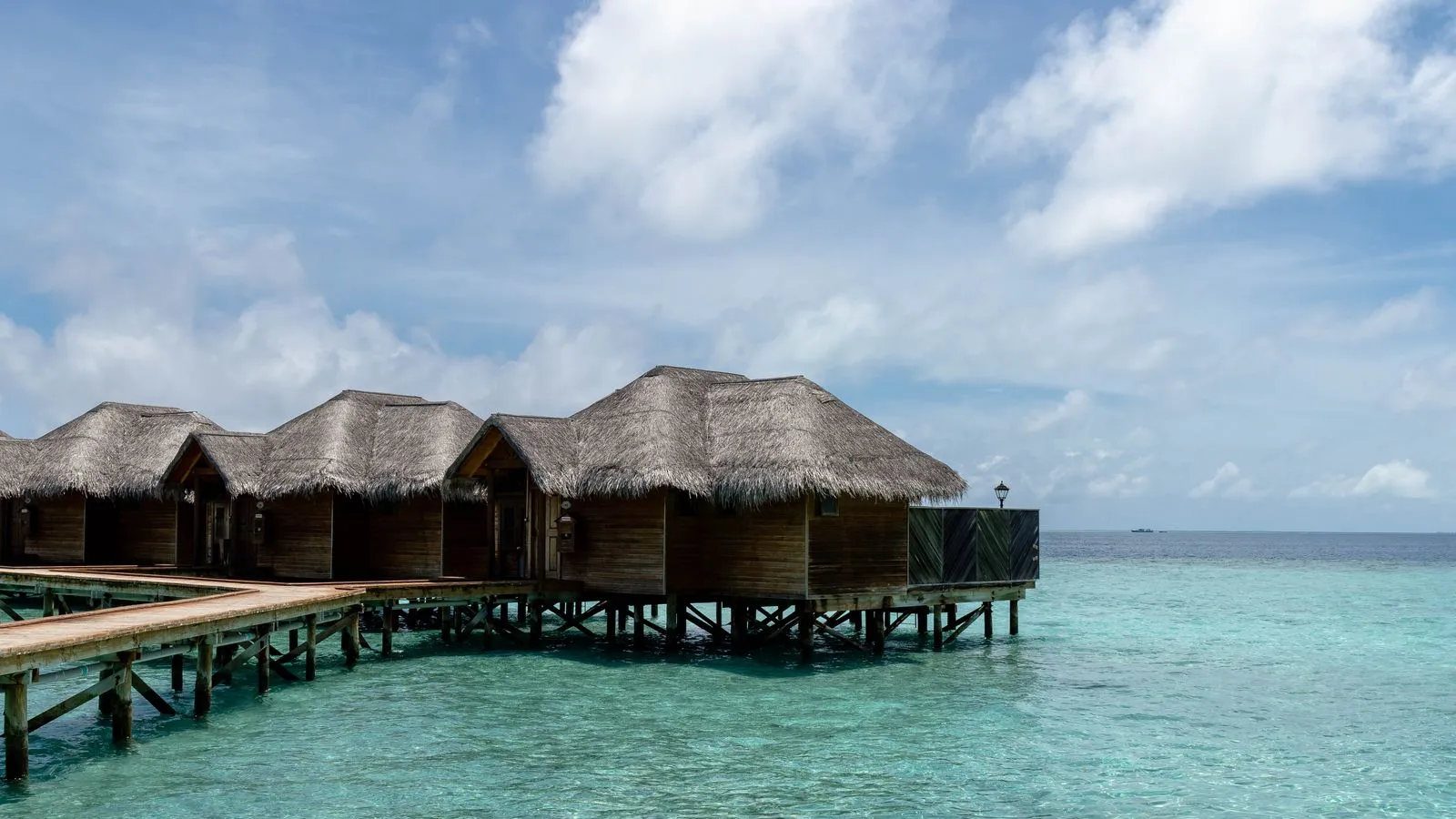
Let’s be honest up front: almost nobody “moves” to the Maldives the way they move to Lisbon or Bali. There is no nomad visa, no easy path to a year of residency, and daily life on a crowded capital island looks nothing like the overwater-villa postcards. What the Maldives actually offers a remote worker is a few months of extraordinary ocean, warm people, and enough infrastructure in the capital to keep a laptop online, followed by a polite exit when your tourist stay runs out.
Most long-stay foreigners base themselves in one of three places. Male, the capital, is dense, functional, and stacked with cafes, clinics and the country’s only real urban services. Hulhumalé, the reclaimed island next door, is newer, calmer and where a lot of longer-term renters end up. Then there are the “local islands” like Maafushi, Thulusdhoo or Fulidhoo, where guesthouses and slower life have grown up alongside surf and diving. Resort islands are a separate world you visit, not one you live in.
Budget-wise, plan for roughly 1,800 to 3,000 USD a month for one person once you add rent, food, local ferries and the odd resort day trip. It is not a cheap-Asia posting. Almost everything is imported, so groceries and eating out cost more than you would expect from the region. The real trade-offs are structural: the heat and humidity are relentless, the wet season brings serious rain, alcohol is banned on inhabited islands (you will only find it on resorts), and the country is a conservative Muslim society with rules to match. Come for a defined season, not an open-ended new life.
Cost of living in Maldives
Male is expensive by South Asian standards because it imports nearly everything. According to Numbeo, a one-bedroom apartment in the city centre runs around 950 USD a month, dropping to roughly 700 USD outside the centre, though genuine long-term local rentals in Hulhumalé can come in lower if you commit for months and negotiate in person.
Everyday costs add up fast. Numbeo puts a single person’s monthly spend, excluding rent, at around 800 USD. A meal at an inexpensive local cafe is about 6 USD, a mid-range dinner for two closer to 40 USD, and basic utilities for a flat around 120 USD a month. Groceries feel pricey for the region: roughly 2 USD for a litre of milk and about 6 USD for a kilo of chicken. You save money by eating where Maldivians eat (short eats and hedhikaa at local cafes) and lose it fast the moment you book resort excursions. Treat all of these as sourced estimates and verify current prices before you go, because import costs and the rufiyaa both move.
Maldives tourist visa and entry
Here is the part people get wrong: the Maldives has no digital nomad visa and no straightforward long-stay permit for remote workers. What you get instead is a free 30-day visa on arrival, granted to almost every nationality, per the Maldives Immigration authority. Our digital nomad visa checker can help you sanity-check your own passport against what is actually on offer.
To be let in you need a passport valid for your stay, a confirmed booking at a registered guesthouse, hotel or resort, proof of sufficient funds, and a Traveller Declaration submitted online through the IMUGA portal within 96 hours before arrival. The 30-day stamp can usually be extended, and long-stay visitors commonly report stretching a stay toward 90 days total by applying through immigration before the first stamp expires, for a fee and with proof of accommodation and funds. Rules and fees change, so confirm the current maximum directly with Maldives Immigration rather than trusting a forum thread. Working for a local employer requires a proper work visa, which is a different and sponsored process entirely. For remote workers, the realistic model is a season on tourist status, then leave.
Tax residency and the 183 day rule
The Maldives introduced a personal income tax only recently, so foreigners often assume it is still a zero-tax country. It is not quite that simple. Under the Income Tax Act administered by the Maldives Inland Revenue Authority (MIRA), individuals are taxed on income above an annual threshold that has sat around 720,000 rufiyaa (roughly 46,000 USD), with rates stepping up in bands from there. Treat those numbers as estimates and check MIRA for the current figures.
The 183-day idea matters more for the country you are leaving than the one you are visiting. Spend around 183 days or more in a place within a tax year and you often become a tax resident there. On a tourist stay capped near 90 days you are unlikely to trip Maldivian residency, but you may still owe tax back home. Our tax residency checker can help you think it through. This is educational, not advice: talk to a cross-border tax professional about your own situation.
Healthcare and insurance
Serious medical care in the Maldives is concentrated in Male. The main public facility is Indira Gandhi Memorial Hospital (IGMH), and the best-known private hospital is ADK Hospital, both in the capital. Care for routine issues is solid, but complex cases are regularly evacuated to India, Sri Lanka or Bangkok, which tells you a lot about the ceiling.
The national insurance scheme, Aasandha, covers citizens, not visitors. As a foreigner you must arrange your own cover. A travel or nomad policy that explicitly includes medical evacuation is not optional here, because on an outer island the nearest real hospital can be a boat or seaplane away. Budget for a policy in the region of a few hundred dollars for an extended stay, and read the evacuation clause carefully before you sign.
Money, banking and settling in
Opening a local bank account as a short-stay visitor is effectively off the table, since accounts at institutions like the Bank of Maldives are geared to residents and work-permit holders. For a tourist-status stay you simply run on your home cards and cash.
The local currency is the rufiyaa, but US dollars circulate widely in tourism, and cards are accepted across Male, resorts and larger guesthouses. Carry some cash for ferries, small local cafes and outer islands where card machines are patchy. Get a local Dhiraagu or Ooredoo SIM at the airport for reliable data (mobile coverage in Male and populated islands is genuinely good). In your first week, sort a Hulhumalé or Male base, learn the public ferry and speedboat timetables, respect local dress and alcohol norms on inhabited islands, and keep your immigration paperwork handy in case you decide to extend.
Figures are estimates. Always check the official source.
Frequently asked questions
- Maldives: is there a digital nomad visa?
- No dedicated digital nomad visa; most people use a standard residence permit instead.
- Maldives: when do you become a tax resident?
- Likely a tax resident if you stay more than 183 days in a year, in which case worldwide income is in scope; non-residents and temporary residents are generally taxed only on Maldives-source income (estimate, confirm with MIRA).
- Maldives: what is the cost of living?
- The cost of living is high and the local currency is the MVR. Treat any figures as estimates.
- Maldives: do you need health insurance?
- No public cover for visitors and private care plus medical evacuation to India or Sri Lanka can be costly, so comprehensive travel or international health insurance is essential.
- Maldives: can you drive on a foreign licence?
- Bring an International Driving Permit alongside your home licence to rent a vehicle, and note driving is on the left.
Terms worth knowing
Asia: more countries to explore
Put it to work
- Free
Digital-Nomad Visa Checker
See which digital-nomad visas you could actually get with your passport and income, ranked, with the binding reason per country.
→ - Free
Tax-Residency Reality Checker
Go beyond the 183-day myth: model the treaty tie-breaker and see whether two countries could both claim you as a tax resident.
→ - Free
Nomad Insurance Picker
Match SafetyWing, Genki, World Nomads and others to your situation, and see which policies satisfy specific visa proof requirements.
→ - Free
Banking & FX Picker
Find the right account stack to avoid fees and hold multiple currencies abroad, Wise, Revolut, N26, for your nationality and spending.
→