Countries
Tunisia: visas, tax & cost of living
Thinking of Tunisia as a remote worker? Real costs, the carte de séjour route (no nomad visa), the 183-day tax rule, healthcare and banking, explained.
United KingdomTunisia
Your move to Tunisia on a United Kingdom passport
- VisitEasyVisa-free entry
- NomadMediumNo nomad visa, other route
- RelocateMediumResidence with conditions
Visiting
Visa-free for up to 90 days. Travel on a passport valid for your whole stay, with a return or onward ticket and proof you can support yourself.
Passport validity: A passport is required. France tells its citizens it must be valid at least 3 months on the entry date, the UK says for the duration of your stay; some carriers and officials expect about 6 months.
At the border: Border officials may ask for a return or onward ticket, proof of accommodation, and contact details; since 1 January 2025 every visitor must present a passport (national ID cards are no longer accepted).
Working remotely
No dedicated nomad visa; the usual route is a standard residence permit.
Tax and residency
You are a tax resident if your main home (habitation principale) is in Tunisia or, without one, you stay there at least 183 days, continuous or not, in a calendar year (Code de l'IRPP et de l'IS, art. 2); residents are taxed on all their income, non-residents only on Tunisian-source income (art. 3). (estimate)
The UK decides residence with its Statutory Residence Test (days in the UK plus your ties). As a non-resident you are usually taxed only on UK income; where one exists, a double-tax treaty with the destination decides who taxes what.
Practical
Currency: TND. Cost of living: mid.
Healthcare: Foreigners typically pay upfront and use private clinics in major cities, so comprehensive international health insurance is strongly advised.
Driving: Bring a 1968-convention International Driving Permit alongside your home licence to drive or rent a car; UK travel advice says that covers you for up to one year.
Sources: Tunisia Ministry of Foreign Affairs (visa and consular services) · Tunisian tax administration (jibaya.tn): Code de l'IRPP et de l'IS · Law 68-7 of 8 March 1968 on the status of foreigners in Tunisia · France Diplomatie: Tunisia entry and stay · UK FCDO travel advice: Tunisia entry requirements · US State Department: Tunisia travel advisory · CDC Travelers Health: Tunisia · GOV.UK: tax on foreign income · HMRC: double-taxation treaties
Estimates, not advice. Confirm with the official sources before you act.
United StatesTunisia
Your move to Tunisia on a United States passport
- VisitEasyVisa-free entry
- NomadMediumNo nomad visa, other route
- RelocateMediumResidence with conditions
Visiting
Visa-free for up to 120 days. Travel on a passport valid for your whole stay, with a return or onward ticket and proof you can support yourself.
Passport validity: A passport is required. France tells its citizens it must be valid at least 3 months on the entry date, the UK says for the duration of your stay; some carriers and officials expect about 6 months.
At the border: Border officials may ask for a return or onward ticket, proof of accommodation, and contact details; since 1 January 2025 every visitor must present a passport (national ID cards are no longer accepted).
Working remotely
No dedicated nomad visa; the usual route is a standard residence permit.
Tax and residency
You are a tax resident if your main home (habitation principale) is in Tunisia or, without one, you stay there at least 183 days, continuous or not, in a calendar year (Code de l'IRPP et de l'IS, art. 2); residents are taxed on all their income, non-residents only on Tunisian-source income (art. 3). (estimate)
The US taxes its citizens on worldwide income wherever you live, so you keep filing US returns abroad. The Foreign Earned Income Exclusion and the foreign tax credit are what stop you being taxed twice.
Practical
Currency: TND. Cost of living: mid.
Healthcare: Foreigners typically pay upfront and use private clinics in major cities, so comprehensive international health insurance is strongly advised.
Driving: Bring a 1968-convention International Driving Permit alongside your home licence to drive or rent a car; UK travel advice says that covers you for up to one year.
Sources: Tunisia Ministry of Foreign Affairs (visa and consular services) · Tunisian tax administration (jibaya.tn): Code de l'IRPP et de l'IS · Law 68-7 of 8 March 1968 on the status of foreigners in Tunisia · France Diplomatie: Tunisia entry and stay · UK FCDO travel advice: Tunisia entry requirements · US State Department: Tunisia travel advisory · CDC Travelers Health: Tunisia · IRS: Foreign Earned Income Exclusion · IRS: tax treaties
Estimates, not advice. Confirm with the official sources before you act.
IndiaTunisia
Your move to Tunisia on a India passport
- VisitMediumVisa required in advance
- NomadMediumNo nomad visa, other route
- RelocateMediumResidence with conditions
Visiting
You need a visa, arranged at a consulate before you travel. Plan ahead: gather the documents, book the appointment, and allow time for processing.
Passport validity: A passport is required. France tells its citizens it must be valid at least 3 months on the entry date, the UK says for the duration of your stay; some carriers and officials expect about 6 months.
At the border: Border officials may ask for a return or onward ticket, proof of accommodation, and contact details; since 1 January 2025 every visitor must present a passport (national ID cards are no longer accepted).
Working remotely
No dedicated nomad visa; the usual route is a standard residence permit.
Tax and residency
You are a tax resident if your main home (habitation principale) is in Tunisia or, without one, you stay there at least 183 days, continuous or not, in a calendar year (Code de l'IRPP et de l'IS, art. 2); residents are taxed on all their income, non-residents only on Tunisian-source income (art. 3). (estimate)
India taxes residents on worldwide income; your status depends on the days you spend in India (broadly 182 or more in the year). As a non-resident (NRI) you are taxed only on Indian-source income, and the relevant double-tax treaty allocates the rest.
Practical
Currency: TND. Cost of living: mid.
Healthcare: Foreigners typically pay upfront and use private clinics in major cities, so comprehensive international health insurance is strongly advised.
Driving: Bring a 1968-convention International Driving Permit alongside your home licence to drive or rent a car; UK travel advice says that covers you for up to one year.
Sources: Tunisia Ministry of Foreign Affairs (visa and consular services) · Tunisian tax administration (jibaya.tn): Code de l'IRPP et de l'IS · Law 68-7 of 8 March 1968 on the status of foreigners in Tunisia · France Diplomatie: Tunisia entry and stay · UK FCDO travel advice: Tunisia entry requirements · US State Department: Tunisia travel advisory · CDC Travelers Health: Tunisia · Income Tax Department, India · India: Double Taxation Avoidance Agreements
Estimates, not advice. Confirm with the official sources before you act.
GermanyTunisia
Your move to Tunisia on a Germany passport
- VisitEasyVisa-free entry
- NomadMediumNo nomad visa, other route
- RelocateMediumResidence with conditions
Visiting
Visa-free for up to 120 days. Travel on a passport valid for your whole stay, with a return or onward ticket and proof you can support yourself.
Passport validity: A passport is required. France tells its citizens it must be valid at least 3 months on the entry date, the UK says for the duration of your stay; some carriers and officials expect about 6 months.
At the border: Border officials may ask for a return or onward ticket, proof of accommodation, and contact details; since 1 January 2025 every visitor must present a passport (national ID cards are no longer accepted).
Working remotely
No dedicated nomad visa; the usual route is a standard residence permit.
Tax and residency
You are a tax resident if your main home (habitation principale) is in Tunisia or, without one, you stay there at least 183 days, continuous or not, in a calendar year (Code de l'IRPP et de l'IS, art. 2); residents are taxed on all their income, non-residents only on Tunisian-source income (art. 3). (estimate)
Germany taxes residents on worldwide income; you become resident through a home available to you (Wohnsitz) or a habitual abode of more than six months. As a non-resident you are usually taxed only on German-source income, and where one exists a double-tax treaty with the destination decides who taxes what.
Practical
Currency: TND. Cost of living: mid.
Healthcare: Foreigners typically pay upfront and use private clinics in major cities, so comprehensive international health insurance is strongly advised.
Driving: Bring a 1968-convention International Driving Permit alongside your home licence to drive or rent a car; UK travel advice says that covers you for up to one year.
Sources: Tunisia Ministry of Foreign Affairs (visa and consular services) · Tunisian tax administration (jibaya.tn): Code de l'IRPP et de l'IS · Law 68-7 of 8 March 1968 on the status of foreigners in Tunisia · France Diplomatie: Tunisia entry and stay · UK FCDO travel advice: Tunisia entry requirements · US State Department: Tunisia travel advisory · CDC Travelers Health: Tunisia · Bundeszentralamt für Steuern (BZSt) · Germany: double-taxation agreements (BMF)
Estimates, not advice. Confirm with the official sources before you act.
FranceTunisia
Your move to Tunisia on a France passport
- VisitEasyVisa-free entry
- NomadMediumNo nomad visa, other route
- RelocateMediumResidence with conditions
Visiting
Visa-free for up to 90 days. Travel on a passport valid for your whole stay, with a return or onward ticket and proof you can support yourself.
Passport validity: A passport is required. France tells its citizens it must be valid at least 3 months on the entry date, the UK says for the duration of your stay; some carriers and officials expect about 6 months.
At the border: Border officials may ask for a return or onward ticket, proof of accommodation, and contact details; since 1 January 2025 every visitor must present a passport (national ID cards are no longer accepted).
Working remotely
No dedicated nomad visa; the usual route is a standard residence permit.
Tax and residency
You are a tax resident if your main home (habitation principale) is in Tunisia or, without one, you stay there at least 183 days, continuous or not, in a calendar year (Code de l'IRPP et de l'IS, art. 2); residents are taxed on all their income, non-residents only on Tunisian-source income (art. 3). (estimate)
France taxes you on your worldwide income if your tax home (domicile fiscal) stays there, broadly when your household, main home, main job or main economic interests are in France, so moving abroad alone may not end it. Once you genuinely settle elsewhere you are usually taxed only on French-source income, and tax treaties typically prevent paying twice through an exemption or a foreign tax credit, but treat any figures as estimates and check your situation.
Practical
Currency: TND. Cost of living: mid.
Healthcare: Foreigners typically pay upfront and use private clinics in major cities, so comprehensive international health insurance is strongly advised.
Driving: Bring a 1968-convention International Driving Permit alongside your home licence to drive or rent a car; UK travel advice says that covers you for up to one year.
Sources: Tunisia Ministry of Foreign Affairs (visa and consular services) · Tunisian tax administration (jibaya.tn): Code de l'IRPP et de l'IS · Law 68-7 of 8 March 1968 on the status of foreigners in Tunisia · France Diplomatie: Tunisia entry and stay · UK FCDO travel advice: Tunisia entry requirements · US State Department: Tunisia travel advisory · CDC Travelers Health: Tunisia · impots.gouv.fr - Résidents de France · impots.gouv.fr - Les conventions internationales
Estimates, not advice. Confirm with the official sources before you act.
SpainTunisia
Your move to Tunisia on a Spain passport
- VisitEasyVisa-free entry
- NomadMediumNo nomad visa, other route
- RelocateMediumResidence with conditions
Visiting
Visa-free for up to 90 days. Travel on a passport valid for your whole stay, with a return or onward ticket and proof you can support yourself.
Passport validity: A passport is required. France tells its citizens it must be valid at least 3 months on the entry date, the UK says for the duration of your stay; some carriers and officials expect about 6 months.
At the border: Border officials may ask for a return or onward ticket, proof of accommodation, and contact details; since 1 January 2025 every visitor must present a passport (national ID cards are no longer accepted).
Working remotely
No dedicated nomad visa; the usual route is a standard residence permit.
Tax and residency
You are a tax resident if your main home (habitation principale) is in Tunisia or, without one, you stay there at least 183 days, continuous or not, in a calendar year (Code de l'IRPP et de l'IS, art. 2); residents are taxed on all their income, non-residents only on Tunisian-source income (art. 3). (estimate)
If Spain still counts as your tax home (roughly 183+ days in the country in a year, or your main base of life and income sits there), Spain taxes your worldwide income at IRPF rates, so what you earn abroad usually counts too. The sting is softened by double-tax treaties and a foreign-tax credit, plus the Article 7.p exemption that can shelter work done abroad up to around 60,100 euros a year, but treat every figure as an estimate and check your own case before you file.
Practical
Currency: TND. Cost of living: mid.
Healthcare: Foreigners typically pay upfront and use private clinics in major cities, so comprehensive international health insurance is strongly advised.
Driving: Bring a 1968-convention International Driving Permit alongside your home licence to drive or rent a car; UK travel advice says that covers you for up to one year.
Sources: Tunisia Ministry of Foreign Affairs (visa and consular services) · Tunisian tax administration (jibaya.tn): Code de l'IRPP et de l'IS · Law 68-7 of 8 March 1968 on the status of foreigners in Tunisia · France Diplomatie: Tunisia entry and stay · UK FCDO travel advice: Tunisia entry requirements · US State Department: Tunisia travel advisory · CDC Travelers Health: Tunisia · Agencia Tributaria: persona física residente en España · Agencia Tributaria: obtención de rentas extranjeras, reglas generales
Estimates, not advice. Confirm with the official sources before you act.
ItalyTunisia
Your move to Tunisia on a Italy passport
- VisitEasyVisa-free entry
- NomadMediumNo nomad visa, other route
- RelocateMediumResidence with conditions
Visiting
Visa-free for up to 90 days. Travel on a passport valid for your whole stay, with a return or onward ticket and proof you can support yourself.
Passport validity: A passport is required. France tells its citizens it must be valid at least 3 months on the entry date, the UK says for the duration of your stay; some carriers and officials expect about 6 months.
At the border: Border officials may ask for a return or onward ticket, proof of accommodation, and contact details; since 1 January 2025 every visitor must present a passport (national ID cards are no longer accepted).
Working remotely
No dedicated nomad visa; the usual route is a standard residence permit.
Tax and residency
You are a tax resident if your main home (habitation principale) is in Tunisia or, without one, you stay there at least 183 days, continuous or not, in a calendar year (Code de l'IRPP et de l'IS, art. 2); residents are taxed on all their income, non-residents only on Tunisian-source income (art. 3). (estimate)
Italy generally treats you as a tax resident if for most of the year (roughly 183 days or more) your home, family or registration ties are here, and residents are taxed on worldwide income wherever they live. The relief is usually a foreign tax credit for tax already paid abroad, often shaped by Italy's double-taxation treaties, so the same income should not be taxed twice.
Practical
Currency: TND. Cost of living: mid.
Healthcare: Foreigners typically pay upfront and use private clinics in major cities, so comprehensive international health insurance is strongly advised.
Driving: Bring a 1968-convention International Driving Permit alongside your home licence to drive or rent a car; UK travel advice says that covers you for up to one year.
Sources: Tunisia Ministry of Foreign Affairs (visa and consular services) · Tunisian tax administration (jibaya.tn): Code de l'IRPP et de l'IS · Law 68-7 of 8 March 1968 on the status of foreigners in Tunisia · France Diplomatie: Tunisia entry and stay · UK FCDO travel advice: Tunisia entry requirements · US State Department: Tunisia travel advisory · CDC Travelers Health: Tunisia · Agenzia delle Entrate, Residence for tax purposes · Agenzia delle Entrate, Bilateral agreements to prevent double taxation
Estimates, not advice. Confirm with the official sources before you act.
CanadaTunisia
Your move to Tunisia on a Canada passport
- VisitEasyVisa-free entry
- NomadMediumNo nomad visa, other route
- RelocateMediumResidence with conditions
Visiting
Visa-free for up to 90 days. Travel on a passport valid for your whole stay, with a return or onward ticket and proof you can support yourself.
Passport validity: A passport is required. France tells its citizens it must be valid at least 3 months on the entry date, the UK says for the duration of your stay; some carriers and officials expect about 6 months.
At the border: Border officials may ask for a return or onward ticket, proof of accommodation, and contact details; since 1 January 2025 every visitor must present a passport (national ID cards are no longer accepted).
Working remotely
No dedicated nomad visa; the usual route is a standard residence permit.
Tax and residency
You are a tax resident if your main home (habitation principale) is in Tunisia or, without one, you stay there at least 183 days, continuous or not, in a calendar year (Code de l'IRPP et de l'IS, art. 2); residents are taxed on all their income, non-residents only on Tunisian-source income (art. 3). (estimate)
Canada taxes you on residency, not on holding the passport, so as long as the CRA still treats you as a resident (kept home, family or strong ties) you generally owe Canadian tax on your worldwide income. The relief is usually a foreign tax credit for tax you already paid abroad, often topped up by a tax treaty, though the exact amounts are only estimates until you check your own case.
Practical
Currency: TND. Cost of living: mid.
Healthcare: Foreigners typically pay upfront and use private clinics in major cities, so comprehensive international health insurance is strongly advised.
Driving: Bring a 1968-convention International Driving Permit alongside your home licence to drive or rent a car; UK travel advice says that covers you for up to one year.
Sources: Tunisia Ministry of Foreign Affairs (visa and consular services) · Tunisian tax administration (jibaya.tn): Code de l'IRPP et de l'IS · Law 68-7 of 8 March 1968 on the status of foreigners in Tunisia · France Diplomatie: Tunisia entry and stay · UK FCDO travel advice: Tunisia entry requirements · US State Department: Tunisia travel advisory · CDC Travelers Health: Tunisia · Canada Revenue Agency, Determining your residency status · Department of Finance Canada, Tax treaties in force
Estimates, not advice. Confirm with the official sources before you act.
AustraliaTunisia
Your move to Tunisia on a Australia passport
- VisitEasyVisa-free entry
- NomadMediumNo nomad visa, other route
- RelocateMediumResidence with conditions
Visiting
Visa-free for up to 90 days. Travel on a passport valid for your whole stay, with a return or onward ticket and proof you can support yourself.
Passport validity: A passport is required. France tells its citizens it must be valid at least 3 months on the entry date, the UK says for the duration of your stay; some carriers and officials expect about 6 months.
At the border: Border officials may ask for a return or onward ticket, proof of accommodation, and contact details; since 1 January 2025 every visitor must present a passport (national ID cards are no longer accepted).
Working remotely
No dedicated nomad visa; the usual route is a standard residence permit.
Tax and residency
You are a tax resident if your main home (habitation principale) is in Tunisia or, without one, you stay there at least 183 days, continuous or not, in a calendar year (Code de l'IRPP et de l'IS, art. 2); residents are taxed on all their income, non-residents only on Tunisian-source income (art. 3). (estimate)
If you stay an Australian resident for tax purposes, Australia generally taxes your worldwide income wherever you live, with residency turned on the moment your real home and ties are here (a continuous stay of roughly 6 months can be enough). To soften double tax, you can usually claim a Foreign Income Tax Offset for tax already paid abroad, capped at the Australian tax on that income, and treaties may help too, so treat these figures as estimates and check your own case.
Practical
Currency: TND. Cost of living: mid.
Healthcare: Foreigners typically pay upfront and use private clinics in major cities, so comprehensive international health insurance is strongly advised.
Driving: Bring a 1968-convention International Driving Permit alongside your home licence to drive or rent a car; UK travel advice says that covers you for up to one year.
Sources: Tunisia Ministry of Foreign Affairs (visa and consular services) · Tunisian tax administration (jibaya.tn): Code de l'IRPP et de l'IS · Law 68-7 of 8 March 1968 on the status of foreigners in Tunisia · France Diplomatie: Tunisia entry and stay · UK FCDO travel advice: Tunisia entry requirements · US State Department: Tunisia travel advisory · CDC Travelers Health: Tunisia · Australian Taxation Office, Australian resident for tax purposes · Australian Taxation Office, International tax agreements (tax treaties)
Estimates, not advice. Confirm with the official sources before you act.
BrazilTunisia
Your move to Tunisia on a Brazil passport
- VisitEasyVisa-free entry
- NomadMediumNo nomad visa, other route
- RelocateMediumResidence with conditions
Visiting
Visa-free for up to 90 days. Travel on a passport valid for your whole stay, with a return or onward ticket and proof you can support yourself.
Passport validity: A passport is required. France tells its citizens it must be valid at least 3 months on the entry date, the UK says for the duration of your stay; some carriers and officials expect about 6 months.
At the border: Border officials may ask for a return or onward ticket, proof of accommodation, and contact details; since 1 January 2025 every visitor must present a passport (national ID cards are no longer accepted).
Working remotely
No dedicated nomad visa; the usual route is a standard residence permit.
Tax and residency
You are a tax resident if your main home (habitation principale) is in Tunisia or, without one, you stay there at least 183 days, continuous or not, in a calendar year (Code de l'IRPP et de l'IS, art. 2); residents are taxed on all their income, non-residents only on Tunisian-source income (art. 3). (estimate)
If Brazil still counts you as tax-resident, usually triggered by a permanent visa, a temporary visa plus a job, or roughly 183 days in the country within any 12 months, the Receita Federal taxes your worldwide income, so you keep filing the annual return wherever you live. The relief is real but partial: tax paid abroad can normally be credited against what you owe in Brazil under a treaty or recognised reciprocity, so most people are not taxed twice on the same income.
Practical
Currency: TND. Cost of living: mid.
Healthcare: Foreigners typically pay upfront and use private clinics in major cities, so comprehensive international health insurance is strongly advised.
Driving: Bring a 1968-convention International Driving Permit alongside your home licence to drive or rent a car; UK travel advice says that covers you for up to one year.
Sources: Tunisia Ministry of Foreign Affairs (visa and consular services) · Tunisian tax administration (jibaya.tn): Code de l'IRPP et de l'IS · Law 68-7 of 8 March 1968 on the status of foreigners in Tunisia · France Diplomatie: Tunisia entry and stay · UK FCDO travel advice: Tunisia entry requirements · US State Department: Tunisia travel advisory · CDC Travelers Health: Tunisia · Receita Federal, Acordos para evitar a dupla tributação · Receita Federal, Imposto sobre a Renda da Pessoa Física (IRPF)
Estimates, not advice. Confirm with the official sources before you act.
MexicoTunisia
Your move to Tunisia on a Mexico passport
- VisitEasyVisa-free entry
- NomadMediumNo nomad visa, other route
- RelocateMediumResidence with conditions
Visiting
Visa-free for up to 90 days. Travel on a passport valid for your whole stay, with a return or onward ticket and proof you can support yourself.
Passport validity: A passport is required. France tells its citizens it must be valid at least 3 months on the entry date, the UK says for the duration of your stay; some carriers and officials expect about 6 months.
At the border: Border officials may ask for a return or onward ticket, proof of accommodation, and contact details; since 1 January 2025 every visitor must present a passport (national ID cards are no longer accepted).
Working remotely
No dedicated nomad visa; the usual route is a standard residence permit.
Tax and residency
You are a tax resident if your main home (habitation principale) is in Tunisia or, without one, you stay there at least 183 days, continuous or not, in a calendar year (Code de l'IRPP et de l'IS, art. 2); residents are taxed on all their income, non-residents only on Tunisian-source income (art. 3). (estimate)
Mexico taxes you on your worldwide income once you count as a tax resident, which usually means your main home or your center of life is here (very roughly, spending more than about 183 days a year can tip the balance). The good news is the SAT lets you credit foreign income tax you already paid, and Mexico's double-taxation treaties mean the same money should not normally be taxed twice.
Practical
Currency: TND. Cost of living: mid.
Healthcare: Foreigners typically pay upfront and use private clinics in major cities, so comprehensive international health insurance is strongly advised.
Driving: Bring a 1968-convention International Driving Permit alongside your home licence to drive or rent a car; UK travel advice says that covers you for up to one year.
Sources: Tunisia Ministry of Foreign Affairs (visa and consular services) · Tunisian tax administration (jibaya.tn): Code de l'IRPP et de l'IS · Law 68-7 of 8 March 1968 on the status of foreigners in Tunisia · France Diplomatie: Tunisia entry and stay · UK FCDO travel advice: Tunisia entry requirements · US State Department: Tunisia travel advisory · CDC Travelers Health: Tunisia · SAT - Servicio de Administración Tributaria · SAT - Tratados en Materia Fiscal (para evitar la doble tributación)
Estimates, not advice. Confirm with the official sources before you act.
PhilippinesTunisia
Your move to Tunisia on a Philippines passport
- VisitMediumVisa required in advance
- NomadMediumNo nomad visa, other route
- RelocateMediumResidence with conditions
Visiting
You need a visa, arranged at a consulate before you travel. Plan ahead: gather the documents, book the appointment, and allow time for processing.
Passport validity: A passport is required. France tells its citizens it must be valid at least 3 months on the entry date, the UK says for the duration of your stay; some carriers and officials expect about 6 months.
At the border: Border officials may ask for a return or onward ticket, proof of accommodation, and contact details; since 1 January 2025 every visitor must present a passport (national ID cards are no longer accepted).
Working remotely
No dedicated nomad visa; the usual route is a standard residence permit.
Tax and residency
You are a tax resident if your main home (habitation principale) is in Tunisia or, without one, you stay there at least 183 days, continuous or not, in a calendar year (Code de l'IRPP et de l'IS, art. 2); residents are taxed on all their income, non-residents only on Tunisian-source income (art. 3). (estimate)
If you stay a resident citizen, the Philippines taxes your worldwide income, but once you genuinely live and work abroad you usually count as a non-resident citizen and are taxed only on income from Philippine sources. The exact line depends on how long you are out and your ties back home, so treat these as estimates, and a foreign tax credit can offset tax already paid abroad.
Practical
Currency: TND. Cost of living: mid.
Healthcare: Foreigners typically pay upfront and use private clinics in major cities, so comprehensive international health insurance is strongly advised.
Driving: Bring a 1968-convention International Driving Permit alongside your home licence to drive or rent a car; UK travel advice says that covers you for up to one year.
Sources: Tunisia Ministry of Foreign Affairs (visa and consular services) · Tunisian tax administration (jibaya.tn): Code de l'IRPP et de l'IS · Law 68-7 of 8 March 1968 on the status of foreigners in Tunisia · France Diplomatie: Tunisia entry and stay · UK FCDO travel advice: Tunisia entry requirements · US State Department: Tunisia travel advisory · CDC Travelers Health: Tunisia · BIR - Taxation of Foreign Source Income · BIR - Taxation of Non-Residents
Estimates, not advice. Confirm with the official sources before you act.
NigeriaTunisia
Your move to Tunisia on a Nigeria passport
- VisitMediumVisa required in advance
- NomadMediumNo nomad visa, other route
- RelocateMediumResidence with conditions
Visiting
You need a visa, arranged at a consulate before you travel. Plan ahead: gather the documents, book the appointment, and allow time for processing.
Passport validity: A passport is required. France tells its citizens it must be valid at least 3 months on the entry date, the UK says for the duration of your stay; some carriers and officials expect about 6 months.
At the border: Border officials may ask for a return or onward ticket, proof of accommodation, and contact details; since 1 January 2025 every visitor must present a passport (national ID cards are no longer accepted).
Working remotely
No dedicated nomad visa; the usual route is a standard residence permit.
Tax and residency
You are a tax resident if your main home (habitation principale) is in Tunisia or, without one, you stay there at least 183 days, continuous or not, in a calendar year (Code de l'IRPP et de l'IS, art. 2); residents are taxed on all their income, non-residents only on Tunisian-source income (art. 3). (estimate)
If Nigeria still counts you as resident, roughly 183 or more days in the country in a year, or you keep a home, habitual abode or close family and economic ties there, you are generally taxed on your worldwide income, not just what you earn in Nigeria. There is usually a foreign tax credit, and Nigeria's tax treaties, so tax you already paid abroad can typically be set against your Nigerian bill, but treat these figures as estimates and check the current rules before you file.
Practical
Currency: TND. Cost of living: mid.
Healthcare: Foreigners typically pay upfront and use private clinics in major cities, so comprehensive international health insurance is strongly advised.
Driving: Bring a 1968-convention International Driving Permit alongside your home licence to drive or rent a car; UK travel advice says that covers you for up to one year.
Sources: Tunisia Ministry of Foreign Affairs (visa and consular services) · Tunisian tax administration (jibaya.tn): Code de l'IRPP et de l'IS · Law 68-7 of 8 March 1968 on the status of foreigners in Tunisia · France Diplomatie: Tunisia entry and stay · UK FCDO travel advice: Tunisia entry requirements · US State Department: Tunisia travel advisory · CDC Travelers Health: Tunisia · Federal Inland Revenue Service (FIRS) · FIRS - Tax Treaties and Related Matters
Estimates, not advice. Confirm with the official sources before you act.
VietnamTunisia
Your move to Tunisia on a Vietnam passport
- VisitMediumVisa required in advance
- NomadMediumNo nomad visa, other route
- RelocateMediumResidence with conditions
Visiting
You need a visa, arranged at a consulate before you travel. Plan ahead: gather the documents, book the appointment, and allow time for processing.
Passport validity: A passport is required. France tells its citizens it must be valid at least 3 months on the entry date, the UK says for the duration of your stay; some carriers and officials expect about 6 months.
At the border: Border officials may ask for a return or onward ticket, proof of accommodation, and contact details; since 1 January 2025 every visitor must present a passport (national ID cards are no longer accepted).
Working remotely
No dedicated nomad visa; the usual route is a standard residence permit.
Tax and residency
You are a tax resident if your main home (habitation principale) is in Tunisia or, without one, you stay there at least 183 days, continuous or not, in a calendar year (Code de l'IRPP et de l'IS, art. 2); residents are taxed on all their income, non-residents only on Tunisian-source income (art. 3). (estimate)
Vietnam treats you as a tax resident once you spend roughly 183 days there in a calendar year (or any rolling 12 months) or keep a permanent home, and residents are taxed on worldwide income at progressive rates of around 5% to 35%; there is no foreign-earned-income exclusion, but Vietnam's tax treaties and a foreign tax credit usually stop the same income being taxed twice.
Practical
Currency: TND. Cost of living: mid.
Healthcare: Foreigners typically pay upfront and use private clinics in major cities, so comprehensive international health insurance is strongly advised.
Driving: Bring a 1968-convention International Driving Permit alongside your home licence to drive or rent a car; UK travel advice says that covers you for up to one year.
Sources: Tunisia Ministry of Foreign Affairs (visa and consular services) · Tunisian tax administration (jibaya.tn): Code de l'IRPP et de l'IS · Law 68-7 of 8 March 1968 on the status of foreigners in Tunisia · France Diplomatie: Tunisia entry and stay · UK FCDO travel advice: Tunisia entry requirements · US State Department: Tunisia travel advisory · CDC Travelers Health: Tunisia · General Department of Taxation (Tổng cục Thuế) · GDT - Agreements for Avoidance of Double Taxation
Estimates, not advice. Confirm with the official sources before you act.
Should you move to Tunisia?
Tunisia is the Mediterranean on a budget most people assume no longer exists. You get warm sea, French and Arabic in the air, whitewashed medinas, plates of grilled fish, and a monthly spend that would barely cover rent in Lisbon or Barcelona. For a remote worker who wants sun and low overhead without leaving the Med behind, it is genuinely tempting.
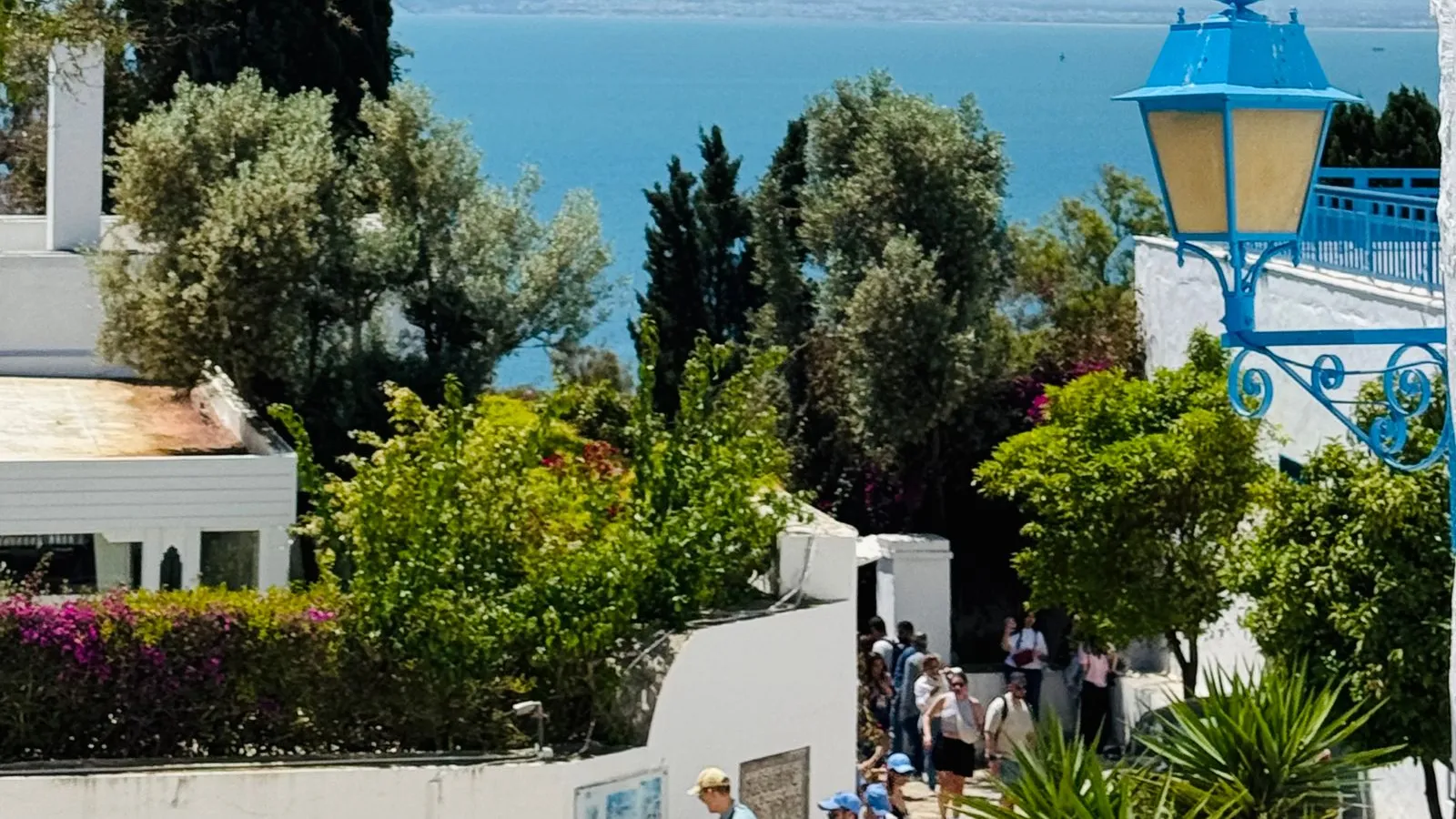
Most nomads base themselves in one of three places. Tunis, the capital, has the best cafes, coworking, hospitals and flights, plus the seaside suburbs of La Marsa and Sidi Bou Said if you want charm over hustle. Sousse gives you a proper beach city with a lower cost base. Djerba, the southern island, is quieter, hotter and more resort-flavored, good for a slow winter. A solo person lives comfortably on roughly $800 to $1,200 a month including rent, food and transport, per Digital Nomads in Africa.
Be honest with yourself about the trade-offs. Internet is the big one: fixed-line broadband tends to be slow and patchy, so most nomads lean on Orange or Ooredoo mobile data instead, which is faster and more reliable. Bureaucracy is slow and French-speaking. There is no dedicated nomad visa. And Tunisia has had past security incidents at tourist sites, with border regions near Libya and Algeria best avoided. In the cities you mostly manage petty theft, apartment scams and ordinary caution at night. If you speak some French and you travel light, none of this is a dealbreaker. If you need fiber and a one-click visa, look elsewhere.
Cost of living in Tunisia
This is the reason people come. Numbeo puts Tunisia’s cost of living, rent included, roughly 69% below the United States, one of the cheaper spots anywhere on the Mediterranean rim (Numbeo).
Rent is where it shows most. A one-bedroom in a Tunis city-center runs around 230 pounds a month, closer to 120 pounds outside the center, according to Wise. Sousse and Djerba tend to sit below that. Groceries are cheap if you shop like a local: fresh produce at the weekly souk often costs half what Carrefour or Monoprix charge for the same tomatoes. Wise estimates a single person needs about 386 pounds a month before rent, so many nomads land comfortably under 1,000 dollars all in.
Eating out is a bargain. A sit-down meal is a few dinar; coffee and pastries barely register. Treat these as sourced estimates, not quotes: the dinar drifts and prices creep, so verify current numbers before you commit to a lease.
Tunisia residence permit and entry
Let’s be plain: there is no Tunisian digital nomad visa. If a site tells you otherwise, it is wrong. Most remote workers simply arrive on the visa-free allowance and stay put.
The good news is that allowance is generous. Nationals of visa-waiver countries, among them the US, UK, Canada, Australia and EU countries such as France, Germany, Italy and Spain, can stay up to three months without a visa (Law 68-7 of 8 March 1968, art. 7). You do need a passport: since 1 January 2025 national ID cards are no longer accepted. France tells its citizens it must be valid at least three months on the entry date (France Diplomatie), the UK says for the length of your stay (UK FCDO), and some carriers expect about six months. For a season by the sea, that alone may be all you need. Our digital nomad visa checker can confirm the rule for your passport.
To stay longer, the real route is a residence permit, the carte de séjour. Anyone staying more than three months in a row, or six months in total within a year, needs a visa and a temporary residence card, and paid work requires official authorisation (Law 68-7, arts. 7 to 9). You apply after arrival at your local police station or National Security district, usually within a month. You need a valid reason for the stay (work, study, family, investment, property), and the card is typically valid one year and renewable. Expect the physical card to take around three months, with a temporary certificate in the meantime. Fees are modest, roughly 100 to 200 dinar per Rivermate. The friction is not the money, it is the paperwork, the French, and the waiting.
Tax residency and the 183 day rule
Here is the part to think through before you settle. Under Tunisian law you are a tax resident if your main home (habitation principale) is in Tunisia or, without one, you stay there at least 183 days, continuous or not, in a calendar year (Code de l’IRPP et de l’IS, art. 2).
Why it matters: residents are taxed on all their income, wherever it is earned, while non-residents are taxed only on Tunisian-source income (art. 3 of the same code). Tunisia runs a progressive scale that reaches 40% on income above roughly 70,000 dinar, plus a small Social Solidarity Contribution, per PwC. For a foreign remote worker earning abroad, crossing 183 days can pull your global income into scope, which is a very different picture from a three-month visit.
None of this is advice, and the interaction with your home-country tax and any treaty is genuinely complex. Model your own situation with our tax residency checker, then talk to a Tunisian accountant before you plant roots. Rates and brackets change with each Finance Law, so verify the current year before you plan around any number.
Healthcare and insurance
Tunisia has a two-track system. Public care is tax-funded and cheap but strained, with staff shortages and queues. Private clinics, concentrated in Tunis and Sfax, are modern, faster, and often have English-speaking staff, which is why most expats use them.
The public insurer is CNAM, run on the French model, and enrollment is mandatory for resident, employed expats (Pacific Prime). As a self-directed nomad, you will lean on private care, and it is affordable out of pocket: an office consultation is around 20 dinar (about 10 euros), while a private hospital room can exceed 500 dinar a day before procedures, per April International. Because those big bills can stack up, an international policy makes sense; expat plans run roughly 50 to 120 dollars a month. Treat these as estimates and get a real quote for your age and coverage.
Money, banking and settling in
The dinar is a closed, non-convertible currency, and that single fact shapes your first weeks. You cannot freely buy or export dinar, and money parked in a standard local account is hard to move back out. A reform passed in December 2025 lets Tunisian residents open foreign-currency accounts for the first time, but it was pitched at keeping local tech talent, and it does little for a short-stay foreigner passing through, per Launch Base Africa.
Practically, most short-stay nomads skip a local account entirely: withdraw dinar from ATMs as needed, keep an eye on fees, and do not convert more than you will spend. If you go the residence route, a standard dinar account usually wants your passport, proof of address and your residence card or long-stay visa (Jarnias Cyril). Long-term foreign residents can later look at a foreign-currency PPR account, which is what keeps your money mobile.
For the first weeks: grab an Orange or Ooredoo SIM at the airport for reliable data, line up a furnished rental through a local agent or expat group rather than sight-unseen online, carry cash since cards are not universal, and lean on French. A little of it opens most doors here.
Figures are estimates. Always check the official source.
Frequently asked questions
- Tunisia: is there a digital nomad visa?
- No dedicated digital nomad visa; most people use a standard residence permit instead.
- Tunisia: when do you become a tax resident?
- You are a tax resident if your main home (habitation principale) is in Tunisia or, without one, you stay there at least 183 days, continuous or not, in a calendar year (Code de l'IRPP et de l'IS, art. 2); residents are taxed on all their income, non-residents only on Tunisian-source income (art. 3).
- Tunisia: what is the cost of living?
- The cost of living is moderate and the local currency is the TND. Treat any figures as estimates.
- Tunisia: do you need health insurance?
- Foreigners typically pay upfront and use private clinics in major cities, so comprehensive international health insurance is strongly advised.
- Tunisia: can you drive on a foreign licence?
- Bring a 1968-convention International Driving Permit alongside your home licence to drive or rent a car; UK travel advice says that covers you for up to one year.
Terms worth knowing
Africa: more countries to explore
Put it to work
- Free
Digital-Nomad Visa Checker
See which digital-nomad visas you could actually get with your passport and income, ranked, with the binding reason per country.
→ - Free
Tax-Residency Reality Checker
Go beyond the 183-day myth: model the treaty tie-breaker and see whether two countries could both claim you as a tax resident.
→ - Free
Nomad Insurance Picker
Match SafetyWing, Genki, World Nomads and others to your situation, and see which policies satisfy specific visa proof requirements.
→ - Free
Banking & FX Picker
Find the right account stack to avoid fees and hold multiple currencies abroad, Wise, Revolut, N26, for your nationality and spending.
→