Countries
Moldova: visas, tax & cost of living
Thinking of moving to Moldova as a remote worker? Honest guide to Chisinau's low cost of living, visas, flat 12% tax, healthcare and banking.
United KingdomMoldova
Your move to Moldova on a United Kingdom passport
- VisitEasyVisa-free entry
- NomadFairly easyNomad visa, stricter rules
- RelocateMediumResidence with conditions
Visiting
Visa-free for up to 90 days. Travel on a passport valid for your whole stay, with a return or onward ticket and proof you can support yourself.
Passport validity: Passport should be valid for at least 3 months beyond your intended stay and issued within the last 10 years
At the border: Valid passport (EU and some other nationals may use a national ID card); proof of accommodation, funds, and onward travel may be requested
Working remotely
Digital nomad temporary residence (Law 200/2010, art. 37/2).
Income needed: At least 18 forecast average monthly salaries earned over the six months before you apply, so about MDL 52,200 a month in 2026 (3 x MDL 17,400), roughly 2,600 to 2,700 EUR depending on the exchange rate (estimate) (estimate)
Duration: 24 months
Fee: state fee under Law 213/2023, reported at about 80 to 100 EUR (estimate) (estimate)
Who qualifies: Foreigners who work remotely using IT, exclusively for legal entities registered outside Moldova: as an employee, as a service provider under a services contract, or as a shareholder, partner or administrator managing a foreign company remotely. Work for Moldovan employers or clients does not count. You apply to the General Inspectorate for Migration (IGM); the permit is granted for the period you request, up to 2 years, and can be extended under the same procedure. Family reunification is possible if you can show enough means for your dependants. In force since 20 September 2025.
Tax and residency
You are a Moldovan tax resident if you have a permanent home in Moldova or spend at least 183 days there in the fiscal (calendar) year. Residents are taxed on worldwide income at a flat 12 percent, while non-residents are taxed only on Moldovan-source income, subject to double-tax treaties. (estimate)
The UK decides residence with its Statutory Residence Test (days in the UK plus your ties). As a non-resident you are usually taxed only on UK income; where one exists, a double-tax treaty with the destination decides who taxes what.
Practical
Currency: MDL. Cost of living: low.
Healthcare: Public care is not free for most foreigners and facilities can be limited outside major cities, so private health insurance covering treatment and evacuation is strongly recommended.
Driving: Bring an International Driving Permit with your home licence; it is valid for up to about 90 days, and a Green Card insurance policy is required to drive your own car into the country.
Sources: Invest Moldova, Digital Nomads: Law 200/2010 art. 37/2, 18 forecast average salaries over six months, up to 2 years and extendable, family reunification, apply to the IGM · Government of Moldova: forecast average monthly salary for 2026 set at MDL 17,400 · Fragomen, Moldova digital nomad visa introduced (in force 20 September 2025; fee reported at EUR 80 to 100) · Moldova Ministry of Foreign Affairs - visa types and visa-exempt countries · Moldova e-Visa official portal · Tax Code of Moldova, art. 5 pt. 5: resident if in Moldova at least 183 days during the fiscal year (legis.md) · State Tax Service of Moldova (SFS) · Moldova international travel information - US State Department · GOV.UK: tax on foreign income · HMRC: double-taxation treaties
Estimates, not advice. Confirm with the official sources before you act.
United StatesMoldova
Your move to Moldova on a United States passport
- VisitEasyVisa-free entry
- NomadFairly easyNomad visa, stricter rules
- RelocateMediumResidence with conditions
Visiting
Visa-free for up to 90 days. Travel on a passport valid for your whole stay, with a return or onward ticket and proof you can support yourself.
Passport validity: Passport should be valid for at least 3 months beyond your intended stay and issued within the last 10 years
At the border: Valid passport (EU and some other nationals may use a national ID card); proof of accommodation, funds, and onward travel may be requested
Working remotely
Digital nomad temporary residence (Law 200/2010, art. 37/2).
Income needed: At least 18 forecast average monthly salaries earned over the six months before you apply, so about MDL 52,200 a month in 2026 (3 x MDL 17,400), roughly 2,600 to 2,700 EUR depending on the exchange rate (estimate) (estimate)
Duration: 24 months
Fee: state fee under Law 213/2023, reported at about 80 to 100 EUR (estimate) (estimate)
Who qualifies: Foreigners who work remotely using IT, exclusively for legal entities registered outside Moldova: as an employee, as a service provider under a services contract, or as a shareholder, partner or administrator managing a foreign company remotely. Work for Moldovan employers or clients does not count. You apply to the General Inspectorate for Migration (IGM); the permit is granted for the period you request, up to 2 years, and can be extended under the same procedure. Family reunification is possible if you can show enough means for your dependants. In force since 20 September 2025.
Tax and residency
You are a Moldovan tax resident if you have a permanent home in Moldova or spend at least 183 days there in the fiscal (calendar) year. Residents are taxed on worldwide income at a flat 12 percent, while non-residents are taxed only on Moldovan-source income, subject to double-tax treaties. (estimate)
The US taxes its citizens on worldwide income wherever you live, so you keep filing US returns abroad. The Foreign Earned Income Exclusion and the foreign tax credit are what stop you being taxed twice.
Practical
Currency: MDL. Cost of living: low.
Healthcare: Public care is not free for most foreigners and facilities can be limited outside major cities, so private health insurance covering treatment and evacuation is strongly recommended.
Driving: Bring an International Driving Permit with your home licence; it is valid for up to about 90 days, and a Green Card insurance policy is required to drive your own car into the country.
Sources: Invest Moldova, Digital Nomads: Law 200/2010 art. 37/2, 18 forecast average salaries over six months, up to 2 years and extendable, family reunification, apply to the IGM · Government of Moldova: forecast average monthly salary for 2026 set at MDL 17,400 · Fragomen, Moldova digital nomad visa introduced (in force 20 September 2025; fee reported at EUR 80 to 100) · Moldova Ministry of Foreign Affairs - visa types and visa-exempt countries · Moldova e-Visa official portal · Tax Code of Moldova, art. 5 pt. 5: resident if in Moldova at least 183 days during the fiscal year (legis.md) · State Tax Service of Moldova (SFS) · Moldova international travel information - US State Department · IRS: Foreign Earned Income Exclusion · IRS: tax treaties
Estimates, not advice. Confirm with the official sources before you act.
IndiaMoldova
Your move to Moldova on a India passport
- VisitFairly easyVisa on arrival, e-visa or travel authorization (ETA)
- NomadFairly easyNomad visa, stricter rules
- RelocateMediumResidence with conditions
Visiting
You need an e-visa. Apply online before you travel and carry the approval. It is usually quick, but leave a few days of buffer.
Passport validity: Passport should be valid for at least 3 months beyond your intended stay and issued within the last 10 years
At the border: Valid passport (EU and some other nationals may use a national ID card); proof of accommodation, funds, and onward travel may be requested
Working remotely
Digital nomad temporary residence (Law 200/2010, art. 37/2).
Income needed: At least 18 forecast average monthly salaries earned over the six months before you apply, so about MDL 52,200 a month in 2026 (3 x MDL 17,400), roughly 2,600 to 2,700 EUR depending on the exchange rate (estimate) (estimate)
Duration: 24 months
Fee: state fee under Law 213/2023, reported at about 80 to 100 EUR (estimate) (estimate)
Who qualifies: Foreigners who work remotely using IT, exclusively for legal entities registered outside Moldova: as an employee, as a service provider under a services contract, or as a shareholder, partner or administrator managing a foreign company remotely. Work for Moldovan employers or clients does not count. You apply to the General Inspectorate for Migration (IGM); the permit is granted for the period you request, up to 2 years, and can be extended under the same procedure. Family reunification is possible if you can show enough means for your dependants. In force since 20 September 2025.
Tax and residency
You are a Moldovan tax resident if you have a permanent home in Moldova or spend at least 183 days there in the fiscal (calendar) year. Residents are taxed on worldwide income at a flat 12 percent, while non-residents are taxed only on Moldovan-source income, subject to double-tax treaties. (estimate)
India taxes residents on worldwide income; your status depends on the days you spend in India (broadly 182 or more in the year). As a non-resident (NRI) you are taxed only on Indian-source income, and the relevant double-tax treaty allocates the rest.
Practical
Currency: MDL. Cost of living: low.
Healthcare: Public care is not free for most foreigners and facilities can be limited outside major cities, so private health insurance covering treatment and evacuation is strongly recommended.
Driving: Bring an International Driving Permit with your home licence; it is valid for up to about 90 days, and a Green Card insurance policy is required to drive your own car into the country.
Sources: Invest Moldova, Digital Nomads: Law 200/2010 art. 37/2, 18 forecast average salaries over six months, up to 2 years and extendable, family reunification, apply to the IGM · Government of Moldova: forecast average monthly salary for 2026 set at MDL 17,400 · Fragomen, Moldova digital nomad visa introduced (in force 20 September 2025; fee reported at EUR 80 to 100) · Moldova Ministry of Foreign Affairs - visa types and visa-exempt countries · Moldova e-Visa official portal · Tax Code of Moldova, art. 5 pt. 5: resident if in Moldova at least 183 days during the fiscal year (legis.md) · State Tax Service of Moldova (SFS) · Moldova international travel information - US State Department · Income Tax Department, India · India: Double Taxation Avoidance Agreements
Estimates, not advice. Confirm with the official sources before you act.
GermanyMoldova
Your move to Moldova on a Germany passport
- VisitEasyVisa-free entry
- NomadFairly easyNomad visa, stricter rules
- RelocateMediumResidence with conditions
Visiting
Visa-free for up to 90 days. Travel on a passport valid for your whole stay, with a return or onward ticket and proof you can support yourself.
Passport validity: Passport should be valid for at least 3 months beyond your intended stay and issued within the last 10 years
At the border: Valid passport (EU and some other nationals may use a national ID card); proof of accommodation, funds, and onward travel may be requested
Working remotely
Digital nomad temporary residence (Law 200/2010, art. 37/2).
Income needed: At least 18 forecast average monthly salaries earned over the six months before you apply, so about MDL 52,200 a month in 2026 (3 x MDL 17,400), roughly 2,600 to 2,700 EUR depending on the exchange rate (estimate) (estimate)
Duration: 24 months
Fee: state fee under Law 213/2023, reported at about 80 to 100 EUR (estimate) (estimate)
Who qualifies: Foreigners who work remotely using IT, exclusively for legal entities registered outside Moldova: as an employee, as a service provider under a services contract, or as a shareholder, partner or administrator managing a foreign company remotely. Work for Moldovan employers or clients does not count. You apply to the General Inspectorate for Migration (IGM); the permit is granted for the period you request, up to 2 years, and can be extended under the same procedure. Family reunification is possible if you can show enough means for your dependants. In force since 20 September 2025.
Tax and residency
You are a Moldovan tax resident if you have a permanent home in Moldova or spend at least 183 days there in the fiscal (calendar) year. Residents are taxed on worldwide income at a flat 12 percent, while non-residents are taxed only on Moldovan-source income, subject to double-tax treaties. (estimate)
Germany taxes residents on worldwide income; you become resident through a home available to you (Wohnsitz) or a habitual abode of more than six months. As a non-resident you are usually taxed only on German-source income, and where one exists a double-tax treaty with the destination decides who taxes what.
Practical
Currency: MDL. Cost of living: low.
Healthcare: Public care is not free for most foreigners and facilities can be limited outside major cities, so private health insurance covering treatment and evacuation is strongly recommended.
Driving: Bring an International Driving Permit with your home licence; it is valid for up to about 90 days, and a Green Card insurance policy is required to drive your own car into the country.
Sources: Invest Moldova, Digital Nomads: Law 200/2010 art. 37/2, 18 forecast average salaries over six months, up to 2 years and extendable, family reunification, apply to the IGM · Government of Moldova: forecast average monthly salary for 2026 set at MDL 17,400 · Fragomen, Moldova digital nomad visa introduced (in force 20 September 2025; fee reported at EUR 80 to 100) · Moldova Ministry of Foreign Affairs - visa types and visa-exempt countries · Moldova e-Visa official portal · Tax Code of Moldova, art. 5 pt. 5: resident if in Moldova at least 183 days during the fiscal year (legis.md) · State Tax Service of Moldova (SFS) · Moldova international travel information - US State Department · Bundeszentralamt für Steuern (BZSt) · Germany: double-taxation agreements (BMF)
Estimates, not advice. Confirm with the official sources before you act.
FranceMoldova
Your move to Moldova on a France passport
- VisitEasyVisa-free entry
- NomadFairly easyNomad visa, stricter rules
- RelocateMediumResidence with conditions
Visiting
Visa-free for up to 90 days. Travel on a passport valid for your whole stay, with a return or onward ticket and proof you can support yourself.
Passport validity: Passport should be valid for at least 3 months beyond your intended stay and issued within the last 10 years
At the border: Valid passport (EU and some other nationals may use a national ID card); proof of accommodation, funds, and onward travel may be requested
Working remotely
Digital nomad temporary residence (Law 200/2010, art. 37/2).
Income needed: At least 18 forecast average monthly salaries earned over the six months before you apply, so about MDL 52,200 a month in 2026 (3 x MDL 17,400), roughly 2,600 to 2,700 EUR depending on the exchange rate (estimate) (estimate)
Duration: 24 months
Fee: state fee under Law 213/2023, reported at about 80 to 100 EUR (estimate) (estimate)
Who qualifies: Foreigners who work remotely using IT, exclusively for legal entities registered outside Moldova: as an employee, as a service provider under a services contract, or as a shareholder, partner or administrator managing a foreign company remotely. Work for Moldovan employers or clients does not count. You apply to the General Inspectorate for Migration (IGM); the permit is granted for the period you request, up to 2 years, and can be extended under the same procedure. Family reunification is possible if you can show enough means for your dependants. In force since 20 September 2025.
Tax and residency
You are a Moldovan tax resident if you have a permanent home in Moldova or spend at least 183 days there in the fiscal (calendar) year. Residents are taxed on worldwide income at a flat 12 percent, while non-residents are taxed only on Moldovan-source income, subject to double-tax treaties. (estimate)
France taxes you on your worldwide income if your tax home (domicile fiscal) stays there, broadly when your household, main home, main job or main economic interests are in France, so moving abroad alone may not end it. Once you genuinely settle elsewhere you are usually taxed only on French-source income, and tax treaties typically prevent paying twice through an exemption or a foreign tax credit, but treat any figures as estimates and check your situation.
Practical
Currency: MDL. Cost of living: low.
Healthcare: Public care is not free for most foreigners and facilities can be limited outside major cities, so private health insurance covering treatment and evacuation is strongly recommended.
Driving: Bring an International Driving Permit with your home licence; it is valid for up to about 90 days, and a Green Card insurance policy is required to drive your own car into the country.
Sources: Invest Moldova, Digital Nomads: Law 200/2010 art. 37/2, 18 forecast average salaries over six months, up to 2 years and extendable, family reunification, apply to the IGM · Government of Moldova: forecast average monthly salary for 2026 set at MDL 17,400 · Fragomen, Moldova digital nomad visa introduced (in force 20 September 2025; fee reported at EUR 80 to 100) · Moldova Ministry of Foreign Affairs - visa types and visa-exempt countries · Moldova e-Visa official portal · Tax Code of Moldova, art. 5 pt. 5: resident if in Moldova at least 183 days during the fiscal year (legis.md) · State Tax Service of Moldova (SFS) · Moldova international travel information - US State Department · impots.gouv.fr - Résidents de France · impots.gouv.fr - Les conventions internationales
Estimates, not advice. Confirm with the official sources before you act.
SpainMoldova
Your move to Moldova on a Spain passport
- VisitEasyVisa-free entry
- NomadFairly easyNomad visa, stricter rules
- RelocateMediumResidence with conditions
Visiting
Visa-free for up to 90 days. Travel on a passport valid for your whole stay, with a return or onward ticket and proof you can support yourself.
Passport validity: Passport should be valid for at least 3 months beyond your intended stay and issued within the last 10 years
At the border: Valid passport (EU and some other nationals may use a national ID card); proof of accommodation, funds, and onward travel may be requested
Working remotely
Digital nomad temporary residence (Law 200/2010, art. 37/2).
Income needed: At least 18 forecast average monthly salaries earned over the six months before you apply, so about MDL 52,200 a month in 2026 (3 x MDL 17,400), roughly 2,600 to 2,700 EUR depending on the exchange rate (estimate) (estimate)
Duration: 24 months
Fee: state fee under Law 213/2023, reported at about 80 to 100 EUR (estimate) (estimate)
Who qualifies: Foreigners who work remotely using IT, exclusively for legal entities registered outside Moldova: as an employee, as a service provider under a services contract, or as a shareholder, partner or administrator managing a foreign company remotely. Work for Moldovan employers or clients does not count. You apply to the General Inspectorate for Migration (IGM); the permit is granted for the period you request, up to 2 years, and can be extended under the same procedure. Family reunification is possible if you can show enough means for your dependants. In force since 20 September 2025.
Tax and residency
You are a Moldovan tax resident if you have a permanent home in Moldova or spend at least 183 days there in the fiscal (calendar) year. Residents are taxed on worldwide income at a flat 12 percent, while non-residents are taxed only on Moldovan-source income, subject to double-tax treaties. (estimate)
If Spain still counts as your tax home (roughly 183+ days in the country in a year, or your main base of life and income sits there), Spain taxes your worldwide income at IRPF rates, so what you earn abroad usually counts too. The sting is softened by double-tax treaties and a foreign-tax credit, plus the Article 7.p exemption that can shelter work done abroad up to around 60,100 euros a year, but treat every figure as an estimate and check your own case before you file.
Practical
Currency: MDL. Cost of living: low.
Healthcare: Public care is not free for most foreigners and facilities can be limited outside major cities, so private health insurance covering treatment and evacuation is strongly recommended.
Driving: Bring an International Driving Permit with your home licence; it is valid for up to about 90 days, and a Green Card insurance policy is required to drive your own car into the country.
Sources: Invest Moldova, Digital Nomads: Law 200/2010 art. 37/2, 18 forecast average salaries over six months, up to 2 years and extendable, family reunification, apply to the IGM · Government of Moldova: forecast average monthly salary for 2026 set at MDL 17,400 · Fragomen, Moldova digital nomad visa introduced (in force 20 September 2025; fee reported at EUR 80 to 100) · Moldova Ministry of Foreign Affairs - visa types and visa-exempt countries · Moldova e-Visa official portal · Tax Code of Moldova, art. 5 pt. 5: resident if in Moldova at least 183 days during the fiscal year (legis.md) · State Tax Service of Moldova (SFS) · Moldova international travel information - US State Department · Agencia Tributaria: persona física residente en España · Agencia Tributaria: obtención de rentas extranjeras, reglas generales
Estimates, not advice. Confirm with the official sources before you act.
ItalyMoldova
Your move to Moldova on a Italy passport
- VisitEasyVisa-free entry
- NomadFairly easyNomad visa, stricter rules
- RelocateMediumResidence with conditions
Visiting
Visa-free for up to 90 days. Travel on a passport valid for your whole stay, with a return or onward ticket and proof you can support yourself.
Passport validity: Passport should be valid for at least 3 months beyond your intended stay and issued within the last 10 years
At the border: Valid passport (EU and some other nationals may use a national ID card); proof of accommodation, funds, and onward travel may be requested
Working remotely
Digital nomad temporary residence (Law 200/2010, art. 37/2).
Income needed: At least 18 forecast average monthly salaries earned over the six months before you apply, so about MDL 52,200 a month in 2026 (3 x MDL 17,400), roughly 2,600 to 2,700 EUR depending on the exchange rate (estimate) (estimate)
Duration: 24 months
Fee: state fee under Law 213/2023, reported at about 80 to 100 EUR (estimate) (estimate)
Who qualifies: Foreigners who work remotely using IT, exclusively for legal entities registered outside Moldova: as an employee, as a service provider under a services contract, or as a shareholder, partner or administrator managing a foreign company remotely. Work for Moldovan employers or clients does not count. You apply to the General Inspectorate for Migration (IGM); the permit is granted for the period you request, up to 2 years, and can be extended under the same procedure. Family reunification is possible if you can show enough means for your dependants. In force since 20 September 2025.
Tax and residency
You are a Moldovan tax resident if you have a permanent home in Moldova or spend at least 183 days there in the fiscal (calendar) year. Residents are taxed on worldwide income at a flat 12 percent, while non-residents are taxed only on Moldovan-source income, subject to double-tax treaties. (estimate)
Italy generally treats you as a tax resident if for most of the year (roughly 183 days or more) your home, family or registration ties are here, and residents are taxed on worldwide income wherever they live. The relief is usually a foreign tax credit for tax already paid abroad, often shaped by Italy's double-taxation treaties, so the same income should not be taxed twice.
Practical
Currency: MDL. Cost of living: low.
Healthcare: Public care is not free for most foreigners and facilities can be limited outside major cities, so private health insurance covering treatment and evacuation is strongly recommended.
Driving: Bring an International Driving Permit with your home licence; it is valid for up to about 90 days, and a Green Card insurance policy is required to drive your own car into the country.
Sources: Invest Moldova, Digital Nomads: Law 200/2010 art. 37/2, 18 forecast average salaries over six months, up to 2 years and extendable, family reunification, apply to the IGM · Government of Moldova: forecast average monthly salary for 2026 set at MDL 17,400 · Fragomen, Moldova digital nomad visa introduced (in force 20 September 2025; fee reported at EUR 80 to 100) · Moldova Ministry of Foreign Affairs - visa types and visa-exempt countries · Moldova e-Visa official portal · Tax Code of Moldova, art. 5 pt. 5: resident if in Moldova at least 183 days during the fiscal year (legis.md) · State Tax Service of Moldova (SFS) · Moldova international travel information - US State Department · Agenzia delle Entrate, Residence for tax purposes · Agenzia delle Entrate, Bilateral agreements to prevent double taxation
Estimates, not advice. Confirm with the official sources before you act.
CanadaMoldova
Your move to Moldova on a Canada passport
- VisitEasyVisa-free entry
- NomadFairly easyNomad visa, stricter rules
- RelocateMediumResidence with conditions
Visiting
Visa-free for up to 90 days. Travel on a passport valid for your whole stay, with a return or onward ticket and proof you can support yourself.
Passport validity: Passport should be valid for at least 3 months beyond your intended stay and issued within the last 10 years
At the border: Valid passport (EU and some other nationals may use a national ID card); proof of accommodation, funds, and onward travel may be requested
Working remotely
Digital nomad temporary residence (Law 200/2010, art. 37/2).
Income needed: At least 18 forecast average monthly salaries earned over the six months before you apply, so about MDL 52,200 a month in 2026 (3 x MDL 17,400), roughly 2,600 to 2,700 EUR depending on the exchange rate (estimate) (estimate)
Duration: 24 months
Fee: state fee under Law 213/2023, reported at about 80 to 100 EUR (estimate) (estimate)
Who qualifies: Foreigners who work remotely using IT, exclusively for legal entities registered outside Moldova: as an employee, as a service provider under a services contract, or as a shareholder, partner or administrator managing a foreign company remotely. Work for Moldovan employers or clients does not count. You apply to the General Inspectorate for Migration (IGM); the permit is granted for the period you request, up to 2 years, and can be extended under the same procedure. Family reunification is possible if you can show enough means for your dependants. In force since 20 September 2025.
Tax and residency
You are a Moldovan tax resident if you have a permanent home in Moldova or spend at least 183 days there in the fiscal (calendar) year. Residents are taxed on worldwide income at a flat 12 percent, while non-residents are taxed only on Moldovan-source income, subject to double-tax treaties. (estimate)
Canada taxes you on residency, not on holding the passport, so as long as the CRA still treats you as a resident (kept home, family or strong ties) you generally owe Canadian tax on your worldwide income. The relief is usually a foreign tax credit for tax you already paid abroad, often topped up by a tax treaty, though the exact amounts are only estimates until you check your own case.
Practical
Currency: MDL. Cost of living: low.
Healthcare: Public care is not free for most foreigners and facilities can be limited outside major cities, so private health insurance covering treatment and evacuation is strongly recommended.
Driving: Bring an International Driving Permit with your home licence; it is valid for up to about 90 days, and a Green Card insurance policy is required to drive your own car into the country.
Sources: Invest Moldova, Digital Nomads: Law 200/2010 art. 37/2, 18 forecast average salaries over six months, up to 2 years and extendable, family reunification, apply to the IGM · Government of Moldova: forecast average monthly salary for 2026 set at MDL 17,400 · Fragomen, Moldova digital nomad visa introduced (in force 20 September 2025; fee reported at EUR 80 to 100) · Moldova Ministry of Foreign Affairs - visa types and visa-exempt countries · Moldova e-Visa official portal · Tax Code of Moldova, art. 5 pt. 5: resident if in Moldova at least 183 days during the fiscal year (legis.md) · State Tax Service of Moldova (SFS) · Moldova international travel information - US State Department · Canada Revenue Agency, Determining your residency status · Department of Finance Canada, Tax treaties in force
Estimates, not advice. Confirm with the official sources before you act.
AustraliaMoldova
Your move to Moldova on a Australia passport
- VisitEasyVisa-free entry
- NomadFairly easyNomad visa, stricter rules
- RelocateMediumResidence with conditions
Visiting
Visa-free for up to 90 days. Travel on a passport valid for your whole stay, with a return or onward ticket and proof you can support yourself.
Passport validity: Passport should be valid for at least 3 months beyond your intended stay and issued within the last 10 years
At the border: Valid passport (EU and some other nationals may use a national ID card); proof of accommodation, funds, and onward travel may be requested
Working remotely
Digital nomad temporary residence (Law 200/2010, art. 37/2).
Income needed: At least 18 forecast average monthly salaries earned over the six months before you apply, so about MDL 52,200 a month in 2026 (3 x MDL 17,400), roughly 2,600 to 2,700 EUR depending on the exchange rate (estimate) (estimate)
Duration: 24 months
Fee: state fee under Law 213/2023, reported at about 80 to 100 EUR (estimate) (estimate)
Who qualifies: Foreigners who work remotely using IT, exclusively for legal entities registered outside Moldova: as an employee, as a service provider under a services contract, or as a shareholder, partner or administrator managing a foreign company remotely. Work for Moldovan employers or clients does not count. You apply to the General Inspectorate for Migration (IGM); the permit is granted for the period you request, up to 2 years, and can be extended under the same procedure. Family reunification is possible if you can show enough means for your dependants. In force since 20 September 2025.
Tax and residency
You are a Moldovan tax resident if you have a permanent home in Moldova or spend at least 183 days there in the fiscal (calendar) year. Residents are taxed on worldwide income at a flat 12 percent, while non-residents are taxed only on Moldovan-source income, subject to double-tax treaties. (estimate)
If you stay an Australian resident for tax purposes, Australia generally taxes your worldwide income wherever you live, with residency turned on the moment your real home and ties are here (a continuous stay of roughly 6 months can be enough). To soften double tax, you can usually claim a Foreign Income Tax Offset for tax already paid abroad, capped at the Australian tax on that income, and treaties may help too, so treat these figures as estimates and check your own case.
Practical
Currency: MDL. Cost of living: low.
Healthcare: Public care is not free for most foreigners and facilities can be limited outside major cities, so private health insurance covering treatment and evacuation is strongly recommended.
Driving: Bring an International Driving Permit with your home licence; it is valid for up to about 90 days, and a Green Card insurance policy is required to drive your own car into the country.
Sources: Invest Moldova, Digital Nomads: Law 200/2010 art. 37/2, 18 forecast average salaries over six months, up to 2 years and extendable, family reunification, apply to the IGM · Government of Moldova: forecast average monthly salary for 2026 set at MDL 17,400 · Fragomen, Moldova digital nomad visa introduced (in force 20 September 2025; fee reported at EUR 80 to 100) · Moldova Ministry of Foreign Affairs - visa types and visa-exempt countries · Moldova e-Visa official portal · Tax Code of Moldova, art. 5 pt. 5: resident if in Moldova at least 183 days during the fiscal year (legis.md) · State Tax Service of Moldova (SFS) · Moldova international travel information - US State Department · Australian Taxation Office, Australian resident for tax purposes · Australian Taxation Office, International tax agreements (tax treaties)
Estimates, not advice. Confirm with the official sources before you act.
BrazilMoldova
Your move to Moldova on a Brazil passport
- VisitEasyVisa-free entry
- NomadFairly easyNomad visa, stricter rules
- RelocateMediumResidence with conditions
Visiting
Visa-free for up to 90 days. Travel on a passport valid for your whole stay, with a return or onward ticket and proof you can support yourself.
Passport validity: Passport should be valid for at least 3 months beyond your intended stay and issued within the last 10 years
At the border: Valid passport (EU and some other nationals may use a national ID card); proof of accommodation, funds, and onward travel may be requested
Working remotely
Digital nomad temporary residence (Law 200/2010, art. 37/2).
Income needed: At least 18 forecast average monthly salaries earned over the six months before you apply, so about MDL 52,200 a month in 2026 (3 x MDL 17,400), roughly 2,600 to 2,700 EUR depending on the exchange rate (estimate) (estimate)
Duration: 24 months
Fee: state fee under Law 213/2023, reported at about 80 to 100 EUR (estimate) (estimate)
Who qualifies: Foreigners who work remotely using IT, exclusively for legal entities registered outside Moldova: as an employee, as a service provider under a services contract, or as a shareholder, partner or administrator managing a foreign company remotely. Work for Moldovan employers or clients does not count. You apply to the General Inspectorate for Migration (IGM); the permit is granted for the period you request, up to 2 years, and can be extended under the same procedure. Family reunification is possible if you can show enough means for your dependants. In force since 20 September 2025.
Tax and residency
You are a Moldovan tax resident if you have a permanent home in Moldova or spend at least 183 days there in the fiscal (calendar) year. Residents are taxed on worldwide income at a flat 12 percent, while non-residents are taxed only on Moldovan-source income, subject to double-tax treaties. (estimate)
If Brazil still counts you as tax-resident, usually triggered by a permanent visa, a temporary visa plus a job, or roughly 183 days in the country within any 12 months, the Receita Federal taxes your worldwide income, so you keep filing the annual return wherever you live. The relief is real but partial: tax paid abroad can normally be credited against what you owe in Brazil under a treaty or recognised reciprocity, so most people are not taxed twice on the same income.
Practical
Currency: MDL. Cost of living: low.
Healthcare: Public care is not free for most foreigners and facilities can be limited outside major cities, so private health insurance covering treatment and evacuation is strongly recommended.
Driving: Bring an International Driving Permit with your home licence; it is valid for up to about 90 days, and a Green Card insurance policy is required to drive your own car into the country.
Sources: Invest Moldova, Digital Nomads: Law 200/2010 art. 37/2, 18 forecast average salaries over six months, up to 2 years and extendable, family reunification, apply to the IGM · Government of Moldova: forecast average monthly salary for 2026 set at MDL 17,400 · Fragomen, Moldova digital nomad visa introduced (in force 20 September 2025; fee reported at EUR 80 to 100) · Moldova Ministry of Foreign Affairs - visa types and visa-exempt countries · Moldova e-Visa official portal · Tax Code of Moldova, art. 5 pt. 5: resident if in Moldova at least 183 days during the fiscal year (legis.md) · State Tax Service of Moldova (SFS) · Moldova international travel information - US State Department · Receita Federal, Acordos para evitar a dupla tributação · Receita Federal, Imposto sobre a Renda da Pessoa Física (IRPF)
Estimates, not advice. Confirm with the official sources before you act.
MexicoMoldova
Your move to Moldova on a Mexico passport
- VisitEasyVisa-free entry
- NomadFairly easyNomad visa, stricter rules
- RelocateMediumResidence with conditions
Visiting
Visa-free for up to 90 days. Travel on a passport valid for your whole stay, with a return or onward ticket and proof you can support yourself.
Passport validity: Passport should be valid for at least 3 months beyond your intended stay and issued within the last 10 years
At the border: Valid passport (EU and some other nationals may use a national ID card); proof of accommodation, funds, and onward travel may be requested
Working remotely
Digital nomad temporary residence (Law 200/2010, art. 37/2).
Income needed: At least 18 forecast average monthly salaries earned over the six months before you apply, so about MDL 52,200 a month in 2026 (3 x MDL 17,400), roughly 2,600 to 2,700 EUR depending on the exchange rate (estimate) (estimate)
Duration: 24 months
Fee: state fee under Law 213/2023, reported at about 80 to 100 EUR (estimate) (estimate)
Who qualifies: Foreigners who work remotely using IT, exclusively for legal entities registered outside Moldova: as an employee, as a service provider under a services contract, or as a shareholder, partner or administrator managing a foreign company remotely. Work for Moldovan employers or clients does not count. You apply to the General Inspectorate for Migration (IGM); the permit is granted for the period you request, up to 2 years, and can be extended under the same procedure. Family reunification is possible if you can show enough means for your dependants. In force since 20 September 2025.
Tax and residency
You are a Moldovan tax resident if you have a permanent home in Moldova or spend at least 183 days there in the fiscal (calendar) year. Residents are taxed on worldwide income at a flat 12 percent, while non-residents are taxed only on Moldovan-source income, subject to double-tax treaties. (estimate)
Mexico taxes you on your worldwide income once you count as a tax resident, which usually means your main home or your center of life is here (very roughly, spending more than about 183 days a year can tip the balance). The good news is the SAT lets you credit foreign income tax you already paid, and Mexico's double-taxation treaties mean the same money should not normally be taxed twice.
Practical
Currency: MDL. Cost of living: low.
Healthcare: Public care is not free for most foreigners and facilities can be limited outside major cities, so private health insurance covering treatment and evacuation is strongly recommended.
Driving: Bring an International Driving Permit with your home licence; it is valid for up to about 90 days, and a Green Card insurance policy is required to drive your own car into the country.
Sources: Invest Moldova, Digital Nomads: Law 200/2010 art. 37/2, 18 forecast average salaries over six months, up to 2 years and extendable, family reunification, apply to the IGM · Government of Moldova: forecast average monthly salary for 2026 set at MDL 17,400 · Fragomen, Moldova digital nomad visa introduced (in force 20 September 2025; fee reported at EUR 80 to 100) · Moldova Ministry of Foreign Affairs - visa types and visa-exempt countries · Moldova e-Visa official portal · Tax Code of Moldova, art. 5 pt. 5: resident if in Moldova at least 183 days during the fiscal year (legis.md) · State Tax Service of Moldova (SFS) · Moldova international travel information - US State Department · SAT - Servicio de Administración Tributaria · SAT - Tratados en Materia Fiscal (para evitar la doble tributación)
Estimates, not advice. Confirm with the official sources before you act.
PhilippinesMoldova
Your move to Moldova on a Philippines passport
- VisitFairly easyVisa on arrival, e-visa or travel authorization (ETA)
- NomadFairly easyNomad visa, stricter rules
- RelocateMediumResidence with conditions
Visiting
You need an e-visa. Apply online before you travel and carry the approval. It is usually quick, but leave a few days of buffer.
Passport validity: Passport should be valid for at least 3 months beyond your intended stay and issued within the last 10 years
At the border: Valid passport (EU and some other nationals may use a national ID card); proof of accommodation, funds, and onward travel may be requested
Working remotely
Digital nomad temporary residence (Law 200/2010, art. 37/2).
Income needed: At least 18 forecast average monthly salaries earned over the six months before you apply, so about MDL 52,200 a month in 2026 (3 x MDL 17,400), roughly 2,600 to 2,700 EUR depending on the exchange rate (estimate) (estimate)
Duration: 24 months
Fee: state fee under Law 213/2023, reported at about 80 to 100 EUR (estimate) (estimate)
Who qualifies: Foreigners who work remotely using IT, exclusively for legal entities registered outside Moldova: as an employee, as a service provider under a services contract, or as a shareholder, partner or administrator managing a foreign company remotely. Work for Moldovan employers or clients does not count. You apply to the General Inspectorate for Migration (IGM); the permit is granted for the period you request, up to 2 years, and can be extended under the same procedure. Family reunification is possible if you can show enough means for your dependants. In force since 20 September 2025.
Tax and residency
You are a Moldovan tax resident if you have a permanent home in Moldova or spend at least 183 days there in the fiscal (calendar) year. Residents are taxed on worldwide income at a flat 12 percent, while non-residents are taxed only on Moldovan-source income, subject to double-tax treaties. (estimate)
If you stay a resident citizen, the Philippines taxes your worldwide income, but once you genuinely live and work abroad you usually count as a non-resident citizen and are taxed only on income from Philippine sources. The exact line depends on how long you are out and your ties back home, so treat these as estimates, and a foreign tax credit can offset tax already paid abroad.
Practical
Currency: MDL. Cost of living: low.
Healthcare: Public care is not free for most foreigners and facilities can be limited outside major cities, so private health insurance covering treatment and evacuation is strongly recommended.
Driving: Bring an International Driving Permit with your home licence; it is valid for up to about 90 days, and a Green Card insurance policy is required to drive your own car into the country.
Sources: Invest Moldova, Digital Nomads: Law 200/2010 art. 37/2, 18 forecast average salaries over six months, up to 2 years and extendable, family reunification, apply to the IGM · Government of Moldova: forecast average monthly salary for 2026 set at MDL 17,400 · Fragomen, Moldova digital nomad visa introduced (in force 20 September 2025; fee reported at EUR 80 to 100) · Moldova Ministry of Foreign Affairs - visa types and visa-exempt countries · Moldova e-Visa official portal · Tax Code of Moldova, art. 5 pt. 5: resident if in Moldova at least 183 days during the fiscal year (legis.md) · State Tax Service of Moldova (SFS) · Moldova international travel information - US State Department · BIR - Taxation of Foreign Source Income · BIR - Taxation of Non-Residents
Estimates, not advice. Confirm with the official sources before you act.
NigeriaMoldova
Your move to Moldova on a Nigeria passport
- VisitFairly easyVisa on arrival, e-visa or travel authorization (ETA)
- NomadFairly easyNomad visa, stricter rules
- RelocateMediumResidence with conditions
Visiting
You need an e-visa. Apply online before you travel and carry the approval. It is usually quick, but leave a few days of buffer.
Passport validity: Passport should be valid for at least 3 months beyond your intended stay and issued within the last 10 years
At the border: Valid passport (EU and some other nationals may use a national ID card); proof of accommodation, funds, and onward travel may be requested
Working remotely
Digital nomad temporary residence (Law 200/2010, art. 37/2).
Income needed: At least 18 forecast average monthly salaries earned over the six months before you apply, so about MDL 52,200 a month in 2026 (3 x MDL 17,400), roughly 2,600 to 2,700 EUR depending on the exchange rate (estimate) (estimate)
Duration: 24 months
Fee: state fee under Law 213/2023, reported at about 80 to 100 EUR (estimate) (estimate)
Who qualifies: Foreigners who work remotely using IT, exclusively for legal entities registered outside Moldova: as an employee, as a service provider under a services contract, or as a shareholder, partner or administrator managing a foreign company remotely. Work for Moldovan employers or clients does not count. You apply to the General Inspectorate for Migration (IGM); the permit is granted for the period you request, up to 2 years, and can be extended under the same procedure. Family reunification is possible if you can show enough means for your dependants. In force since 20 September 2025.
Tax and residency
You are a Moldovan tax resident if you have a permanent home in Moldova or spend at least 183 days there in the fiscal (calendar) year. Residents are taxed on worldwide income at a flat 12 percent, while non-residents are taxed only on Moldovan-source income, subject to double-tax treaties. (estimate)
If Nigeria still counts you as resident, roughly 183 or more days in the country in a year, or you keep a home, habitual abode or close family and economic ties there, you are generally taxed on your worldwide income, not just what you earn in Nigeria. There is usually a foreign tax credit, and Nigeria's tax treaties, so tax you already paid abroad can typically be set against your Nigerian bill, but treat these figures as estimates and check the current rules before you file.
Practical
Currency: MDL. Cost of living: low.
Healthcare: Public care is not free for most foreigners and facilities can be limited outside major cities, so private health insurance covering treatment and evacuation is strongly recommended.
Driving: Bring an International Driving Permit with your home licence; it is valid for up to about 90 days, and a Green Card insurance policy is required to drive your own car into the country.
Sources: Invest Moldova, Digital Nomads: Law 200/2010 art. 37/2, 18 forecast average salaries over six months, up to 2 years and extendable, family reunification, apply to the IGM · Government of Moldova: forecast average monthly salary for 2026 set at MDL 17,400 · Fragomen, Moldova digital nomad visa introduced (in force 20 September 2025; fee reported at EUR 80 to 100) · Moldova Ministry of Foreign Affairs - visa types and visa-exempt countries · Moldova e-Visa official portal · Tax Code of Moldova, art. 5 pt. 5: resident if in Moldova at least 183 days during the fiscal year (legis.md) · State Tax Service of Moldova (SFS) · Moldova international travel information - US State Department · Federal Inland Revenue Service (FIRS) · FIRS - Tax Treaties and Related Matters
Estimates, not advice. Confirm with the official sources before you act.
VietnamMoldova
Your move to Moldova on a Vietnam passport
- VisitFairly easyVisa on arrival, e-visa or travel authorization (ETA)
- NomadFairly easyNomad visa, stricter rules
- RelocateMediumResidence with conditions
Visiting
You need an e-visa. Apply online before you travel and carry the approval. It is usually quick, but leave a few days of buffer.
Passport validity: Passport should be valid for at least 3 months beyond your intended stay and issued within the last 10 years
At the border: Valid passport (EU and some other nationals may use a national ID card); proof of accommodation, funds, and onward travel may be requested
Working remotely
Digital nomad temporary residence (Law 200/2010, art. 37/2).
Income needed: At least 18 forecast average monthly salaries earned over the six months before you apply, so about MDL 52,200 a month in 2026 (3 x MDL 17,400), roughly 2,600 to 2,700 EUR depending on the exchange rate (estimate) (estimate)
Duration: 24 months
Fee: state fee under Law 213/2023, reported at about 80 to 100 EUR (estimate) (estimate)
Who qualifies: Foreigners who work remotely using IT, exclusively for legal entities registered outside Moldova: as an employee, as a service provider under a services contract, or as a shareholder, partner or administrator managing a foreign company remotely. Work for Moldovan employers or clients does not count. You apply to the General Inspectorate for Migration (IGM); the permit is granted for the period you request, up to 2 years, and can be extended under the same procedure. Family reunification is possible if you can show enough means for your dependants. In force since 20 September 2025.
Tax and residency
You are a Moldovan tax resident if you have a permanent home in Moldova or spend at least 183 days there in the fiscal (calendar) year. Residents are taxed on worldwide income at a flat 12 percent, while non-residents are taxed only on Moldovan-source income, subject to double-tax treaties. (estimate)
Vietnam treats you as a tax resident once you spend roughly 183 days there in a calendar year (or any rolling 12 months) or keep a permanent home, and residents are taxed on worldwide income at progressive rates of around 5% to 35%; there is no foreign-earned-income exclusion, but Vietnam's tax treaties and a foreign tax credit usually stop the same income being taxed twice.
Practical
Currency: MDL. Cost of living: low.
Healthcare: Public care is not free for most foreigners and facilities can be limited outside major cities, so private health insurance covering treatment and evacuation is strongly recommended.
Driving: Bring an International Driving Permit with your home licence; it is valid for up to about 90 days, and a Green Card insurance policy is required to drive your own car into the country.
Sources: Invest Moldova, Digital Nomads: Law 200/2010 art. 37/2, 18 forecast average salaries over six months, up to 2 years and extendable, family reunification, apply to the IGM · Government of Moldova: forecast average monthly salary for 2026 set at MDL 17,400 · Fragomen, Moldova digital nomad visa introduced (in force 20 September 2025; fee reported at EUR 80 to 100) · Moldova Ministry of Foreign Affairs - visa types and visa-exempt countries · Moldova e-Visa official portal · Tax Code of Moldova, art. 5 pt. 5: resident if in Moldova at least 183 days during the fiscal year (legis.md) · State Tax Service of Moldova (SFS) · Moldova international travel information - US State Department · General Department of Taxation (Tổng cục Thuế) · GDT - Agreements for Avoidance of Double Taxation
Estimates, not advice. Confirm with the official sources before you act.
Should you move to Moldova?
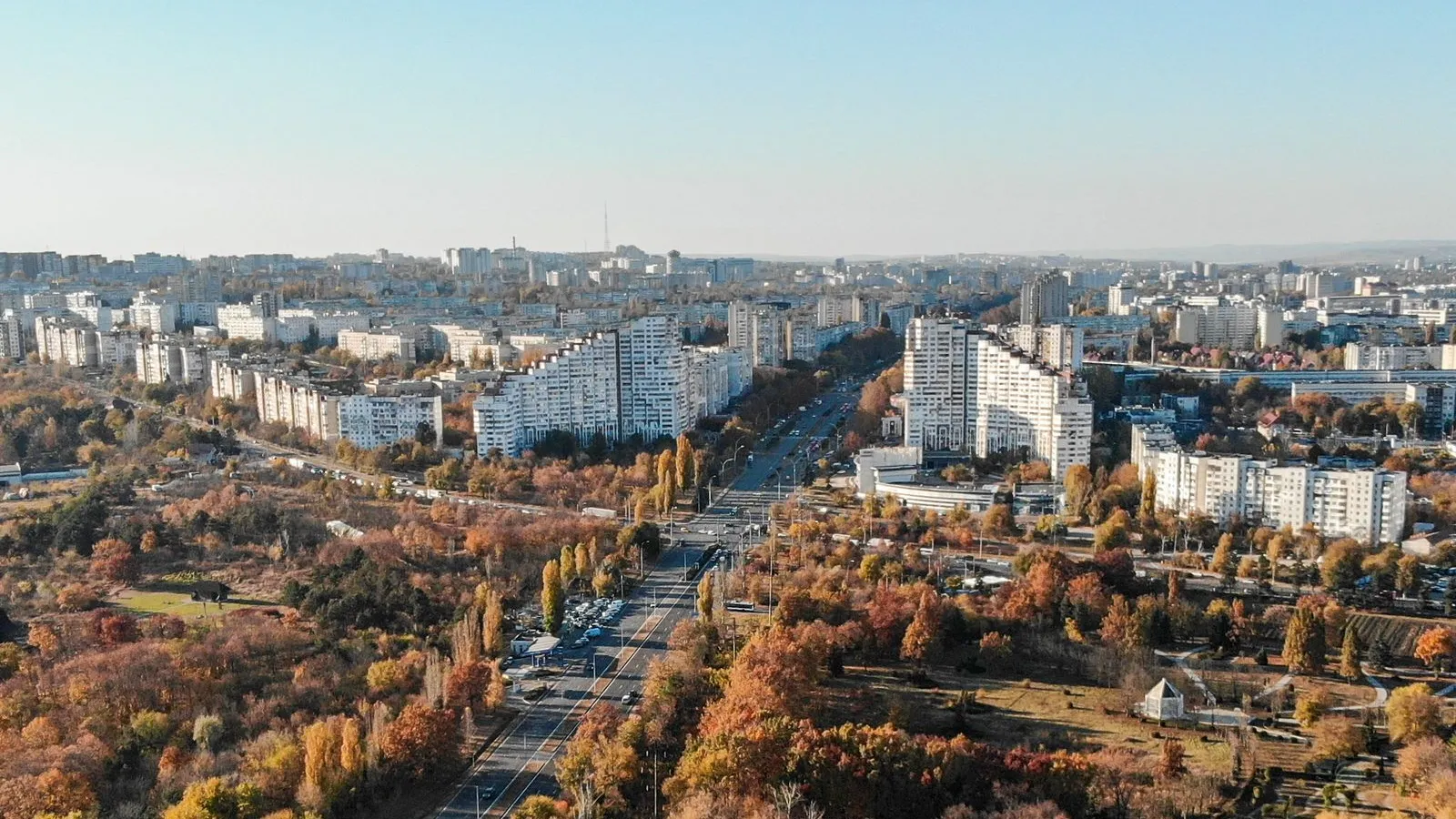
Moldova is the quiet option almost nobody puts on their shortlist, and that is exactly why it can work. It is a small, landlocked country between Romania and Ukraine, with one real hub for remote workers: Chisinau, the capital. If your idea of a good base is cheap rent, fast fibre internet, decent cafes, wine country a short drive away, and a low-drama daily life, it fits. If you need a big international scene, sunshine year round, or a deep pool of English speakers, it will feel thin.
The honest pitch is cost. A single remote worker can live comfortably in Chisinau on roughly 900 to 1,300 euros a month including a nice one-bedroom flat, and more frugally for less. The trade-offs are real. Winters are cold and grey, Russian and Romanian do most of the daily work while English is patchy outside younger and IT circles, and the breakaway region of Transnistria in the east means several governments tell you to skip that corner entirely (Smartraveller). Government-controlled Moldova, and Chisinau in particular, is calm and walkable, with the usual big-city pickpocketing to watch in crowds. Tap water is best avoided, so plan on bottled or filtered.
Cost of living in Moldova
This is Moldova’s headline. Chisinau is one of the cheapest capitals in Europe, though prices have climbed lately, with the cost of living up around 7 percent in a year (Numbeo).
Rough monthly ranges, which you should treat as a starting point and verify locally:
- Rent: a one-bedroom flat in the centre runs around 500 to 600 euros, and noticeably less a little further out (Wise).
- Groceries: budget somewhere around 150 to 250 euros a month for one person, helped by cheap local produce and Moldova’s own wine.
- Eating out: a casual meal is often 6 to 12 euros, and a coffee a euro or two.
- Utilities: heating, power and water for a mid-size flat land around 150 to 180 euros, spiking in winter.
Add a good coworking desk or gym and a single person can still keep total spend comfortably under 1,300 euros most months. Families scale up, but not steeply by European standards.
Moldova visas and entry
Here is the part where honesty matters most, because it changed recently and many guides have not caught up. Since 20 September 2025 Moldova has a real digital nomad route: a temporary residence right under Article 37/2 of Law 200/2010 on the regime of foreigners. It is for people who work remotely, using IT, exclusively for legal entities registered outside Moldova: as an employee, as a contractor under a services contract, or as a shareholder, partner or administrator running a foreign company from a distance. Moldovan employers and clients do not count, and because the law speaks of legal entities, freelancers whose clients are private individuals should check before applying. The income bar is at least 18 forecast average monthly salaries earned over the six months before you apply, which in 2026 means about MDL 52,200 a month (3 x MDL 17,400), roughly 2,600 to 2,700 euros depending on the exchange rate. You apply to the General Inspectorate for Migration (IGM). The permit is granted for the period you ask for, up to two years, can be extended the same way, and family members can join you if you show enough means for them. The state fee is set by law and has been reported at around 80 to 100 euros, so confirm it when you file.
Around it, the other options still apply:
- Visa-free short stays. Many nationalities, including EU citizens, and typically US, UK, Canadian and Australian passport holders, can enter visa-free for stays that generally run up to 90 days within any 180-day window. That is plenty to test the water before you commit to anything.
- Other temporary residence permits for longer stays, tied to a specific ground such as employment with a local entity, study, family, or business and investment.
- The Moldova IT Park regime is sometimes mentioned in nomad forums, but it is a company tax regime, not a personal visa. Its single tax on IT companies is roughly 7 percent of revenue, and the route some remote workers use is registering a business there rather than obtaining any nomad status. That is a company setup with accounting obligations, so weigh it with a local advisor, not as a shortcut to residency.
Because the categories are narrow and the details shift, run your nationality and plans through our digital nomad visa checker before you book anything, then confirm the current rules with the migration authority.
Tax residency and the 183 day rule
Moldova uses a flat 12 percent personal income tax, which is genuinely simple by European standards (PwC). The catch for anyone staying a while is residency. You generally become a Moldovan tax resident if you spend at least 183 days in the country in a calendar year, or keep a permanent home there. The days do not need to be back to back; the authorities count total physical presence.
Why it matters: tax residents are, in principle, taxed on worldwide income, while non-residents are taxed only on Moldova-sourced income. Any specific rate, exemption or business-regime figure you read online is exactly the kind of detail that shifts, so treat it as an estimate and get it confirmed. None of this is tax advice, and double-tax treaties between Moldova and your home country can change the picture entirely. A qualified local accountant is worth the modest fee. To sketch out where you might land as your days add up, try our tax residency checker and then take the output to a professional.
Healthcare and insurance
Public healthcare exists but is underfunded, and as a foreigner without the national CNAM insurance you will mostly use private clinics and pay directly or through insurance. The good news is that private care in Chisinau is solid and cheap by Western standards. Medpark International Hospital is the standout, an internationally accredited private hospital with specialists across dozens of fields (Treatment Abroad). American Medical Center and Laurus Medical are also popular with foreigners.
A private doctor’s consultation typically runs around 20 to 50 euros, and a fuller adult check-up perhaps 180 to 200 euros. Because serious cases may mean travelling abroad, a proper international health insurance plan is strongly recommended, and often required for any residence application anyway (Pacific Prime). Budget a few thousand euros a year for a good expat policy with evacuation cover, and confirm which Chisinau clinics your insurer works with directly.
Money, banking and settling in
Everyday spending is easy: cards work widely in Chisinau, and the local currency is the leu (MDL). Cash still matters at markets, small cafes and outside the capital, so keep some on hand.
Opening a local account is doable once you have a residence permit. The main banks are maib (the largest), Victoriabank, which is now part of Romania’s Banca Transilvania group, and a handful of others, and you will typically need your passport, your visa or residence permit, and proof of address (Incorpore). English support is best at the bigger branches. Many nomads simply run day to day on Wise or Revolut for the first weeks and open a local account only once settled.
Practical first-weeks advice: pick up a local eSIM or SIM on arrival for cheap, fast data, line up your accommodation before you register with the migration police, and lean on Chisinau’s coworking spaces to meet the small but friendly remote-work crowd. Learn a few words of Romanian or Russian and doors open faster.
Figures are estimates. Always check the official source.
Frequently asked questions
- Moldova: is there a digital nomad visa?
- Digital nomad temporary residence (Law 200/2010, art. 37/2). Foreigners who work remotely using IT, exclusively for legal entities registered outside Moldova: as an employee, as a service provider under a services contract, or as a shareholder, partner or administrator managing a foreign company remotely. Work for Moldovan employers or clients does not count. You apply to the General Inspectorate for Migration (IGM); the permit is granted for the period you request, up to 2 years, and can be extended under the same procedure. Family reunification is possible if you can show enough means for your dependants. In force since 20 September 2025.
- Moldova: when do you become a tax resident?
- You are a Moldovan tax resident if you have a permanent home in Moldova or spend at least 183 days there in the fiscal (calendar) year. Residents are taxed on worldwide income at a flat 12 percent, while non-residents are taxed only on Moldovan-source income, subject to double-tax treaties.
- Moldova: what is the cost of living?
- The cost of living is low and the local currency is the MDL. Treat any figures as estimates.
- Moldova: do you need health insurance?
- Public care is not free for most foreigners and facilities can be limited outside major cities, so private health insurance covering treatment and evacuation is strongly recommended.
- Moldova: can you drive on a foreign licence?
- Bring an International Driving Permit with your home licence; it is valid for up to about 90 days, and a Green Card insurance policy is required to drive your own car into the country.
Terms worth knowing
Europe: more countries to explore
Put it to work
- Free
Digital-Nomad Visa Checker
See which digital-nomad visas you could actually get with your passport and income, ranked, with the binding reason per country.
→ - Free
Tax-Residency Reality Checker
Go beyond the 183-day myth: model the treaty tie-breaker and see whether two countries could both claim you as a tax resident.
→ - Free
Nomad Insurance Picker
Match SafetyWing, Genki, World Nomads and others to your situation, and see which policies satisfy specific visa proof requirements.
→ - Free
Banking & FX Picker
Find the right account stack to avoid fees and hold multiple currencies abroad, Wise, Revolut, N26, for your nationality and spending.
→