Countries
Slovakia: visas, tax & cost of living
A warm, honest guide to moving to Slovakia as a remote worker: real residence routes, cost of living, tax residency, healthcare and banking, all sourced.
United KingdomSlovakia
Your move to Slovakia on a United Kingdom passport
- VisitEasyVisa-free entry
- NomadMediumNo nomad visa, other route
- RelocateMediumResidence with conditions
Visiting
Visa-free for up to 90 days. Travel on a passport valid for your whole stay, with a return or onward ticket and proof you can support yourself.
Passport validity: Non-EU passports should be valid for at least three months beyond your planned departure from the Schengen area and issued within the last ten years.
Heads-up: The EU Entry/Exit System (EES) started on 12 October 2025 and has been fully operational since 10 April 2026, replacing passport stamps for non-EU short-stay visitors. The ETIAS travel authorisation (EUR 20) is not yet in operation; the EU says it will announce the start date several months ahead.
At the border: Passport plus, for some non-EU nationals, proof of funds, accommodation, return travel, and purpose of stay.
Working remotely
No dedicated nomad visa; the usual route is a standard residence permit.
Tax and residency
You are a Slovak tax resident if you have your permanent residence or a home in Slovakia (accommodation that is not just occasional, with an evident intention to stay), or if you are present for at least 183 days in the calendar year, in one stretch or several, with every started day counting (Income Tax Act 595/2003, section 2(d)). Residents are taxed on worldwide income; staying only to study or for medical treatment does not make you resident, and a tax treaty can override the result (estimate). (estimate)
The UK decides residence with its Statutory Residence Test (days in the UK plus your ties). As a non-resident you are usually taxed only on UK income; where one exists, a double-tax treaty with the destination decides who taxes what.
Practical
Currency: EUR. Cost of living: mid.
Healthcare: EU and EEA visitors can use a European Health Insurance Card for needed care; others and longer-stay residents should arrange private or public insurance.
Driving: EU and EEA licences are accepted. Slovakia also recognises licences from states party to the 1949 Geneva or 1968 Vienna road traffic conventions, and an International Driving Permit only together with the national licence. If you take up residence on a non-EEA licence, you must apply to exchange it within 60 days once 185 days of residence have passed, or it stops being valid in Slovakia.
Sources: Act 404/2011 on the Residence of Foreigners (Slov-Lex), sections 22, 31, 32 and 34 · Slovak Ministry of Interior, residence of foreigners (Pobyt cudzinca) · Slovak Ministry of Interior, Bureau of Border and Foreign Police · Income Tax Act 595/2003 (Slov-Lex), section 2 · Financial Administration of the Slovak Republic · Slovak Ministry of Interior, driving licences issued abroad · European Commission, European Health Insurance Card · EU Immigration Portal, self-employed worker in Slovakia · European Commission, Entry/Exit System (EES) · EU EES and ETIAS, travelling to Europe · GOV.UK: tax on foreign income · HMRC: double-taxation treaties
Estimates, not advice. Confirm with the official sources before you act.
United StatesSlovakia
Your move to Slovakia on a United States passport
- VisitEasyVisa-free entry
- NomadMediumNo nomad visa, other route
- RelocateMediumResidence with conditions
Visiting
Visa-free for up to 90 days. Travel on a passport valid for your whole stay, with a return or onward ticket and proof you can support yourself.
Passport validity: Non-EU passports should be valid for at least three months beyond your planned departure from the Schengen area and issued within the last ten years.
Heads-up: The EU Entry/Exit System (EES) started on 12 October 2025 and has been fully operational since 10 April 2026, replacing passport stamps for non-EU short-stay visitors. The ETIAS travel authorisation (EUR 20) is not yet in operation; the EU says it will announce the start date several months ahead.
At the border: Passport plus, for some non-EU nationals, proof of funds, accommodation, return travel, and purpose of stay.
Working remotely
No dedicated nomad visa; the usual route is a standard residence permit.
Tax and residency
You are a Slovak tax resident if you have your permanent residence or a home in Slovakia (accommodation that is not just occasional, with an evident intention to stay), or if you are present for at least 183 days in the calendar year, in one stretch or several, with every started day counting (Income Tax Act 595/2003, section 2(d)). Residents are taxed on worldwide income; staying only to study or for medical treatment does not make you resident, and a tax treaty can override the result (estimate). (estimate)
The US taxes its citizens on worldwide income wherever you live, so you keep filing US returns abroad. The Foreign Earned Income Exclusion and the foreign tax credit are what stop you being taxed twice.
Practical
Currency: EUR. Cost of living: mid.
Healthcare: EU and EEA visitors can use a European Health Insurance Card for needed care; others and longer-stay residents should arrange private or public insurance.
Driving: EU and EEA licences are accepted. Slovakia also recognises licences from states party to the 1949 Geneva or 1968 Vienna road traffic conventions, and an International Driving Permit only together with the national licence. If you take up residence on a non-EEA licence, you must apply to exchange it within 60 days once 185 days of residence have passed, or it stops being valid in Slovakia.
Sources: Act 404/2011 on the Residence of Foreigners (Slov-Lex), sections 22, 31, 32 and 34 · Slovak Ministry of Interior, residence of foreigners (Pobyt cudzinca) · Slovak Ministry of Interior, Bureau of Border and Foreign Police · Income Tax Act 595/2003 (Slov-Lex), section 2 · Financial Administration of the Slovak Republic · Slovak Ministry of Interior, driving licences issued abroad · European Commission, European Health Insurance Card · EU Immigration Portal, self-employed worker in Slovakia · European Commission, Entry/Exit System (EES) · EU EES and ETIAS, travelling to Europe · IRS: Foreign Earned Income Exclusion · IRS: tax treaties
Estimates, not advice. Confirm with the official sources before you act.
IndiaSlovakia
Your move to Slovakia on a India passport
- VisitMediumVisa required in advance
- NomadMediumNo nomad visa, other route
- RelocateMediumResidence with conditions
Visiting
You need a visa, arranged at a consulate before you travel. Plan ahead: gather the documents, book the appointment, and allow time for processing.
Passport validity: Non-EU passports should be valid for at least three months beyond your planned departure from the Schengen area and issued within the last ten years.
Heads-up: The EU Entry/Exit System (EES) started on 12 October 2025 and has been fully operational since 10 April 2026, replacing passport stamps for non-EU short-stay visitors. The ETIAS travel authorisation (EUR 20) is not yet in operation; the EU says it will announce the start date several months ahead.
At the border: Passport plus, for some non-EU nationals, proof of funds, accommodation, return travel, and purpose of stay.
Working remotely
No dedicated nomad visa; the usual route is a standard residence permit.
Tax and residency
You are a Slovak tax resident if you have your permanent residence or a home in Slovakia (accommodation that is not just occasional, with an evident intention to stay), or if you are present for at least 183 days in the calendar year, in one stretch or several, with every started day counting (Income Tax Act 595/2003, section 2(d)). Residents are taxed on worldwide income; staying only to study or for medical treatment does not make you resident, and a tax treaty can override the result (estimate). (estimate)
India taxes residents on worldwide income; your status depends on the days you spend in India (broadly 182 or more in the year). As a non-resident (NRI) you are taxed only on Indian-source income, and the relevant double-tax treaty allocates the rest.
Practical
Currency: EUR. Cost of living: mid.
Healthcare: EU and EEA visitors can use a European Health Insurance Card for needed care; others and longer-stay residents should arrange private or public insurance.
Driving: EU and EEA licences are accepted. Slovakia also recognises licences from states party to the 1949 Geneva or 1968 Vienna road traffic conventions, and an International Driving Permit only together with the national licence. If you take up residence on a non-EEA licence, you must apply to exchange it within 60 days once 185 days of residence have passed, or it stops being valid in Slovakia.
Sources: Act 404/2011 on the Residence of Foreigners (Slov-Lex), sections 22, 31, 32 and 34 · Slovak Ministry of Interior, residence of foreigners (Pobyt cudzinca) · Slovak Ministry of Interior, Bureau of Border and Foreign Police · Income Tax Act 595/2003 (Slov-Lex), section 2 · Financial Administration of the Slovak Republic · Slovak Ministry of Interior, driving licences issued abroad · European Commission, European Health Insurance Card · EU Immigration Portal, self-employed worker in Slovakia · European Commission, Entry/Exit System (EES) · EU EES and ETIAS, travelling to Europe · Income Tax Department, India · India: Double Taxation Avoidance Agreements
Estimates, not advice. Confirm with the official sources before you act.
GermanySlovakia
Your move to Slovakia on a Germany passport
- VisitEasyVisa-free entry
- NomadEasyFree movement, no nomad visa needed
- RelocateEasyStraightforward residence
Visiting
You have freedom of movement here: you can live, work and stay with no visa.
Passport validity: Non-EU passports should be valid for at least three months beyond your planned departure from the Schengen area and issued within the last ten years.
Heads-up: The EU Entry/Exit System (EES) started on 12 October 2025 and has been fully operational since 10 April 2026, replacing passport stamps for non-EU short-stay visitors. The ETIAS travel authorisation (EUR 20) is not yet in operation; the EU says it will announce the start date several months ahead.
At the border: Passport plus, for some non-EU nationals, proof of funds, accommodation, return travel, and purpose of stay.
Working remotely
No dedicated nomad visa; the usual route is a standard residence permit.
Tax and residency
You are a Slovak tax resident if you have your permanent residence or a home in Slovakia (accommodation that is not just occasional, with an evident intention to stay), or if you are present for at least 183 days in the calendar year, in one stretch or several, with every started day counting (Income Tax Act 595/2003, section 2(d)). Residents are taxed on worldwide income; staying only to study or for medical treatment does not make you resident, and a tax treaty can override the result (estimate). (estimate)
Germany taxes residents on worldwide income; you become resident through a home available to you (Wohnsitz) or a habitual abode of more than six months. As a non-resident you are usually taxed only on German-source income, and where one exists a double-tax treaty with the destination decides who taxes what.
Practical
Currency: EUR. Cost of living: mid.
Healthcare: EU and EEA visitors can use a European Health Insurance Card for needed care; others and longer-stay residents should arrange private or public insurance.
Driving: EU and EEA licences are accepted. Slovakia also recognises licences from states party to the 1949 Geneva or 1968 Vienna road traffic conventions, and an International Driving Permit only together with the national licence. If you take up residence on a non-EEA licence, you must apply to exchange it within 60 days once 185 days of residence have passed, or it stops being valid in Slovakia.
Sources: Act 404/2011 on the Residence of Foreigners (Slov-Lex), sections 22, 31, 32 and 34 · Slovak Ministry of Interior, residence of foreigners (Pobyt cudzinca) · Slovak Ministry of Interior, Bureau of Border and Foreign Police · Income Tax Act 595/2003 (Slov-Lex), section 2 · Financial Administration of the Slovak Republic · Slovak Ministry of Interior, driving licences issued abroad · European Commission, European Health Insurance Card · EU Immigration Portal, self-employed worker in Slovakia · European Commission, Entry/Exit System (EES) · EU EES and ETIAS, travelling to Europe · Bundeszentralamt für Steuern (BZSt) · Germany: double-taxation agreements (BMF)
Estimates, not advice. Confirm with the official sources before you act.
FranceSlovakia
Your move to Slovakia on a France passport
- VisitEasyVisa-free entry
- NomadEasyFree movement, no nomad visa needed
- RelocateEasyStraightforward residence
Visiting
You have freedom of movement here: you can live, work and stay with no visa.
Passport validity: Non-EU passports should be valid for at least three months beyond your planned departure from the Schengen area and issued within the last ten years.
Heads-up: The EU Entry/Exit System (EES) started on 12 October 2025 and has been fully operational since 10 April 2026, replacing passport stamps for non-EU short-stay visitors. The ETIAS travel authorisation (EUR 20) is not yet in operation; the EU says it will announce the start date several months ahead.
At the border: Passport plus, for some non-EU nationals, proof of funds, accommodation, return travel, and purpose of stay.
Working remotely
No dedicated nomad visa; the usual route is a standard residence permit.
Tax and residency
You are a Slovak tax resident if you have your permanent residence or a home in Slovakia (accommodation that is not just occasional, with an evident intention to stay), or if you are present for at least 183 days in the calendar year, in one stretch or several, with every started day counting (Income Tax Act 595/2003, section 2(d)). Residents are taxed on worldwide income; staying only to study or for medical treatment does not make you resident, and a tax treaty can override the result (estimate). (estimate)
France taxes you on your worldwide income if your tax home (domicile fiscal) stays there, broadly when your household, main home, main job or main economic interests are in France, so moving abroad alone may not end it. Once you genuinely settle elsewhere you are usually taxed only on French-source income, and tax treaties typically prevent paying twice through an exemption or a foreign tax credit, but treat any figures as estimates and check your situation.
Practical
Currency: EUR. Cost of living: mid.
Healthcare: EU and EEA visitors can use a European Health Insurance Card for needed care; others and longer-stay residents should arrange private or public insurance.
Driving: EU and EEA licences are accepted. Slovakia also recognises licences from states party to the 1949 Geneva or 1968 Vienna road traffic conventions, and an International Driving Permit only together with the national licence. If you take up residence on a non-EEA licence, you must apply to exchange it within 60 days once 185 days of residence have passed, or it stops being valid in Slovakia.
Sources: Act 404/2011 on the Residence of Foreigners (Slov-Lex), sections 22, 31, 32 and 34 · Slovak Ministry of Interior, residence of foreigners (Pobyt cudzinca) · Slovak Ministry of Interior, Bureau of Border and Foreign Police · Income Tax Act 595/2003 (Slov-Lex), section 2 · Financial Administration of the Slovak Republic · Slovak Ministry of Interior, driving licences issued abroad · European Commission, European Health Insurance Card · EU Immigration Portal, self-employed worker in Slovakia · European Commission, Entry/Exit System (EES) · EU EES and ETIAS, travelling to Europe · impots.gouv.fr - Résidents de France · impots.gouv.fr - Les conventions internationales
Estimates, not advice. Confirm with the official sources before you act.
SpainSlovakia
Your move to Slovakia on a Spain passport
- VisitEasyVisa-free entry
- NomadEasyFree movement, no nomad visa needed
- RelocateEasyStraightforward residence
Visiting
You have freedom of movement here: you can live, work and stay with no visa.
Passport validity: Non-EU passports should be valid for at least three months beyond your planned departure from the Schengen area and issued within the last ten years.
Heads-up: The EU Entry/Exit System (EES) started on 12 October 2025 and has been fully operational since 10 April 2026, replacing passport stamps for non-EU short-stay visitors. The ETIAS travel authorisation (EUR 20) is not yet in operation; the EU says it will announce the start date several months ahead.
At the border: Passport plus, for some non-EU nationals, proof of funds, accommodation, return travel, and purpose of stay.
Working remotely
No dedicated nomad visa; the usual route is a standard residence permit.
Tax and residency
You are a Slovak tax resident if you have your permanent residence or a home in Slovakia (accommodation that is not just occasional, with an evident intention to stay), or if you are present for at least 183 days in the calendar year, in one stretch or several, with every started day counting (Income Tax Act 595/2003, section 2(d)). Residents are taxed on worldwide income; staying only to study or for medical treatment does not make you resident, and a tax treaty can override the result (estimate). (estimate)
If Spain still counts as your tax home (roughly 183+ days in the country in a year, or your main base of life and income sits there), Spain taxes your worldwide income at IRPF rates, so what you earn abroad usually counts too. The sting is softened by double-tax treaties and a foreign-tax credit, plus the Article 7.p exemption that can shelter work done abroad up to around 60,100 euros a year, but treat every figure as an estimate and check your own case before you file.
Practical
Currency: EUR. Cost of living: mid.
Healthcare: EU and EEA visitors can use a European Health Insurance Card for needed care; others and longer-stay residents should arrange private or public insurance.
Driving: EU and EEA licences are accepted. Slovakia also recognises licences from states party to the 1949 Geneva or 1968 Vienna road traffic conventions, and an International Driving Permit only together with the national licence. If you take up residence on a non-EEA licence, you must apply to exchange it within 60 days once 185 days of residence have passed, or it stops being valid in Slovakia.
Sources: Act 404/2011 on the Residence of Foreigners (Slov-Lex), sections 22, 31, 32 and 34 · Slovak Ministry of Interior, residence of foreigners (Pobyt cudzinca) · Slovak Ministry of Interior, Bureau of Border and Foreign Police · Income Tax Act 595/2003 (Slov-Lex), section 2 · Financial Administration of the Slovak Republic · Slovak Ministry of Interior, driving licences issued abroad · European Commission, European Health Insurance Card · EU Immigration Portal, self-employed worker in Slovakia · European Commission, Entry/Exit System (EES) · EU EES and ETIAS, travelling to Europe · Agencia Tributaria: persona física residente en España · Agencia Tributaria: obtención de rentas extranjeras, reglas generales
Estimates, not advice. Confirm with the official sources before you act.
ItalySlovakia
Your move to Slovakia on a Italy passport
- VisitEasyVisa-free entry
- NomadEasyFree movement, no nomad visa needed
- RelocateEasyStraightforward residence
Visiting
You have freedom of movement here: you can live, work and stay with no visa.
Passport validity: Non-EU passports should be valid for at least three months beyond your planned departure from the Schengen area and issued within the last ten years.
Heads-up: The EU Entry/Exit System (EES) started on 12 October 2025 and has been fully operational since 10 April 2026, replacing passport stamps for non-EU short-stay visitors. The ETIAS travel authorisation (EUR 20) is not yet in operation; the EU says it will announce the start date several months ahead.
At the border: Passport plus, for some non-EU nationals, proof of funds, accommodation, return travel, and purpose of stay.
Working remotely
No dedicated nomad visa; the usual route is a standard residence permit.
Tax and residency
You are a Slovak tax resident if you have your permanent residence or a home in Slovakia (accommodation that is not just occasional, with an evident intention to stay), or if you are present for at least 183 days in the calendar year, in one stretch or several, with every started day counting (Income Tax Act 595/2003, section 2(d)). Residents are taxed on worldwide income; staying only to study or for medical treatment does not make you resident, and a tax treaty can override the result (estimate). (estimate)
Italy generally treats you as a tax resident if for most of the year (roughly 183 days or more) your home, family or registration ties are here, and residents are taxed on worldwide income wherever they live. The relief is usually a foreign tax credit for tax already paid abroad, often shaped by Italy's double-taxation treaties, so the same income should not be taxed twice.
Practical
Currency: EUR. Cost of living: mid.
Healthcare: EU and EEA visitors can use a European Health Insurance Card for needed care; others and longer-stay residents should arrange private or public insurance.
Driving: EU and EEA licences are accepted. Slovakia also recognises licences from states party to the 1949 Geneva or 1968 Vienna road traffic conventions, and an International Driving Permit only together with the national licence. If you take up residence on a non-EEA licence, you must apply to exchange it within 60 days once 185 days of residence have passed, or it stops being valid in Slovakia.
Sources: Act 404/2011 on the Residence of Foreigners (Slov-Lex), sections 22, 31, 32 and 34 · Slovak Ministry of Interior, residence of foreigners (Pobyt cudzinca) · Slovak Ministry of Interior, Bureau of Border and Foreign Police · Income Tax Act 595/2003 (Slov-Lex), section 2 · Financial Administration of the Slovak Republic · Slovak Ministry of Interior, driving licences issued abroad · European Commission, European Health Insurance Card · EU Immigration Portal, self-employed worker in Slovakia · European Commission, Entry/Exit System (EES) · EU EES and ETIAS, travelling to Europe · Agenzia delle Entrate, Residence for tax purposes · Agenzia delle Entrate, Bilateral agreements to prevent double taxation
Estimates, not advice. Confirm with the official sources before you act.
CanadaSlovakia
Your move to Slovakia on a Canada passport
- VisitEasyVisa-free entry
- NomadMediumNo nomad visa, other route
- RelocateMediumResidence with conditions
Visiting
Visa-free for up to 90 days. Travel on a passport valid for your whole stay, with a return or onward ticket and proof you can support yourself.
Passport validity: Non-EU passports should be valid for at least three months beyond your planned departure from the Schengen area and issued within the last ten years.
Heads-up: The EU Entry/Exit System (EES) started on 12 October 2025 and has been fully operational since 10 April 2026, replacing passport stamps for non-EU short-stay visitors. The ETIAS travel authorisation (EUR 20) is not yet in operation; the EU says it will announce the start date several months ahead.
At the border: Passport plus, for some non-EU nationals, proof of funds, accommodation, return travel, and purpose of stay.
Working remotely
No dedicated nomad visa; the usual route is a standard residence permit.
Tax and residency
You are a Slovak tax resident if you have your permanent residence or a home in Slovakia (accommodation that is not just occasional, with an evident intention to stay), or if you are present for at least 183 days in the calendar year, in one stretch or several, with every started day counting (Income Tax Act 595/2003, section 2(d)). Residents are taxed on worldwide income; staying only to study or for medical treatment does not make you resident, and a tax treaty can override the result (estimate). (estimate)
Canada taxes you on residency, not on holding the passport, so as long as the CRA still treats you as a resident (kept home, family or strong ties) you generally owe Canadian tax on your worldwide income. The relief is usually a foreign tax credit for tax you already paid abroad, often topped up by a tax treaty, though the exact amounts are only estimates until you check your own case.
Practical
Currency: EUR. Cost of living: mid.
Healthcare: EU and EEA visitors can use a European Health Insurance Card for needed care; others and longer-stay residents should arrange private or public insurance.
Driving: EU and EEA licences are accepted. Slovakia also recognises licences from states party to the 1949 Geneva or 1968 Vienna road traffic conventions, and an International Driving Permit only together with the national licence. If you take up residence on a non-EEA licence, you must apply to exchange it within 60 days once 185 days of residence have passed, or it stops being valid in Slovakia.
Sources: Act 404/2011 on the Residence of Foreigners (Slov-Lex), sections 22, 31, 32 and 34 · Slovak Ministry of Interior, residence of foreigners (Pobyt cudzinca) · Slovak Ministry of Interior, Bureau of Border and Foreign Police · Income Tax Act 595/2003 (Slov-Lex), section 2 · Financial Administration of the Slovak Republic · Slovak Ministry of Interior, driving licences issued abroad · European Commission, European Health Insurance Card · EU Immigration Portal, self-employed worker in Slovakia · European Commission, Entry/Exit System (EES) · EU EES and ETIAS, travelling to Europe · Canada Revenue Agency, Determining your residency status · Department of Finance Canada, Tax treaties in force
Estimates, not advice. Confirm with the official sources before you act.
AustraliaSlovakia
Your move to Slovakia on a Australia passport
- VisitEasyVisa-free entry
- NomadMediumNo nomad visa, other route
- RelocateMediumResidence with conditions
Visiting
Visa-free for up to 90 days. Travel on a passport valid for your whole stay, with a return or onward ticket and proof you can support yourself.
Passport validity: Non-EU passports should be valid for at least three months beyond your planned departure from the Schengen area and issued within the last ten years.
Heads-up: The EU Entry/Exit System (EES) started on 12 October 2025 and has been fully operational since 10 April 2026, replacing passport stamps for non-EU short-stay visitors. The ETIAS travel authorisation (EUR 20) is not yet in operation; the EU says it will announce the start date several months ahead.
At the border: Passport plus, for some non-EU nationals, proof of funds, accommodation, return travel, and purpose of stay.
Working remotely
No dedicated nomad visa; the usual route is a standard residence permit.
Tax and residency
You are a Slovak tax resident if you have your permanent residence or a home in Slovakia (accommodation that is not just occasional, with an evident intention to stay), or if you are present for at least 183 days in the calendar year, in one stretch or several, with every started day counting (Income Tax Act 595/2003, section 2(d)). Residents are taxed on worldwide income; staying only to study or for medical treatment does not make you resident, and a tax treaty can override the result (estimate). (estimate)
If you stay an Australian resident for tax purposes, Australia generally taxes your worldwide income wherever you live, with residency turned on the moment your real home and ties are here (a continuous stay of roughly 6 months can be enough). To soften double tax, you can usually claim a Foreign Income Tax Offset for tax already paid abroad, capped at the Australian tax on that income, and treaties may help too, so treat these figures as estimates and check your own case.
Practical
Currency: EUR. Cost of living: mid.
Healthcare: EU and EEA visitors can use a European Health Insurance Card for needed care; others and longer-stay residents should arrange private or public insurance.
Driving: EU and EEA licences are accepted. Slovakia also recognises licences from states party to the 1949 Geneva or 1968 Vienna road traffic conventions, and an International Driving Permit only together with the national licence. If you take up residence on a non-EEA licence, you must apply to exchange it within 60 days once 185 days of residence have passed, or it stops being valid in Slovakia.
Sources: Act 404/2011 on the Residence of Foreigners (Slov-Lex), sections 22, 31, 32 and 34 · Slovak Ministry of Interior, residence of foreigners (Pobyt cudzinca) · Slovak Ministry of Interior, Bureau of Border and Foreign Police · Income Tax Act 595/2003 (Slov-Lex), section 2 · Financial Administration of the Slovak Republic · Slovak Ministry of Interior, driving licences issued abroad · European Commission, European Health Insurance Card · EU Immigration Portal, self-employed worker in Slovakia · European Commission, Entry/Exit System (EES) · EU EES and ETIAS, travelling to Europe · Australian Taxation Office, Australian resident for tax purposes · Australian Taxation Office, International tax agreements (tax treaties)
Estimates, not advice. Confirm with the official sources before you act.
BrazilSlovakia
Your move to Slovakia on a Brazil passport
- VisitEasyVisa-free entry
- NomadMediumNo nomad visa, other route
- RelocateMediumResidence with conditions
Visiting
Visa-free for up to 90 days. Travel on a passport valid for your whole stay, with a return or onward ticket and proof you can support yourself.
Passport validity: Non-EU passports should be valid for at least three months beyond your planned departure from the Schengen area and issued within the last ten years.
Heads-up: The EU Entry/Exit System (EES) started on 12 October 2025 and has been fully operational since 10 April 2026, replacing passport stamps for non-EU short-stay visitors. The ETIAS travel authorisation (EUR 20) is not yet in operation; the EU says it will announce the start date several months ahead.
At the border: Passport plus, for some non-EU nationals, proof of funds, accommodation, return travel, and purpose of stay.
Working remotely
No dedicated nomad visa; the usual route is a standard residence permit.
Tax and residency
You are a Slovak tax resident if you have your permanent residence or a home in Slovakia (accommodation that is not just occasional, with an evident intention to stay), or if you are present for at least 183 days in the calendar year, in one stretch or several, with every started day counting (Income Tax Act 595/2003, section 2(d)). Residents are taxed on worldwide income; staying only to study or for medical treatment does not make you resident, and a tax treaty can override the result (estimate). (estimate)
If Brazil still counts you as tax-resident, usually triggered by a permanent visa, a temporary visa plus a job, or roughly 183 days in the country within any 12 months, the Receita Federal taxes your worldwide income, so you keep filing the annual return wherever you live. The relief is real but partial: tax paid abroad can normally be credited against what you owe in Brazil under a treaty or recognised reciprocity, so most people are not taxed twice on the same income.
Practical
Currency: EUR. Cost of living: mid.
Healthcare: EU and EEA visitors can use a European Health Insurance Card for needed care; others and longer-stay residents should arrange private or public insurance.
Driving: EU and EEA licences are accepted. Slovakia also recognises licences from states party to the 1949 Geneva or 1968 Vienna road traffic conventions, and an International Driving Permit only together with the national licence. If you take up residence on a non-EEA licence, you must apply to exchange it within 60 days once 185 days of residence have passed, or it stops being valid in Slovakia.
Sources: Act 404/2011 on the Residence of Foreigners (Slov-Lex), sections 22, 31, 32 and 34 · Slovak Ministry of Interior, residence of foreigners (Pobyt cudzinca) · Slovak Ministry of Interior, Bureau of Border and Foreign Police · Income Tax Act 595/2003 (Slov-Lex), section 2 · Financial Administration of the Slovak Republic · Slovak Ministry of Interior, driving licences issued abroad · European Commission, European Health Insurance Card · EU Immigration Portal, self-employed worker in Slovakia · European Commission, Entry/Exit System (EES) · EU EES and ETIAS, travelling to Europe · Receita Federal, Acordos para evitar a dupla tributação · Receita Federal, Imposto sobre a Renda da Pessoa Física (IRPF)
Estimates, not advice. Confirm with the official sources before you act.
MexicoSlovakia
Your move to Slovakia on a Mexico passport
- VisitEasyVisa-free entry
- NomadMediumNo nomad visa, other route
- RelocateMediumResidence with conditions
Visiting
Visa-free for up to 90 days. Travel on a passport valid for your whole stay, with a return or onward ticket and proof you can support yourself.
Passport validity: Non-EU passports should be valid for at least three months beyond your planned departure from the Schengen area and issued within the last ten years.
Heads-up: The EU Entry/Exit System (EES) started on 12 October 2025 and has been fully operational since 10 April 2026, replacing passport stamps for non-EU short-stay visitors. The ETIAS travel authorisation (EUR 20) is not yet in operation; the EU says it will announce the start date several months ahead.
At the border: Passport plus, for some non-EU nationals, proof of funds, accommodation, return travel, and purpose of stay.
Working remotely
No dedicated nomad visa; the usual route is a standard residence permit.
Tax and residency
You are a Slovak tax resident if you have your permanent residence or a home in Slovakia (accommodation that is not just occasional, with an evident intention to stay), or if you are present for at least 183 days in the calendar year, in one stretch or several, with every started day counting (Income Tax Act 595/2003, section 2(d)). Residents are taxed on worldwide income; staying only to study or for medical treatment does not make you resident, and a tax treaty can override the result (estimate). (estimate)
Mexico taxes you on your worldwide income once you count as a tax resident, which usually means your main home or your center of life is here (very roughly, spending more than about 183 days a year can tip the balance). The good news is the SAT lets you credit foreign income tax you already paid, and Mexico's double-taxation treaties mean the same money should not normally be taxed twice.
Practical
Currency: EUR. Cost of living: mid.
Healthcare: EU and EEA visitors can use a European Health Insurance Card for needed care; others and longer-stay residents should arrange private or public insurance.
Driving: EU and EEA licences are accepted. Slovakia also recognises licences from states party to the 1949 Geneva or 1968 Vienna road traffic conventions, and an International Driving Permit only together with the national licence. If you take up residence on a non-EEA licence, you must apply to exchange it within 60 days once 185 days of residence have passed, or it stops being valid in Slovakia.
Sources: Act 404/2011 on the Residence of Foreigners (Slov-Lex), sections 22, 31, 32 and 34 · Slovak Ministry of Interior, residence of foreigners (Pobyt cudzinca) · Slovak Ministry of Interior, Bureau of Border and Foreign Police · Income Tax Act 595/2003 (Slov-Lex), section 2 · Financial Administration of the Slovak Republic · Slovak Ministry of Interior, driving licences issued abroad · European Commission, European Health Insurance Card · EU Immigration Portal, self-employed worker in Slovakia · European Commission, Entry/Exit System (EES) · EU EES and ETIAS, travelling to Europe · SAT - Servicio de Administración Tributaria · SAT - Tratados en Materia Fiscal (para evitar la doble tributación)
Estimates, not advice. Confirm with the official sources before you act.
PhilippinesSlovakia
Your move to Slovakia on a Philippines passport
- VisitMediumVisa required in advance
- NomadMediumNo nomad visa, other route
- RelocateMediumResidence with conditions
Visiting
You need a visa, arranged at a consulate before you travel. Plan ahead: gather the documents, book the appointment, and allow time for processing.
Passport validity: Non-EU passports should be valid for at least three months beyond your planned departure from the Schengen area and issued within the last ten years.
Heads-up: The EU Entry/Exit System (EES) started on 12 October 2025 and has been fully operational since 10 April 2026, replacing passport stamps for non-EU short-stay visitors. The ETIAS travel authorisation (EUR 20) is not yet in operation; the EU says it will announce the start date several months ahead.
At the border: Passport plus, for some non-EU nationals, proof of funds, accommodation, return travel, and purpose of stay.
Working remotely
No dedicated nomad visa; the usual route is a standard residence permit.
Tax and residency
You are a Slovak tax resident if you have your permanent residence or a home in Slovakia (accommodation that is not just occasional, with an evident intention to stay), or if you are present for at least 183 days in the calendar year, in one stretch or several, with every started day counting (Income Tax Act 595/2003, section 2(d)). Residents are taxed on worldwide income; staying only to study or for medical treatment does not make you resident, and a tax treaty can override the result (estimate). (estimate)
If you stay a resident citizen, the Philippines taxes your worldwide income, but once you genuinely live and work abroad you usually count as a non-resident citizen and are taxed only on income from Philippine sources. The exact line depends on how long you are out and your ties back home, so treat these as estimates, and a foreign tax credit can offset tax already paid abroad.
Practical
Currency: EUR. Cost of living: mid.
Healthcare: EU and EEA visitors can use a European Health Insurance Card for needed care; others and longer-stay residents should arrange private or public insurance.
Driving: EU and EEA licences are accepted. Slovakia also recognises licences from states party to the 1949 Geneva or 1968 Vienna road traffic conventions, and an International Driving Permit only together with the national licence. If you take up residence on a non-EEA licence, you must apply to exchange it within 60 days once 185 days of residence have passed, or it stops being valid in Slovakia.
Sources: Act 404/2011 on the Residence of Foreigners (Slov-Lex), sections 22, 31, 32 and 34 · Slovak Ministry of Interior, residence of foreigners (Pobyt cudzinca) · Slovak Ministry of Interior, Bureau of Border and Foreign Police · Income Tax Act 595/2003 (Slov-Lex), section 2 · Financial Administration of the Slovak Republic · Slovak Ministry of Interior, driving licences issued abroad · European Commission, European Health Insurance Card · EU Immigration Portal, self-employed worker in Slovakia · European Commission, Entry/Exit System (EES) · EU EES and ETIAS, travelling to Europe · BIR - Taxation of Foreign Source Income · BIR - Taxation of Non-Residents
Estimates, not advice. Confirm with the official sources before you act.
NigeriaSlovakia
Your move to Slovakia on a Nigeria passport
- VisitMediumVisa required in advance
- NomadMediumNo nomad visa, other route
- RelocateMediumResidence with conditions
Visiting
You need a visa, arranged at a consulate before you travel. Plan ahead: gather the documents, book the appointment, and allow time for processing.
Passport validity: Non-EU passports should be valid for at least three months beyond your planned departure from the Schengen area and issued within the last ten years.
Heads-up: The EU Entry/Exit System (EES) started on 12 October 2025 and has been fully operational since 10 April 2026, replacing passport stamps for non-EU short-stay visitors. The ETIAS travel authorisation (EUR 20) is not yet in operation; the EU says it will announce the start date several months ahead.
At the border: Passport plus, for some non-EU nationals, proof of funds, accommodation, return travel, and purpose of stay.
Working remotely
No dedicated nomad visa; the usual route is a standard residence permit.
Tax and residency
You are a Slovak tax resident if you have your permanent residence or a home in Slovakia (accommodation that is not just occasional, with an evident intention to stay), or if you are present for at least 183 days in the calendar year, in one stretch or several, with every started day counting (Income Tax Act 595/2003, section 2(d)). Residents are taxed on worldwide income; staying only to study or for medical treatment does not make you resident, and a tax treaty can override the result (estimate). (estimate)
If Nigeria still counts you as resident, roughly 183 or more days in the country in a year, or you keep a home, habitual abode or close family and economic ties there, you are generally taxed on your worldwide income, not just what you earn in Nigeria. There is usually a foreign tax credit, and Nigeria's tax treaties, so tax you already paid abroad can typically be set against your Nigerian bill, but treat these figures as estimates and check the current rules before you file.
Practical
Currency: EUR. Cost of living: mid.
Healthcare: EU and EEA visitors can use a European Health Insurance Card for needed care; others and longer-stay residents should arrange private or public insurance.
Driving: EU and EEA licences are accepted. Slovakia also recognises licences from states party to the 1949 Geneva or 1968 Vienna road traffic conventions, and an International Driving Permit only together with the national licence. If you take up residence on a non-EEA licence, you must apply to exchange it within 60 days once 185 days of residence have passed, or it stops being valid in Slovakia.
Sources: Act 404/2011 on the Residence of Foreigners (Slov-Lex), sections 22, 31, 32 and 34 · Slovak Ministry of Interior, residence of foreigners (Pobyt cudzinca) · Slovak Ministry of Interior, Bureau of Border and Foreign Police · Income Tax Act 595/2003 (Slov-Lex), section 2 · Financial Administration of the Slovak Republic · Slovak Ministry of Interior, driving licences issued abroad · European Commission, European Health Insurance Card · EU Immigration Portal, self-employed worker in Slovakia · European Commission, Entry/Exit System (EES) · EU EES and ETIAS, travelling to Europe · Federal Inland Revenue Service (FIRS) · FIRS - Tax Treaties and Related Matters
Estimates, not advice. Confirm with the official sources before you act.
VietnamSlovakia
Your move to Slovakia on a Vietnam passport
- VisitMediumVisa required in advance
- NomadMediumNo nomad visa, other route
- RelocateMediumResidence with conditions
Visiting
You need a visa, arranged at a consulate before you travel. Plan ahead: gather the documents, book the appointment, and allow time for processing.
Passport validity: Non-EU passports should be valid for at least three months beyond your planned departure from the Schengen area and issued within the last ten years.
Heads-up: The EU Entry/Exit System (EES) started on 12 October 2025 and has been fully operational since 10 April 2026, replacing passport stamps for non-EU short-stay visitors. The ETIAS travel authorisation (EUR 20) is not yet in operation; the EU says it will announce the start date several months ahead.
At the border: Passport plus, for some non-EU nationals, proof of funds, accommodation, return travel, and purpose of stay.
Working remotely
No dedicated nomad visa; the usual route is a standard residence permit.
Tax and residency
You are a Slovak tax resident if you have your permanent residence or a home in Slovakia (accommodation that is not just occasional, with an evident intention to stay), or if you are present for at least 183 days in the calendar year, in one stretch or several, with every started day counting (Income Tax Act 595/2003, section 2(d)). Residents are taxed on worldwide income; staying only to study or for medical treatment does not make you resident, and a tax treaty can override the result (estimate). (estimate)
Vietnam treats you as a tax resident once you spend roughly 183 days there in a calendar year (or any rolling 12 months) or keep a permanent home, and residents are taxed on worldwide income at progressive rates of around 5% to 35%; there is no foreign-earned-income exclusion, but Vietnam's tax treaties and a foreign tax credit usually stop the same income being taxed twice.
Practical
Currency: EUR. Cost of living: mid.
Healthcare: EU and EEA visitors can use a European Health Insurance Card for needed care; others and longer-stay residents should arrange private or public insurance.
Driving: EU and EEA licences are accepted. Slovakia also recognises licences from states party to the 1949 Geneva or 1968 Vienna road traffic conventions, and an International Driving Permit only together with the national licence. If you take up residence on a non-EEA licence, you must apply to exchange it within 60 days once 185 days of residence have passed, or it stops being valid in Slovakia.
Sources: Act 404/2011 on the Residence of Foreigners (Slov-Lex), sections 22, 31, 32 and 34 · Slovak Ministry of Interior, residence of foreigners (Pobyt cudzinca) · Slovak Ministry of Interior, Bureau of Border and Foreign Police · Income Tax Act 595/2003 (Slov-Lex), section 2 · Financial Administration of the Slovak Republic · Slovak Ministry of Interior, driving licences issued abroad · European Commission, European Health Insurance Card · EU Immigration Portal, self-employed worker in Slovakia · European Commission, Entry/Exit System (EES) · EU EES and ETIAS, travelling to Europe · General Department of Taxation (Tổng cục Thuế) · GDT - Agreements for Avoidance of Double Taxation
Estimates, not advice. Confirm with the official sources before you act.
Should you move to Slovakia?
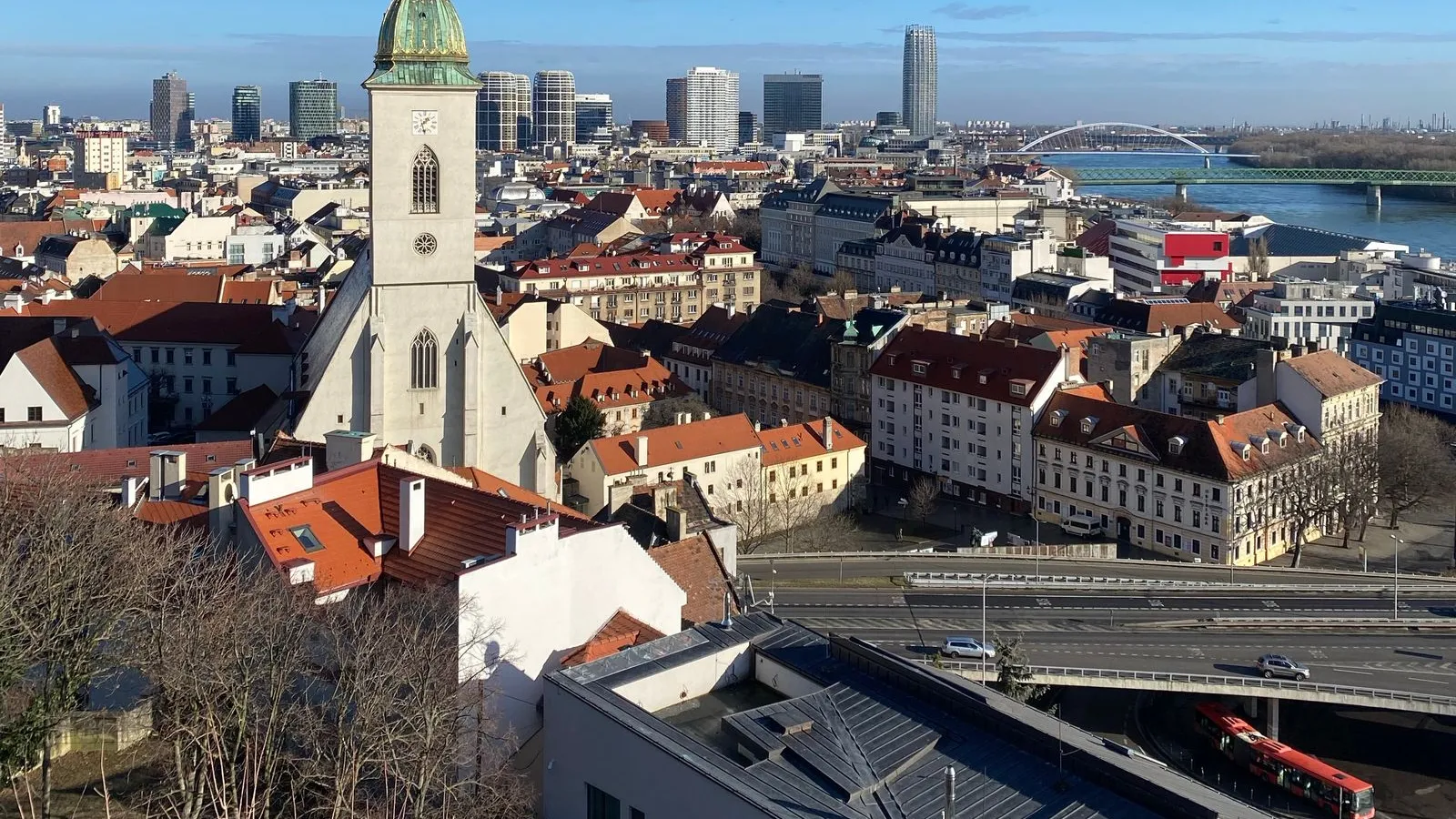
Slovakia is one of Central Europe’s quiet wins. It sits inside both the Schengen area and the Eurozone, it borders Austria, Hungary, Poland and the Czech Republic, and it costs a good deal less than its western neighbours. Bratislava is close enough to Vienna for a day trip; Kosice in the east gives you a smaller, cheaper city with a real cultural pulse. For a remote worker who wants a well-connected European base without Vienna or Prague prices, Slovakia earns a serious look.
The honest caveat: this is a bureaucratic country where English is not guaranteed at the counter, and Slovakia for digital nomads is less of a plug-and-play scene than Lisbon or Tbilisi. If you value low cost and central geography over a big ready-made nomad crowd, it fits. If you need a turnkey visa and a large English-speaking community, weigh it carefully.
Cost of living in Slovakia
Your budget depends heavily on where you land. In Bratislava, a one-bedroom apartment tends to run somewhere around 800 to 850 EUR per month, with central Old Town, Nivy and the Eurovea riverfront pushing above 1,000 EUR and districts like Petrzalka or Dubravka sitting lower (Wise and Investropa data, early 2026). Kosice is noticeably cheaper, with central one-bedrooms often below what Bratislava charges.
For a single person, all-in monthly spending is commonly estimated in the range of roughly 1,300 to 1,600 EUR including rent, though your number swings with the city and lifestyle (multiple cost-of-living trackers, 2026). Utilities for a mid-size flat can be a meaningful line item, especially in winter when heating kicks in. Treat every figure here as a directional estimate and confirm live listings on a Slovak rental portal before you commit, since rents have been moving.
Slovakia digital nomad visa and entry
Here is the plain truth: there is no dedicated Slovakia digital nomad visa. If you are searching for a “Slovakia digital nomad visa,” you will not find a purpose-built remote-work permit the way Spain or Portugal offer one.
What exists instead depends on your passport. EU and EEA citizens have free movement and can simply live and work in Slovakia, registering their stay after arrival with no permit required. Non-EU and non-EEA nationals need a temporary residence permit, and the common route for a self-directed remote worker is the permit for business or self-employment. In practice that usually means obtaining a Slovak trade licence (the zivnostensky list) and registering as self-employed, and temporary residence for business is granted for three years (Act 404/2011 on the Residence of Foreigners, section 22).
There is no official monthly income threshold for nomads. What the law sets instead is a money test for sole traders: with a first application you must show a business bank balance of at least 20 times the subsistence minimum (section 32), and at renewal, taxable income from the business for the previous tax year above the threshold that triggers an income tax return (section 34). You will typically also need a clean criminal-record certificate, a valid passport, proof of accommodation and proof of funds. Since 1 July 2025 a first application can only be filed in person at a Slovak embassy abroad, not at the foreign police in Slovakia, so check the current requirements with the Slovak Ministry of Interior and that embassy before you travel, and never rely on a blog figure alone. To sanity-check which route matches your nationality and situation, run Voymo’s digital nomad visa checker before you book anything.
Tax residency and the 183 day rule
Spend enough time in Slovakia and the tax system starts to notice you. Under the Income Tax Act (595/2003, section 2(d)) you are a tax resident if you have your permanent residence or a home in Slovakia, meaning accommodation that is not just occasional, with an evident intention to stay, or if you are present for at least 183 days in the calendar year, in one stretch or several, with every started day counting. Staying only to study or for medical treatment does not make you resident. Tax residents are taxed on worldwide income; non-residents are taxed only on Slovak-source income.
On rates, section 15 of the Income Tax Act has used four bands since 1 January 2026: 19 percent on the tax base up to 43,983.32 EUR, 25 percent up to 60,349.21 EUR, 30 percent up to 75,010.32 EUR and 35 percent above that. The law sets these limits as multiples of the subsistence minimum (284.13 EUR for 2026), so they move every year. Self-employed people whose business revenue for the year does not exceed 100,000 EUR pay 15 percent on their business tax base instead, and the basic tax-free allowance of 5,966.73 EUR shrinks once your tax base passes 26,083.13 EUR, according to the Financial Administration’s 2026 figures. Because Slovakia tax for expats can involve both this system and your home country’s rules, and because the 183-day count is only one of several triggers, do not plan around a single number. Model your situation with Voymo’s tax-residency reality checker, then confirm the current brackets and any treaty tie-breaker with a Slovak cross-border tax advisor. These figures move, and this is not tax advice.
Healthcare and insurance
Slovakia runs a public health insurance system through a small set of insurers, notably the state-owned VsZP alongside Dovera and Union. Legal residents enrolled in the public system get the same coverage as Slovak citizens. Self-employed residents pay into it directly; guidance for 2026 points to a minimum monthly self-employed contribution in the region of 110 to 140 EUR, based on a minimum assessment base, though your actual figure depends on income.
If you are only visiting short-term from another EU country, your EHIC covers care you need during the stay but is not a substitute for full cover, and it does not handle private care or medical repatriation. Many arrivals bridge the gap with private or international health insurance, sometimes cited around 40 to 80 EUR per month for basic private plans, until public enrolment is sorted. Confirm your exact contribution and eligibility with your chosen Slovak insurer.
Money, banking and settling in
Opening a Slovak account is straightforward once your paperwork is in order. The main banks include Slovenska sporitelna, VUB Banka, Tatra Banka and CSOB, and they typically ask for proof of identity, proof of address and, for non-EU nationals, a valid residence permit. Many nomads keep a multi-currency account like Wise or Revolut for the arrival gap, then open a local account once residence is granted so recurring bills and any self-employment income run cleanly through a Slovak IBAN.
For the practical settling-in stretch, budget time rather than just money: expect in-person appointments, Slovak-language forms and a foreigners’ police step for non-EU residents. Bring more document copies than you think you need, and confirm each requirement with the official source before your appointment, because processes and fees change.
Figures are estimates. Always check the official source.
Frequently asked questions
- Slovakia: is there a digital nomad visa?
- No dedicated digital nomad visa; most people use a standard residence permit instead.
- Slovakia: when do you become a tax resident?
- You are a Slovak tax resident if you have your permanent residence or a home in Slovakia (accommodation that is not just occasional, with an evident intention to stay), or if you are present for at least 183 days in the calendar year, in one stretch or several, with every started day counting (Income Tax Act 595/2003, section 2(d)). Residents are taxed on worldwide income; staying only to study or for medical treatment does not make you resident, and a tax treaty can override the result (estimate).
- Slovakia: what is the cost of living?
- The cost of living is moderate and the local currency is the EUR. Treat any figures as estimates.
- Slovakia: do you need health insurance?
- EU and EEA visitors can use a European Health Insurance Card for needed care; others and longer-stay residents should arrange private or public insurance.
- Slovakia: can you drive on a foreign licence?
- EU and EEA licences are accepted. Slovakia also recognises licences from states party to the 1949 Geneva or 1968 Vienna road traffic conventions, and an International Driving Permit only together with the national licence. If you take up residence on a non-EEA licence, you must apply to exchange it within 60 days once 185 days of residence have passed, or it stops being valid in Slovakia.
Terms worth knowing
Europe: more countries to explore
Put it to work
- Free
Digital-Nomad Visa Checker
See which digital-nomad visas you could actually get with your passport and income, ranked, with the binding reason per country.
→ - Free
Tax-Residency Reality Checker
Go beyond the 183-day myth: model the treaty tie-breaker and see whether two countries could both claim you as a tax resident.
→ - Free
Nomad Insurance Picker
Match SafetyWing, Genki, World Nomads and others to your situation, and see which policies satisfy specific visa proof requirements.
→ - Free
Banking & FX Picker
Find the right account stack to avoid fees and hold multiple currencies abroad, Wise, Revolut, N26, for your nationality and spending.
→ - Free
Schengen 90/180 Calculator
Count how many of your 90 Schengen days are left and the earliest date you can re-enter. All math runs in your browser, nothing is sent anywhere.
→